NATO Joint Fighter Force
Why not? NATO does this for AEW, transport and to a lesser extent pilot training. Set up a pool of fighter resources, then base small amounts in each of the necessary countries.
Smithsonian
The world’s only remaining example is in the Smithsonian’s Steven Udvar-Hazy Center in Chantilly VA.
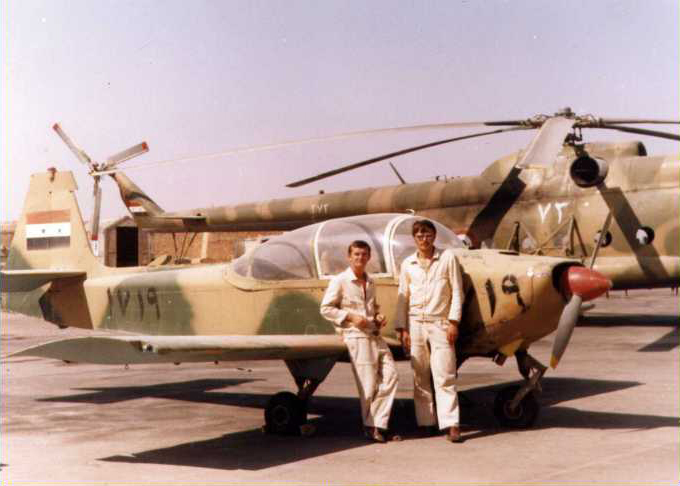
Syrian Flamingo
.jpg)
The only photo of this type I have ever seen in Syrian service.
Turkmen Govt. S-92

Medevac
The helicopter’s greatest role in Vietnam was medevac and troop transport (air cav). Attack choppers grew out of the need for an armed escort and to soften LZ’s. The attack helo is going to be around for a considerable amount of time. A VTOL attack aircraft is very useful, especially when used alongside armed drones.
I guess I am looking at things from the customer’s perspective and in reality toward the actual threats Denmark may face in the next thirty years. First and foremost, Denmark would never stand alone against a threat to the European mainland. NATO, as a whole, and with the U.S. would share the burden of any future campaign. Second, the air defense of Denmark and its territory could easily be maintained by a variant of the F-16E or F-16V. Procuring a fifth generation design would be great, but probably isn’t worth the costs given the likelihood of their use in actual combat. There is also the “golden eagle” principle. The F-35 may be considered to expensive to deploy into combat for fear of loss. The Gripen is a valid contender, but what can it do that the F-16V or even F-16E could not?
Lockheed Martin probably isn’t interested in competing with Lockheed Martin.
Better to sell some newer F-16s than nothing at all.
MoD F-35B
Is the MoD’s current F-35B, in-country, a static test airframe?
What about the F-16V?
If all the RDAF has to do is defend Danish airspace, then a more modern F-16 in a new airframe could do it. Pilot training could continue in earnest, along the same lines as is done now. Existing infrastructure could be used because the F-16V wouldn’t change from the F-16AM/BM in size.
It makes sense…
Actually, it doesn’t
The checkerboard roundel explains why.
The checkerboards are some sort of registration or telemetry mark (?), but I don’t see why the would have to be applied over just primer. Wouldn’t a coat of paint also help protect against corrosion as well?
Great Photos
Thanks for posting. Wonder why the aircraft appear to be in primer and not painted.
Congolese Su-25
FG-505

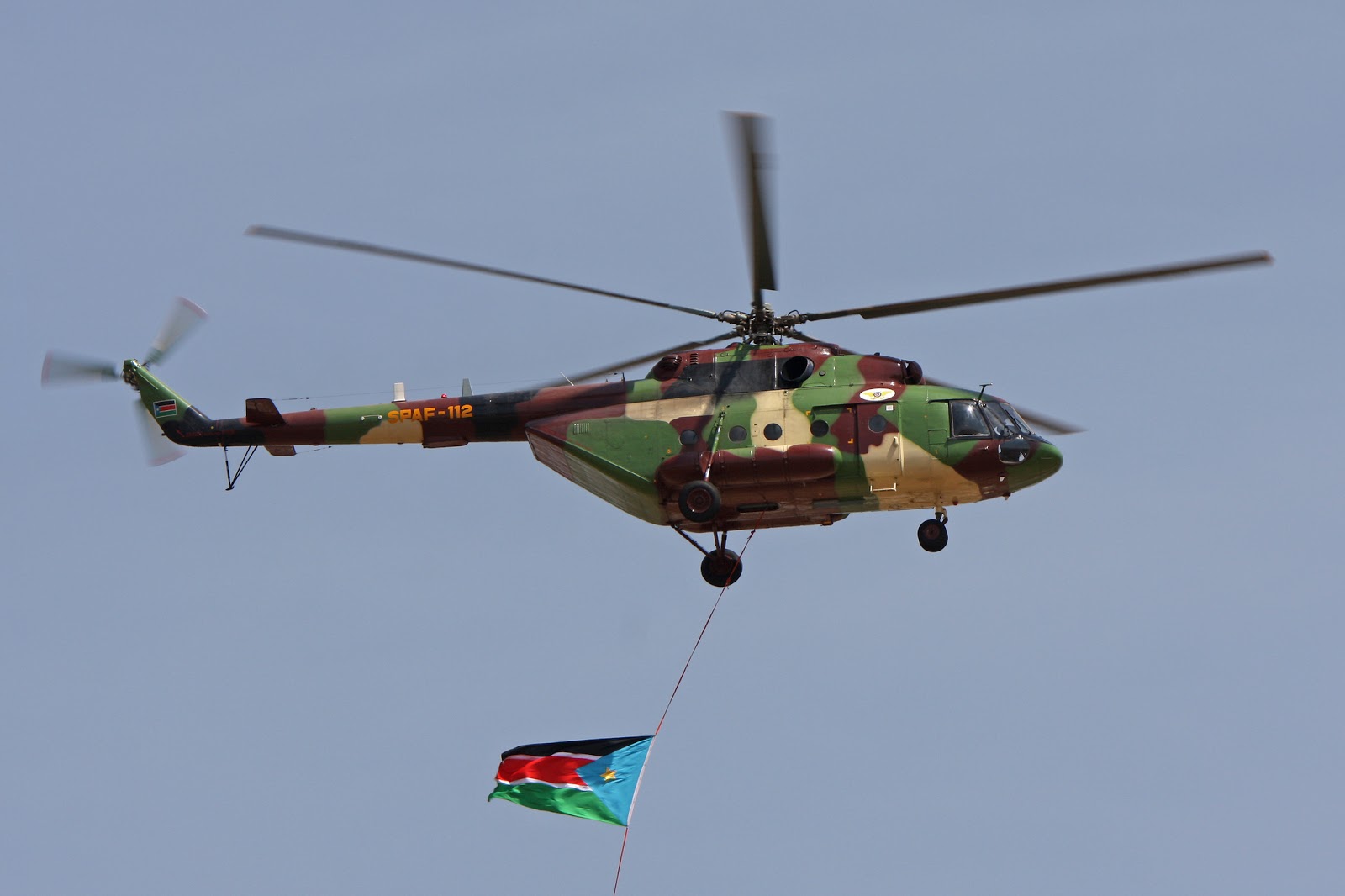
South Sudanese Mi-17V-5’s
C.O. TJ’s Hangar
Accountability, it is just that simple. Many taxpayers, this one included (U.S. Army 92-96), did serve in the military and can understand how things work on the government end. Not everyone has the privilege of being a combat jet pilot, which means those that do are even more subject to scrutiny. Add-in a $100,000,000.00+ jet into the mishap, and a public investigation becomes very appropriate. Flying jets is a dangerous business and accidents will happen, there is no way around it, but the cost-margin of an F-22 loss is too high to just sweep under the rug. I am very glad no one got hurt and am not trying to belittle the risk taken every day by pilots around the world. Just because you go up, does not guarantee you will come back.
premature classification
To be fair, there are a 2 types of accident reports, and only one is ever releasable to the public. You have an SIR which is privileged info and any statements made during the investigation are protected by the privacy agreements of the investigation. Not only is it not releasable to the public, it is also generally only released to the folks who have an immediate need to read it (ie same Type/Model as mishap). Then you also have the JAG investigation, which is a legal proceeding, not covered by the privilege umbrella. Anything disclosed, stated, or otherwise revealed in the course of a JAG investigation is subject to release via FOIA. These are the basis of any news release about a high profile accident (such as a Raptor crash), and may or may not actually reflect the findings of the SIR. Wanderlei is right that such releases of mishap info are generally only in the case of such high profile incidents where there is a lot of public interest. Again, these reports often only include partial information, and often lack key details. This isn’t a function of secrecy or any sort of conspiracy, but rather the idea of privilege in an SIR is to provide incentive for aircrew and others to be completely honest with their statements, without fear of legal retribution. If there is actual criminal misconduct or negligence found or suspected as a contributing factor, this is dealt with in the JAG investigation and anyone involved has the right to legal representation throughout the process.
In general, the purpose of an accident report is not to point blame at people and make public scapegoats…..it is so that other aircrew can learn from the mistakes of others, and not repeat. We rely on the concept of privilege to encourage honest assessments of accidents, and to point out where we have gone wrong. Bringing the public (and lawsuits/legal proceedings) into that process ruins that honest process.
That predetermines what the public would do with such information and how they would react. There are guesses to that end, but no one really knows. The public may not need the gory details and the where with all for any classified information, but they should get a concise version of the whole story. Being honest or even slightly open should shed light on such proceedings, that itself kills corruption.