 King Jester
OK, thanks so far, learnt a lot.
1) Didn´t know about leased ADV by Italy. Leased from whom? The RAF I guess, so the RAF cut back on active sqaudrons?
2) Thought the saudi Tornados were IDS. Or do they operate both types?
3) Thought the ADV had a complety different set of engines than the IDS, isn´t that so?
4) How did the RAF ADV perform in Desert Storm 1991? In terms of not being nor the design operating environment nor mission type (iraqui long range bombers not much of concern, right?) Were there any changes made to electronic suits or operational employment protovcols afetr Desert Storm? Was there much to learn out of Desert Storm, in terms of air superiorty, anyways?
King Jester
PD: Waht does RIO (second crew member) stand for?
King JesterNo afterburner because his supercruise ability (Mach 1.3max) is turned in range advantage.
That pops up a question in my mind, somewhat unrelated, but anyway. Is there any other 3rd or even 4th generation AC which can do Mach 1+ without afterburner? I know 5th gen AC, such as F-22 are designed from the start with that capability. Was Sue designed as a supersonic AC from the start, or did it “turn out to be” Mach 1+ capable by bogus?
And what are exactly the flight parameters to get her to Mach 1,3? Shallow dive or level? I imagine clean configuration,anyway, right?
King Jester
EDIT: I just noticed there is another tread on “supercruise” open, so I will seek for answers there. Thanks anyway.
King JesterThey didn’t fare well against Harriers in the Falklands, but the Entard isn’t a fighter, its air-mud/sea.
Swerve and Dutchy are both right.
More so…RN SHAR´s never got anywhere near COAN SUE´s.
Same tactic used by leased iraqui SUE´s during Persian Gulf War. Sneack in, pop up, fire and forget, turn back home.
King Jester
King JesterA fellow poster over at ZONA MILITAR, captured this two images from “El Palomar”, the base of FAA 1st Transport Brigade.
Thanks Google Earth and Spirit 666 from ZM.
1) More recent pic, you can see 5 B-707, 1 B-757 (Tango 01, presidential aircraft), 2 C-130´s on the “active” tarmac, and 5 C-130´s (IRCC 3 “B´s” and 2 “E´s”) on the “derelict” tarmac. The B´s are definitively out of service, radiated and canibalized, while the E´s AFAIK exceeded hours between inspections, and are grounded (perhaps forever).
http://i81.photobucket.com/albums/j203/claudiospirit/PalomarDic06.jpg?t=1165092455
2) Older pic, where you can see 4 B-707´s, a single DC-9 (or may be MD-80, dunno), a single F-28, 4 C-130´s (including the white C-130 L-100) on the active tarmac, and 7 C-130´s on the “derelict” tarmac. Two of the E´s (including a KC-130) were checked and inspected, and are back in service now, AFAIK.
http://i81.photobucket.com/albums/j203/claudiospirit/Palomar.jpg?t=1165094625
Moving just 3 miles E from there, you may find the “Campo de Mayo” Army airbase, where there are helos to spot, and if you move 3 miles W/WSW you will find “Moron” FAA base, where the MNA (Museo Nacional de Avaición) is, there you can see a number of preserved aircraft, including AVRO Lancaster, Ju-52, DC-3, Guarani, S-61R, Bristol Freighter, and others. (just a curiosity, the same aircrafts appear on two locations in Google Earth, due to the different timing of the imagery…if you find Aeroparque Domestic Airport in dowtown Buenos Aires, at the S end of the runway you can see the same Lancaster, Ju-52 etc, which were all moved to Moron in 2002.
King Jester
PS: I´m frustrated, cannot get the images to show.
King JesterReally ?? I didn’t know that ? And what is exactly the upgrade that justifies a new denomination ? Genuine question…
And, excuse me but, I think that “Finger” is barely an appropriate name for a combat aircraft, just my opinion…
Its a catchy sounding name (for the phonetics) in non-english language, but doesn´t really mean anything. And with such an aircraft you can give your opponnent the “finger”, right? 😀
On a serious note, the “Finger” conversion program was already concieved in 1980/81, as soon as the ex-IDF Neshers were operating with the FAA, but only materialized in 1984/85 timeframe (post-Falklands/Malvinas war).
The Neshers/Daggers (as already explained, IAI exported the Neshers as Daggers, with only minro changes to the original specs), were upgraded i batches, and there are at least four diffrent variants which can be listed:
Finger IIA
Finger IIB
Finger III
Finger IV
which differ on nav/com equipment and radar. A second upgrade program (AFAIK) standardized all remaining aircraft as Finger III, with Marconi nav suit, ELTA 2012 (??) radar, new radios, and some minor improvements in self-defence equipment.
The engines are still the ATAR 9C, for all argie Mirage/Fingers.
There are some 35-40 aircraft of all types (Mirage IIIEA, Finger, Mirage 5P) in service with the FAA.
The Mirage IIIEA fleet was also standardized to carry Magics (originally the aircraft was delivered in two batches, the first batch unable to carry Magics), and it is said that the rails and software was upgraded to carry Sidewinders, but I´m not sure about that.
The few remaining Mirage 5P were upgraded with RWR, nav/com and some other electronics and renamed Mara. As of today, the Mara´s are assigned to the Mirage OCU unit, and not used in combat duties any longer. They are also used as testbed for a locally developped chaff/flare dispenser, which should be installed in the entire fleet (that is if the budget gets assigned before its to late and the Mirage fleet is definitively grounded).
To add some chips to the list originally posted by Phantom:
Argentina: already explained above
Chile: Mirage 50 CN alias Pantera, and Mirage 5B (ex-FA Belgium) alias Elkan
Colombia : Kfir, but also Mirage 5COA
Perú: Mirage 5P
Venezuela : Mirage 5V and Mirage 50, all upgraded to a standard similar to the Mirage III NG
Brasil: just very recently (2006 IRCC) retired the Mirage IIIBR´s, and has gotten surpluss M-2000C´s
At least in SA I can´t think of any other user.
King Jester
King Jesterzoot horn rollo wrote:
Still down south of the border Argentina way, is this a museum at Bahia Blanca? Note the carrier deck….
Exactly, it´s the MUAN or Museo de Aviacion Naval, at the military sector of Bahia Blanca´s airport.
IRCC, the aircraft parked at the museum are a L-188 Electra (modified to Elint craft in the 80´s, laid off in ´95 or so, whe the first surpluss PC-3 Orions arrived), a Neptune (laid off in 1982), Gruman Panther, Vought Corsair, AT-3 Texan, T-28 Trojan, Gruman Tracker, A-4 Skyhawk, Aermachi 339 (may be a 326?), two more unidentified aircraft.
The simulated carrier deck was used for training purposes (though I don´t know how you are supposed to practice approach or touch and go on a “still” carrier deck, it´s a completely unreal scenario). Guess that much of deck-crew training was done here (not risking a costly plane rolling off the deck!!)
If you scroll down some 10-15 km South from that point, you will find the naval base of Puerto Belgrano (recently updated on Google Earth with high definition imagery).
There you can see all four Meko-360´s, both Type 42´s, 5 out of 6 Meko-140´s and the Patagonia OAR (ex-french Durance class). There is also what seems to be a drilling platform/ship, and some minor vessels (some ATF´s, may be some derelict TON class MRV´s.)
I´m not very skilled at pasting Google Earth images, so sorry no picture.
King Jester
King JesterTurbo-Tracker programs:
# IMP performed an update for 12 Brazilian Air Force Trackers, fitting them with PT6A turboprops, five-bladed Hartzell propellers, and other updates. The first of these updates was performed by IMP in Canada and flew in 1990, the others were provided to Brazil as upgrade kits.
Brazil planned to perform a turbo upgrade on their Trackers, working with IMP of Halifax, Nova Scotia, to upgrade an initial machine as a prototype using PT6A engines. The upgrade was not regarded as satisfactory, the turboprops lacking adequate performance to get the aircraft back up into the air after a “bolter” on carrier deck landing, and the program was cancelled.
The Brazilian Trackers were then retired, one being donated to the Brazilian Air Force (FAB) museum in Rio de Janiero, and the others were mothballed. Incidentally, although the Trackers were operated off the Brazilian Navy carrier MINAS GERAIS (named after a Brazilian state), they were flown and maintained by FAB crews. However, the Brazilian Navy has considered pulling them out of storage and converting them to an AEW configuration, using a compact radar like the Brazilian Searchwater 2000 that could fit into the original Tracker belly radome.
Source: http://www.vectorsite.net/avtraker.html
Thats the version I knew of, just one prototype was converted, flown from MB Minas Gerais and then mothballed. Hence, no pictures of brazilian Turbo Trackers around.
Here the info from a brazilian site (in portuguise) :
Durante o início da década de 80, os P-16A e UP-16 já estavam sentindo o peso de seus mais de vinte anos de operação. Em 1984 todos foram retirados de serviço, deixando o 2°/1° GAE mais uma vez sem aeronaves. Enquanto isso, a FAB já estudava uma possível modernização da versão “Echo”, ainda em operação. Em 1988 foi dado início ao processo de modernização das aeronaves para o padrão S-2T Turbo Tracker. Uma das principais alterações foi nos motores, com a troca dos velhos Wright R-1820-82C pelos turbo-hélices Pratt & Whitney PT6A-67CF. A aeronave 7036 foi enviada para as instalações da IMP, empresa vencedora da licitação, no Canadá. O novo Turbo Tracker da FAB voou pela primeira vez em 1990 e no mesmo ano seguiu para a Base Aérea de Santa Cruz para dar prosseguimento aos testes. No ano seguinte, já ostentando a nomenclatura P-16H, a aeronave fez seus primeiros pousos e decolagens do Porta-Aviões Minas Gerais.
Com a iminência da modernização dos demais P-16E, o 2°/1°GAE recebeu em 1992 duas aeronaves P-95A (7056 e 7057) para que os pilotos se adaptassem ao vôo com motor turbo-hélice. No entanto, nada estava bem com o programa de modernização dos Trackers. A falta de recursos em conjunto com a inexperiência da empresa responsável fez com que o programa fosse cancelado em 1996, selando definitivamente o futuro do Grumman S-2 Tracker na FAB. Como já era esperado, os P-16 foram aposentados no mesmo ano, o que causou um grande choque no Grupo. O 1° Grupo de Aviação Embarcada, de tantas glórias, perdera o motivo de sua existência. Porém continuou voando com os dois P-95A recebidos em 1992 e um terceiro (7060) recebido em 1994, até que em 1999 o Grupo foi definitivamente desativado.
Source: http://www.basemilitar.com.br/artigos/cardeal/index.htm (search for the Google cache, the real site seems to be gone).
I had indeed completely missed the taiwanese conversions, but I feel I´m excused as Taiwan does not operate them on carriers.
King Jester
King JesterHere a pic of an argie Tracker (T) on MB Sao Paolo.
http://www.jetfly.hu/rovatok/repules/katonai/legierok/brazil_041013/Argentin%20Turbo%20Tracker-3.jpg
Knig Jester
King JesterI know that some tracker upgrades to turboprop have been attempted, do you know if they had been successful….
I like this air group especially the AEW aspect ,it would have been well balanced .
The argie CANA is AFAIK the only navy which operates Turbo Trackers (all other operators are civilian firefighters) in the ASW role. The CANA has upgraded 5 cells with isreali avionics and Garret Turboprops.
The program was started after ARA 25 de Mayo had been decommisioned, so the re-engined Trackers never operated on that Colossus type. I don´t know if the got to operate on MB Minas Gerais (there is a mutul training program with the MB since ARA lost the carrier), but for sure they train every year on MB Sao Paolo (Foch class). Will post some pictures later.
I always had the idea of re-engining a copuple of Gruman Tracers for the ARA. Would have been a flexible and cost-saving alternative AEW for the CANA.
King Jester
King JesterPage in spanish full of Photoshoped and funny real pictures
More of the kind, some real others PS.
King Jester
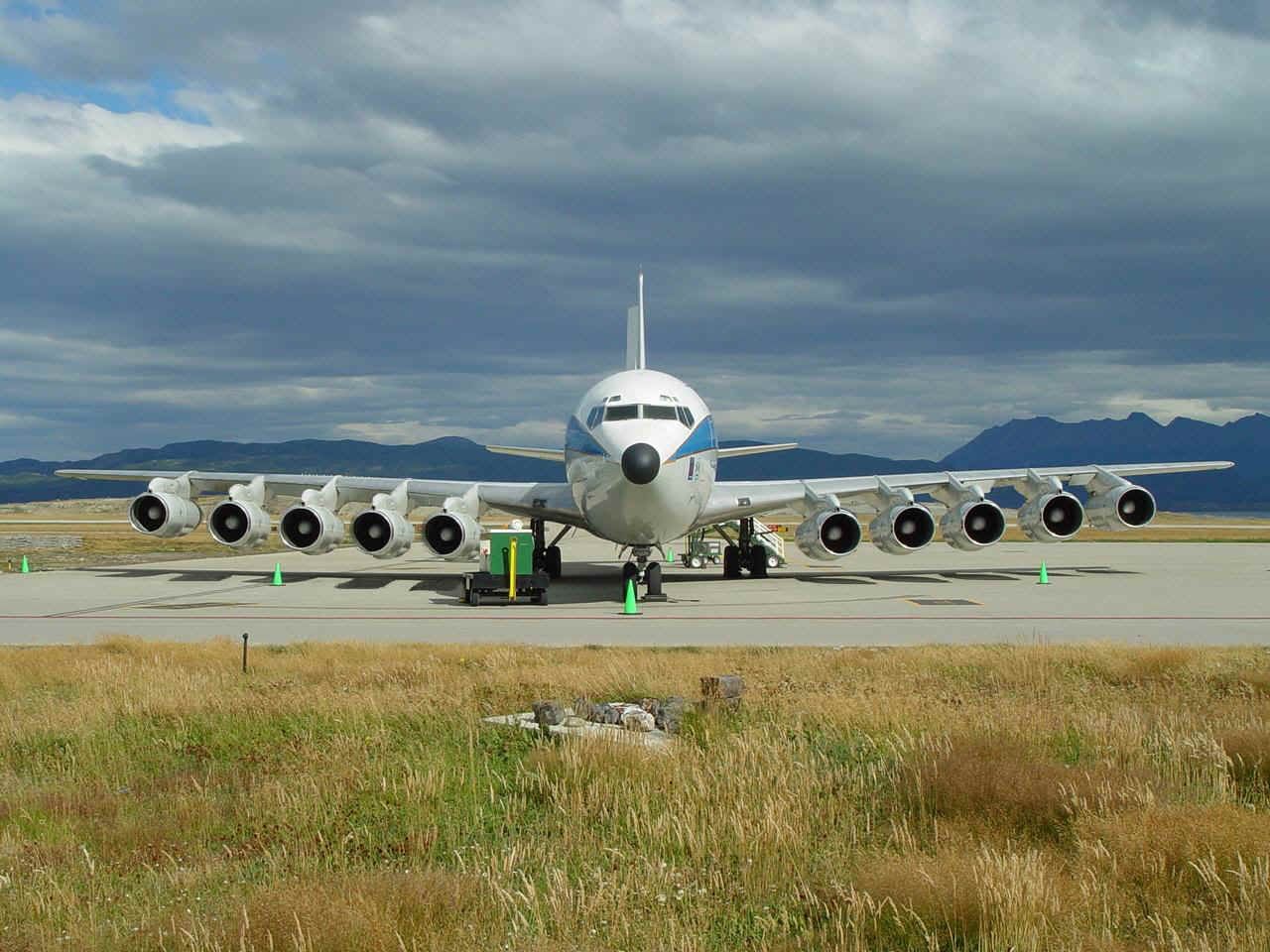
King JesterJust four JT-3´s aren´t enough anymore.
King Jester
King JesterOriginal Quote:
Originally Posted by ricardo
What about Argentinian pilots during Falkland’s war. They almost kick Margaret’s ass!!
…but got owned by the FAA and RAF.
I beg to differ from both of you guys. Actaully, I strongly disagree.
First Ricardo: Argie pilots (Fuerza Aerea Arg and CANA) were almost completely untrained to do what they were required to do during the 1982 war. FAArg had NO training what-so-ever against naval targets, little and sparse training on long range/bad weather/multiple in-air refueling ops, no joint operations training nor phylosophy, limited AAC training (none against other AFs /disimilar AC types), and a long etc. About the CANA almost the same could be said, indeed, Super Etendart pilots had only a few hours on the type and had never fired an Exocet missile in their entire career as naval pilots.
Whatever they achieved was mainly based on improvization, ingenuity, ruder and stick skills, and lots a guts, but not training.
Secondly Barnowl: Altought the SHAR did come out of the war with an impressive (on first reading) AA kill ratio, a couple of nitpicky observations are due here.
The RAF did not “own” nobody, as the RAF did not achieve a single AA victory, cause a) not fielded nor tasked for it and b) no actual AA encounters ever happened.
As for the Fleet Air Arm, it has to be noted that only 2 and 1/2 “kills” were ever acheived against AAM armed argie fighters, while all the remainding kills were against no AAM armed bombers, transport planes, COIN Acs, and helicopters, which were mostly on the run for their lifes.
But that is not the important point here, the important point here is that most of the FAA kills against those fighter-bombers were achieved AFTER the argie planes had achieved their mission goals, hitting their material targets with their bombs. Ditto otherwise: the FAA did not prevent the argies from mauling the RN, as they were for the most part shooting down enemies when those were already on the way home. The FAA victory in the airwar campaign against the argies was an attrition victory (the argies had not enough planes to replace actual losses), while the RN could continue bringing in SHARS from England over Ascension as they were lost due to AAA or accidents. Nevertheless the superior training, tactics and weaponry [edit: proficiency in using given weaponry, as in “they did best use of their planes and AIM-9 capabilities“] on the british side has to be honoured too. As for flying skills, guts and ingenuity, well, that call I leave to each reader to make.
Back on topic, about which pilots are best trained?
Depends on “trained for what?” Cropdusters are probably the most experienced and best “weeded out” lot of them all. Of course they aren´t trained to shoot other people out of the sky at Mach 2, but they fly 14 hours a day, all stick and rudder, at 10 feet from the ground, while inhalating toxic fumes, and if they live long enough to dodge powerlines, birds, trees, engine failures, etc, they surely become the best “self-instructed-instinct-fliers” in the whole world. So, it depends on “trained for what”, as the same could be said about aerial firefighters, or crane helicopter pilots, or so many others.
But I´m sure the question was aimed at airforces, wasn´t it?
King Jester
Edited for clarity of ideas, its not only the weapons you have (i.e. AIM-9 Lima Sidewinder, but also how you use them and what effect you can achieve with them). Hope my “clarification” isn´t more confusing than having let it standing as it was in first place.
King JesterGrumman UH-16 Albatross:
1) powerfull new turboprops (Would T-56 Allison be enough?)
2) GPS receiver with digitall map of South Pacific atolls
3) frigo bar, kitchened, barbacue roast, and other ammenities (shower, WC, may be a jacuzzi)
4) surfboard rack (or better yet, an enclosed “garage” for a jet ski)
5) nice king sized bed, to share with some South Pacific atoll beauties….
An up-to-date favourite island hopper.
King Jester
King JesterReally? So why is it that there are so many high power Mercedes, Jags, Porches, Ferraris, Lambos, BMWs, and so forth coming out of Europe? Where are all the electric cars that the enlightened europeans are suppose to be building?
Bigveern 1966 already put that quite into perspective.
Just let me add the shear weight of numbers: How many Lambos and Ferrarris are made every year? Besides every Middle East sheik having half a dozen of each, those are elite cars and all together a couple hundred thousend to a shor million a year Mercedes, BMW, Porshes and exclusive fancy Italians are build (as said by Bigveern, mainly for export to the US).
On the other hand VW, FIAT, Peugot, Citroen, SEAT, Rover, the Japanese crank out four cilinder cars by the millions, for the regular European, Japanese and ROW customer, which burn generally under 8 liter / 100 km (roughly what, 3,5 gallons /100 miles? my menthal math is a bit rusty). While Detroit cranks out GM, Chrysler and Ford crank out passenger cars with 6 or 8 cilinder engines by the millions for the average american customer, which burn roughly twice the fuel the regular european car burns. Pretty old data (last time I checked was 2001) there were 140 million private cars and another 110 million commercial vehicles registered in the US, with about 8 to 10 million adding each year. Thats an awfull lot of gas guzzlers. (Fairness note: China is adding cars at about the same rate, mainly VW and french design compact cars, IRCC)
Jeez, I´m not telling you what car to drive (for the record, I drive a 6 cilinder myself), but don´t complain if you gotta pay the real price of oil. And don´t stage wars under dubious pretenses to keep oil cheap, because that is exactly what the recent actions of the US foreign policy (foreign police??) seem to be pursuing, in deeper reading.
Not sure what point you’re trying to make here. Are you saying the money I pay in taxes makes the price of food cheaper? Well I either pay it in taxes or pay it at the check out line what difference does it make? Unless the Canadians or somebody is subsidizing food in America I don’t see your point.
I clearly mentioned the social and environmental cost of food. Not only bananas picked in Costa Rica do not factor in the social cost of labour (no medical coverage for workers, no retirement funds, no job security, unhealhty and unsafe working conditions, etc.) nor the development cost of rural communities (no infrastructure, education, home building, habitat managing, natural area protection, etc), but the SAME may be said about the peaches, brussel sprouts or watermelons picked by ILLEGALS (not only tolerated by, but actively hired by US food corporations) in Texas or California.
And another much could be said about the environmental cost of producing food, because jsut a punny example, the plastic wrappers and bags you buy your food in are made of, you guessed it, OIL. Which needs to be drilled, processed into platic, extruded (all of taken account off on the cost of a plastic bag) BUT also disposed/recycled (not accounted for at ALL within the price tag of food). And garbage pick-up fees alone do not account for it either, becuase 1) as Berlusconi said OIL = non-renewable, and 2) atmospheric pollution (acid rain, GHG, ect etc) do not stick over your own polluting country, but moves over to other countries as well, affecting the environment globally. All those abbatement cost are not factored in food price, nor do you pay them off as taxes. Not yet. If Kyoto would be alive, then, perhaps, you would be paying for it, but as things are, you don´t.
Taxes and subsidies are a different issue than the cost thing mentioned above, and I may have done wrong by mixing them into the same post. Let me explain myself:
a) A country preaching globalization should not be giving out subsidies to its farmers with both hands (Fairness note: many countries in Europe do that as well, so there are more govs to blame)
b) In the US, there is no direct relation between the taxes you pay and the subsidies the Feds give to farmers (or any other industry). Given the priviledged (and self-fought for, much to the US´s own credit, having unlinked said currency from gold reserves) situation of printing the most widely used currency worldwide, and moreover the currency by which the price of oil is set, the US only need to tax 7 cents to print a 100 dollar bill (real printing cost, paper + ink + shipping and handling). That situation has allowed the US to “export” so to speack, its own inflation and deficit overseas, as the US only needs to print dollar bills to buy oil, which then is turned into energy, fertilizers, pesticides and other goodies much needed home. When the saudis want to trade in their dollars to buy their Ferraris, they have already helped unknowlingly to “pay” for the US inflation rate and internal deficit.
May be my understanding of macro-ecnomy is BS. you are free to correct me if you see it fit.
King Jester
King JesterWhile we’re at it let’s jack the price of food through the roof so everybody will be skinny. :rolleyes:
Berlusconi (our own forum Berlusconi, not the real one) may have a point about oil price. At 17 bucks the barrel (only, what, 18 months ago?) the **** was way to cheap to even waste a minute about the consequences. Now at 70 bucks it is a good reason to make us ALL think a little bit about our own and our kids future in an oil-less World. At least now even hard core “gas-guzzlers” in the US have realized that car sharing, hybrid cars and alternative fuels (the recent move to use propane and alcohol in US fuel market by federal regs) is a must. Something others (within the US and abroad) have realized a long time ago.
BTW, if you think that what you pay for food in the US is even close to the real value of food, you are dilutional. Social and environmental costs factored in, you would be surprised what a banana shipped from Costa Rica in the middle of winter would really cost you. Not to talk about subsidized cornflakes, beef or even beer.
King Jester
PS: Back in topic, pointless AF, hmmm? Lebannon perhaps, bought 12 brand-new M-III in 1970, racked less than a couple hundred hours on them, alltogether. Just a random glimpse.


 Sign In







