 Argo
ArgoThe by far the biggest problem with those two ships are the engines, which are russian and therefore, completely useless:D. The RTOP-21 Sibenik, which is twice the age of Petar Kresimir IV, has MTU engines which are in a much better state then those in the 7 year old Dmitar Zvonimir. Other then that, they have been very well maintained and are relatively new.
So, given a engine change, they should be good for a long service.
ArgoSpeculations occured in the croatian press that the gunboats “Petar Kresimir IV” and “Dmitar Zvonimir” might be sold to Georgia:). They would both get a minor refit before the sale, if it happens.
ArgoThere are some misinformations in that text. RTOP-21 Sibenik is in working order… It passed just by my house a couple of days ago and I doubt it was just a short ride, because my house is some 220 kms from Lora in Split, as the crow flies :D. Engines have been overhauled, new (domestically built)communication system installed, 2 upgraded and overhauled RBS-15 were on board. The same is due for 2 Kralj(king) class gunboats, plus the new MTU engines.
Still, cheers to the Finns for their 2 Helsinkis! 😉
ArgoHere’s some more pictures taken during Noble Midas 07 that was held in Croatia in october last year
Pictures are taken from http://forum.croplus.net/viewtopic.php?t=3171&start=105
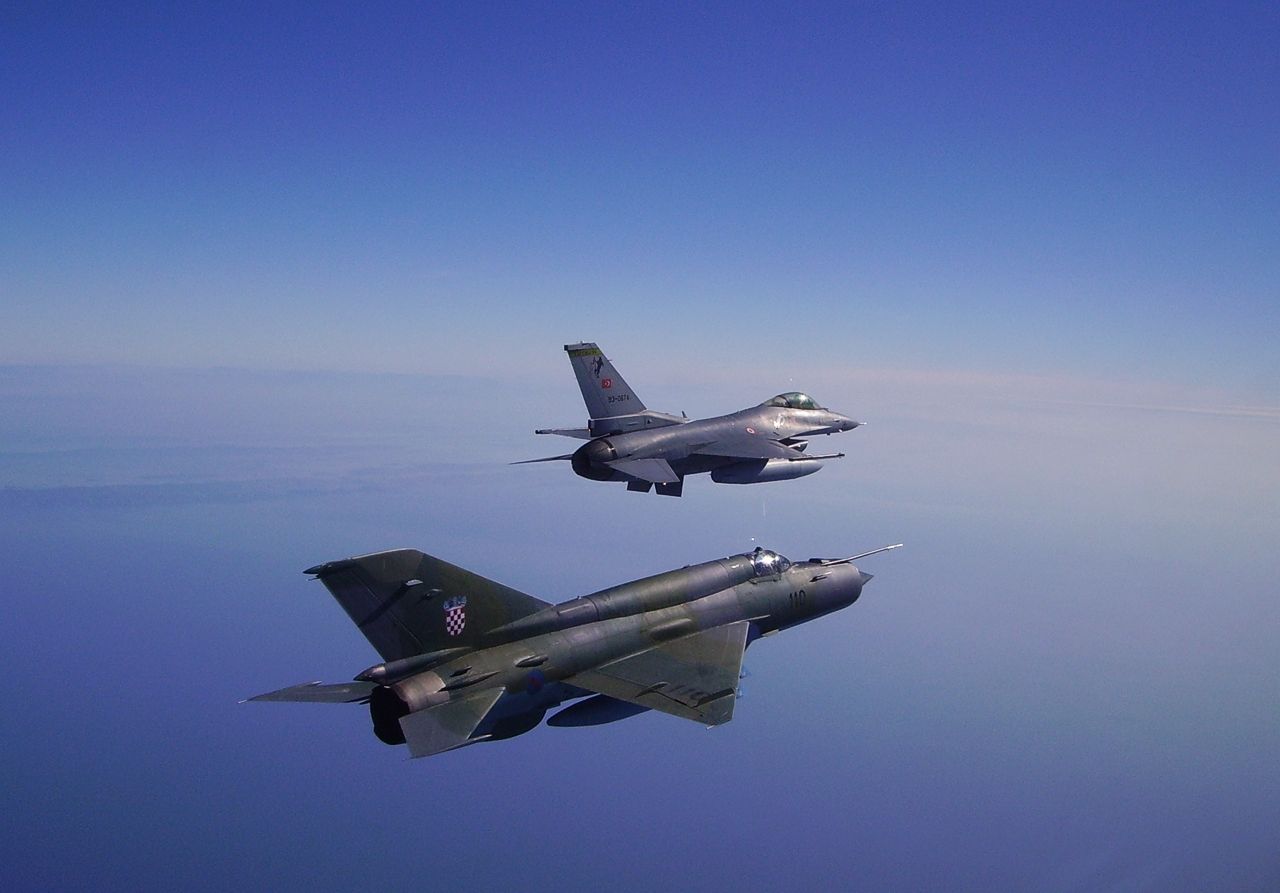
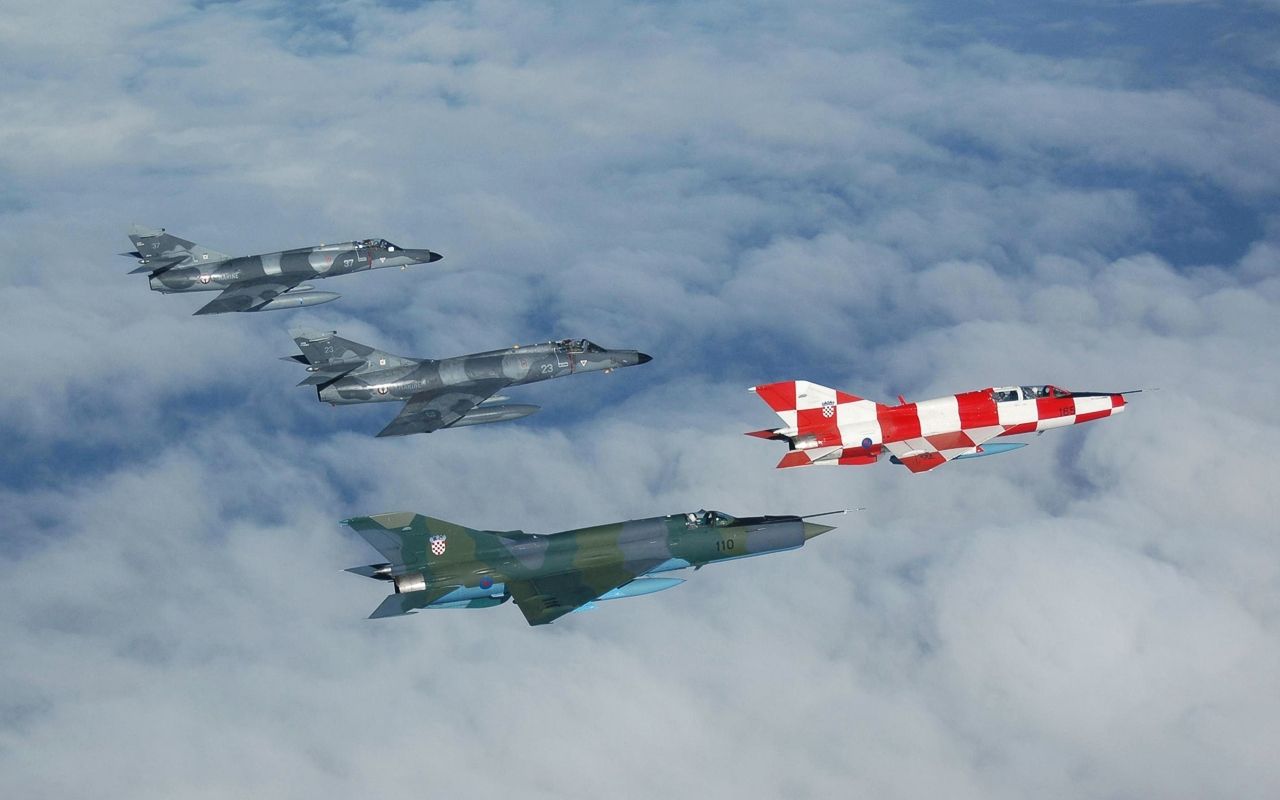
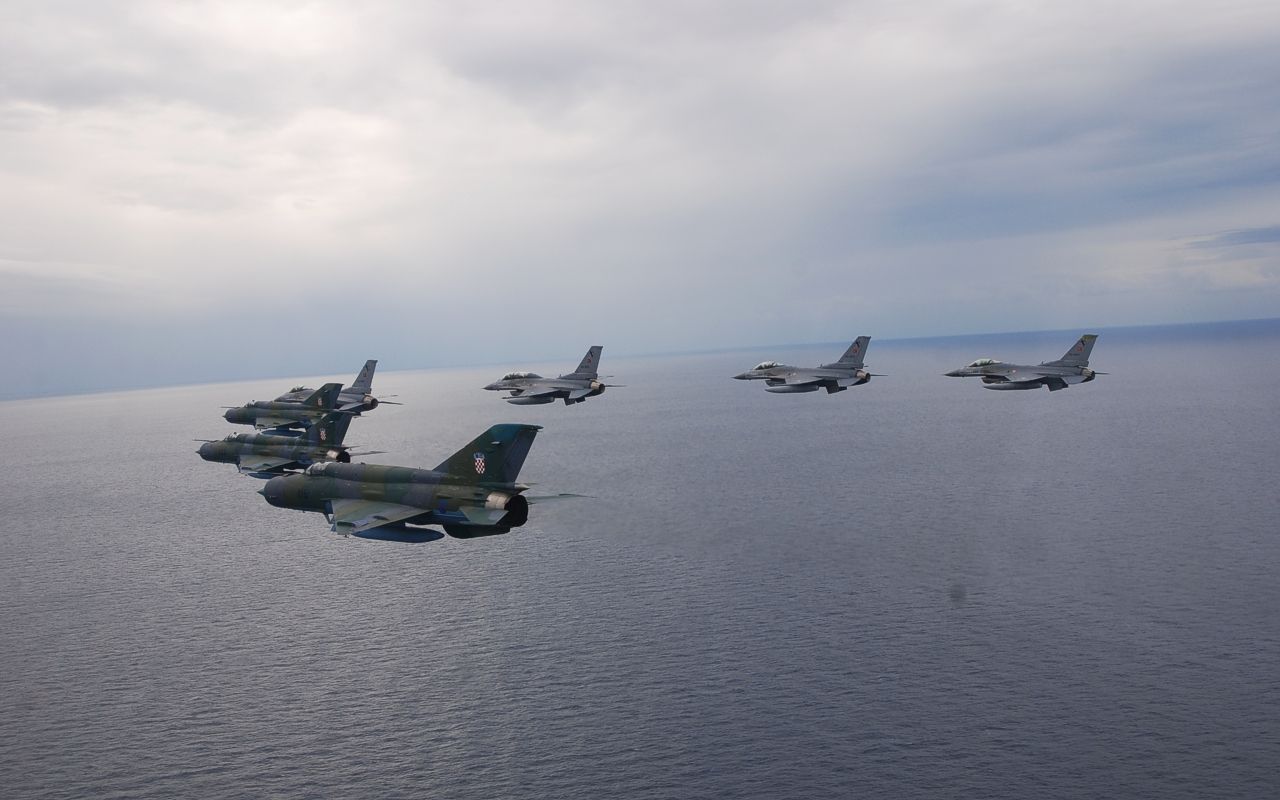
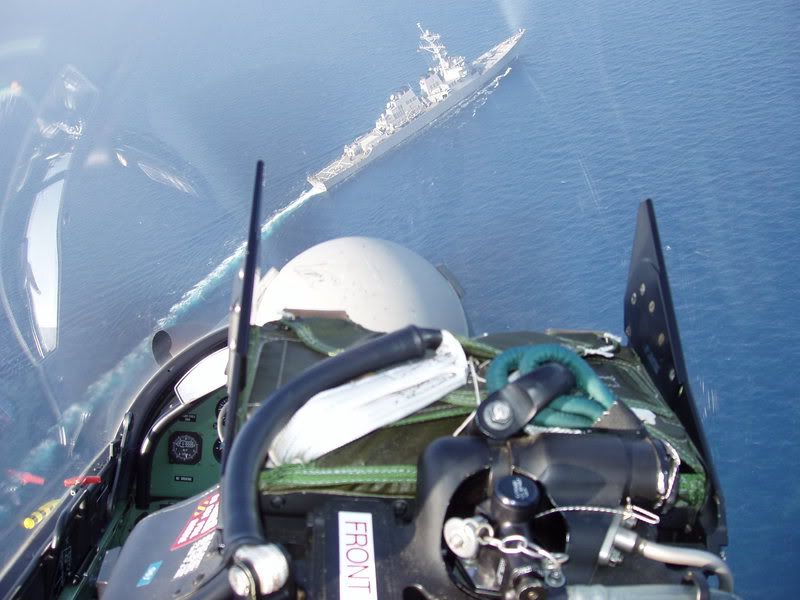
😉
ArgoAny info/pictures of the cancelled italian Trieste aviation cruiser?:)
ArgoThat photo of the Raptor with the EF in the backround is funny…With nozzles opened like that, it looks like the Raptor is gazing the Typhoon with awe 😀
ArgoI feel sorry that the Yu Supersonik(or Novi Avion) shared the doom of Yugoslavia, because I think it would have been a great jet fom smaller countries.
Darn cheap, too.
Argofrom what i’ve seen the F-22 is EXTREMELY manouevrable- it does have vectored thust don’tforget!- i can’t see how it can lose against a Typhoon
The Typhoon is smaller and lighter, simple. Thrust vectoring can help, but it can’t win a battle against laws of newtonian physics, unless the F-22 can move at relativistic speeds… or higher 😀
ArgoUnofficial sources now claim that the EF-2000 will be included in the Croatian bid. We’ll see, it should be official in March(the bid, that is 😀 ).:) 😎
Argof you are intrested in a first hand source, you have to stick to OKB-MiG.
R. A. Belyakov was the general designer after the death of A. I. Mikoyan in 1970. Belyakov can not blame wrong informations afterwards and stick to the facts. Contrary to that, the writer Yefim Gordon did not hestitated to use dubious sources claims to bolster his books.
About the ‘Ye-155M/99/Ye-266M/Experimental Versions’ (pp 405ff) Belyakov gives for the proposed RB-15BF-2-300 13,230 daN or 13,500 kg st with afterburner –
Development of the new aircraft was to happen in two stages.
First the range and rate of climb would be enhanced without structural modifications.
The aircraft would be reengined after their operational life expired – a sure way to grow younger.
Second, the aircraft structure would be modified, removing the little duralumin still used in the forward fuselage and the few non-heat-resisting wing elements so that the aircraft could fly at speeds above Mach 3.
(He gives not a single data above Mach 3!)
The first stage was carried to a successful conclusion. The factory designation of the new product was Ye-155M, but the certification documents sent to the FAI after several record attempts in 1975 and 1977 called it the Ye-266M. Unfortunately, the excessive engine development time and the lack of factory availability delayed the second stage of the upgrade; as a result these modifications either remained experimental or did not go beyond the computational phase.
Nevertheless, the results obtained during the first step were very encouraging compared with the MiG-25P or R performance. The service ceiling increased to 24,200 m (79,375 feet), and the range at supersonic speed to 1.920 km (1,190 miles) – 2,510 km (1,560 miles) if one adds the auxiliary tank’s 5,300 l (1,400 US gallons).
[You see were Yefim Gordon has his data from, but the claim: “which would take the aircraft to Mach 3.5s” is not backed by Belyakov!]
But those claims are for Ye-155PA(which is a different aircraft to Ye-155M/266M), not the M version of the MiG-25.
On the engines, Gordon said that the factory was busy with producing the engines for the 31, and that the airforce had lost their interest in the MiG-25M, and went with the 31.
At p 401 he gives the data of MiG-25R used in Egypt from October 1971.
The range at supersonic speed was 1635 km.
The range at subsonic speed was 1865 km.
At 21000 m Mach 2,35 is 2500 km/h. That is 40 minutes for 1635 km.
In reality not all 1635 km were flown at Mach 2,35. The MiG-25R did climb out in full burner and did land-back without that. Neither the climb-out leg nor the land-back leg was flown at supersonic speed. Under most favourable conditions the Mach 2,35 leg was ~1200 km. Still a formidable achivement!
The two flights over Israel did push the MiG-25R to its range limits.
Going behind Mach 2,35 as done through shorter runs over Sinai will reduce range accordingly.
A writer with a mix of facts and fictons has an easy game with faithfull readers. Even when it comes to facts, some details related to that are missing!
Those sound true, but as the mission duration grew, they started carrying belly tanks, to extended their range(they never dropped them).
Gordon says that the missions were flown always by 2 MiGs, should either of them be shoot down or suffer an accident, to have a backup(so where are the pictures:D ).
He also said that most missions were flown at M2.5-2.8, and that the aircraft performed extremely well in hot conditions.
ArgoTo stay polite, that are all claims out of the blue by exaggerate data quoted.
You can all read them in Yefim Gordon’s book on the MiG-25/31.
He said that by the beggining of operations over Sinai, the engines were modified and perfected, which resultetd in extending the engine durability to 40 minutes in full afterburber, which meant the entire flight could have been done in full afternurner.
About M3.5 claims, here’s copy/paste from Gordons book
In the mid-1960s the Mikoyan OKB was working
on an interceptor project referred to as the
Ye-155PA. This aircraft was to be capable of
destroying targets flying anywhere between
100 and 30,000m (328 – 98,425 ft) at speeds of
3,500 to 4,000km/h (2,187 – 2,500 mph). To this
end, it was to be equipped with the brand-new
‘Smerch-100’ radar, later renamed ‘Zaslon’
(Shield), and armed with the equally new R-100
missiles. The powerplant consisted of two
R15BV-300 turbojets with an improved high
altitude performance (Vysotnyy – high altitude)
which would take the aircraft to Mach 3.5.
Later, the requirements changed, especially
regarding speed, and the project was discontinued.
As for the radar, a refined version (SBI-
16 ‘Zaslon’) was later installed in the MiG-31.
The MiG-25M project was powered by a R15BF2-300, Izdelye 65M engines.
The tests showed significant performanse gains, to be precise
The service ceiling exceeded 24,200m
(79,396ft) and supersonic cruise range was
1,920km (1,200 miles) in clean condition or
2,530km (1,581 miles) with a 5,300 litre (1,177
Imp gallon) drop tank.
But this all was dropped in favour of the MiG-31 project.
ArgoAccording to the specs 5 minutes a 2.83, 20 minutes at 2.6 and as long as it liked at 2.4.
That limit was imposed on early production models MiG-25.
When they were deployed over Sinai, a typical mission lasted about 40 minutes, and they cruised between M2.5 and M2.8(basicaly, they gained speed and height as they burned fuel, they didn’t apply any additional thrust).
That’s, offcourse, for the recce version.
On several occasions they exceeded M3.0, but no damage was done to the airframes or engines.
There indeed was an intention to make a MiG-25 a “true” M3 plane, but it was dumped in favour of the MiG-31.
The engines were being tested, which would give it a max speed of M3.5 and improved ceiling of 90 000+ feet. I guess they have realised there wasn’t any sense to it, and went in the right direction of making the MiG-25 more versatile and modern, thus the 31 was borned.
ArgoSo, afterall…

No MiG for you!!! …come back in ONE YEAR!!!!:D 😀 😀
ArgoTrue, but sadly there’s no recce version of the MiG-31. Although it shouldn’t be too difficult to convert it:D
What are Russians using for reccon these days? Su-24MR?
ArgoI disagree that purchasing Mig 31s or whatever would have a negligible impact in a war against the US. Militarily of course it’s not likeley to change much to the outcome. But it would prove much more costly to the US, even if only in terms of what they need to bring to the theater to insure air supremacy. And if they are capable fo shooting down a handful of planes in the process, it may prove enough to deter a US invasion as deemed too costly $-wise and (maybe) casualty-wise.
Nic
To some extent I agree with you, but a better investment for that would be some S-300/400 batteries, rather then (super)interceptors, which will probably be destroyed while either on ground or in underground shelters…


 Sign In







