 BPAG
BPAGRecently received back from refurbishment- original nosewheel from ZE360. Cleaned up and prepared by Paul Wright and powdercoated by Andy Groves at JW Smart Services. Many thanks to Andy and JWSS for donating the time, labour and materials to get the job done.
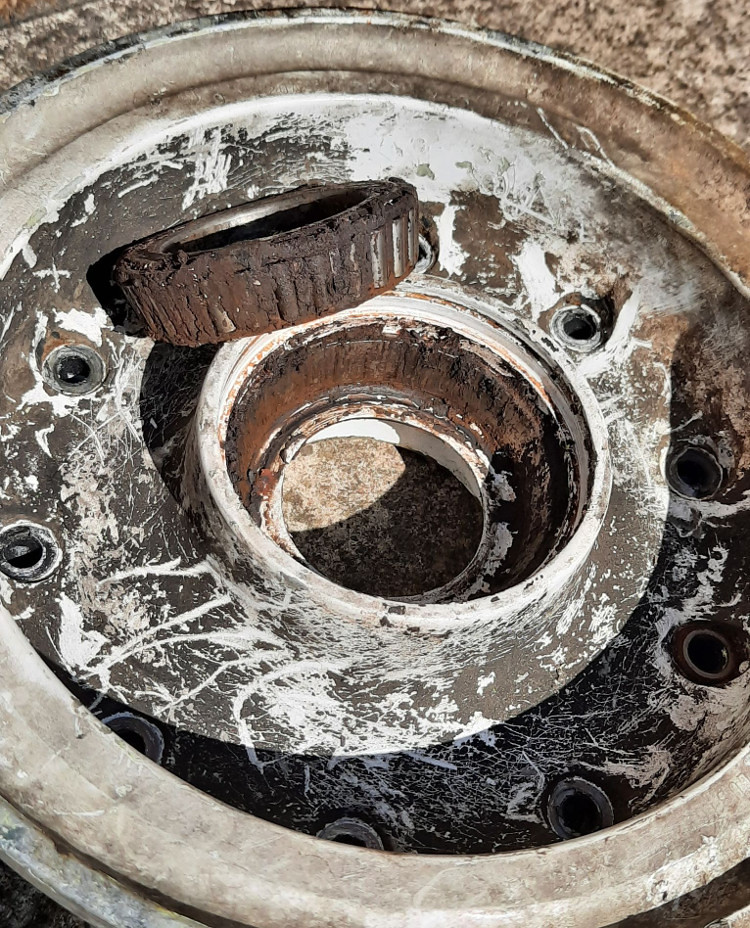

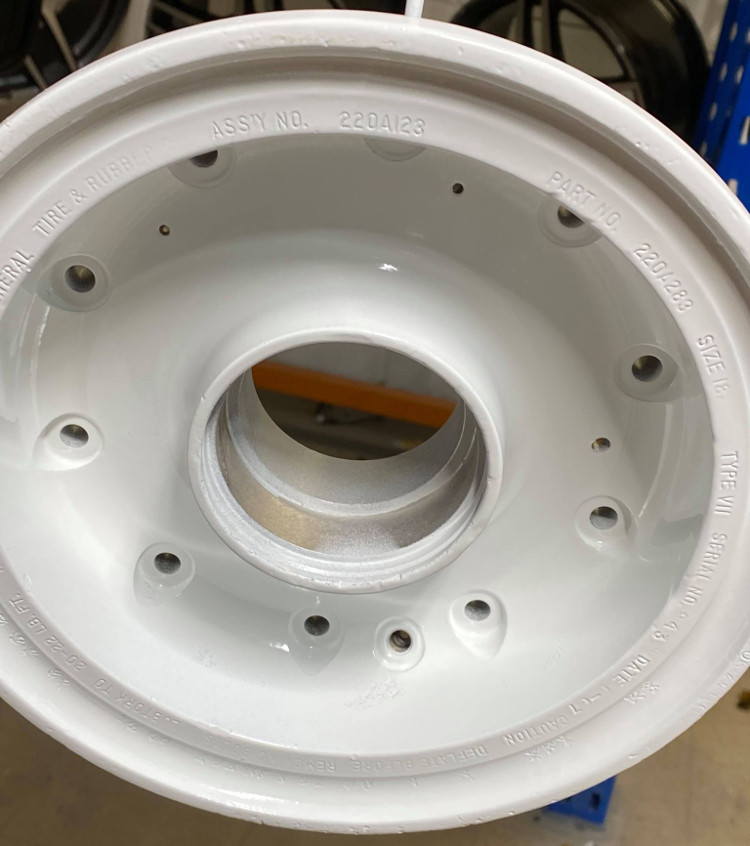
BPAGMany thanks. It feels good to be making progress after all those months of non-activity.
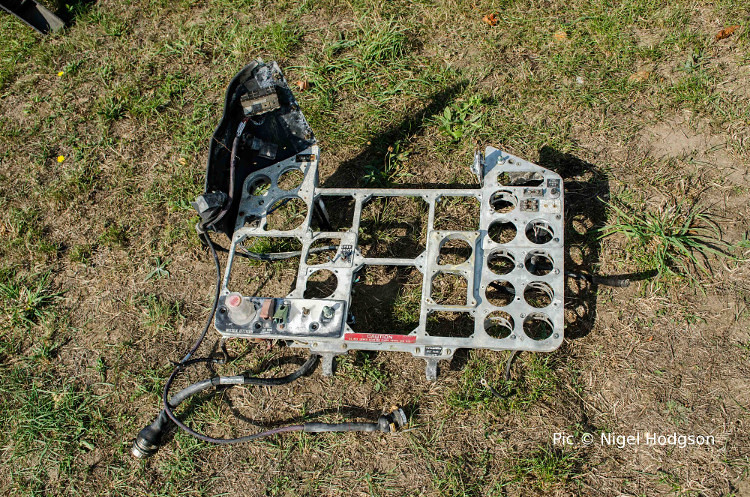
BPAGThe weather gods smiled on the BPAG as our largest volunteer contingent to date assembled at Manston last weekend. Further progress made with stripping out systems and components inside D22 but there’s still a long way to go there. The front cockpit was relieved of many of its remaining parts, including the main panel and some instruments. The latter have gone off site to be refurbished by Paul West, in his own time.

Elsewhere, both full sets of engine doors are now lowered and engine disconnection has started. Both sets of lateral control runs and a plethora of hydraulic lines and electrical looms have been removed, along with the left hand leading edge BLC duct. Access was also gained to the trailing edge flap actuators and these are scheduled to be removed at the next visit.


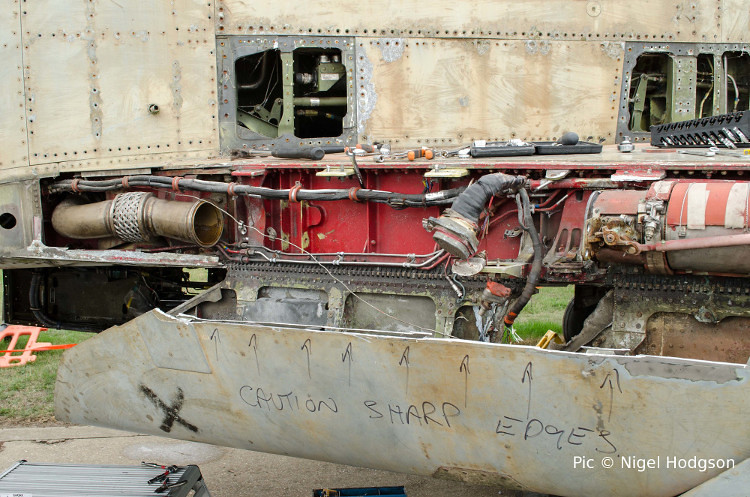
As ever, it was an ongoing battle with the corrosion and lack of servicing, meaning that even simple panel removal takes much longer than it would normally.
Effusive thanks to our volunteers, who braved the hot weather and the usual terrible jokes. You really are the lifeblood of the group. Many thanks also go to all at Manston, for your ongoing hospitality and tolerance.

BPAGThe Bank Holiday weekend saw BPAG back onsite at Manston. Undeterred by the cold and wet weather on Saturday the team got stuck in to the ongoing process of preparation for the separation of wing and fuselage. The principle task was the removal of the centreline tank, as when installed it prevents both the opening of the engine bays and work progressing along the centre of the lower wing. Despite having been untouched for decades (and thanks to some very clear instructions from one of our supporters, a former armourer) the tank actually released as it was designed to. Cue much celebration from the BPAG Chairman. With the tank out of the way, we now have clear access to the engine bays doors.


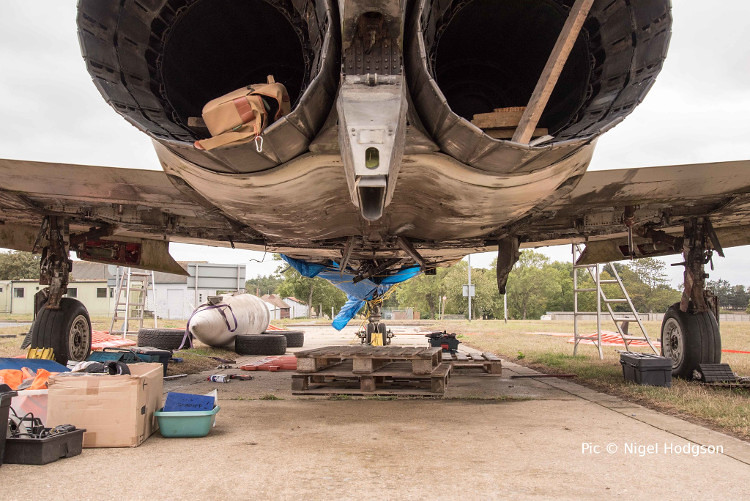
Whilst this was happening other volunteers removed the remaining speedbrake. Sadly, the corroded bolts would not give in, so the decision was made to cut way the brake from the aircraft. An unfortunate outcome- and such decisions are not taken lightly- but as both time and progress are at stake, some compromises have to be made to keep to an agreed timetable.
Sunday’s weather was no better and owing to last minute changes, we had limited team numbers on site. Preparation work continued inside Door 22, where many of the components will have to be removed to gain access to the wingtank/front fuselage joints and disconnection of the inboard undercarriage doors was started. Highlight of the day was opening the rear most engine doors for the first time in 3 decades. Elsewhere, the inboard leading edge occupied a lot of time and effort, corrosion had made bolt removal impossible and attempting to drill out ¼” thick bolts to a depth of up to 1″ was not proving successful. Once again, after much deliberation, the decision was made to cut away the structure holding it up. This was already beyond saving owing to corrosion, but we still don’t like cutting into the jet.
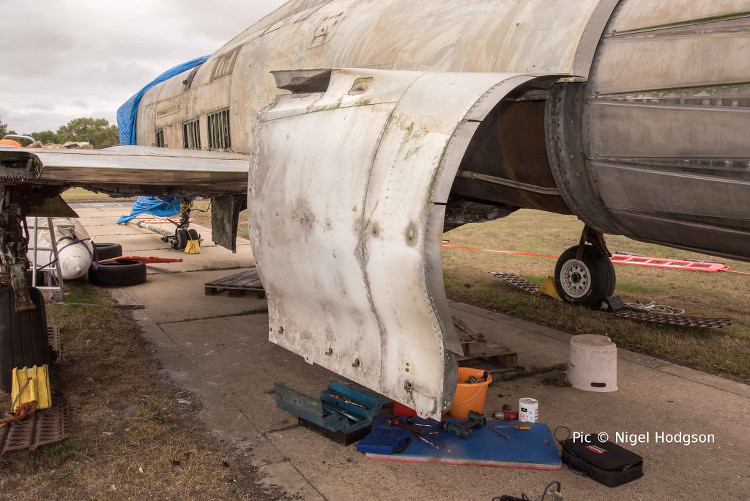
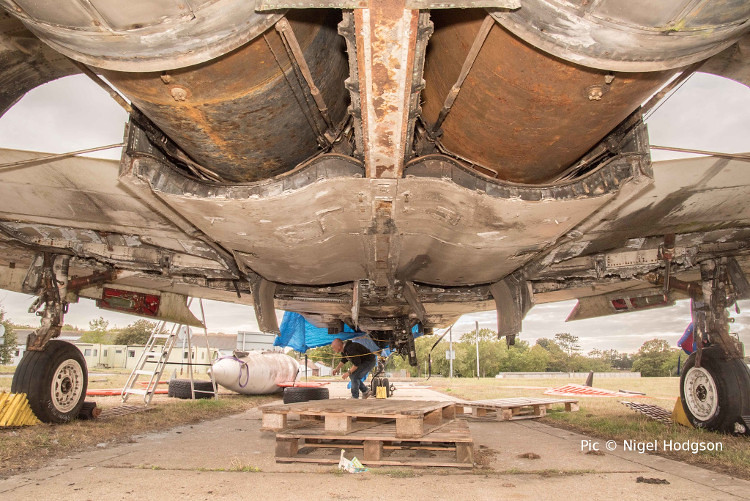
Monday dawned bright and clear, with the leading edge STILL refusing to come down. Further investigation and searching revealed a hidden bolt, one which is not present on F-4K/M, and once removed (by drilling out, naturally) the leading edge was finally lowered down.

Attention turned to the engine doors, and despite further corrosion related problems, both Aero 27A missile launchers were removed from the underside of the aircraft, which will allow the main engine doors to be lowered on a subsequent visit.
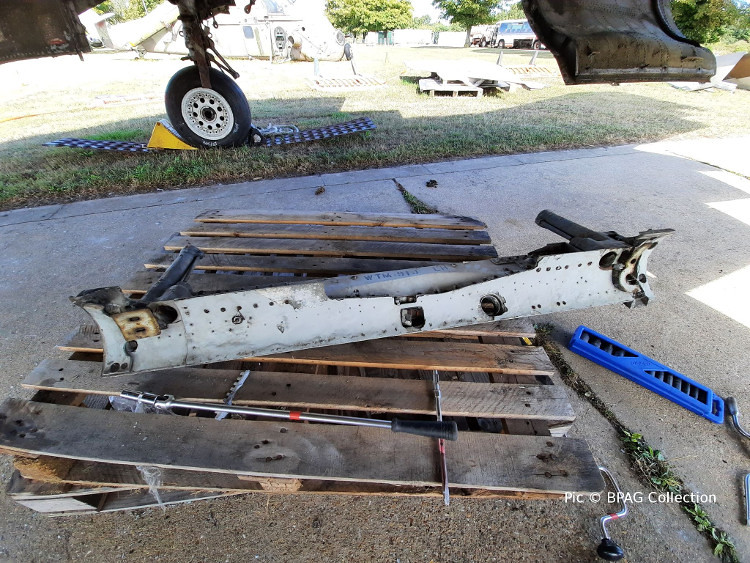
Many thanks to our members and volunteers for giving up their weekend and to the staff at DFTDC Manston for putting up with us once again.
BPAGAs mentioned above, this weekend was a busy one. The main focus of activity was once again on ZE360 at Manston and as such the British Phantom Aviation Group and the 74 Squadron Association are pleased to announce that another milestone in the preservation effort has been reached. On Saturday 15th August, ZE360 was towed away from an area of waste ground, where it has sat since 2015, and back onto hardstanding elsewhere within the facility.
This event was delayed by the current Covid-19 pandemic, when work at the site was forced to cease for four months, and follows replacement of the main wheels and nose wheels by the BPAG engineering team, which allowed movement of the aircraft to be attempted. The relocation to hard, level ground will now allow access for engine removal apparatus and once this process is complete, permit entry to the inner fuselage area to commence the wing/fuselage split. This will be the final step before transportation off site can be planned.


Firm ground also meant that the stabilator could be safely removed and the extra overhead clearance gained has allowed work on previously inaccessible areas of the underside to commence.
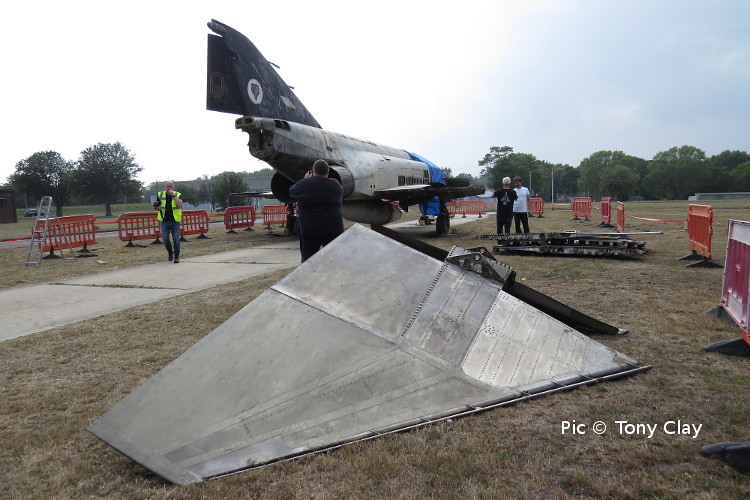
The rest of the weekend would inevitably be overshadowed by Saturday morning’s achievement but that does not mean that what the team got finished through the rest of the day and into Sunday is in any way less vital. More progress on leading edge flaps and panel removal and the RH hydraulic reservoir was also taken out, which is necessary to access the ring mounting bolts. CL tank is still stubbornly hanging on but that should hopefully be sorted on the next visit. Many thanks to all our volunteers for their hard work. We also couldn’t have got this far with the unstinting support of the officers and staff of DFTDC, our gratitude also goes out to them.
BPAGA busy weekend for the BPAG. With one team occupied with ZE360 at Manston, it was up to a separate small detachment to collect the fin of XV494 from Brenzett Aeronautical Museum. This piece was surplus to museum requirements and space is needed for a new items. The BPAG have gratefully made it part of their collection and another piece of British F-4 history has been secured for future display.


Many thanks to Stuart Forth and Mike Davey for giving up their Saturday to sort this one out and to Pauline Judge for the pics.
BPAGMany thanks.
BPAGMany thanks to you both for your kind words. Much appreicated.
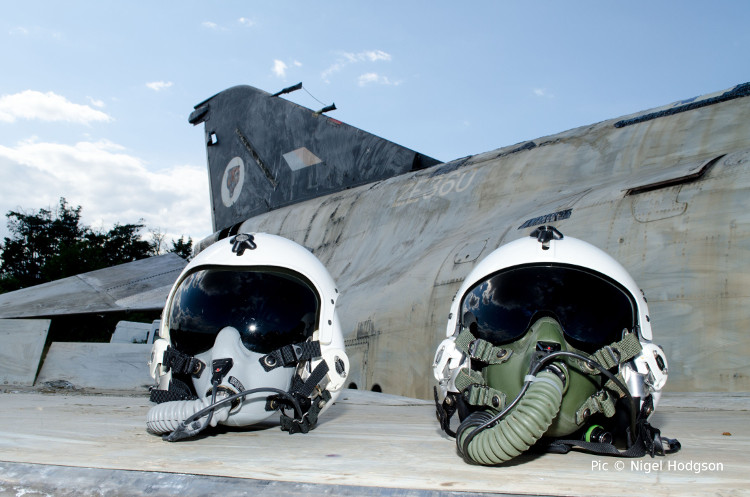
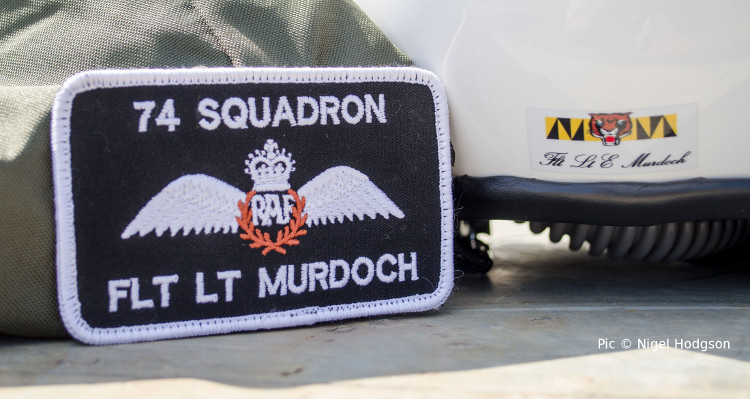
BPAGAnother event that occurred during the recent working weekend at Manston was the handover to the BPAG of the two flying helmets obtained and refurbished by Paul West. These are dedicated to the memory of the only two aircrew lost whilst flying the F-4J(UK), Flt Lt Ewan Murdoch and Fg Off Jeremy Ogg. These have been donated to the Group and after a suitable cabinet has been obtained, they will be ready for display when events and gatherings are permitted once again. Many thanks to Paul for his hard work and generosity.


BPAGThe first day of August saw the biggest working party the BPAG has assembled so far recommencing work on our F-4J(UK), ZE360. The weather promised to be clear and sunny and didn’t disappoint.

First surprise of the day was discovering that the RAF crew from Manston had moved the remnants of a Canberra which was previously just behind ZE360 and cut all the long grass from around and behind the aircraft. This saved us several hours work. Our aims for the weekend were the removal of both outer wings, the fuselage tailcone, replacing the deflated RH mainwheel and progressing access to the internal structure, which needs to be removed to separate wing and fuselage.
One of the major challenges of this project is the fact that the aircraft has stood outside, fairly close to the sea for nearly 30 years, which means that almost every single part is corroded and stuck- fasteners, panels, connections and hinges. For example, it took a couple of hours of concerted effort to remove the RH outer wing as it involved lowering the leading edge flap to gain access and removing the hinge pin (using the hinge pin puller kindly loaned to us by the Ulster Aviation Society- many thanks to them for helping us out). The process was also complicated by the fact we can’t get hydraulic pressure on to lower the flap. The successful removal of the first wing gave a big boost to the team, who by now had an increasingly hot day to contend with. The LH outer wing, which presented some additional challenges to the RH one, came off relatively easily despite the corrosion on the hinge pin. Both outer wings off is a major milestone in the project.


While these tasks were going on, team members were tackling several other jobs around the aircraft. Panel removal is a tedious, unloved but vital task and is made exceptionally difficult owing to the aforementioned corrosion issues. We estimate that around 75% of all the screws have had to be drilled out in the panels we have removed so far, although in the worst cases the only option has been to cut the panels away (corrosion would have meant replacement anyway, so no loss).
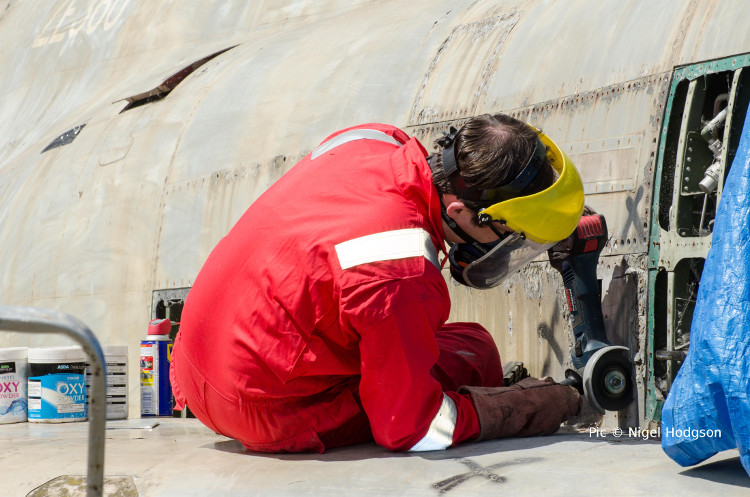
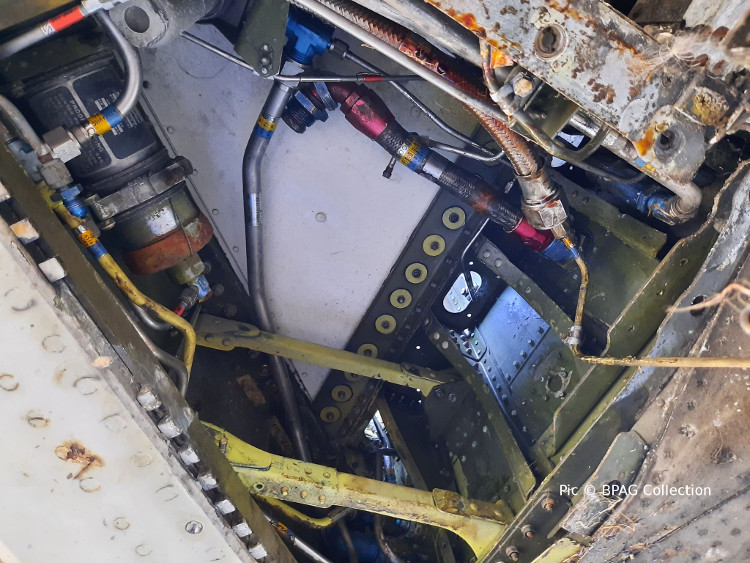
Underneath the aircraft, the team continued panel removals and stripped out a bay containing one of the hydraulic reservoirs and subsequently removed the reservoir itself and a lengthy process of jacking and trestles had the RH side raised enough to lift the landing gear out of the hole to allow the replacement of the deflated wheel.

Transportation restrictions mean that the stabilator has to be removed, a process which firstly means removal of the tailcone. Once again, many screws to drill out, some in the most inaccessible positions and all achieved under the full glare of the sun while perched on a stainless steel surface that you could have cooked eggs on…however, a combination of the stoicism of our volunteers and some professional head scratching meant that it was eventually off and on the floor.


Finally, Sunday saw us visited by two of the remaining RAF personnel from Manston. This included the base commander himself, as he is taking a personal interest in the project and reiterated his continued support and encouragement. Our thanks go out to all the staff from Manston, for their help and assistance. Our appreciation and thanks and appreciation also go out to all our volunteers for all their hard work over the weekend.
BPAGThank you. Nasty surprises are all part of the process, unfortunately but we are keepin our fingers crossed that they are at a minimum too!
BPAGBPAG Chairman Paul Wright was busy on wheel duty again last weekend.
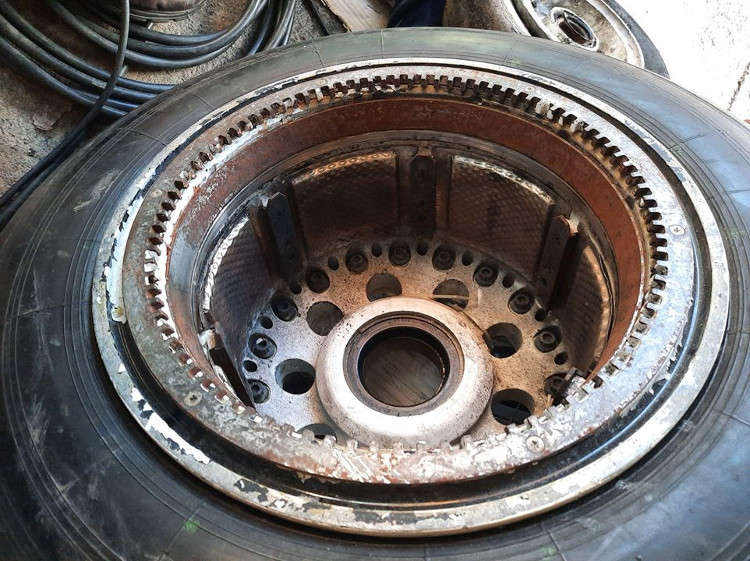
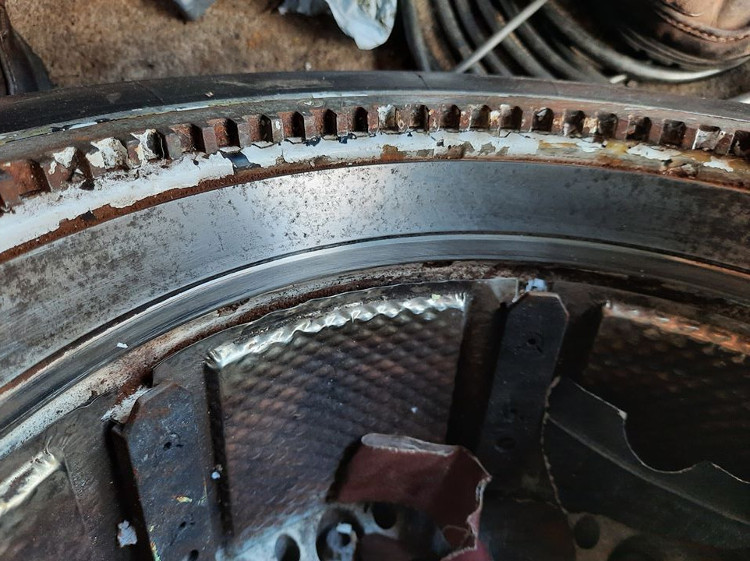
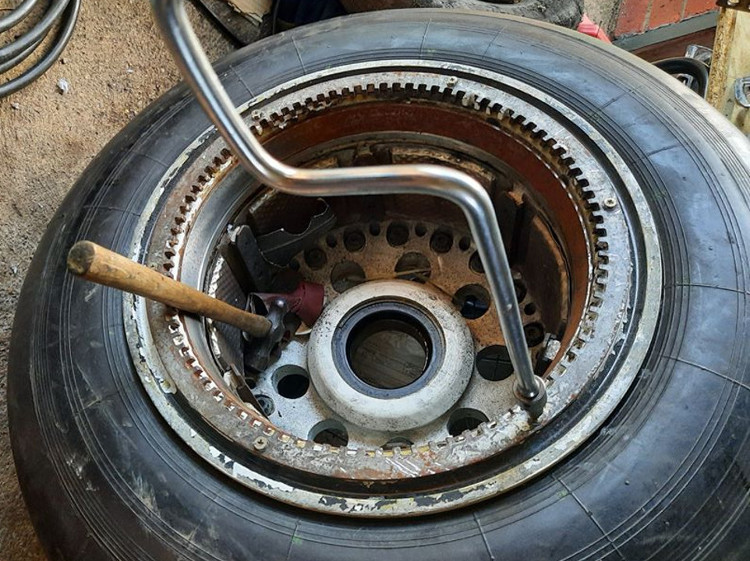
“As mentioned previously, during our recent visit to Manston we found that one of the mainwheels on ZE360 had deflated during the time that the facility was closed to visitors. Fortunately we have another wheel, which wasn’t fitted originally as it wouldn’t hold pressure. A couple of hours work saw the inflation valve removed, cleaned, tested and refitted resulting in the unit now holding pressure correctly. Attention then turned to the wheel bearing and outer race. The captive bearing was inspected and re-greased, nothing further needed. The outboard bearing race required slightly more work however, with surface corrosion being removed by the tried and trusted method of increasingly finer grades of emery cloth, then protected with a coat of synthetic grease. The actual outboard bearing for the wheel is fitted to the brake pack backplate and is still on the aircraft. The anti-skid exciter ring was removed just to keep it safe from damage. All this was a purely functional servicing task, the wheels will receive a full overhaul at a later date”.

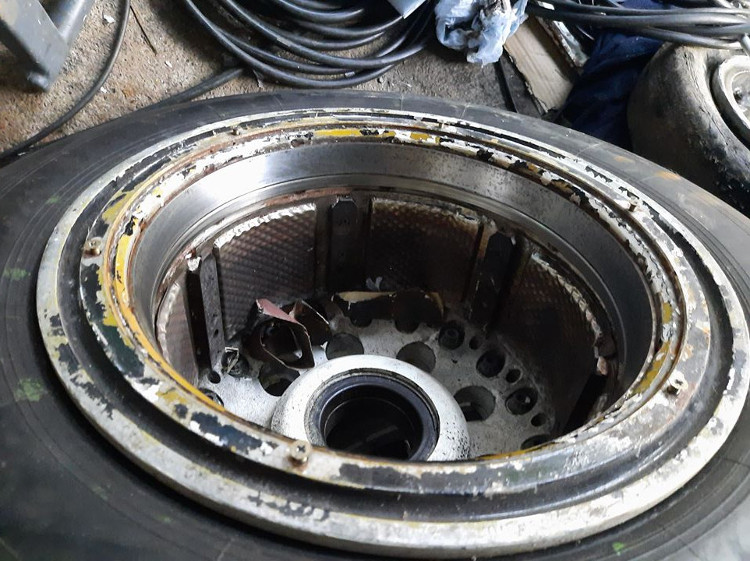
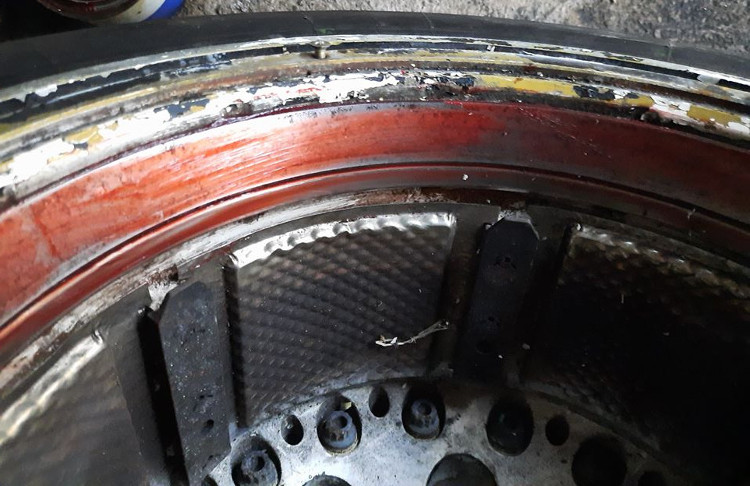
BPAGThank you. Fingers crossed that the rest of the aircraft scrubs up as easily…
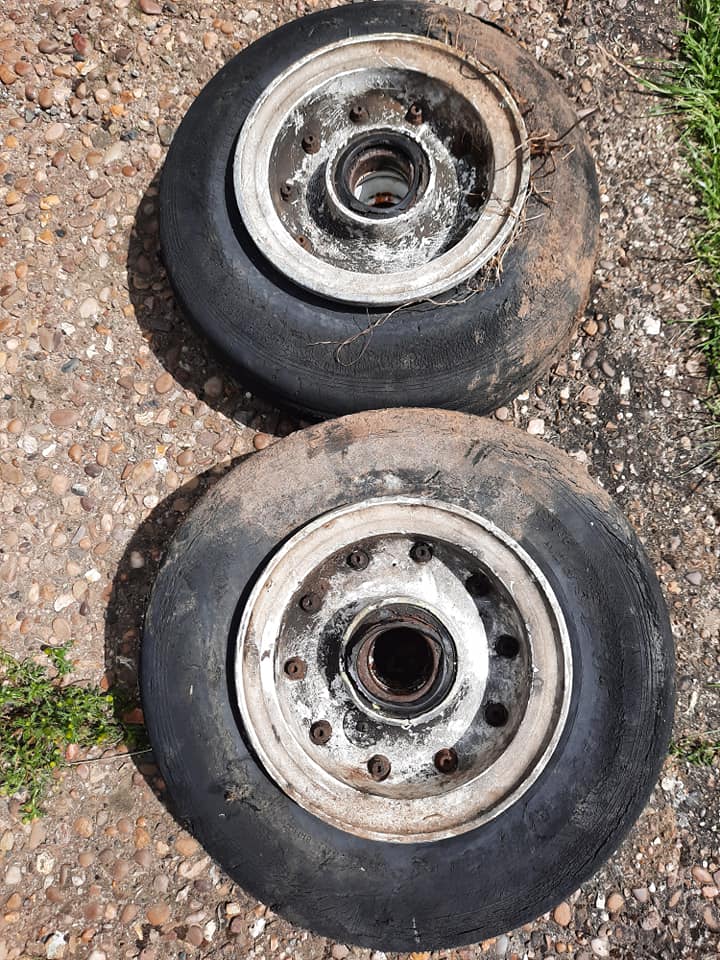
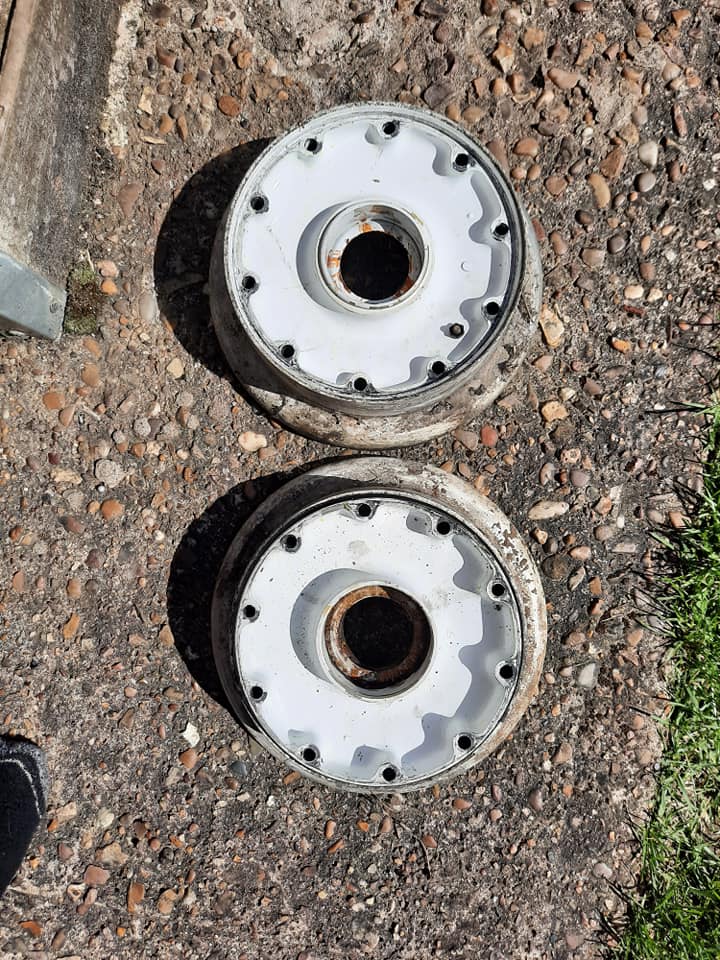
BPAGFollowing on from our recent visit to ZE360 to change the nosewheels, BPAG Chairman Paul Wright decided to strip down one of the wheels to see how they had stood up to 28 years of inactivity. Thanks to them having been previously assembled with anti-seize grease, the wheel half bolts came out easily and the wheel separated cleanly. The internal o-ring seal is a little stiff but undamaged so we will happily reuse it, suitably greased.
Now for the bearings…not such a good story. Due to being sat in one place for so long and exposure to the salt laden air at Manston, some corrosion was inevitable. However, after a trip to the wash tank to scrub away the congealed grease, the moment of truth came and brought with it a happy surprise. The bearings themselves are in relatively good condition, they run freely and only a couple of rollers showed any surface corrosion, which polished off with 400 grit abrasive paper. Now repacked with synthetic grease and although not to flight standard, the bearings are fine for ground use.
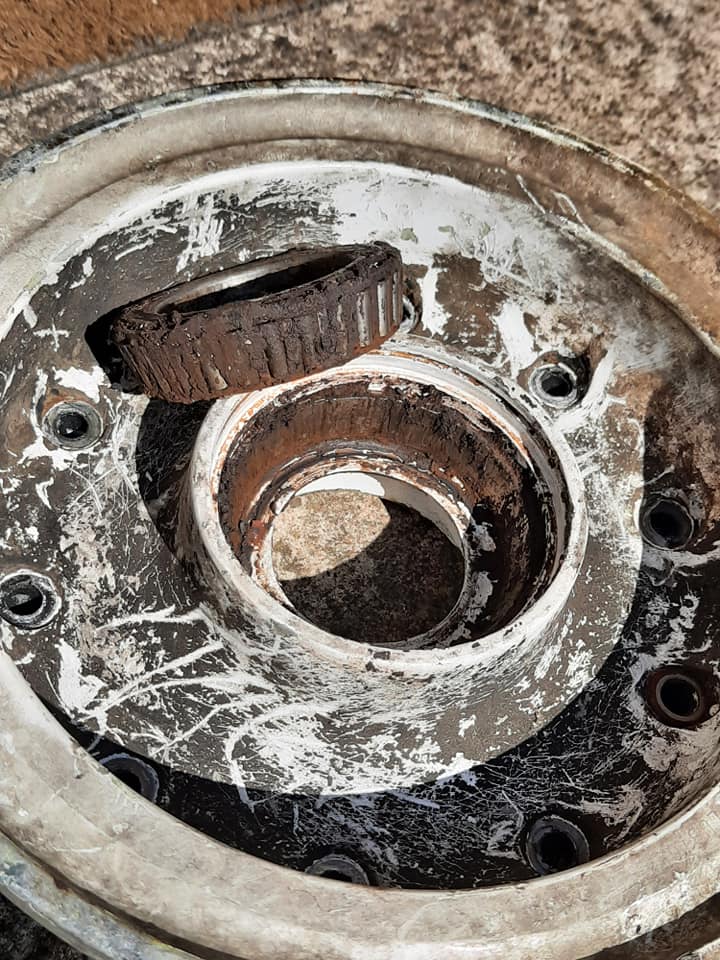
However, the outer races have fared a little worse, as you can see. Using a Dremel and increasing fine emery cloth to polish out the damage, a point where they are good for static use was eventually reached. Replacement races is something to be investigated for the future. The cover (tyre) is only fit for scrap and replacements are on our ‘bits needed’ list. Final task will be to repaint the wheel halves and store it all away, protected from the elements, until the time comes to refit the covers and reunite them with the nose gear.
One further item for attention are the dust/grease seals from the outboard side of the bearing. These are completely gone, so we will have to source replacements.


BPAGThank you.


 Sign In







