 Jwcook
I’m more interested in the aftermath of this competition.
what will we infer from the result??
1.Both aircraft meet the minimum specifications of the Indian airforce.
2. If Rafale wins would it confirm that the Rafale is cheaper to run?
3. If the Typhoon wins it would overturn the widely held belief that Rafale was cheaper?
4. Would the winner be deemed to have the best offset proposals or ToT?
Clearly the technical side is a draw in regard to this competition, so what would be the reason you think your particular favourite lost?
From my perspective if the Typhoon lost it would be due to a large cost difference in procurement and running.
Cheers
JwcookI find the better built quality argument kind of odd.
Its a prerequisite for stealth aircraft that the fit of panels and alignment are to a fine tolerance.
Thats exactly the sort of technology that India would be looking for in the future (JSF adopted it too).
Did you know the BAE Systems Typhoon plant at Samlesbury can measure the moon passing over the factory as the ground rises and falls by a millimeter or two (just like the tides in the sea), and adjusts its calibration to take that into account as the measurements are in the microns.
It took them a while to figure out what was causing the variations.
Cheers
JwcookThen , the Typhoon ‘s canards CAN ‘T be used for roll control (nose too unstable and bad vortices behavior interaction with the wings) .
Under 200kts , a SH can almost out turn a Typhoon when the Rafale will out turn both easily .
It is a matter of design and competence in aerodynamics .Cheers .
Its not a matter of competence, its a matter of choice.
At higher mach numbers the tables are reversed and the Typhoon will out turn the Rafale and SH just as it was designed to.
I would suggest that fighters entering a sub 200kts turning fight are toast.
JwcookThere is more to share when you are two than five and considering Typhoon nation partners lack of enthusiasm for upgrades and taking their orders being part of the consortium is more about sharing the costs than the profits.
HUH!!
You can share more with two than five?, that is counter-intuitive.
to jwcook : that’s your opinion but it is only an opinion and I don’t share it. In this case I prefer to discuss issues that have or had a real echo in the press or specialised press. Not speculation from an individual.
Opinion it may be but its informed opinion and its informed opinion that is backed up with pictures.
Cheers
JwcookI am not playing that childish game of photo comparison as the perception can change depending of the photo age of the aircraft, quality of maintenance etc. My personal experience is that there is no real visible difference, and there is nothing serious that suggest that there would be a difference. This is your own speculation that you suddenly brought tonight.
Er I think there is a difference, you say there isn’t.
I can find supporting hi-res pictures and you don’t want to ‘play’
Oh and I have mentioned this before today… 15th April 2010 on this forum.
Interesting video of the Rafale being made here..http://www.youtube.com/watch?v=douzAeXkjo4
If the Rafale is a bit more ‘handmade’ its a cost benefit to Dassault because labour is cheaper in India!!. 🙂
interesting bit on typhoons here http://www.youtube.com/watch?v=z41I-F3Y0hk at 2:00 they talk about hand crafted aircraft.
Cheers
JwcookIIRC Rafale parts are interchangeable without recalibrating, and that includes engines, and OTOH the engine subassemblies.
Nic
Is that the case for the exterior panels? they look more errr… hand crafted.
they do have a definite variation. in this picture of the Rafale you can see the putty in the gaps.
http://fanakit.free.fr/Rafale_M/JPEG/rafale/content/Rafale_M_photoscope_walkaround_53_large.html
Compare with the fit of the Typhoon..
cheers
JwcookYour comparison is stupid : You are comparing close up of a rafale M after a oceanic deployment to a typhoon from a greater distance. take a rafale C or B in good shape and the assemblage quality and you’ll see is the same if not better.
So the panel gaps get wider with a deployment???, Forget the dirt, look at the panel fit.
JwcookI think Jw means the Eurofighter incorporates Laser and Electron Beam Welding techniques incorporated on F-22/35. Whereas Rafale has ‘zig-zag’ patterns @ structural hotspots.
If the term ‘marginal’ is true and accurate, then it could be ‘MERDE’ for Dassault!
Eurofighter’s levels of production accuracy are astounding, panels and fittings have tolerances equal to 70 microns. This means that parts taken from one aircraft will fit any another, without modification, as was common practice on previous aircraft.
Cheers
JwcookThe cost difference between the two companies is ‘marginal’ when seen in the context of the overall cost of the tender that is more than Rs 42,000 crore. Also, on broad parameters like per unit cost, engine costs, maintenance costs and operating costs, there isn’t much difference between the two.
Source
The tribune India
As Eagle1 pointed out earlier, its not officially confirmed at the moment..
Cheers
JwcookThat’s strange because I’ve seen them close and they do look different fit and finish wise.
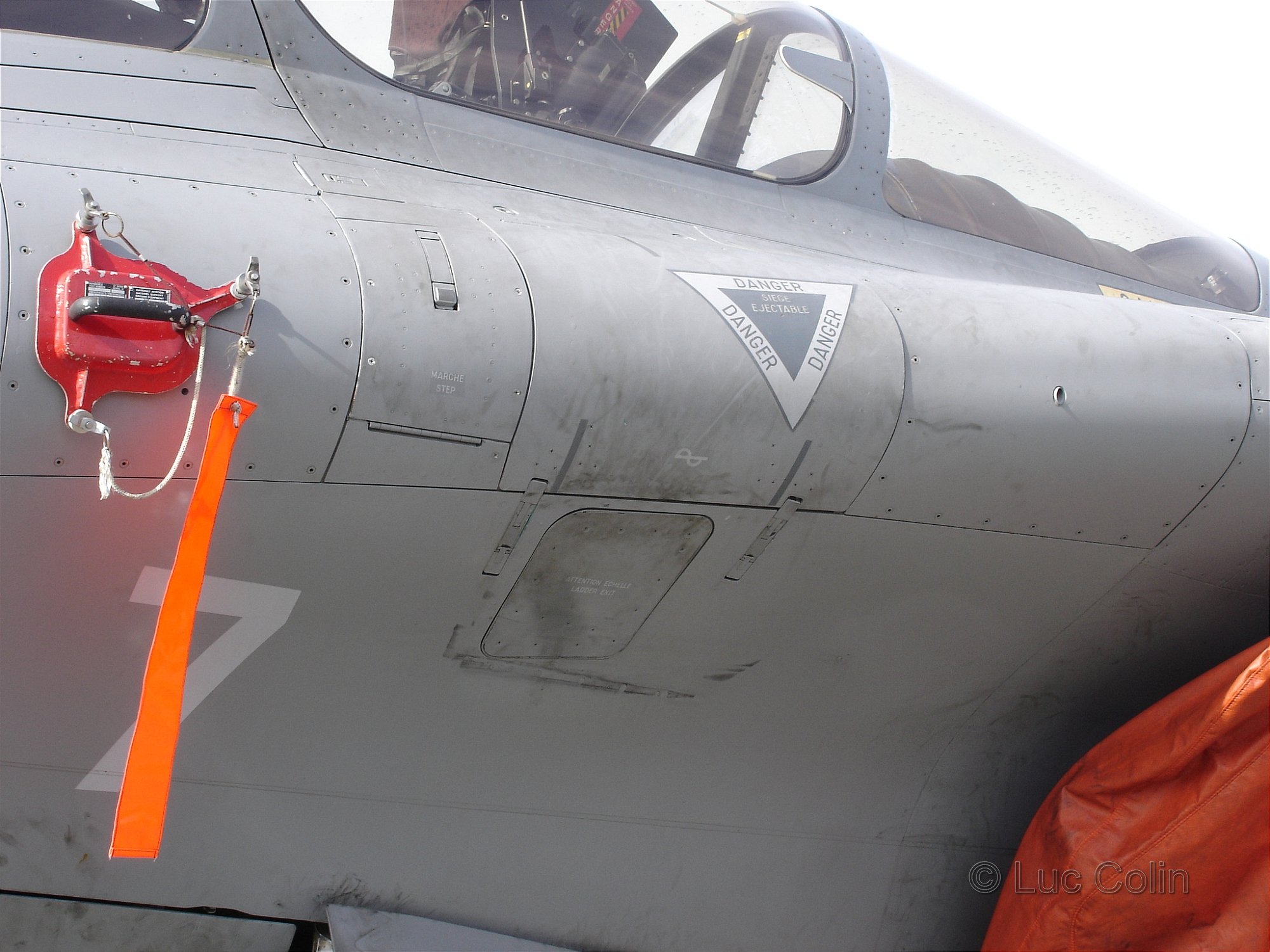
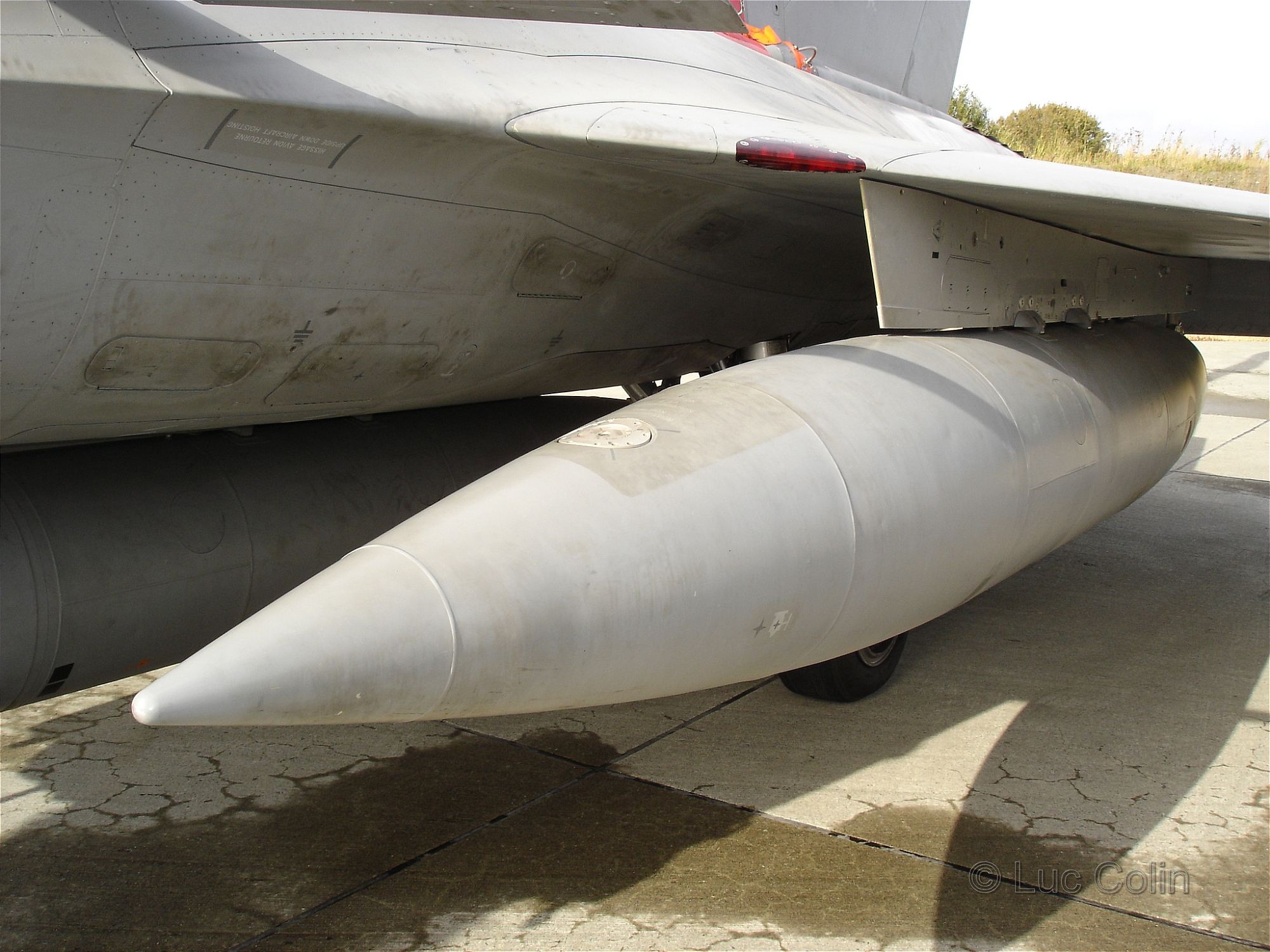
For those that have not seen them up close this may help you decide on fit and finish.
EUROFIGHTER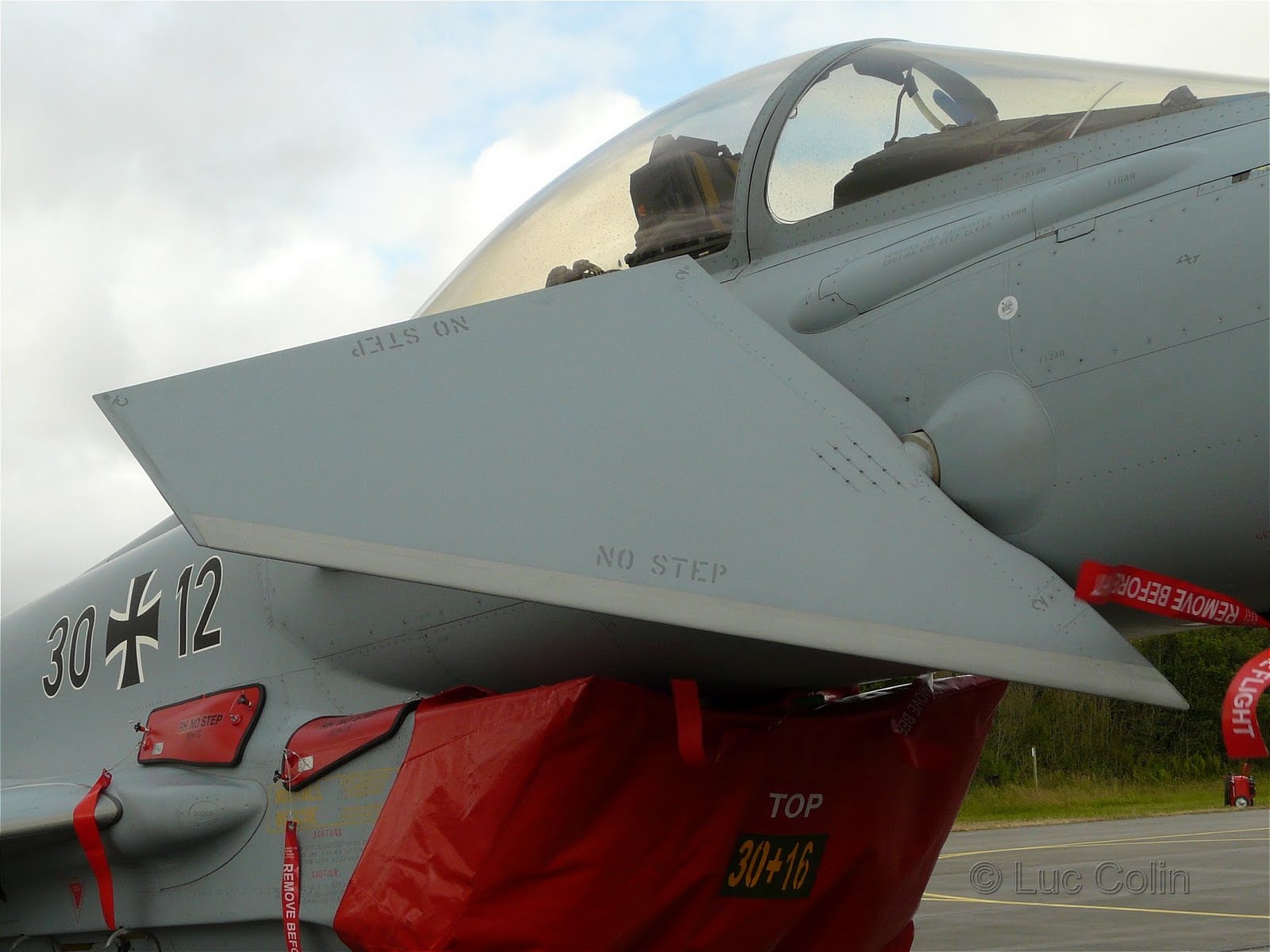
RAFALE

Cheers
JwcookOne thing I think the Typhoon has a big advantage over the Rafale is build technology/quality, the method the Typhoons are built was adopted by the JSF program as it has stealth applications (Fit and finish being important).
If you compare the two close up, the Rafale looks a bit more shoddy.
Renault vs Mercedes if you like, that would account for the marginal lower unit cost.:)
Cheers
JwcookWhy widen on the operating costs?.
I’ve not seen anything definitive for either aircraft, maybe some good guesses.
The apparently marginal lower unit price of the Rafale is interesting as some commentators were picking a much larger difference from the Swiss competition.
The Eurofighter consortium has reduced running costs by 20-30% in recent deals, perhaps to make it more competitive.
So what do we have:-
Rafale ahead on unit cost. (Marginally < 5%)
Typhoon ahead on offsets (maybe significantly)
ToT ??? (But I favour Typhoon here.)
Lifecycle costs (roughly equal)
Strategic value ???
Cheers
JwcookMy guess is (as alluded by Jwcook) the IAF has been offered the ‘partner discount’ of 7% which means the difference may only be marginal, hence the associated costs on spares, tooling, maintenance and operating costs per hour in terms of fuel, manpower, maintenance and lifecycle (6,000hrs/40yrs) is included in L1.
ToT and up to 50% offsets will now be calculated.Imho, it would be very difficult to beat EADS on the combined package.
The $20bn figure probably includes the optional 63 (exercised), this figure has probably only recently been leaked- with the Americans realising the true enormity of this deal hence LM’s 11th hour mischief.
More rumour an unnamed source is quoted as saying
A person with direct knowledge of the matter said that Dassault was “marginally lower” on the unit cost. Mint could not independently confirm this.
source http://www.livemint.com/2011/11/05010231/India-opens-bids-for-combat-pl.html
So Rafale is apparently a little ahead on unit cost!! Personally I’m not that surprised but that may be a shock to some who were touting a large gap.
The ToT and offsets are the key, offsets were a bit of problem for Dassault, less so for Eurofighter GmbH.
from Dassault CEO Charles Edelstenne
– in terms of industrial offsets. Edelstenne acknowledges that the “compensation is really very tough. It will be very difficult to answer to this request.” However, he’s not scared. “We will negotiate,” he says. “First of all, I want to be chosen, and then we will negotiate.”
and from EADS Louis Gallois
Off-sets are not an obstacle for us. Our will to invest in India is high and the off-set factor is not a big constraint.
cheers
JwcookEADS Cassidian released this statement shortly after the opening of bids: Our offer for India’s Medium Multi-Role Combat Aircraft (MMRCA) tender is backed by the four Eurofighter partner nations as well as their respective aerospace and defence industries. It is competitive and designed to deliver maximum value to India. Our proposal to make India a full partner in the Eurofighter programme is fully supported by Germany, the UK, Spain and Italy.
There is very little to be gleaned from this statement except :-
“It is competitive and designed to deliver maximum value to India.
”
This infers to me the bids are very close (something the Dassault was hoping against).
tender is backed by the four Eurofighter partner nations as well as their respective aerospace and defence industries.
This may be a reference to the largeattractive offsets on offer from a larger group.
I maybe barking up the wrong tree, but it makes some sense to me.
Anyone have different thoughts?
cheers
JwcookKovy :
I agree 200% .
Am I the only one to think that the Rafale would get the upper hand on the Typhoon BVR ? Just checking …
Cheers .
200% huh.. well you have to stand up for what you believe you’re not sure about.!! and your intuition nearly makes up for the lack of good judgment


 Sign In







