hello wha about William “Bill” Henry Isaac Atkinson, D.S.C., M.I.D, RCNVR
Lancaster882,
Last summer I had an extended telephone conversation with a Canadian writer who has done extensive research on the TCA’s Lancasters. I will email the Pub with his contact information.
Cheers,
Ken
Brit,
I you contact the museum I am sure they would have no problem sending you a copy by mail. I believe the cost is around $20.00, I was given a copy as a thank you for some research I provided them. Here is their web site http://gmam.ca/
KB 839 did get a fresh paint job and other cosmetic work done to her but it is in need of some anti-corrosion work in areas that are unseen externally. Our Maritime weather does do these historic airframes justice
Cheers,
Does anyone have any interior pictures of KB839?
Here are a few of the interior of KB 839 I took in 1998. As you can see the Crew from CWH and others didn’t leave very much of this once proud veteran (26 operations). The Greenwood Military Aviation Museum just published a book on the history of this airframe.
They even took the control yoke
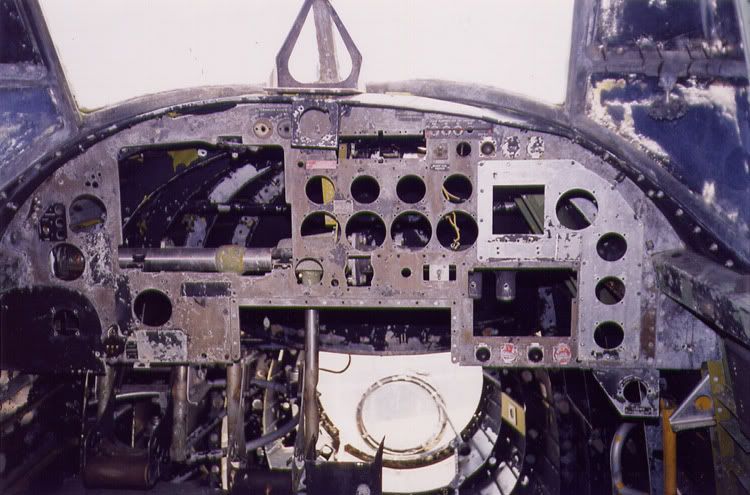
Looking forward from the crew entry door
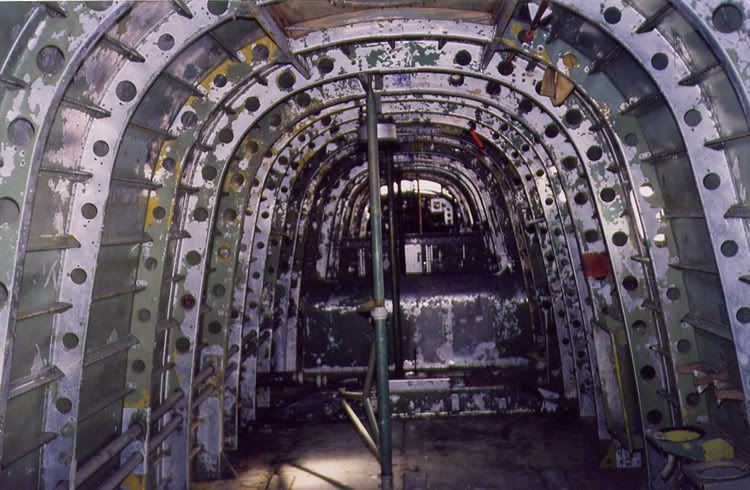
Looking aft from the cockpit area
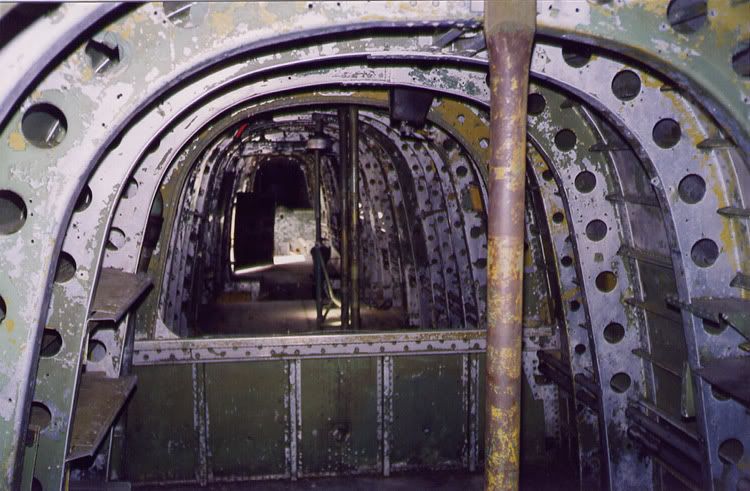
Mid Upper turret ring, KB 839 is the last surviving Mk. 10 that had a Frasher Nash Mid Upper turret.
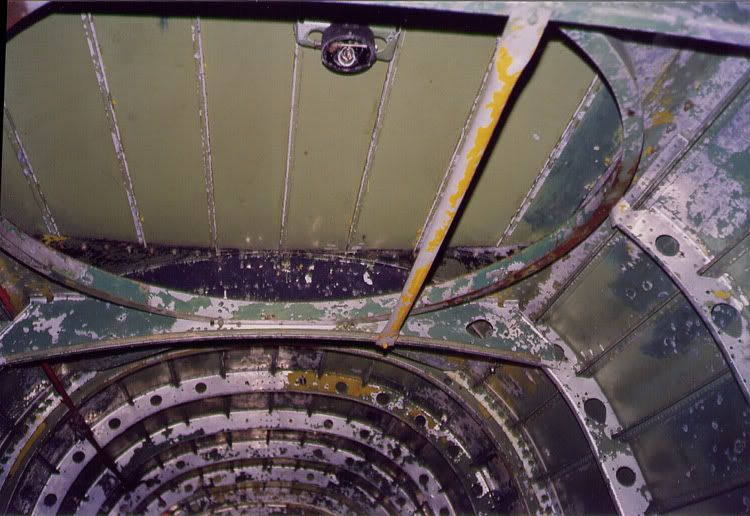
In my opinion that this is the most historical Lancaster located here in Canada and it is a shame more effort is not being made to get it undercover. At least LancasterKB882 and the town of Edmunston is on track to perserve KB 882.
Cheers.
P.S. If you are ever in Nova Scotia I highly recomend a visit to the Spitfire Arms Alehouse, I would call it Nova Scotia’s 4th Aviation Museum.
It is great to see that there is still places like Picton left in Canada. Here in Nova Scotia the wartime building have been disappearing at an alarming rate. The majority of the hangars at the various wartime airfileds are now gone. To my knowledge only Greenwood, Shearwater and Debert are the only airfields left with WW II hangars intact (although highly Modified). This past summer seen the Hangar at the former No. 17 EFTS at Stanley, Nova Scotia was torn down (see attached photos).
Still learning about posting photos, sorry about the size.
Johnreid I have took quite a few photos of the interrior of the Hangar at Stanley before it was torn down. If you are intrested send me a PM with your email I will scan them and send them to you.
This photo taken in 1944
May 2005
September 2005, taken at the annual fly-in
I don’t think it would have been a Mark X Lanc in March 1944, would it?
Sorry Kansan,
I overlooked the date. Lancaster Mk.X started flying on Operations in May, 1944.
Ken.
The Victory Aircraft produced Lancaster Mk.X replaced the Frasher Nash mid-upper turret with the Martin 250 turret on the production line from serial number KB 853 on. A good many of these airframes did see combat with the 419,428,431 and 434 Squadrons.
I beleive some of No.6 Group Halifax Mk.III and Lancaster Mk.II had a single .50 cal MG in the Mid-Under position.
Ken.
The Atlantic Canada Aviation Museum (ACAM) tries to show the role aviation (both civilian and military) has played in Atlantic Canada’s History. We chose to display the Avenger in civilian markings for several reasons. The Shearwater Aviation Museum is located only about twenty miles away from ACAM and are in the process of restoring a true ex-Canadian Navy Avenger and if ACAM to restore theirs in the same paint scheme would be duplicating SAMs example and wouldn’t benefit either museum given there close proximity to each other. Another reason is that Avengers flew in Atlantic Canada with civilian markings a lot longer than they had in RCN markings and the museum wanted to recognize the TBM role in Spruce Bud Worm spraying and Water Bombing here on the East Coast. Forest Protection Ltd. at one time (and may still have) had the largest fleet of Avengers in the world and were a major supporter of ACAMs restoration effort and it is only fitting we recognize their effort by painting the aircraft to represent one of their aircraft.
The Avenger is restored to static condition only even though the aircraft is fully fitted out to represent a FPL water bomber (notice the Grumman Tracker Wheels and Brakes). Many of the aircraft parts were recovered from various crash sites through out New Brunswick. The right wing alone his made up parts of four different aircraft and took approx. 900 hours to restore. The engine was from another crash site dismantled and restored, the only thing missing are the piston compression rings so that the prop can be easily turned by hand if need be.
ACAM is operated by volunteers and operates on a very tight budget. If they were to bring the aircraft back to WW II configuration the price of Turret and Bomb Doors alone would have made this restoration almost impossible.
Kzee
P.S.
ACAM is also in the process of restoring a Consolidated PBY-5A, which will also be painted in Eastern Provincial Airlines colours. The same markings it painted in when it made its force landing in Labrador in 1957.
Hi James,
Nothing has changed with the Hudson fuselage. It is still stored in the compound along with the PBY-5A wings. Due to the lack of space inside the museum and so many other projects of higher priority any work on the Hudson is still years away.
Ken.
The former Eastern Provincial Airlines PBY-5A comming along slowly, The tail section was completed and mounted on the fuselage earlier this year. It still has many years of work ahead of it.
The other big news is that the museum’s Avenger Wings and tail section was delivered to the museum this past Saturday. The Fuselage should be arriving later in September. A group museum volunteers have been restoring the Avenger over the past nine years at Forest Protection Limited base in Fredericton, New Brunswick. The aircraft is restored to represent FPL’s Tanker 24.


I believe the RCAF stopped using radium in their instruments in the late 1950s or the early 60s. A few years ago the Atlantic Canada Aviation Museum tested some of their aircraft on display. Both CF-5A and the CF-104 showed no signs of radiation. Aircraft that had shown some level of radiation in the cockpit were 1950’s vintage or older, including the Sabre Mk. 5, CF-100, Tracker and Lockheed Jet Star. It should be noted that the radiation levels were low and were confined to the cockpit of the area with no trace outside the aircraft.
Peter – you might want to contact one of the DND Museums they may be able to give you a time as to when the RCAF stopped using radium painted instruments. I know the two museums here in Nova Scotia had to test all their aircraft. I believe Ottawa mandated that the DND museums test their exhibits for radiation.








