WV-903.
Found Tools associated with ED-908.
Thanks for your thoughts WV-903. All the pieces were found at ED908’s base airfield some time ago by a relative of one of the crew members.
……….
Further reading suggests that the two circular items on the right of X4 may be cartridge bases from flares or signal pistols.
Any ideas anyone?……….
Still further exploration on the internet confirms that these last items must be one-inch and one-and-a-half inch flare cartridge bases.
Hi BobKat,
RRrrrrrrrrrr !! 🙂 Interesting. So these tools could well be from the Hydraulic Bay final clearout and dumping of gear as the base Closed. So they would have an association with ED-908.
Bill T.
WV-903.Great Stuff Ken. Catch up time.
Hey Ken,
Nice surprise, right out of the blue. 29 Sqdn RAF Javelins, were the last ones operating and that year( I think) 29 Sqdn. also detached to Fighter Command Missile Practice Camp at RAF Valley,UK for a week’s missile firing practice down the Aberporth range. I was a lowly Airframes Corporal operating the Tyre and Hydraulic Bay Support at MPC, so if you were on that detachment, we must have met.
The Javelins arrived overhead to start camp, having flown across from Germany,( Or was it still Cyprus ? ) we saw them in and put them to bed,( luckily, we had one ex-Javelin Rigger from Tengah “Jock” Matherson who took charge of it all and ended up showing even Engineering Officer what was what, as no one had a clue about Javelins. ) “Jock” took me and all other riggers on a before Flight/Turn Round / After Flight Servicing tour of the Javelin. He was absolutely in his element. The pilots and navigators who climbed out were all old ,brown, fit looking,wrinkly aircrew, dressed in KD shirts,shorts and long socks—-lol !!! great people, but obviously on their last tours of duty with Javelins.
We could tell that we were seeing the very last,(even then) of the real old type of Squadron spirit and it was quite a privilege to be a part of this for the week.
I remember the pulsating sound of the Sapphire engines as the Javelins taxied, sort of a”Whoom-Whoom” sound. The fires that broke out in engine bays on engine start up and the very nice sight of the Javelins, whistling in to the overhead break for landings after each sortie. I well realised that we were also part of the end of an era and that week was a truly magic time for us.
I cannot now remember the exact Aircraft that brought in the ground Crew and Ground equipment and spares, It was almost certainly Beverly and or Hastings transports. I did marshall Beverly’s etc, in to FCMPC. Were you on that detachment and if so, what memories. ?
I beleive the Javelins were finally taken out of 29 Sqdn use later that year and the Sqdn. moved onto Lightnings.
Great times Ken, so pleased i witnessed it all. Thanks again for posting these very memorable pics. 🙂
Bill T.
WV-903.Servicing Tools.
Hello again BobKat,
Left this awhile to see if any one else had an idea about these tools. My first thoughts were, steel ,– been in field or under earth since WW2 so most likely Merlin engine. But as no one else has said anything in the weeks, they cannot be Merlin stuff, fine chaps out there would have recognized them immediately. So assuming they are Aircraft tools, and a deafening silence reigns, I think they are Hydraulic Bay Servicing Tools. U can see the peg spanners / Sockets and wide flat spanners that I recognize as types for servicing Hydraulic Jacks/ Main Wheel Nuts and gawd knows what else. To get a general jack to bits means taking off end plugs and adaptors, unscrewing the gland nut assy. (using that turreted socket or peg Spanners, but then again, peg spanners might also be needed to get them in and out of aircraft situ.) While the wide flat spanner used to hold /lock parts while U twist other end off. These hydraulic components come in all sorts of shapes and sizes.
The other thing is that I remember looking through the tools sections of the various Volume 3’s of the Hyd. components Air Publications many years ago and I still remember seeing the rows of pics. of this sort of Tools as I was searching for the correct item needed to service a new jack /etc item arrived in Hyd. Bay at RAF Wyton (Back in the days of the 543 Squadron Valiants/Victors—Yeahhhhh !! I can hear the Ex Valiant men cheering from here —lol !!!:D;) ) and we had Hydraulic Power Bay servicing rigs (Static in Bay) that one day while servicing the rig, I found loads of trays in back of this rig, full of adaptors that were marked as:- Lancaster– Mosquito–Halifax–etc,etc. (By adaptors, i mean Hydraulic pipe fitting adaptors, so rig could be used to test them. ) This surprised me (1961) as I thought all ww2 stuff was gone by then.
So that meant, these rigs were used back in WW2 and that makes U wonder about these tools u have found too BobKat. They cannot be too far away from my thinking on this. No way could I hazard a guess at what Aircraft Component your found tools fit, but if you could find copies of those types of AP’s I saw back then U might be able to measure up your tools and find a match. But me-thinks U are in for a very ,long, haul.
So where were these tools actually found ? And are they anything to do with Lancaster ED-908 crash site ? or did they come from another disused WW2 RAF Bomber Station ?
Also have noticed these type of tools pop-up in the aircraft parts for sale in evil Bay from time to time, but I’ve never seen any takers. (Not surprising really ).
Sorry to open up a can of worms and still no answer to your question, but maybe this could be where to look. As before, all the best in yours and French collegues’s endeavours to catalogue ED-908’s remains and add more to the story of those final minutes. And salute to the crew.
Bill T.
WV-903.1″ Wide WW2 Webbing Buckle part.
This is best I can find,(so far) BobKat,to illustrate what that corroded “Toothed” Claw Locking piece came off. In this webbing the lock claw is not toothed, but it is exactly same type of harness/webbing. From 1944 WW2. You can see the secondary strap retainer and the Webbing width is 1″. Even though some personal webbing straps were this width,( same as the aircraft location /hold straps ) there were differences,for the various uses.
BillT
WV-903.Spot On Bob Kat !!!
Thanks Peter. It seems that we are all agreed that we are not certain what our metal strip is!!
Before moving on to something different, I should like to attach a picture which appears to show the split cotter (post #205) in place. The detailed photo of part of the camshaft of a Merlin 28 engine is taken from commons.wikimedia and what I assume to be the split cotter is visible where circled beneath the end of the cam follower (see post #203).
WV-903, could you please confirm I have this right?
Hello again BobKat,
That is it exactly !! Good call. The spring cap to right of that will also have same set-up as will rest of engine. Well I just learnt that the Merlin is an Overhead Cam Engine. Makes sense for max. performance !!
To remove the valve for engine strip down,after taking off the overhead camshaft and removing cylinder head Block, a Valve cap/spring compressor would be used to depress spring so that valve colletts can be removed. (Don’t lose em–lol !!! 😮 ). allowing valve to drop out and springs/ Caps to be removed too.
So,the valve split Colletts or Cotters are an extremely important bit of Merlin Engine design,fulfilling several functions.
Good stuff !! keep pics. coming.
BillT.
WV-903.OO—Place looks same (As in 1985) less planes.
Interesting !! Thanx for posting these ZH. My visit there in 1985 was a right good eye opener of rare stuff,(Inside) remember the Fairey Battle, Beaufighter ?and heck knows what else, I remember enjoying my visit very much and the rotting remains of an Anson Centre Section just outside main Museum door, covered in weeds. 😮
Bill T.
WV-903.Jeremy Chapman.
Hi Bill,
I guess that you are my only link to Jeremy Chapman, but it is a long shot and a long time ago – any pointers welcomed. I too was at Wyton – ARSF, ASF and 58 Squadron – thence to RAF Seletar on Bevs, RAF Gan and Thorney Island before my Fitters Course. It seems that life as an Apprentice was a bit tough compared with Boy Entrant – my entry actually stopped “bull boys” – 32nd tried to reintroduce it but got short shrift from us – one massive bed tipping attack saw to that!
Hello Dave,
Logged in this afternoon and I was surprised,but very pleased to see this thread still running. Now that is interesting about about Jeremy Chapman. You’ve rung a bell somewhere down in my sub conciousness, so after a couple of brew ups and a long think ,(everything takes longer these days-lol 😀 ) The name does seem familiar,and there was another small,very young looking Apprentice in 88th who virtually joined up with me and was in the same ITF Flight for those 1st 4 months, who I’m 80% sure was known as Chapman and the more I think about it ,it has to be him. He was a year younger than rest of us, had a sqeaky voice, and a good laugh that got him noticed.( so the others were always taking the mickey out of that,) but he was a happy young chap, we got on well. None of the bad side of Halton Apprentice life I’ve described previously ever seemed to get him down either. I think we called him Jerry, and as he was 4 numbers behind me (In our Service Numbers ) thats how we queue’d up to receive them on initial signing on. Pretty sure also that he was an Engine Fitter,and also quite certain he passed out to J/T std. before being posted away. (I have no idea what happened to him then, never seen or heard anything.) I never got a copy of the Halton Magazine that covered our 88th Entry Graduation, but you can bet our names will be in there. I have a typical Entry Flt. RAF picture taken in 1958 that I can pick him out on,that I’ll scan in and send to you. Of course we have our big SD Hats on, but somewhere, I have another one with hats off ,so will look for these. I’ve no individual pics. of Jerry though.
So all a long time ago now, not much help really,the clincher being his Service Number, last Number 4 behind mine. if you do find out more about him and what /where he is today, please let me know,it would be great to pass him the usuall “Brat” greetings.;):D
Yes Dave, Wyton ,late1962, I was in ASF Servicing 58 Squadron Canberra’s. T ?’s and PR 9’s If I remember correctly.
Bill T.
WV-903.Looks Snap fastener Back to me too.
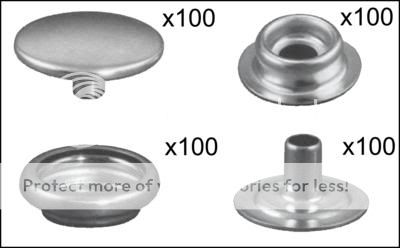
I’m still convinced that it’s the back of a snap fastener.
(Bottom right)
Must admit, I suspect it is the back part of a snap fastener too. (Used on Flying Gear–Seats–Survival packs–,Navs curtains,etc,etc. )
BillT.
WV-903.Valve Split Cotter. !!
Many thanks Air Ministry – an excellent diagram of what we have found – good to have an exact match from the AP.
I have just returned from a trip away which gave me the opportunity to visit the Yorkshire Air Museum and have a closer look at the gun turrets. I will post a few pictures separately.
In the meantime, WV-903, I have heard from France and attach a close-up picture of item ‘H’. Laurent says that there appears to be ‘une clavette de soupape’ which I have translated as ‘a pin valve’ on the side, and that the material seems to be bronze or brass. He wonders whether the piece might be a hook for closing a wooden box that contained a compass or gyroscope?
Finally, turretboy, Laurent confirms that the part you questioned is ‘un rivet en inox’, a steel rivet.
Hi BobKat,
Thanks for posting the pic. here. That lower item is definately a valve Spring Cap retaining Cotter, in the old Motorcycle world, they are known as”Split” Cotters. It would be made of a sophisticated steel mix.
But whether it is Merlin Engine, I know not. The catch above , does seem to be what you say.
BillT.
WV-903.Thanks for Info Mark.
Many thanks chaps for keeping us informed of this very important WW2 event Anniversary and also for the excellent links. I’ve always been fascinated by the exploits of the RAAF/ RAF/US Air Forces,etc out in that hot bed area and have many books covering actions,etc. The Milne Bay P-40’s repulsing the Japs so close you could bat a cricket ball at them for one. 😮 It’s really good to see that quite a few important planes have been saved too now for posterity. Just keep it all going and keep the info. flowing this way too.
Spitfire Ale time now me-thinks and i’ll toast you guys efforts.
Bill T.
WV-903.Item above C.
Back again !!! lol !! Yes, those pics. will be interesting to look at and draw more comments Bob Kat.
Item H I’m refering to is the small steel,curved squarish shaped object to right of that what looks like a bent up peg spanner. Any chance of pics. of underside of it and another view of C too. Item C is a steel substantial shaft with that catch on it. Must have been to lock something very strong,like a spring under tension. Wonder if it is something to do with Turret Guns ?
Also, that chain could well have a manufacturers name stamped into side plates. (Reynolds Chains, UK. have been making these for many years now, don’t know if they still are. )
I’m still searching for pics. of a complete toothed Buckle used on Webbing.
BillT.
WV-903.Nice selection and clear pics.
WV-903 – an unexpected response on something new – many thanks.
Fasteners
We have several fasteners amongst the wreckage found. I attach a picture of the type which seems to have been used to hold the flares in place (top left intact, and top right with a bit of the webbing still attached next to some electrical pieces and that piece of window – or is it a piece of a capacitor – see my post #116 and #147 from Derbyhaven – any thoughts anyone?).
In the middle row are pictures of pieces in situ, left and centre, plus a picture of the ladder (right). Could your toothed bit come from the fastener at the end of the ladder, for example? Do you have any pictures of a complete fitting?
In the bottom row is another sort of fastener – the bottom hinged one (along with a button and a parachute fastener), the purpose of which is unknown.
Fuses and bits
I attach a better view (from W3) of the piece you were querying ‘A’, and several other items including a broken fuse ‘E’. We have already identified the items circled in red (see post #22) and I have marked the others with identification letters to facilitate your reply.
Over to you!
Hi BobKat,
More good stuff here. Like the pic of that different webbing fastener,(Held flares in situ-good one). The Toothed lock I mentioned would be on webbing about 1-1/4″ width and beside a brass or steel Buckle,there would be another pivoting strap hold wire in the set-up. I don’t have a pic. but will go looking. Its possible these would be used on the ladder mount. I seem to remember our ATC Unit many years ago had these strap locks on the .303 rifle racks. (perish the thought now,H & S would have a fit. 😮 )
————–
That piece marked A, that is a really good ,clear view, yes, same as corroded one in other pic. This one is remarkably good condition. It has to made of brass or allied metals. Definately NOT a fuse holder. The main body has Knurling machined on it, that says it is to help it be gripped by, or in something. So maybe the body was rammed into wood.. The sheet fabrication looks copper/brass, the nut and screw in thin fluted knob certainly are and I’m certain a thread would be attached to that Knob and is screwed into main body. This item is meant to be dis and re-assembled as required at any time. (On Servicing or Aircraft Flight.) heavy materials too. I have no idea what it is from though. Only thing that comes to mind is it could be something for electrics,– heavy duty. Maybe batteries or associate system. :confused:
—-Piece marked D is similar, knurling machining on body, but that has nut and bolt on for more permanent fixture.
—
E is a fuse -yes and B ???? Brass something. but H down at bott. right of pic. looks very much like an Engine Valve Spring Cap Cotter. 2 of these press into cap (that holds spring in ) then are locked into ridge on valve stem top. All internal combustion Engines use these. Must be out of one of ED 908’s Merlin engines. That must also mean other engine bits are around that area too.
Another view of it would show the other side is dished to fit valve stem(If it is a cotter ).
The chain section at top of pic. is almost certainly from a part of the flying controls and my hunch is part of a trim system. The chain would go around an operating sprocket and be attached to control cables at either end.
So a nice selection of parts found.
Bill T.
WV-903.Buckle Strap toothed lock.
Bob Kat, that toothed locking piece in your pic. 1 on this page ( 189) looks like a typical period Buckle strap locking lever. It pivoted about the 2 arms and you can almost see one pivot point left.(Other one probably corroded away. )
These were used on lots of Army Webbing type equipment, not necessarily personnel gear but more for securing heavier equipment around vehicles. They were definately used on aircraft too. They idea was that you had a reasonable chance of quick-ish release as item would be stowed to be used for something. So these heavy straps would secure:- Crew Ladders–Fire Extinguishers–Mobile Oxy packs,–Poss. Crew parachute packs,etc,etc.
But what this would have held in Lancaster ED-908’s last flight,??————-Over to you slueths.
Also,that Fuse looking thing on right (close) of the Red fig.1—- Could be a fuse holder —–or it makes me think of a Window catch /Lock. It seems to go through a piece of Window edging. Wild guess here,—-any chance of a clean-up and closer pics ?
Bill T.
WV-903.Once again, great detection chaps.
Thanks for your thought, Peter. Maybe others will follow?
Air Ministry, that’s a fascinating graph – many thanks for that. As you say it establishes that ED908 was likely to be carrying the Monica system.
Ow-eee !! again, ain’t it a great feeling to get a gritty problem sorted by co-operation and help. Spitfire Ales all round and applause too. A bit late now, but here’s a pic. of a new one of these Plugs. ED-908 ‘s item probably had a lesser amount than 10 connecting holes and pins, at least this gives you an idea.
Looking forward to see what next our French stalwarts will find and the pics. we can scrutinize.
Bill T.
WV-903.Yes !! Definately.
Hi Bill
The tube on the panel is were the wing geodetic structure is bolted onto, there was another tube on the other parallel edge but has rotted off. The construction is similar to the wing leading edge and trailing edge tail fin and tail plane. The thing that confused me was the colour I think the panel turned black because of immersion in salt water. The photo is MF509 and shows the constuction
Ian
Hi Ian,
Got yer on that, yes !! U can see it OK. If you look back at those other pics of that panel, sure enough, that one slotted tube left shows at least 6 fixing holes that match with your pic.
This panel is certainly as you say, and it is bent consistent with impact and one slotted tube is ripped/ rotted off.
Good conclusion. 🙂
Bill T.


 Sign In