 Phaid
PhaidApparently the RN is in fact studying the concept of using F-35Cs as buddy tankers.
But yes as DJCross points out, today’s tankers in the USN, including Hornets, are only useful as recovery tankers. The days of escort tanking went out with the KA-6D (and were pretty marginal even then, only the KA-3B was really useful in that role). Hornets don’t have the endurance, even if on paper they can haul a lot of gas. And the now retired KS-3 never had the altitude or speed performance to accompany strike packages. Still, a recovery tanker can be a lifesaving asset on a carrier.
PhaidThe USN had a dedicated tanker in the ’60s and early ’70s, the EKA-3B / KA-3B:

Unlike every other naval tanker (e.g. the KA-6D, or fast jets with buddy tanks) its fuel load was internal. It could offload about 28,000lbs of fuel at 450+ nm.
Dumping the fuel was not a concern unless there was an emergency situation — they launched and recovered as part of a strike or an air ops cycle, so the gas was usually put to good use.
PhaidUm… Mirage IIIG was a heavy, variable-geometry (swing-wing) fighter, having almost nothing in common with the 2000 in terms of planform. It would help if you actually read the link you pasted.
Dassault then worked on several new aircraft concepts evolved from their “Mirage G” variable-geometry experimental prototype, resulting in a sophisticated design with the designation “Avion de Combat Futur (ACF / Future Combat Aircraft)”. The ACF prototype was almost complete when the French government canceled it in December 1975; the ACF was simply too big and expensive. However, Dassault had been considering other fighter options in the meantime, partly because the export potential of the ACF was unpromising.
These alternatives were smaller, simpler, and cheaper than the ACF, and took the form of a number of “Mini-Mirage (Mimi)” concepts developed beginning in 1972 on a “back-burner” basis. These concepts congealed into an aircraft known at first as the “Super Mirage III”, then the “Delta 1000”, “Delta 2000”, “Super Mirage 2000”, and finally just “Mirage 2000”. When the ACF was canceled, Dassault was able to immediately offer the Mirage 2000 as an alternative, and the French Defense Council accepted it. It wasn’t exactly an even trade, since the ACF was a strike aircraft first and an interceptor second, while the Mirage 2000 was exactly the reverse — but the Mirage 2000 was much more affordable.
PhaidAgain, your history of the IIIG/ACF vs Mirage 4000 is completely wrong. But don’t take my word for it, read what Dassault has to say.
The decision to launch work on the production of a twin-engine aircraft concurrently with the single-engine Mirage 2000 was taken by the authorities in September 1976. Since the Mirage 4000 is a technological upgrade of the Mirage 2000 (except the front part of the aircraft which is equipped with a fixed canard ancillary wing, dismountable and adjustable in flight) – the design and construction of the two new aircraft were carried out simultaneously.
French aeronautical manufacturers self-financed the development of the Mirage 4000 in particular Avions Marcel Dassault-Breguet Aviation which was responsible for the airframe and supervised the assembly phase. Jet engines were borrowed from the government under the June 21, 1978 agreement with the Minister of Defense : the Snecma M 53 engines were taken from the stock of the Mirage 2000 program.
The ACF was a completely different program, and was abandoned before the 2000/4000 design came about as a more lightweight and cost effective alternative later on. The ground-attack requirement was, again, a different program which ultimately resulted in the Rafale.
PhaidYou are confusing the ACF, which was to be an evolution of the Mirage IIIG, with the Mirage 4000. Your entire story is simply confused. The ACF went nowhere, the Mirage 2000 and 4000 were based on the same design and developed simultaneously, but whereas the 2000 was specifically aimed at a AdlA requirement, the 4000 was a privately-funded expansion of the same design aimed at export more than at the AdlA.
PhaidActually the AdlA wanted the M-4000 but it was too costly, so Dassault gave them a scaled down version the M-2000.
Not true, the Mirage 2000 flew first and the 4000 was a privately funded evolution of the same design that really depended on export sales, specifically to Saudi Arabia. When it became clear the Saudis were not interested, and France was satified with the 2000 for their air defense needs, they turned their attention to the Armee de L’air light ground attack requirement, which ultimately grew into the Rafale.
PhaidAnd the Mirage 2000N and now the Rafale replaced the Mirage IV in the nuclear deterrent role, so size is obviously not really a reason either.
Basically the Mirage 4000 did not meet any French needs that were not already met by existing French aircraft, so its only real purpose was R&D and export hopes. At the time there was plenty of market for Mirage 2000 sized fighters, so investing in the 4000 just to be able to compete in the heavy fighter market that was already American dominated was not seen as a good idea.
PhaidNow, tell me, with the exception of “not wanting the french aircraft, which IMHO will be the sole choice criteria, should such situation occur, why would the british turn the rafale down in favor of the SH?
Three things leap to mind: cost, munitions stocks more compatible with Typhoon and fully compatible with the eventual F-35s, and much greater potential for sharing training and logistics with the USN. The US has more decks to train on and more squadrons to exchange with, and even France has all of its naval aviators trained in the US in any case.
As far as capability, realistically each has its strengths and weaknesses, and the political and cost advantages of the SH are overwhelming.
PhaidA little détail, at the beginning of 80’s, the french navy had one plane in mind to replace the F-8, the Hornet.
IIRC, some discussion even happened at that time with USA but Dassault (among others) paid attention that nothing could put a shadow over the ACX/Rafale, not even renting some F-18.
It happened twice, actually. Once in the 1970s with the F-18FL
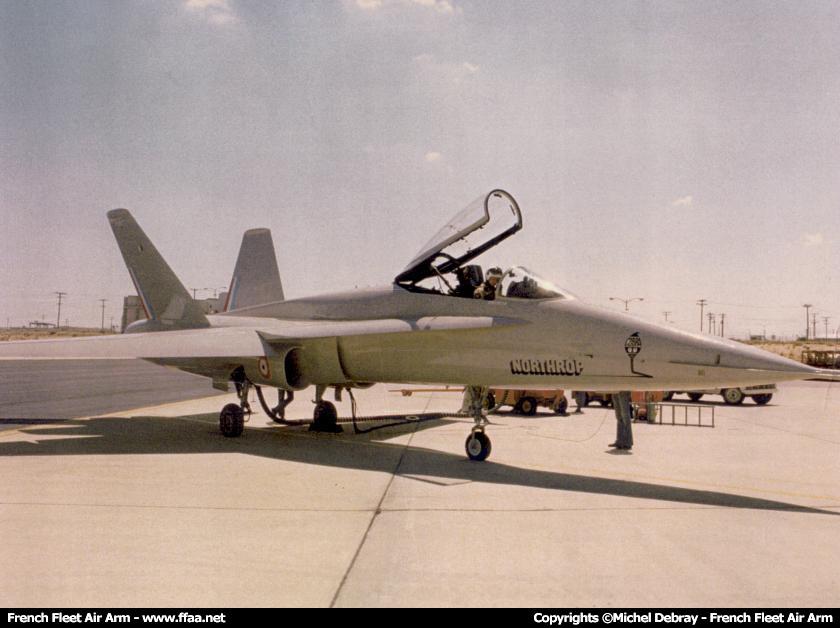
And then a second time during the 80s with the F/A-18 proper. It’s an interesting story, there’s a writeup of it here.
PhaidRegards the Metz quote…if this is the same Metz as the well known test pilot, then his comments are well appreciated. Perhaps you could provide the link to that quote.
It is indeed the same Paul Metz, the full story is here.
PhaidFalklands II: Electric Boogaloo. Apparently calling Prince William a ‘Conquistador’ has struck a nerve.
PhaidThe Super Hornet, already equipped with a top-shelf engine running hotter than EJ200, failed a basic performance parameter necessitating a significant further investment in the powerplant.
:rolleyes:
Again, the same is true of the Eurocanards. Whether in terms of powerplant, radar, weapons, etc, none of the aircraft coming off the assembly line today are RFP-compliant. The myopic Rafale needs a new radar and a raft of electronics upgrades, the hopelessly outdated Eurofighter needs a new radar and a slew of weapons integration, etc.
The obvious difference all along is that the Europeans were all willing to throw in everything including the factory key to get this deal, whereas the American government was much more arm’s length about it. Neither Boeing nor Lockheed could offer guarantees that ITAR would not get in the way, while on the other hand Sarkozy and Cameron were both glad-handing assurances all around. The end result being that post-2020, those wily Indians won’t need the Europeans at all any more, they’ll have the cow and the butter. 😉
PhaidBoeing had to include the expensive EPE engine upgrade for Super Hornet — where the current engine isn’t exactly lacking in thrust as evidenced by Gripen NG’s Mach 1.2 supercruise — to even meet India’s requirements for transonic acceleration.
Right, just as Dassault and EADS had to include the expensive AESA radar upgrade for their aircraft to even meet India’s requirements for sensor performance. Point blank, none of the proposed aircraft in their current production forms meet the RFP requirements. So sure, the F/A-18 is “fat”, just like the Rafale is “myopic”. Yawn.
PhaidPakistan and India lost more men and had more casualties in that “border skirmish” than Germany has lost in its existence since WW2.
Not to take away from your post, but that is an absolutely hilarious statistic to quote. Personally I’d have used “than the Peruvian Coast Guard has lost since WW2”.
PhaidI dont think Su-30 production is going to end in 2017.
what will happen in reality that Rafale is super expensie and complex so the induction will be even slower than BAE Hawk/Su-30. same thing will happen with LCA-MK2. So nothing else Su-30 will be continued to be built.
without substational investments i failed to see how Dassault can produce extra 40 Rafale in next 4 years. BAE with EF and Boeing with F-18E cannot do it for new customer.
First 40 will not be delivered before 2020.
Not sure about the continued MKI production, but it’s pretty obvious you are correct that the first 40 aircraft are unlikely to be delivered before 2020.
Indigenous production of the 108 locally produced aircraft would not begin until 4.5 years after the contract starts anyhow. I am not sure how Dassault’s proposal is structured, but Boeing’s in 2008 went like this:
This was 4 years ago, so you have to shift all of the dates. I imagine Dassault’s schedule is very similar, given the parameters of RFP milestones regarding time and money, IAF force structure schedule, etc. Of course, all of this is still subject to extensive negotiations. I don’t see the contract being signed in less than 18 months. So given that, the first 18 aircraft would not have been delivered until 2018, which leaves 2 years to produce a further 22 aircraft to reach 40. Possible, certainly, but that assumes no slippage anywhere on either side of the ocean, which is not likely.


 Sign In







