 asp
aspThe B-57 was what the B(I) 8 should have been
I am big fan of the Canberra – but what the RAF did with the B(I)8 was unconscionable. It was manifestly unsuited to the role of an interdictor – for many reasons. Only the flying qualities and robustness of the basic design allowed it to stay in service so long. But the B-57 was the true interdictor version – with all that an properly funded RAF design would have wanted.
The Indian AF flew the Canberra in its offensive role far longer than the RAF or any other service. One of the foremost exponents of the Canberra in the IAF was Air Cdre Pete Wilson – and here’s what he had to say about it.
““The Canberra was a strong, docile, easy to fly aircraft, but it was obsolete when the IAF bought them. It had been made obsolete by the transonic fighter aircraft, which had been introduced at the same time. She could not survive as a level bomber in the day and use at night against relatively small targets such as airfield structures required radar bombing and marking equipment, which the IAF did not have.
It was effective against specialist targets like Badin during the day, but night use like the PAF B-57’s were not possible because of the very poor light transmission of the windshield. Night shallow glide attacks on unlit ranges were an exercise in bravery, which brings me to the subject of IAF Canberra B58 navigators. They were unique in the world as aircrew, who flew on operations without a chance of getting out of the aircraft in an emergency. It was reprehensible, that the British aerospace industry should sell such aircraft and that the Indian Govt., should buy them.”
The above excerpt is from this article on Bharat-Rakshak.com and is from a man who was awarded the IAF DFC equivalent for what was one of the most daring raids of the 1965 Indo Pak war (see this article).
aspAt least the Spit wasn’t put on Ebay like Vulcan XL 391, which I believe was made into the margarine tubs that Red964 refers to!
aspThis is one of the few warbirds I have actually flown myself. It is an awesome machine, really BIIIG. You can carry a lot of stuff in the cabin – it truly is a French Beaver (the de Havilland kind!).
My friend and flight instructor Jerry Painter (http://mysite.verizon.net/res0cs5r/index.html) used to own one and I got to fly it a little in July 2004 from Arlington, WA to Olympia, WA for a show. We were flying over Puget Sound but our radio (a regular civilian one camouflaged under the “flip top” panel of the original radio) packed up and we had to return. Arlington is a no-tower field but we had to get through Seattle’s airspace to get to Olympia, so couldnt go on.
Here are a few pictures I took before pre-flight and from the cockpit.
ASP
aspAlbert,
Thanks! These are great!
Smashing book (Testing Colours) by the way.
ASP
aspSteve and Thunderbird
Thanks – I’ll look into the transportphotos thing – I have a bunch of other fotos I want from them too.
Steve – I will wait for your photos as well.
BTW Does anyone know what the livery was for ETPS Canberras before the raspberry ripple scheme? Bare silver – or something like WH876 in the other thread?
ASP
aspStormbird,
Thanks
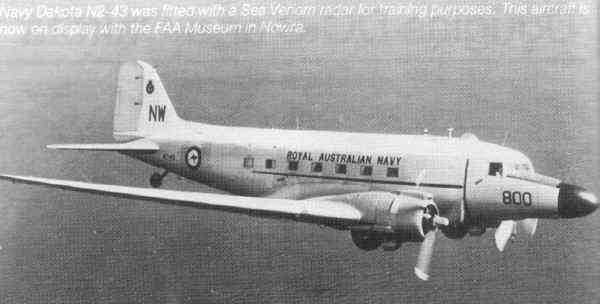
BTW I saw a picture of the RAN Dakota with the long nose, in which it looked a lot like the Indian AF “nosey” Dakota. Added it here.
aspOn the IAF website at Bharat Rakshak – there is a new article on Vampire NF 54s operations during the 1961 Goa operations. The pilots and navigators were from 37 Sqn – the second squadron to fly nightfighter Vampires (besides 10 Sqn- which my father was in).
Loughran was posted at Palam with my father – and the navigators of both 10 Sqn and 37 Sqn spent training time with my father as pilot of the Dakota.
The article is here http://www.bharat-rakshak.com/IAF/History/1960s/Goa03.html
aspStormbird,
Thanks! I’ll wait to see if you are able to dig something up.
If anyone can find information about the Dak – it will be dug up by someone on the forum!
I also have a picture of a “nosey” Dakota from the Italian Air Force (which I am attaching) which flew Vampire NF MK 54s, similar to the ones flown by the IAF (and the NF MK 10s flown by the RAF).
Also attached is a picture of nosey Dakota from the Royal Australian Navy which had a Sea Venom radar (which I think was the same or similar to the one on the Vampire NF 10) in its nose.
Given that there were at least 3 Dakotas with the same radar set up, built for training navigators, someone must know something!
aspThe ones in Arlington,WA belong to a private dealer. The outfit is called Alphajets USA http://www.alphajetsusa.com/
I fly my Cessna out of Arlington and have seen them fly a few times. Very smooth silent jet!
ASP
aspJagan
Congratulations! I know the effort it took and lengths you guys went to cross check stuff . Interviews in 4 continents!
Cant wait for it!
aspThe Yak-38 was an interim fighter – meant to gain experience in V/STOL operations. An excellent book that covers the Yak-38, Yak-38M Forger and Yak-141 is John Fricker & Piotr Butowski’s “Yakovlevs VTOL fighters”.
Some tidbits from the book
1. The Yak-38M had an automatic ejection system – if during a hover, sink rate, roll and pitch limitations were exceeded the ejection seat fired automatically. Resulting in a very surprised pilot no doubt! 🙂
2. The weight of the 2 lift engines and the single engine was calculated to be lighter than a purpose built Pegasus like (Harrier) engine – it was more efficient to have those than the swiveling nozzles!
3. The stability augmentation system of the Yak was great, it could do a fully automatic vertical landing. But it was also complex, so a STOL (running) takeoff/landing wasnt perfected till very late in the service life of the Yak. So every takeoff/landing HAD to be vertical. The Harrier gained a lot of its load capability by doing running takeoff, I believe every 500 ft it rolled it could carry 50% extra load or something like that.
4. It was actually used in combat missions in Afghanistan in 1979 but only for a few months. Its performance was so marginal that it could do only dusk/dawn takeoffs! It also resulted in huge plumes of sand being thrown about that caused other airplane operations to cease!
ASP
aspSpitfire PR XI
The Indian Air force had a number of PR XIs – according to this article
http://www.bharat-rakshak.com/IAF/History/Aircraft/Spitfire.html
An excerpt
“This was the unpressurized version of the PR Mk X version. A Merlin 63A replaced the Merlin 77. Total 471 produced. The only IAF units to operate the type were Nos 6, 7 and 15 Squadrons, No 15 being raised on the type in Aug 51. Ex RAF serials of this type were in the MB, PA and PL series with a few Mk VIIIe sharing the PA letters.”
There is a picture of an Indian Air Force PR XI here http://www.bharat-rakshak.com/IAF/History/1940s/Images/Spit-6Sqn.jpg besides in the previous link.
Anandeep Singh Pannu
aspTurban fit etc
Kye,
Only Sikh pilots wear turbans – and we are only a minority of 2% in India!
However the only DSO in the Indian Air Force or Royal Indian Air Force was a Sikh – Air Cdre Mehar Singh. The winner of the highest gallantry award (Param Vir Charkra) in post-colonial India was a Sikh Flt Lt Nirmaljit Singh Sekhon. Check out this web page http://www.info-sikh.com/FFPage1.html and this one http://www.bharat-rakshak.com/IAF/History/1940s/Sikhs.html
I usually wear a smaller turban – called a patka, more like a bandana, when I fly – the helmet and headset fit well enough then. And this I do in the USA – I am a 1st Lootenant in the USAF Auxiliary – the Civil Air Patrol. My father wore standard RAF issue cloth helmets and bone domes flying everything from Prentices to Vampires to Canberras. You just need to get a size or two larger than the small headed people 🙂
BTW – there as a great site by Jagan – http://www.warbirdsofindia.com – we are trying to get as pedantic about paint schemes etc as the British 🙂 and have approached the IAF to do something about it – but like everything else in India it will take time.
Anandeep Singh Pannu
aspConnie tip tanks
The tip tanks were removable. My fathers squadron 6 Squadron Indian Air Force had 9 Connies taken from Air India and modified to be Maritime Recce airplanes – they were models starting from L-1049E to L-1049Gs. My dad was QFI, was also Technical Officer qualified and commanded 6 Sqn briefly before the Super Connies went to the Indian Navy. All of them had been upgraded to a uniform L-1049G standard. They had tip tanks, but those were never installed on IAF Connies. They actually increased the takeoff weight beyond just their fuel capacity because being at the wing tip they reduced the bending moment on the wing.
I guess they had enough range (my father did many 12 hr sorties over the Indian Ocean and the Arabian Sea) for the IAF not to bother with them. I think in Air India service the tip tanks were sometimes used.
Take a look at the URLs below for some IAF Super Connie pics.
http://www.bharat-rakshak.com/IAF/Images/Classic/Connie.html
and
http://www.bharat-rakshak.com/IAF/History/Aircraft/Constellation.html
Cheers
Anandeep
aspAll the Tempests were taken by Doug Arnold out of the country. They were taken sometime in the 1970s not 1988/90 as mentioned in the article on the website.
As a kid growing up on Pune (then Poona) Air Force Station – I remember seeing these wrecks – and then one day they werent there anymore. Old Liberators also disappeared in a similar manner.
Dont think there are any Tempest IIB wings, except the ones on the Indian Air Force Museum Tempest IIB.
Nelson Ezell in the US has one of them in storage, according to the article. If he can get a Seafire in the air, he certainly can do that to a Tempest IIB! I believe Kermit Weeks has one flying (though it isnt an IAF one).


 Sign In







