Or because the F-35 has a very different capability in terms of C4ISTAR, an aspect which is usually ignored in public forums and open media but which is critical to effectiveness
And also because the workshare gives the UK a greater proportion than her investment and costs, which means that when you offset the UK tax take from F-35 against UK government costs it is much “cheaper” overall than Super-hornet or Rafale where our workshare would be minimal.
So we get a better (for what we want) product for less money and retain UK skills.
In what ways is the C4ISTAR capabilities of the F-35 so different/better than other naval fighters?
Could you give us some figures to show how the F-35 will work out cheaper than the alternatives for the UK?
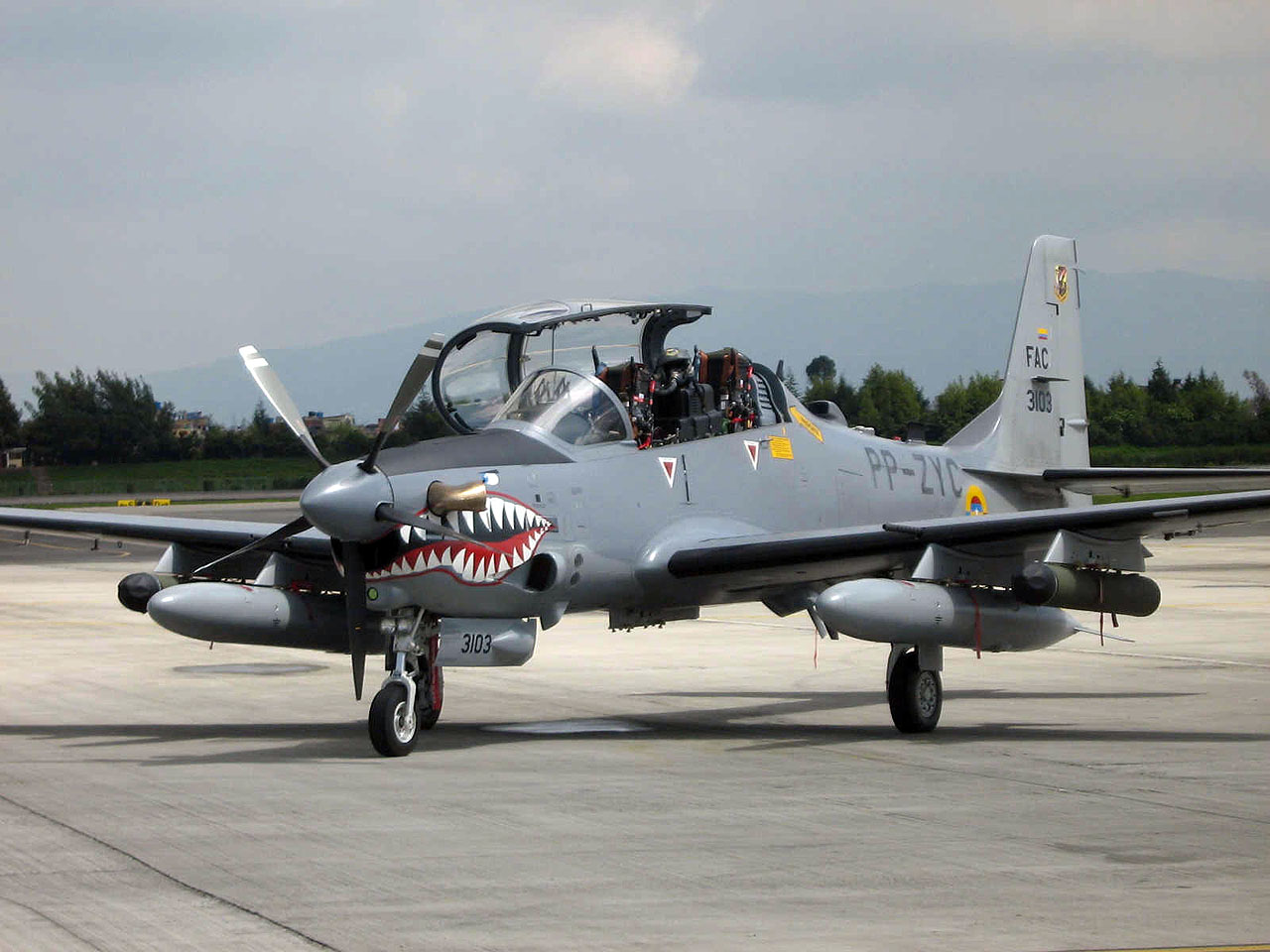
Hope this isn’t regarded as heresy, but could something like this fixed-wing aircraft do most of the escort/scout/fire support missions that seem to take up most of the work of attack helicopters these days?

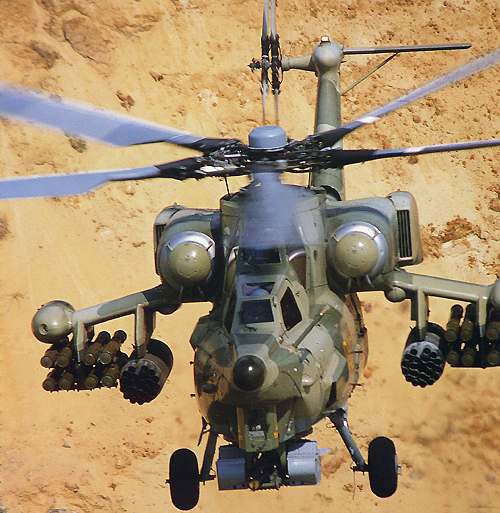
Presumably all that glass is armoured, able to provide at least some degree of protection to the crew?
The AHs with least glazing seem to be the Russians, such as the Mi-28,

Do the crew lose out in terms of situational awareness?
Putting the ‘light’ back in ‘light attack helicopter’ 🙂

Boeing AH-6i
To start with, around twice the payload, better armour, more room and power supply for avionics, greater range.
It should be noted that actually there are two classes apart of attack helicopters, the light ones (AW129, Tiger, AH-1) and the heavy ones (AH-64, Mi-24/35/28, Rooivalk, Ka-50/52).
There are pros and cons with both, costs being only one factor.
The only reason I would pick up the heavy ones, is not about armour or payload, but it is about room and power supply availabe to avionics.
As whatever has to fly, the first and most vital line of defence is to avoid to be hitted, then to give the crew the better chance to survive when hitted, third and last to be able to withstand heavy damage.
About the AW129 rotor, described as “civilian”, it has been designed to withstand the standard russian 23 shell and it’s a very unusual design, with the mast hosting all the blades’ leverages and hydraulics lines internally.
Re the heavy/light classification, is the AH-1 not of a similar size and weight as the Apache? Is there a significant difference between the range of the T129 and the Apache? How significant is the question of power supply for avionics? Do the smaller/lighter helicopters not have adequate power supplies? And is a heavy payload capability that important these days, when most missions are escort or fire support rather than anti-armour?
Just wondering….

So what – if any – are the advantages of something like the Apache, which is twice as heavy as the T129?
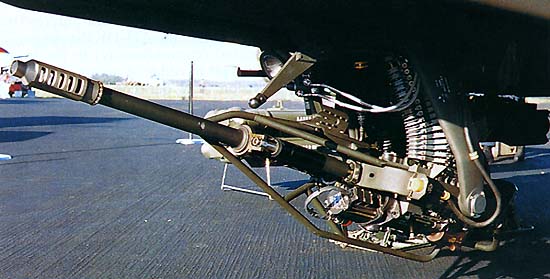
The Turks already operate the AH-1 Cobra, which also has a 3-barrel 20mm Gatling gun, the location of which would appear to present some of the same potential problems mentioned above. Surprising that such problems would have persisted for so long, especially as the USMC are still buying new versions of this heli?
Here’s a pic of the 30mm gun under the Apache: is this ammo feed not equally exposed?

Ideally, the Army could do with a light armed scout/escort heli – like the OH-58, or bring back the Gazelle! 😀 – plus a medium utility type like the Blackhawk or an AW139/149, that can lift a fully equipped section.
…. 2 to 4 passengers?
…….
I do totally agree that size is everything in respect of the carrier procurement…BIGGER IS BETTER! As has been discussed and pointed out many times with the CVF program in this forum the major cost is the systems and machinery not the steel. Making a carrier of lets say 40 thousand tons and similar in size to Cavour would not cost significantly less and would be far more restricted in capability.
Not everyone would agree with you on that point, it seems: there’s an article by David Axe in the current issue of ‘Combat Aircraft’, where he writes “… light carriers, roughly half the size of today’s super-carrier and embarking a half-size air wing, should suffice for many tasks, while also costing a quarter as much as a Ford… ” (the latest class of US carrier)
Not sure I would class a 40,000-50,000 carrier as light, but size does seem to make a big difference to the cost.
Why would you attack an enemy where he’s strong? If you want to attack a US CBG, use submarines, missiles, mines, asymmetric methods.
It’s not just a question of carriers vs. no carriers. It’s also about how many carriers, of what size. This is an interesting article from the US Naval Institute on that topic:
Twilight of the $UPERfluous Carrier
Issue: Proceedings Magazine – May 2011 Vol. 137/5/1,299
By Captain Henry J. Hendrix, U.S. Navy, and Lieutenant Colonel J. Noel Williams, U.S. Marine Corps (Retired)
http://www.usni.org/magazines/proceedings/2011-05/twilight-uperfluous-carrier
I’m not sure I’d agree with all of the recommendations, but the analysis seems pretty sound.
Trident:
I understand your point, but to my mind it still seems jarring to announce both a new carrier and a missile system which, if it worked, would effectively render the carrier obsolete. The conclusion I draw is that the missile system probably does not work as well as the Chinese would like us to think. They hate the ability of the US to dominate the seas close to China, so why not put a few doubts in their mind? Doesn’t mean the things will work, and I suspect they won’t.
The way I would see it is that the carrier allows China to project power in the China Sea area, not against the US but countries with which China has regional disputes, while the missile is intended to deter the US carriers from interfering.
Pardon my ignorance, but could someone explain to me why the tails on the PAK-FA can be so small, compared to the Flanker’s quite large tails?
Lads, let’s face it, it’s not really about defence, it’s about status – mine is bigger than yours, or I want to sit at the big boys’ table. As the Chinese have said recently about their ‘new’ aircraft carrier, these are symbols of power, not necessarily realistic elements of a national defence. The problems arise when a country’s power symbols get out of step with the reality of its standing in the world. Britain has been trying to maintain some sort of global status by hanging on to the coat-tails of the US – a humiliating very junior role, IMHO. The only realistic option for Britain in the future is some sort of European defence force – maybe the recent Anglo-French agreements about sharing carrier resources and other matters is a step in this direction, but there is still far too much wasteful duplication within Europe on defence.
(OK, putting on my tin hat and taking cover…)