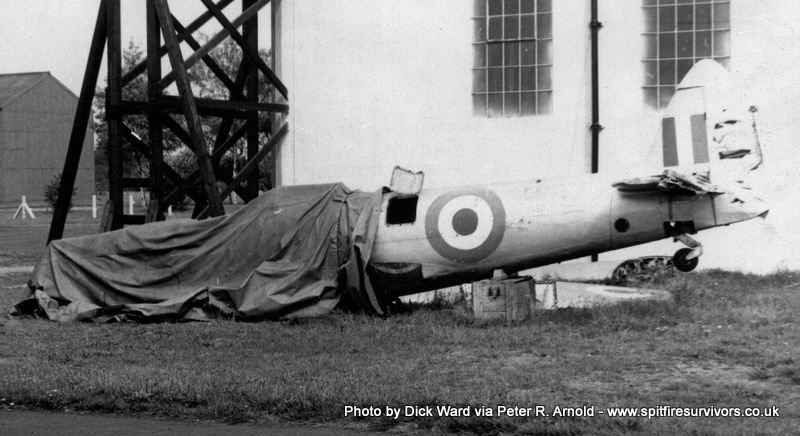
I’d have to go back through my files on ‘EXF but I do have a lot – some from Alex’s photo album which he loaned to me back in the 1970’s.
Here’s a shot of her which I took at Booker on a visit in 1969 – she deteriorated badly after the move to Blackpool. The wings were sawn off at Booker to expedite the move by road.
Alex looked at her at Blackpool with a view to buying her back but thought that she was beyond hope of resurrection – Tom Storey and Martin Barraclough had different ideas!
It’s not just Spitfires that can inspire cabinet makers …
Pages 178-181 of Volume II 🙂
Stand down folks – Phil Moore has come up trumps thanks to the power of Facebook!
and another one at Debden?
Whilst on the subject, we have an exhaustive list of Spitfires which were disposed of during the late 1950’s which will be appearing as an Appendix in a book very soon …
However, one we cannot pin down was sighted by Graham Trant in a blast pen on the north side of RAF Debden around 1957/58.
It was a low-back (probably an L.F.XVIe) painted either silver or pale blue and had the wings stacked alongside the fuselage.
Graham had thought it was SL572, but the date and location do not stack-up as its last accident had been an Duxford … although it may have been taken to Debden for fire practice?
One That Got Away …
This one was outside the BBMF hangar at Martlesham on 12 August 1959. It may be either SL718 or TE464. It was scrapped after spares recovery …

Thanks very much for the guidance guys. Thanks especially to Viscount for his kind and gererous offer. I have just discovered that a friend has the Shipley & Jefferies book, which he’ll drop in over the next couple of days so I’ll be sorted on that book. I’ll be interested to see what images it holds. 🙂
Let me know if it has any shots of my old Pou-du-Ciel, G-AEOH, which flew there in the hands of its builder, R.C. Streather.
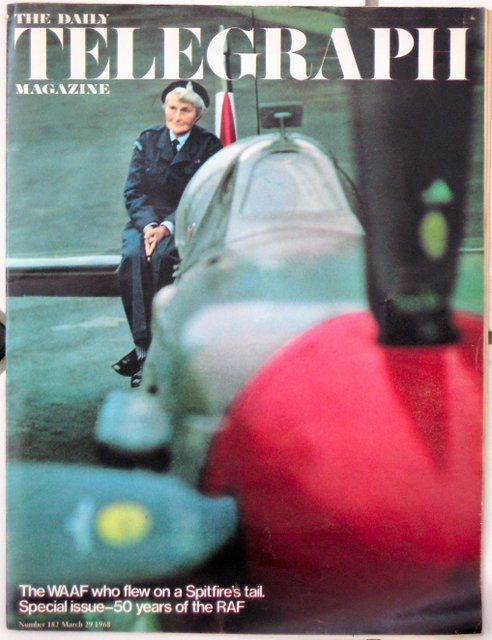
Must say over the years I have met a few women RAF and male RAF where the Spitfire wouldn’t have got airborne due to the weight on the tail!
You should see some of the USAF people I work with …

On page 96 of S*** S*** Vol I we have a photo taken shortly after the incident.
🙂
G-ORDY, They would have still been operating out of Duxford in June, they didn’t start filming at Binbrook until the middle of July. They often used to be about on those summer evenings.
Quite possibly – I was getting our bikes packed up for the Windsor Triathlon which is always held in June.
I was working at Hatfield in those days and drove past DX daily – got quite used to seeing B-17’s! What took the biscuit was one early evening in June (a Friday IIRC) when I was working in the garage at home and there was this enormous racket in the sky. Over the houses opposite came the whole fleet, B-17’s, P-51’s, Buchons and a B-25, very low and forming up for (I assume) the ferry flight to Binbrook. The noise was amazing!
I set up the sale of this Argus to Winston Ramsey (After The Battle magazine) back in the mid-1970s. Cliff Lovell did the initial rebuild & repaint in camouflage at his strip near Basingstoke. Winston based it at Stapleford Tawney for a while and used it as the camera ship for some of the air-to-ground photos in the book “Airfields of the Eighth“. I remember it had some problems with the brakes, among other things, and although we did have some fun flying it he decided to sell it – didn’t realise that Bob Stanford-Tuck was the purchaser!
Some thoughts on R6915 …
If the paintwork is that original why isn’t it showing any squadron codes?
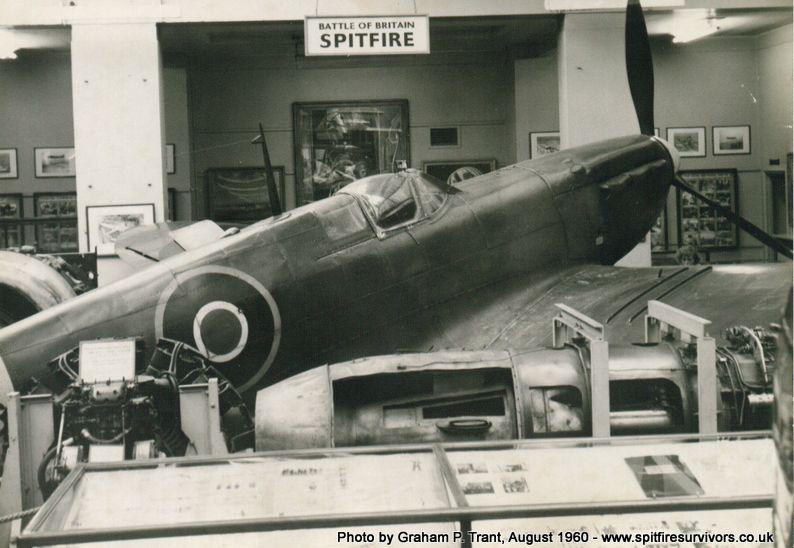
R6915 is at Duxford for “Conservation” and minor repair NOT any restoration, re-build, conversion, or even re-paint.
R6915 is a “Time Capsule” like no other Spitfire in the UK, It is very complete.
R6915 is in original wartime paint, which we believe was applied at 39 MU RAF Colerne (Wiltshire) in late 1943, the Spitfire later assed through 82 MU Lichfield ( Staffordshire) in May 1944, before going to 52 MU at Cardiff for packing, the latter MU is where the yellow stencilled markings of its RAF serial number were applied to all major components, this was so that on final re-assembly parts of the same airframe were re-united.
There are only two other complete early Spitfires still in current wartime paint, these are Mark I P9306 in Chicago, and Mark II P7973 in Australia, all other early complete Spitfires (P9444, K9942, X4590 etc) have been re-painted many times.
There are no plans for R6915 to go through the same paint-stripping and investigation processes used on the FAA Museum Cosair, although the fuselage will be examined in detail at Duxford for any evidenc of markings below the current paint scheme.
The Spitfire unfortunately suffered some damage at IWM London many years ago when being moved, this is planned to be very sympathetically repaired whilst at Duxford,
The airframe has considerable evidence of wartime repairs to skin damage, even possible bullet hole repairs, these are all to be investigated, and are very much part of R6915’s history as a “time capsule”.
R6915 will return to IWM London in due course, current designs show it again suspended, however hopefully with more suitable slinging methods which will not damage the airframe.
Once re-installed at IWM London the aircraft is most likely to be in position for many years, thus Conservation work now at Duxford is vitally important to retaining a safe exhibit for many years to come.
R6915 can currently be seen in Hangar 5 at IWM Duxford, many superb photographs have been posted on this Forum by “DCW”, no doubt these will follow the Conservation processes over coming months.
The IWM Duxford Conservation Team are those responsible for the most excellent work on the Museum’s Vampire T11, currently on show in Hangar 4 at Duxford, so R6915 is in safe hands.
Although plans can change, I hope the above puts the record straight on the current situation for R6915, a most important display Spitfire.
Volume 2 of “S*** S***” (due to be published in late Summer 2013) will feature an update on R6915, also many other aircraft detailed in Volume 1, which have changed circumstances.