If its the part-work I think it is then I wrote the section on the Vickers Vedette flying boat for it! I think it may have later been republished as a coffee table type of hard-back. I think Phil Jarrett may have asked me for the piece … maybe it was a different part-work but it would have been early 1970s.
Blimey … when did I get so old … or maybe I was just very young 🙂
IIRC there was a 1950’s proposal for a Sea Hawk executive jet – I think it even got a registration reserved for it
As a toddler I remember having the airfield at Hatfield pointed out to me a few days after VE day. All I remember now is that there was a line of white painted aircraft which may have been Wellingtons. Any ideas anyone? I realise just what a longshot this is!!
Jim
I remember Alan Hall telling me he’d seen a PBY Privateer at Hatfield around that time :confused:
Hi,
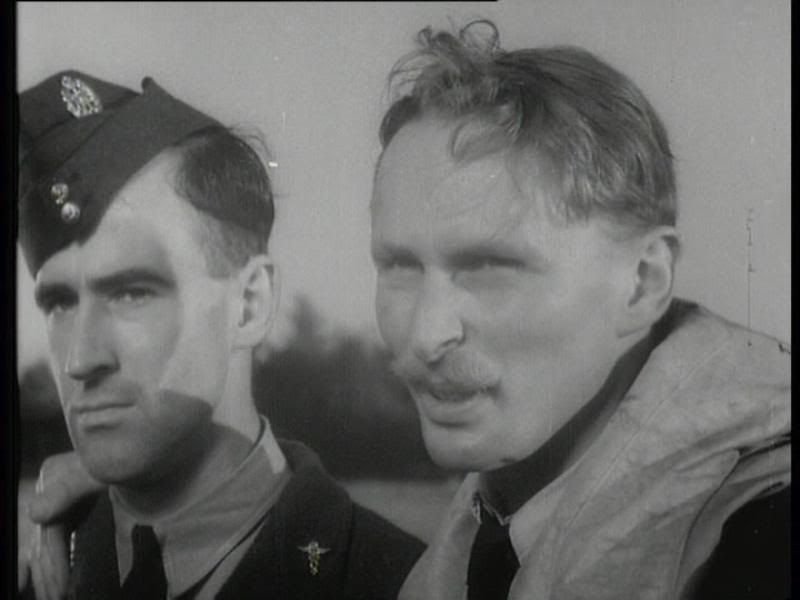
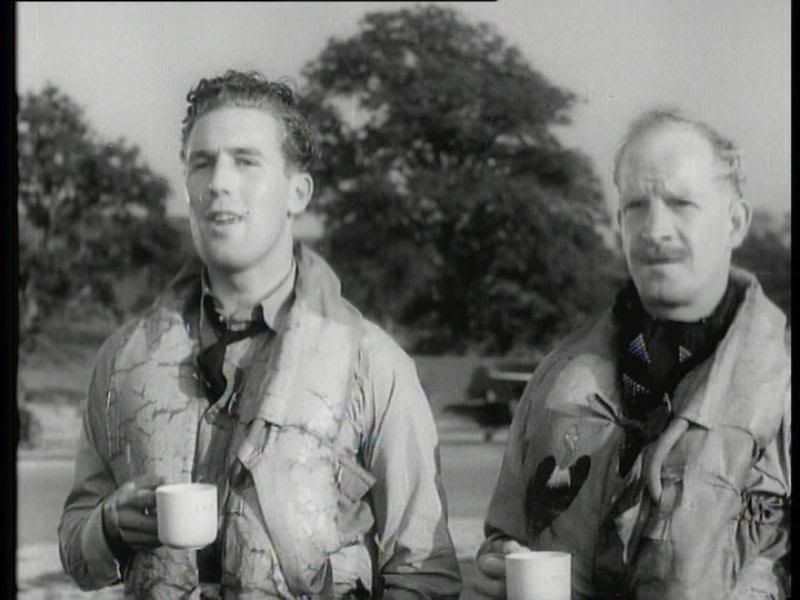
The airman on the right in photo 4 is 100% definately Frank Howell who flew with 609 in the Battle. He was tragically killed post war after being hit on the head by a wingtip of an aircraft he was filming landing.
Gerry
That shot is just after the “crash landing” sequence – he’s pulled out of the cockpit by David Niven. The actual aircraft used is a presentation Spitfire “Borough of …….?” and had been damaged before filming. It was placed on sandbags and explosive charges set off to throw earth up in the air – unfortunately they left the canopy open and filled the cockpit with all sorts … which the repair crew were not happy about!
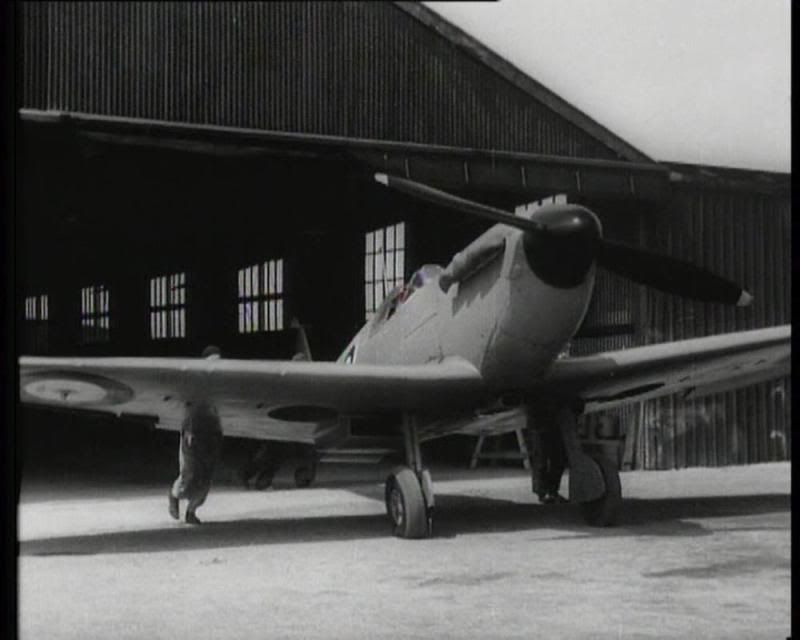
Henley or High Post?
If you have a look at the post on BoB pilots in the film you’ll see I posed the same question about the location of the “prototype” roll-out!
http://forum.keypublishing.co.uk/showthread.php?t=89054
The hangar is a dead-ringer for the one at Henley but I’ve seen others of the interior of High Post which shows identical windows.
The High Post hangar still stands:
http://worldwar2airfields.fotopic.net/p55373133.html
I don’t know if the Henley hangar is still there?
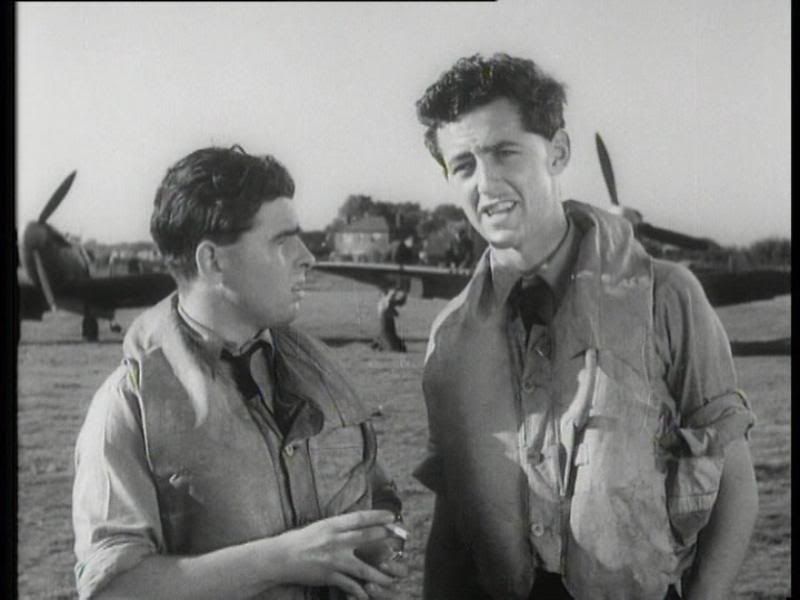
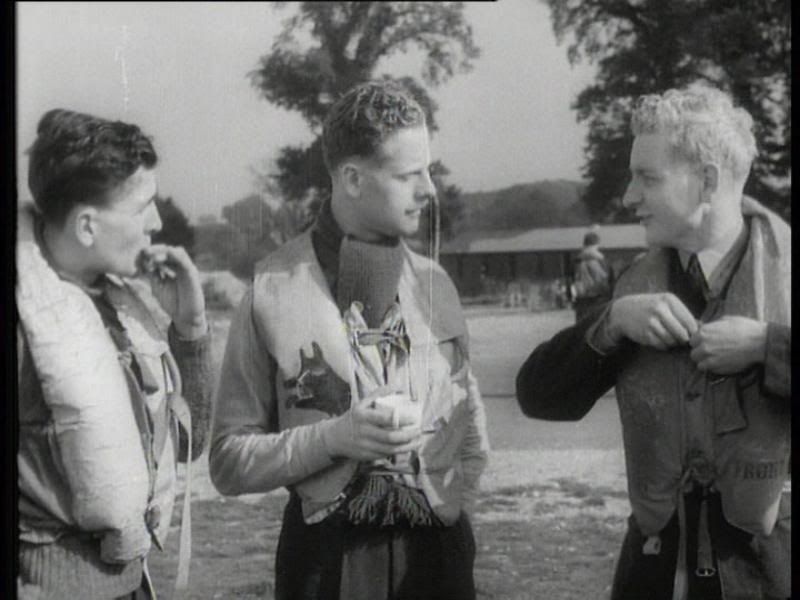
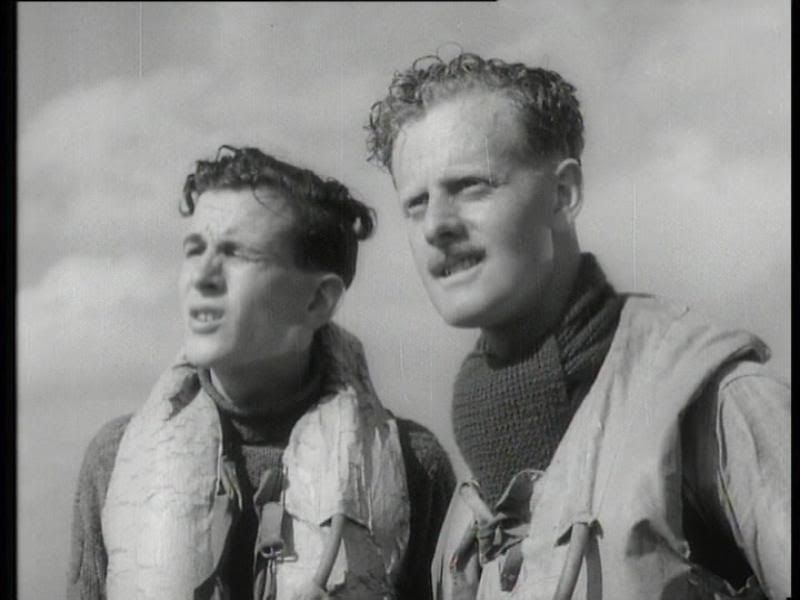
Stills from “The First of the Few”
I don’t know if these will help in identification? The squadron flying sequences were all shot at Ibsley.


and I think that this “prototype roll-out” may be at High Post, can anyone i/d the actual aircraft? It was painted as “K5054” which showed remarkable attention to detail considering the pressure the film-makers must have been working under.

IIRC the Vulcan was “borrowed” from Halton and immersed in a tank on the James Bond set at Pinewood. If you look closely you will see that the vertical tail is missing. I’m sure somebody knows the serial.
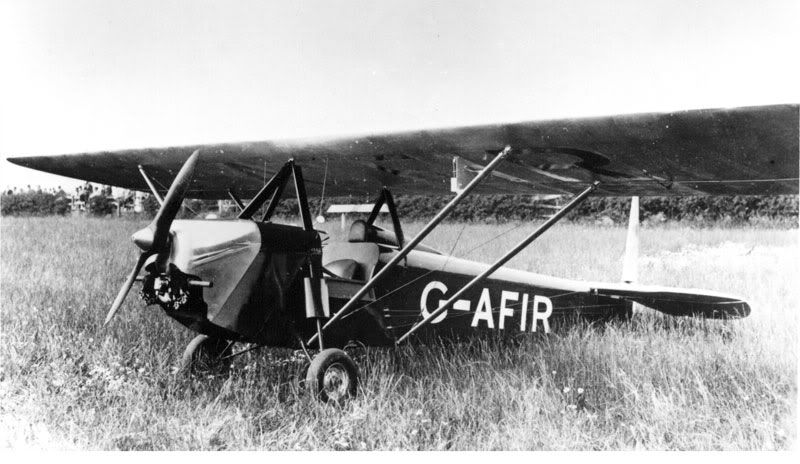
G-AFIR, Rearsby, 1938

Just found this one in the filing cabinet – courtesy Victor Doree IIRC
Prototype Auster J5/F Aiglet Trainer, G-AMMS, in the middle. Still going strong down in Devon I believe
Nice overalls….
And look at the registration clearly painted on the top of the starboard wing!
Sorry for the minor thread creep, but just had a look at Wikipedia page for the Snargasher, which led me on to the R.S.3 / R.S.4 Desford. States there that it was in flyable condition until 1973, but I was under the impression that it was still airworthy at Strathallan until later then that…. Can anyone confirm or deny ?
Definitely airworthy at Strathallan – I have an air-to-air by D Richardson
Nope but 40 ops is a fine score.
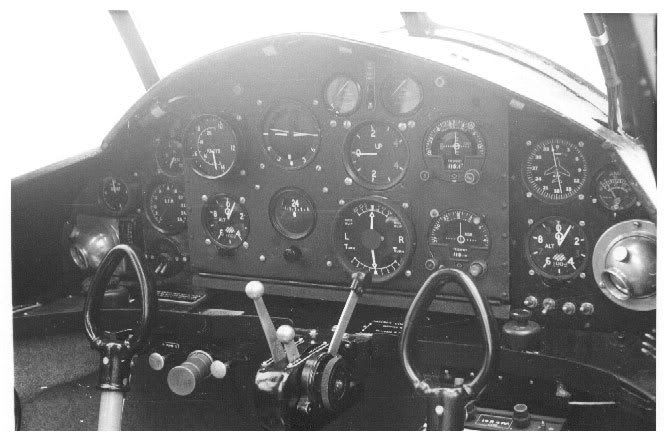
Anyone have pics of the cockpit of PN323 during the early Skyfame years?
Cheers
Cees
I’ll ask Graham Trant, my co-author – he was the chap who rescued it from Radlett and then presented the cockpit to Skyfame
I don’t know if this is any help?
G-ALJF at Biggin Hill about 30 years ago:

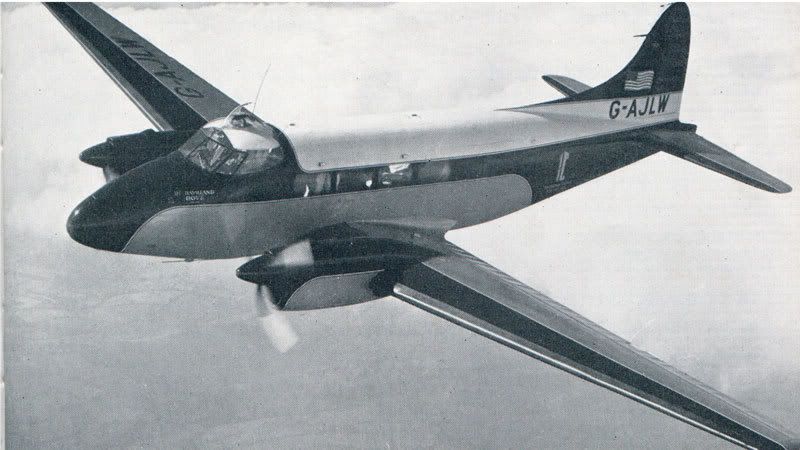
Here’s an example – DH Dove G-AJLW

With the establishment of civil aviation after WWI the first regulations stated that the registration letters were to be in black and displayed on a white panel – fuselage sides, wings upper & lower, with the national identity letter on the vertical tail.
By the mid 1920’s the white panels were no longer required and the letter on the tail was dispensed with, wings still carried the reg’n full span upper & lower.
By the mid 1930s the requirement for black (or silver) lettering was still there but being ignored in many cases as manufacturers used colours to match the colour scheme of the aircraft. The upper wing markings were often dispensed with (although technically still required).
In the early post WW2 era manufacturers (and those converting ex-military a/c) tended to follow the 1930’s standards with full-span lettering but by 1947 Miles Aircraft and de Havilland were using the lower port and the upper starboard wings for relatively small registration letters. By the 1950’s most a/c no longer carried the upper starboard letters.
(I’ll post some photos when I have a chance to scan some)