FBW
FBWThe F-35 Navy Requirements is debated to dead. I pointed this out to J-20.
I must have hit a nerve or something.. just deal with it.
Well, we can start with the fact that your statement is fundamentally incorrect. The length of the F-35 was not determined by CVN constraints, it was dictated by LHD lift size and deck park (in other words, the Marines).
second, is your statement about area rule and length. Area rule applies to the transonic region. A longer F-35 could have improved fineness ratio, and PERHAPS that would allow different distribution, but the two versions challenged in transonic acceleration are the “B” & “C” one has a rather noticeable hump due to lift fan and the other has a totally different wing.
Given given the requirements, the F-35 is a long and as wide as it needs to be, simply making the “A” & “C” longer would have added weight, decreased commonality, added testing. For what? So internet eyeball drag analysts would be impressed? The only question that matters to the nation’s purchasing the aircraft is operational relevance, and since the services had a say in what they wanted (payload, fuel, footprint, max airspeed), they drive the dimensions.
FBWDassault NGF looks absolutely amazing! Major kudos! Look forward to seeing how Northrop’s effort compares aesthetically, will they go tail-less?
Will be interesting to see the Generative Design solutions implemented on both:
I think they all look very interesting…
because they are mockups. Although, it’s ironic that the pointy nose gets all the “love” on the forum analysis. The critical design feature that would make a difference (if carried over to the demonstrator) would be the integrated nozzle/fuselage of the Tempest, that is the next technological leap for materials, IR reduction , lower weight. Fluidic thrust vectoring, BAE already has experience with this, not to mention the way forward for eliminating vertical tails in a supersonic aircraft.
Drag doesn’t just happen at the front of the aircraft, an integrated nozzle will be a major breakthrough, the F-22’s 2-d non-axis symmetric nozzle was the baby step to major drag reduction.
FBWi may be wrong, but i think DSI equipped F-16 reached mach2
It did, the CFD analysis paper showed optimal ranges for that particular DSI/inlet shape, Spillage increased approaching Mach 2. You’re going to optimize the DSI, inlet shape, BLC for efficiency across the widest range of relevant speeds.
FBWBrazil just bought 200 Meteor for about 200 millions.
100 missiles for €200 million…. bit different.
FBWThen there is the F35 which is the “unkonwn for me”, it has indeed strong arguments but not sure how it would perform in the Swiss context.
My 2c is that the rules were made to discard some contenders like the gripen E. Then Armassuisse will not automatically end up withthe cheapest “good enough/politically correct option”. They want to be spoiled. You don’t need to have a cristal ball to understand that this set of rules will favour the rafale and the F35 and left other behind
This has been the Rafale’s contest to win from the outset. The competition includes two aircraft at their peak in terms of systems maturity, proven capabilities (Rafale, F-18 E/F), the Typhoon which increasingly looks like it will never fully capitalize on the potential of that airframe with a timely upgrade path & technology roadmap, one aircraft in the F-35 with enormous potential and future capabilities planned and funded but certainly on the front slope of the maturity/reliability curve. And our eliminated Gripen, which is a question mark in potential and future capabilities.. though I admit bias on my belief that the Gripen E/F project is Cinderella showing up the ball at 11:58.
Add to that the political element of strong lobbying with the EU for support of continental defense solutions (Trump doesn’t help), and I’ve thought this is the Rafale’s competition to lose.
FBWPAS19 sees two next gen fighter mockups revealed, can’t be anything but a win for defense aviation fans and interest will be high. SCAF, Tempest & TF-X mockups are all “lookers”. Don’t know if I’m getting old or simply practical, but cynical on the odds of two concurrent European projects coming to fruition. Yes, past experience suggests that it could happen, but both the Rafale and Eurofighter began in the era of large defense budgets.
The timeline is much tighter on FCAS (demonstrator by 2025? airframe possible, doubt engine will be ready, systems?). Meanwhile, the Tempest program needs to solidify partnerships. While I don’t see the two programs merging (Dassault will see to that), collaboration on propulsion would increase the odds both programs survive.
Rolls-Royce has already competed in projects for and developed adaptive fan tech. I would like to see a path forward for collaboration on propulsion, software development, and certain systems like: life support, comms, thermal regulation (a BIG concern moving forward). It just makes sense, and would allow more European defense companies to survive into the 2030’s. The projects could still have different platforms (H@ll, that’s not even the most expensive nor riskiest part of an aircraft program anymore), platform specific sensors.
SCAF/FCAS engine partnership Safran/MTU was announced in Feb, Safran contract for the combustor & HPC designs run until 2024. Engine dev could delay the project considerably considering the timeline. A collaboration with RR could develop a family of adaptive cycle engines around a common core. The US started the ADVENT/AETP programs well over a decade ago for propulsion systems due in 2025 (phase I) and 2030 (phase II), Rolls-Royce had won contracts in phase I&II of previous VAATE/ADVENT- assuming that the technology is not proprietary, RR experience could be a huge advantage for timely development.
Cynicism is more like doubt on the TF-X, more due to RR already pulling out, BAE may follow suit, and if relations worsen with U.S., the alternate plan of a F110 derivative engine would be out as well.
FBWPersonally i use DefenseNews a lot when looking for news.
I think they have their nest clean. Good luck trying to discredit them..
If you had read this thread over the years you should/would have been current on the majority of issues mentioned. They’ve been reported before, discussed on the F-35 thread and addressed by previous DOT&E and responses from JPO. The documents DefenseNews “uncovered” or whatnot aren’t dated. Doesn’t it strike you as somewhat backward that LM and DoD constantly has to respond that the problems have been noted and fixes identified EVERY time a news agency reports so-called “new” problems that are anything but?
The aircraft IOC was less than 3 years ago for the “A” and a few months ago for the “C”. Rest assured, they will be ironing out problems for several more years. Same as the F-16, F-15, F-18; or any other program you can name. The difference (for us aircraft due to transparency in multiple gov reports, unlike other western programs) is due to both the F-22, F-35 coming into service in the age of online media. You have to dig a bit to read the articles and reports of problems with previous generations…. but they were there, they were extensive, and pilot’s died while they tried to fix them (just look at the history of the F100 engine). The F-35 program has been one of the safest, if not the SAFEST introduction of a new combat aircraft in history for pilots, and one of the most extensive as far as identifying and addressing issues.
It not a matter of discrediting the reports, it’s understanding context. Not to mention the selective reading of some who like to downplay the successes the program has experienced over the last 5-6 years and overstate the difficulties. The DoD is behind the program, the pilot’s are behind the program, the services are behind the program (With the caveat that Navy is schizophrenic in both procurement and future force structure planning). Why? Because they understand the difference between issues common in fielding a new aircraft, workaround and technological immaturity vs. failures, and balancing required current capabilities vs. future potential.
FBWLittle “off” info. Tests in Payerne were catastrophic. Look down capability poor , follow ground capabilities and worse, when asked what about numbers of Cat 1 failures? The answer was we a re fully aware those will be fixed quickly of course”. Not to talk about capability to fly in alps environment. Trust me or not, F-35 finished last. Just ahead of EFT
Careful hallow, how many supposed leaks of information from these competitions have proved to be inaccurate, incorrect, or incomplete. I don’t doubt you’ve heard this from someone. I doubt the completeness and what it means. You write for a blog or website, negative information about a competitor in a competition where the information is supposed to be secure is available to you…. it’s always negative reports that are leaked about aircraft in these competitions too, and often wrong.
FBWDid you see my comment about melodramatic title? If you check, it is a different heating issue.
No, it’s the same issue that was reported then (around the time they were testing envelope expansion), and listed in reports. Your thinking of the weapon bay heating that was reported later on (and I believe still unresolved), at least until block 4 improvements to bay cooling.
FBWThe Pentagon is battling the clock to fix serious, unreported F-35 problems
I don’t know why defensenews is claiming this as a major scoop of “unreported issues” most everything listed with the exception of the tires, battery issues at-30, and sea search radar mode have been listed in previous DOT&E.
The heating issue was reported way back in 2011, and unlikely to be solved without new thermal resistant coatings (F-22 had similar issues), LO ain’t easy. The reporting is vague on this issue as well. It appears that the problem was noted in one incident each in 2011, not since, yet afterburner time restrictions still apply. Is this due to overcaution? Or due to fears that damage is “possible”?
The dutch roll and wing drop issues were reported early on too. The Rhino had the same issues. but the F-35B/C control issues can’t be solved with an aerodynamic band aid as in the F-18 wing fence.
I’ll be curious to read JPO or services respond to this reporting (if they do),
FBWhalf of the french do not fl because due ro intense opex they “used” their yearly hours. Still, the 50% remaining are full mission capable (our metrics).
This is an out and out lie. How many years of availability for all French air force assets do you want to disprove this? This has nothing to do with the Rafale per se. It has to do with FUNDING for maintenance and spares. Oddly enough, this is the same issue that is holding down F-35 MC rates.
During Lybia, Rafale flew up to 35 hours per week with near 100% availability (no mission was cancelled). Show me F-35 doing that?
This is a part of the cost of the plane also. I takes one hour for 2 ppl lto change a Rafale engine (took 2 on the Eisenhower, i guess the french techs did hurry a bit so as to tease US ones…)
You trot this out every time as if it proves a thing. What was the availability of US assets during the GW? Near 100% What was the availability of the F-22 over Syria? Or the F-35 on it’s recent deployment?
All aircraft have high MC rates on operational deployments (for short duration anyway), instead of touting this point on the Rafale every time availability is mentioned, actually do a little research and understand why the the “100% availability” is not unique.
FBWApplaud the effort LMFS.
The weights are wrong. No F-35A has weighed 29,300lbs since 2011. That’s off by 400lbs. Ditto with the “B”&”C” weights. And there is no +/- 5% empty weight variation. The “not to exceed weight” for the “A” over the course of the program was 29,378lbs. Two aircraft from the same lot aren’t going to vary %5 period.
FBWhttps://warontherocks.com/2019/06/f-15ex-the-strategic-blind-spot-in-the-air-forces-fighter-debate/
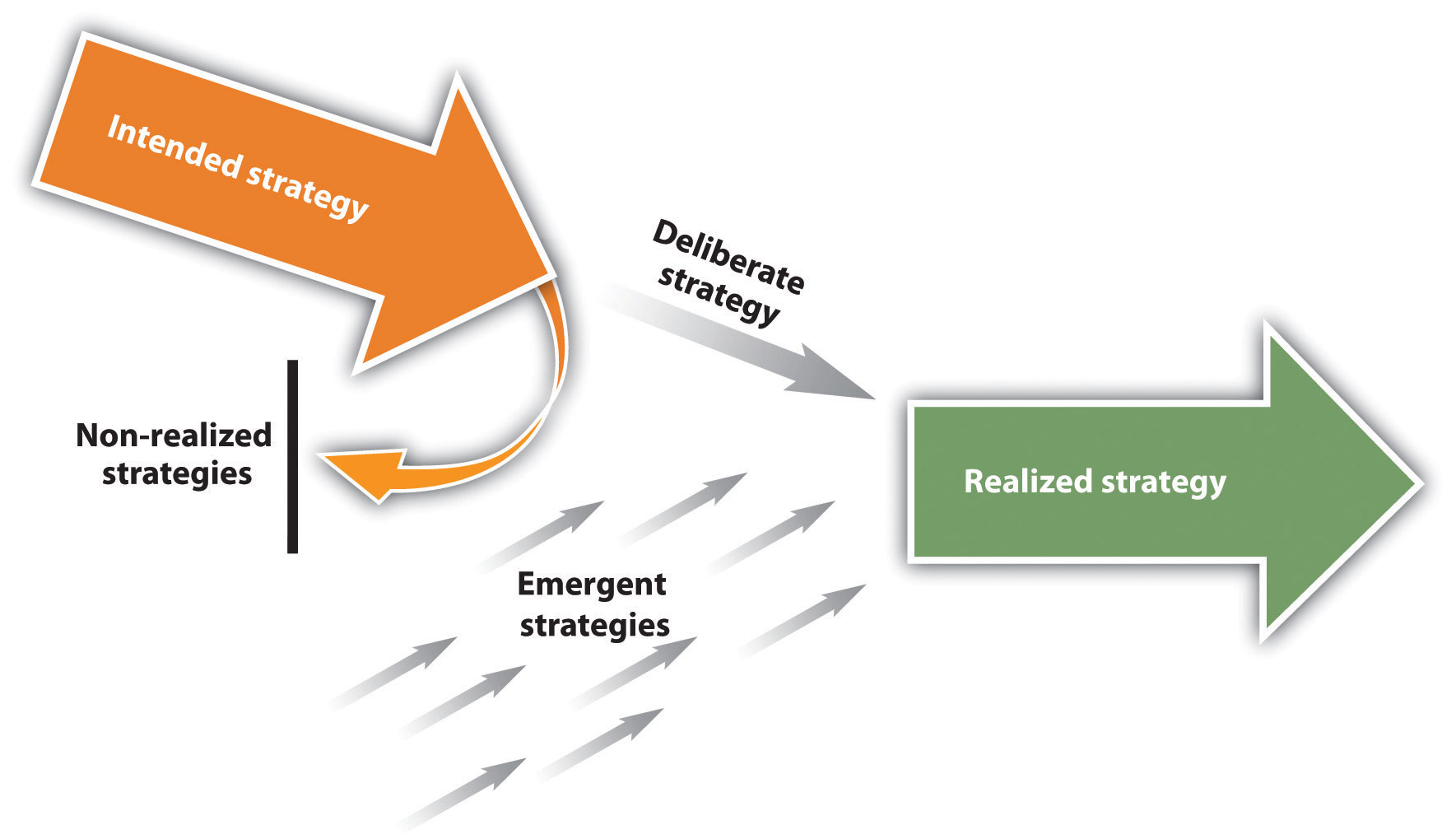
The realized strategy (the end) rarely matches the intended strategy (the beginning) because a strategy can — and should — evolve over time. The Mintzberg model acknowledges that the realized strategy is actually a combination of both deliberate and emergent strategies. As a strategy is executed, various smaller emergent strategies are coupled and decoupled to the long-term deliberate strategy as new opportunities present themselves.
What does this have to do with the F-15EX and F-35A? The F-35A represents the deliberate part of the strategy, while the F-15EX represents the emergent part. F-35A may be the generational foundation for the Air Force’s fighter force structure strategy through the 2070s, but the way it is traditionally envisioned for use has little to do with the emerging framework of strategic competition (note China and Russia have been developing stealth-negating weapons systems for 20 years). However, coupling the F-35A with other rapidly-fielded force structure opportunities like the F-15EX enables the Air Force to engage very effectively in strategic competition. This is how it’s possible to remain committed to the F-35A while also supporting the F-15EX. In other words, this is how both sides are right.
Long and well reasoned article, not sure I agree with some arguments presented or his conclusion, but worth reading.
FBWThat is 13,154 kg. The fast facts document I refer indicates 13,300. It is also official, therefore my question as to what source is the correct one and, in case both are, whether there are differences between domestic and export versions. Difference is not huge, but still 150 kg is not a rounding or conversion error.
the L-M fast facts aren’t all that accurate for specifications. For weight, I would use either the DOT&E reports from previous years which give the exact weight of each variant, or as spud suggested, use F-16.net search function which probably has parts of the report highlighted (possibly even on here, but the search function on this site is not user friendly. The “A” weight as of last report is under 29,000lbs though (28,890ish IIRC). That is the most accurate. You can also get the exact weights of the “b”&”c” from those reports but the exact weights have slipped my mind.
Is this official or “unofficial but reliable”?
Product card by P&W (2016) indicates 27 and 41k respectively for the PW-600, which should have the same values as -100 and -400 in horizontal flight. And the fast facts again is way lower (25 and 40k). So there is a big difference between two “official” values and then the “actual” one seems to be one for which I cannot find an official source… that is why I am asking again about differences between domestic and export versions / installed vs uninstalled values / sustained vs special conditions. We talk about ca. 1.5 Tf here, that is significant.
the F135-Pw-600 has been listed as 41k max thrust compared to the 43k of the -100 and -400 for some time. This is due to the roll posts being unable to handle extra thrust as of last time the issue was reported. It also has a different nozzle. Some claim the -600 is now equal to thrust of the other 2 variants, I’ve never seen confirmation of this. There is no difference in thrust between USAF or export customers. Weights should be mostly the same too, F-35I being a notable exception.
Well, essentially all basic technical data like dimensions, weights, capacities and main engine parameters like thrust, weight, TSFC.
most will be easy to search on F-16.net with the exception of TSFC, those are all going to be guesses.
I am trying to compile sets of RELIABLE basic data about current crop of fighters and it is quite tricky, since most of the data are not official and the the official ones are often contradictory. Russian fighters have no officially stated empty weight, and then, only data of export versions are disclosed, so capacities of domestic versions are largely unknown, for PAK-FA all but rough dimensions are “guesstimates” of little or no value. US is sandbagging here and there, others may be overstating their values… tricky indeed.
Link to the fast facts file:
Your not going to find “sandbagging” on weights in reports to Congress, and the uninstalled thrust figures on PW product cards are accurate enough (rounded within a few hundred pounds +/-). Go to the sources.. reports to Congress and whatnot. Wiki, L-M fast facts, etc. are all going to be generalized. I’d look through my posts to help you out but don’t have the time that would take today.
FBWLmfa-
empty weight for the “A” is just under 29k lbs from last report.
F135
28k lbs of intermediate thrust
43k max thrust
typing from phone so it’s brief. What other numbers do you want?


 Sign In