FBW
FBWGuessing Turkey and the Kurds get along well enuff these days for US to give them to the Kurds,
beats me why resources arent given in plenty to Kurds and accepted as a nation
It truly would be a better situation in Syria and Iraq if the Kurds were given a homeland, and IF the Turkish government did in fact get along with the Kurds. The problem lies partially in the fact the Kurdish areas cross several international boundaries from Iraq, Syria, Turkey, and Iran. Any mention of Kurdish autonomy sends the Turkish government into a fit, and if you haven’t noticed relations between Turkey and the US, or for that matter the EU aren’t exactly at a high water mark.
FBWAnother one:
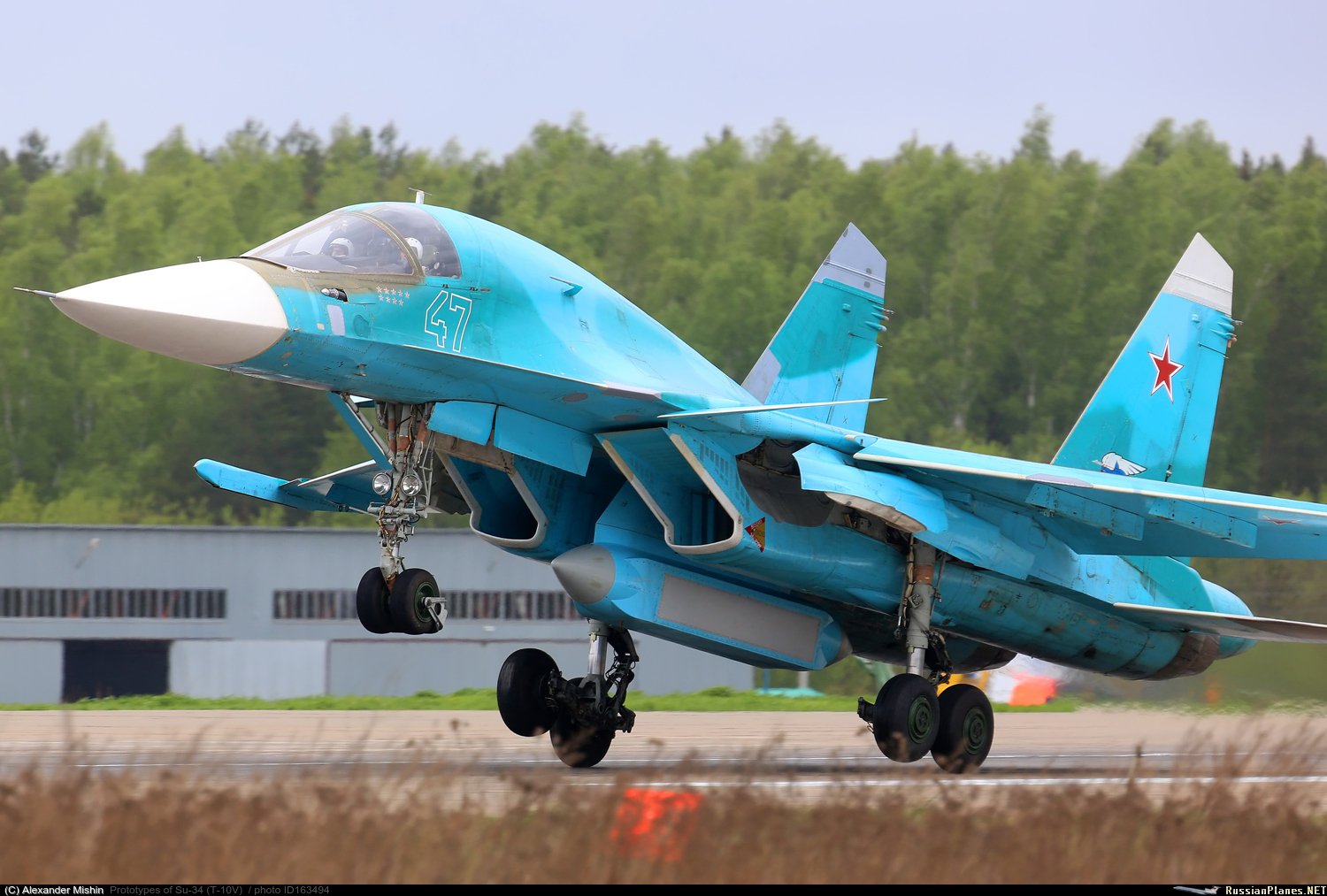
Why are there stars under the canopy? Do they represent bombing missions from the Georgian campaign? That is where western fighters mark their “kills”.
FBWthey can always use carriers wuth baval aircraft (in any case, where they go, a carrier comes with then), the LHA’s you forget them or put helicopters on them; having a STOVL aircraft that will use the budget, space and training time for a symbolic carrying capability is a luxury, not a need
Having an aircraft that could not be brought into theater without tanking and transport supply by the USAF, an airfield to operate from, and a permissive environment to operate in, is the very definition of a luxury Marines cannot afford.
This is not my opinion that the Marines are trying to get back to their roots as an air and sea based expeditionary force, they have stated this. There is no room for a fixed wing aircraft that cannot operate from the assets the Marines (or Navy) possess. The F-35B on the other hand, was designed for the Marines according to the specifications they desired. I’m going to guess they know which aircraft fits their doctrine.
The trend of the last 10-12 years on how the Marines , and Marine air has operated is not guaranteed to continue. In fact, they have made it clear that they are distancing themselves from those types of operations. This is reflected in the restructuring they are undertaking, adding vertical transport, aviation, sea basing, and cutting ground combat elements.
FBWif you want ONE ideal customer for the A-10, it would be the USMC. Perfectly suited for CAS, long loiter time, lots of ordnance and sufficiently simple to be used on advanced airfields… but then, of course, it is not the latest and shiniest toy in town, so they’d obviously turn it down
TBH, the Marines would not be interested in the A-10 for very obvious reasons. They are focused on being an expeditionary force. Even though they were forced to operate as such over the past decade, they do not want to be looked at as a second army (a therefore expendable).
With the refocus on expeditionary and amphibious warfare, pivot to the Pacific and all that, there is no room for the A-10 in that structure. Second, exactly how are they going to incorporate the A-10 onto LHA or Carriers? That would be why they have used, traditionally the same aircraft as the Navy (Though all the squadrons of a MAW are not sea based, they are interchangeable with the Marine squadrons based on Carriers).
FBWGiving up MAWS ? -unlikely
Seriously, start reading the links provided. Stop voicing irrelevant opinions. The quote was from the DAS demonstration at the Paris air show in 2011, do you really think your opinion trumps what has been demonstrated and stated repeatedly?
FBWwell, I’d put the lens before the sensor, but, overall, I agree with your quote: for the same technology, larger photosites give you better signal to noise ratio i.e. better sensitivity. The problems start when you need to check the details in a picture. At some point, the smaller pixels will allow you to see things that the larger ones will leave in a blur
This whole thing seems like a silly argument. There are plenty of images you guys can view of images generated by DAS. The only thing I’ve not seen is how clear the picture is when the AN/AAQ-37 sensor is zoomed in on a target.
DAS sensors can be zoomed electronically within their field of view to let the F-35 pilot take a closer look at a selected target
http://www.aviationtoday.com/av/military/Keep-One-Eye-Out_75101.html#.VV3N3jjbK1s
FBWCould this weapon enable to have significantly smaller internal bays on the LRS-B? The B-2s could be reserved to use the GBU-28s/MOPs, etc… the LRS-B could be made smaller, lighter and cheaper.
The dimensions of the LRS-B contenders was probably frozen after the RFP last summer. The contract is to be awarded this summer. Odds are that the competitors already had prototypes flying for the program to move forward that fast.
FBWHas there been studies to integrate the F-35’s HMD on the F-22? The HMD could display the video stream coming from the MLD sensors and give the F-22 better night/day SA and a 360deg capability. The MLD has a lower definition than the DAS but I would guess it is still good enough to warn the pilot of incoming threats.
No, it is too bulky and if you look at the seat on the F-35, you can see that it has a large and wide headrest to help support that thing. Using the MLD like DAS is feasible and LM has claimed that it has that capability. It would require some extensive software mods(not easy with the Raptor), however. The new helmet study does mention that very possibility though:
The air force also wants a helmet that overlays display imagery over an external field of view generated by a camera.
The Scorpion HMD has been floated one possible option, was shelved, and has re-emerged as the leading contender to be integrated:
http://www.gentexcorp.com/scorpion-helmet-mounted-cueing-system
FBWThere are around 123 Combat coded F-22A’s. The 110 number is either due to the reason mentioned above, or most likely due to the fact that they could fund that amount for now (this is most likely for full inc. 3.2) and may later issue a follow on contract to bring the remaining aircraft back to standard. The USAF has 123 combat coded F-22A’s, with another 20 in the back up inventory. The rest are used for tactics and testing.
Quite right, there are 143 Raptors included in the Block 35 increment 3 plans. The older Raptors are simply too expensive to retrofit to the block 35 standard. The 36 (35 after the write off) are used for training, the rest for test and the weapons squadron. Not too sure about the Aim-9x only being implemented on 110 Raptors, unless they don’t plan on fitting the ANG squadron in Hawaii with the Aim-9X.
FBWnot read minds, just be realistic about what’s being said..
for example: the thing doesn’t have the software version it was supposed to have before release in order to be at least partially operational – logical conclusion is: it is not ready for combat.
What don’t you get about the software blocks. The Marines asked to go to IOC with Block 2b, unlike the USAF which will IOC with block 3i. It has the software it is supposed to have for Marine IOC. It is also capable of combat. Your distortions are tiresome as you have not actually followed the program, or read what has been presented in the above posts. The arguments you present are weak, such as:
that’s why they had to put special coating on ship’s deck, but hey, don’t let reality disturb your dreams
As I pointed out in my response:
Or did you forget the modifications to the CdG to operate the E-2 Hawkeyes?
Happens all the time, Carriers (and aviation amphibs) may stay in service 30-45 years. Sometimes they require modifications to operate newer aircraft
If you will ignore all evidence to the contrary and post overly simplistic, distorted, and fallacious comments then what exactly separates you from any one of the posters accused of trolling in the Rafale thread?
FBW@PhilpG-
It would seem that you are confusing Concurrency with software block upgrades.
FBWSolarWarden;2226937]
that’s why they had to put special coating on ship’s deck, but hey, don’t let reality disturb your dreams 😉
Seriously TooCool? Do think this is the first time there have been modifications to ships to operate a new type of aircraft? A dose of reality may help you.
Or did you forget the modifications to the CdG to operate the E-2 Hawkeyes?
Happens all the time, Carriers (and aviation amphibs) may stay in service 30-45 years. Sometimes they require modifications to operate newer aircraft, get over it.
FBW.
BTW, the lifecycle cost of Norway’s 52 F-35As was stated to the Canadian parliament on 24.11.2011, by the head of Norway’s Department of Defence Policy and Long-Term Planning, to be estimated at $40 billion. The programme cost referred to before is not the lifecycle cost. It is the predicted cost of the acquisition programme, including initial spares, etc.
Link
Note this –
😀
Yes, great, we’ve all been versed in various types of costs-acquisition, O&S, development, APUC, PAUC, so on. No need to repeat it, think you missed the point.
I was not referring to the lifetime O&S costs though. You made the jump to compare the two. The point was about the claim of “1/3 the costs associated with the F-35”
I was using the costs associated with the contract to purchase the aircraft, simulators, spares, and support at 8-10 billon with the contracts and estimates for the 60 Gripen E. The lifetime costs for either the F-35 or the Gripen E are still moving targets i.e. estimates. (U.S. F-35 lifetime costs estimates range from 1.5 trillion to 845 billion, pretty large range)
P.S.- when did they quote 40 billion to the Canadian Parliament? I have Norway quoting 248 billion NOK in 2013 (32 billion dollars)
http://www.reuters.com/article/2013/12/11/norway-f-idUSL6N0JQ1KE20131211
FBWMmmm… flightglobal article is dated 18 May 2015 so I presume that Mr Nillson’s statement was made recently. It’s not an opinion he is stating – he claims Norway has set aside a certain amount to finance F-35 whereas Sweden has set asidea third of that.
Just thinking of $1 trillion lifetime cost for ~2,500 US F-35’s: that comes out @ ~$400 million a piece. Don’t remember if the US figure includes development but it is of minor importance given the number of frames. $13.5 billion for 60 Gripens reported in defensenews in 2012 comes out @ ~ $225 million each.
I won’t be surprised if Gripen cost is lower than the 2012 estimate. And I expect the Norwegian lifecycle cost will be substantially higher than the US one so I think it is not implausible that Gripen will cost Sweden about a third of what F-35 will cost Norway.
The reason I posted was many will recall that Norway assessed Gripen as being more expensive than F-35 to and ordered F-35. Which appears to be utterly inaccurate.
The estimated total value of the contracts signed for the support and pre-work as well as production contracts 2013-2026 is over 7 billion.
http://www.airforce-technology.com/news/newsfmv-awards-gripen-e-development-support-contract-to-saab-4513389
That does not include lifetime O&S costs. So even the quoted 13.5 billion lifetime program costs are of questionable accuracy. As contracts start to get signed for the Gripen E production in Sweden we will get a better overall picture of costs associated.
I do not doubt that the lifetime O&S costs of the F-35 will far exceed that of the Gripen E. We’ve had a considerable amount of discussion over the Norway F-35 program, it would be safe to say that some of their ahem, “assumptions” about the F-35 costs were inaccurate. I would also say that Aerospace executives quoting prices as “proof” of anything, or comparing their product to others is about as worthless as forum members playing the “my fighter is better than yours” game.
FBWWhat part of “development and lifecycle costs” didn’t you get? Apples & oranges.
What part of NORWAY”S PROGRAM COSTS DID YOU NOT GET. Good luck with finding apples to apples comparisons. Bottom line, 2.5 billion quote is no longer accurate for the purchase of the Gripen E, how much more it will be? Even at the 80 million per copy quote in the attached article that leads to nearly 5 billion for 60 aircraft. Now do you think the SAAB exec’s statement was accurate?
Helps to read before applying snark there Swerve.


 Sign In