FBW
FBWIn terms of acceleration, the impact is not negligible:
For an F-15E with the -229 engines, with a massive static T/W ratio at 45,000lbs of 1.296 here are the numbers clean and with 4 aam:10,000 feet clean mach .8 to mach 1.2: under 16 seconds
10,000 feet with four aam: 17 seconds- not much difference40,000 feet clean: 40 seconds
40,000 feet with 4 aam 45 seconds
a 12.5% decrease in accelerationmax speed difference is negligible for the F-15 because it is time limited but roughly .1 mach.
For the F-16C which is much lighter fighter, at a gross weight of 24,000lbs ( which means it is low on fuel because the aircraft actually weighs 20,000lbs+ (not 19,000lbs as often quoted) with pilot and all lubricants and unusable fuel etc, it will touch mach 1.95 clean.
With a DI of 50, reasonable if not low for 4 aam and pylons it’s under mach 1.8The acceleration also takes a hit:
at 10,000 feet 24,000lbs clean mach .8 to mach 1.23 takes 24 seconds
at 10,000 feet 24,DI of 50 mach .8 to mach 1.23 takes 39 secondsclean at 40,000 feet mach .82 to mach 1.24 takes 61 seconds
with a DI of 50 mach .82 to mach 1.24 takes 77 secondsSaying that 4 missiles and the associated pylons does not have an impact on acceleration is obviously wrong. Top speed is a little deceptive since both of the fighters are time limited on fuel so top speed is hypothetical anyway, the F-15E will not go above much above mach 2.3 clean or with missiles as it runs out of fuel (and the four aams are semi recessed so very little drag there). The F-16 looses about .15 mach with a DI of 50 ( the F-16 is also listed as a mach 2 fighter but the flight manual tops it out below mach 2, so I don’t know)
The point is: a smaller fighter is impacted by even the addition of pylons and missiles. The F-15E comes off better because the drag impacts it less, and frankly 4 semi-recessed missiles are not going to add a ton of drag (good news for the Typhoon).
Edit- The DI 50 is the lowest listed, for a reason. Yes, the F-16 with two pylons+ missiles and two wingtip missiles can have a DI around 20, but how often does any air force remove all the other weapon pylons to clean the aircraft off? The DI of 50 about as low as they are going to fly with weapons.
The point of the above seems to have been missed, carrying weapons and pylons has an impact. An impact that is greater on a smaller fighter.
We can parse various DI configurations all day: two wingtip aam or two wingtip and aam on wings with pylons and adapters, or whatever. Even in the QRA pictures, the aircraft are carrying five pylons. Even when empty most will carry a min of centerline and four wing pylons. Most of the time the pylons stay on no?
FBW. They go: DI 0, 50, 150, 200 as a point of comparison.
@Eagle, read the above again a starting point DI of 0 would be a clean airframe. Also, read the note at the bottom of first post. I’m well aware that you can add up the various drag numbers from the stores list. There are, however, no acceleration numbers for those. DI of 50 is a good starting point as you calculated yourself for an aircraft with centerline and wing pylons with 4 aams.
FBWNot so.
The Su-35S is allready delivered to VVS.
But as far as any Empty weight figures, nothing..Good luck waiting for those T-50 figures 🙂
Yeah great the VVS has gotten Su-35S delivered, what does that have to do with the PAK-FA’s weight?
Don’t expect to get the numbers, don’t think the current weights reflect what a 2020 Su-50 will weigh.
FBWIn terms of weight, the PAK-FA development is ongoing. The F-22 added about 10,000lbs going from technology demonstrator yf-22 to production.
The PAK-FA is closer to a production representative vehicle, but aircraft do tend to gain weight moving from pre-production to production. There is a high probability the PAK-FA currently weighs less than the F-22. When the first are delivered to the customer, a comparison of weight will be more accurate.
FBWlooks like 2+2 AAM is the most common loadout after all
Seriously ignorant comment, do better. The point was it’s the LOWEST DI from the flight manual on the F-16C. They go: DI 0, 50, 150, 200 as a point of comparison.
So no, it is not, its just the lowest listed. If that’s the only comment you could make about my post, you completey missed the point.
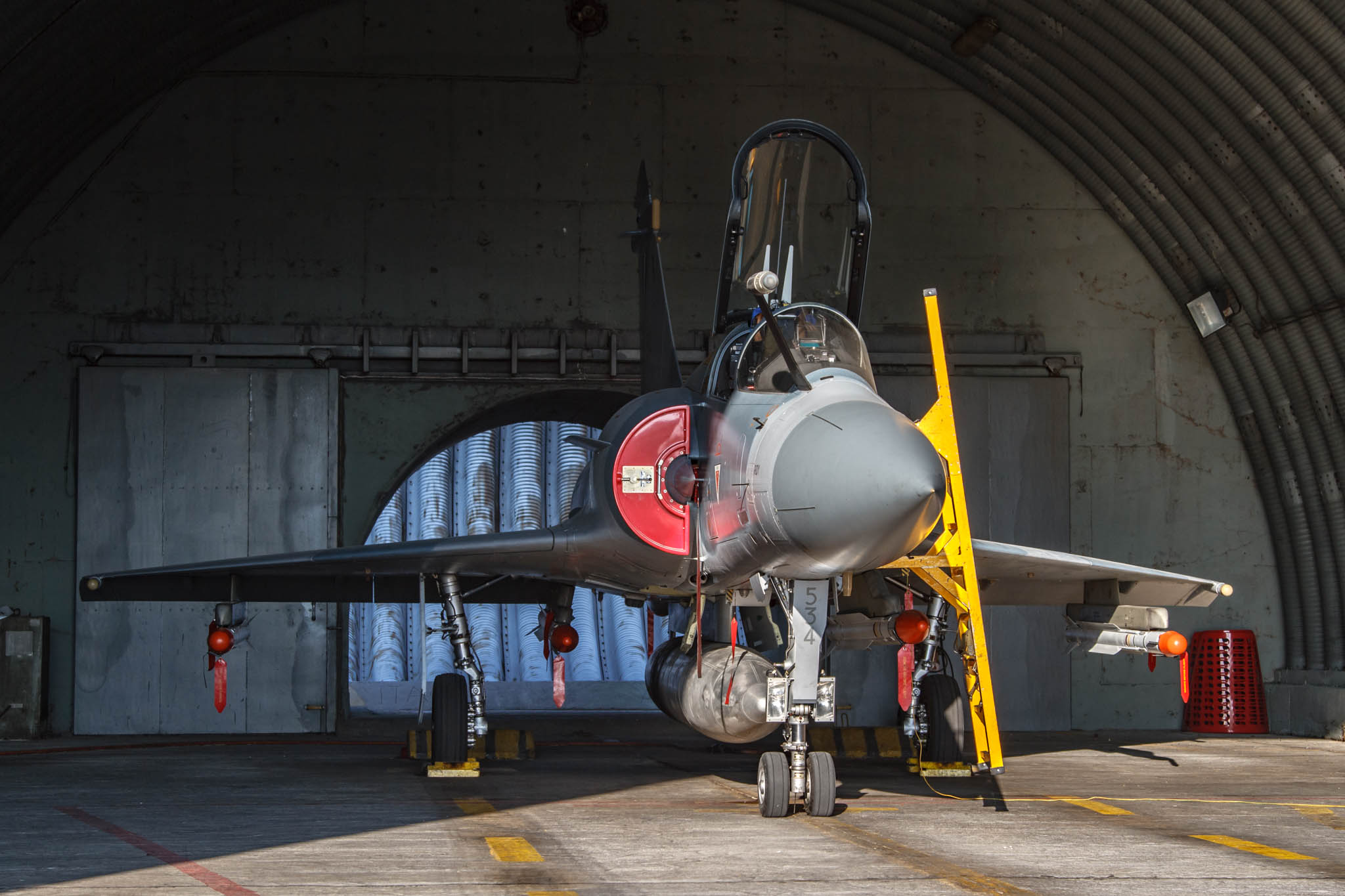
FBWHere a Hellenic Mirage 2000-5EG Mk2 and French Rafale C armed on QRA duty – 2x ARH MICA, 2x IR guided MICA, one drop tank (to be jettisoned).
I have serious doubts the max speed or acceleration after climb is imparted by this loadout in any significant way.
In terms of acceleration, the impact is not negligible:
For an F-15E with the -229 engines, with a massive static T/W ratio at 45,000lbs of 1.296 here are the numbers clean and with 4 aam:
10,000 feet clean mach .8 to mach 1.2: under 16 seconds
10,000 feet with four aam: 17 seconds- not much difference
40,000 feet clean: 40 seconds
40,000 feet with 4 aam 45 seconds
a 12.5% decrease in acceleration
max speed difference is negligible for the F-15 because it is time limited but roughly .1 mach.
For the F-16C which is much lighter fighter, at a gross weight of 24,000lbs ( which means it is low on fuel because the aircraft actually weighs 20,000lbs+ (not 19,000lbs as often quoted) with pilot and all lubricants and unusable fuel etc, it will touch mach 1.95 clean.
With a DI of 50, reasonable if not low for 4 aam and pylons it’s under mach 1.8
The acceleration also takes a hit:
at 10,000 feet 24,000lbs clean mach .8 to mach 1.23 takes 24 seconds
at 10,000 feet 24,DI of 50 mach .8 to mach 1.23 takes 39 seconds
clean at 40,000 feet mach .82 to mach 1.24 takes 61 seconds
with a DI of 50 mach .82 to mach 1.24 takes 77 seconds
Saying that 4 missiles and the associated pylons does not have an impact on acceleration is obviously wrong. Top speed is a little deceptive since both of the fighters are time limited on fuel so top speed is hypothetical anyway, the F-15E will not go above much above mach 2.3 clean or with missiles as it runs out of fuel (and the four aams are semi recessed so very little drag there). The F-16 looses about .15 mach with a DI of 50 ( the F-16 is also listed as a mach 2 fighter but the flight manual tops it out below mach 2, so I don’t know)
The point is: a smaller fighter is impacted by even the addition of pylons and missiles. The F-15E comes off better because the drag impacts it less, and frankly 4 semi-recessed missiles are not going to add a ton of drag (good news for the Typhoon).
Edit- The DI 50 is the lowest listed, for a reason. Yes, the F-16 with two pylons+ missiles and two wingtip missiles can have a DI around 20, but how often does any air force remove all the other weapon pylons to clean the aircraft off? The DI of 50 about as low as they are going to fly with weapons.
FBWMany countries don’t do much beyond intercept missions. I briefly remember that some Gripen users don’t even have A-G modes installed, for example.
True, they are those nations unlikely to see combat as well. The last 30 years has shown that most aircraft flying in harms way are not loaded with 4 aams. Look at the typhoons that have been scrambled to intercept Russian bears, they are not flying clean in any sense of the word.
Yet I agree with the premise of your post, for a nation like Switzerland, which is extremely unlikely to ever fly combat fighters in anything other than a short, fast air policing mission, the Gripen on a cost basis makes perfect sense. Sadly, the voters disagreed.
FBWseems you didnt even check what the discussion was about, (hint: intercept)
but that didnt stop a knee-jerk response
Point stands, look back at DI discussions, all sorts of load outs were compared. Anyway, instead of looking at the most common load outs for actual combat aircraft usage, most want to compare intercept configurations. Not very realistic.
FBWsustained speed is always an issue in any intercept,
and thanks to huge drag, it will need all that fuel to just briefly reach M1.6 before bingo fuel
Seems many of the above posters learned nothing from the extensive discussions about external weapon drag( or don’t want to learn because it upsets their views).
We’ve taken actual drag indexes from actual flight manuals, to compare and if still it is impossible for some to grasp the obvious then…..
Any fighter hanging 2 x 2000lb bombs a centerline tank, 2 x aam and a targeting pod is going to have a very large DI, not to mention the speed limits placed on the aircraft from the targeting pod.
And please, several of the above posts should be in the f-35 thread. Does every thread have to turn into “rant about the F-35” thread?
FBWTrue, it might happen, might not.
Dont bet on it. The first NATO “fighter” to receive an HMD (the good old Marconi Striker) coupled with the latest 180º generation AAM was called… the Jaguar, it also had an LDP and datalink, that was done years before it got canned, the first non American aircraft equiped with a Link 16 was called the Sea Harrier FA2, before it got axed, the Tornado FMK3 was upgraded right untill it got axed, the 16 “diamond standard” fleet RAF GR4 are receiving ugrades now, etc, etc… The RAF upgrades their aircrafts right untill it scraps them.
For the “strap on” kind of arguments try JSR not me.
Now is there any chances that sensor evolution and computing power erode a great big chunk of the tactical advantage that a low RCS gives to the Raptor versus an older generation of aircrafts, more than THIRTY years after it was received by USAF Sqn´s? Is it possible or not? If you say “its not possible”, i have a wonderfull Northrop Gruman video featuring F-35´s stating that agility is a bit irrelevant, something that the General Dynamics 1990 PR chaps would surely disagree.
On top of that we have this Joint Strike Fighter Tier 1 partner with an anti stealth program (reforger) led by this company called British Aerosomething wich happens to build a great big chunk of DAVE, and that partner will field something like five sqn´s of Typhoonsomething, and offcourse that they wont use these three sqn´s of “Davesomething” to model an answer to the latest Russian and Chinese low RCS aircrafts.
And the fact that the RAF was the first NATO air force to field IR seekers linked through L16 across its fleet had nothing to do with their experience with the F-117 and the Raptor and the fact that the US Navy and the USAF agressor units went right after them also doesnt say anything about exercises with the USAF Raptor fleet.
I honestly think that if the USAF didnt believe that the RCS advantage enjoyed by the likes of the Raptor or the JSF wouldnt be seriously compromised by the mid thirties, they wouldnt be looking for a new fighter by that timeframe.Cheers
Time to start looking at RCS reduction as a starting point for an aircraft rather than a gimmick or an advantage that will prove fleeting. Sure, technology will (and has) eroded the idea that stealth alone is a strength unto itself. The USAF made this assertion with the advent of the F-22 and the retirement of the F-117, yet the idea that somehow “stealth” is the singular power of the maligned “fifth generation” is in signal reduction remains.
The simple fact is: the F-22 is not (arguably) the best air superiority fighter because it is stealthy, or maneuverable, or because can super cruise. It is dominant because it has: excellent radar, AN/ALR-94 which is the single most expensive and classified piece of equipment on the aircraft (the abilities of which are not really open to discuss due to the lack of open source references, nor does the USAF tout it unlike SPECTRA on the Rafale because the F-22 is not an exportable product) but the most important factor the pilots have discussed are the advantages provided by the sensors and sensor fusion.
Sensor fusion has become a buzz word in the industry but truthfully it is misused nearly as often as stealth. There simple is no level of sensor fusion on legacy aircraft comparable to the F-22, F-35 despite the claims of Sweetman and others. Legacy fighters can mimic sensor fusion by blending the data from different sensors into the MFD and HMD of legacy aircraft. The difference?
1. They are federated systems, you can plug and play the Elbit SAPIR, or the OSF and the DDM NG on the Rafale, they are not all tied into the ICP as the sensors are in the F-22 or the F-35. These are not opinions, it is a fact.
2. federated sensors have some advantages such as: the ability to upgrade quickly, easier integration onto the airframe, agility in upgrade paths not tied to software/hardware obsolescence.
3. the drawbacks are: to the pilot the sensor information “appears” fused i.e.. they are presented with the data from the array of sensors on the MFD or HMD, but there was no processing in the ICP. The threat database does not cross reference the radar with the IRST and the onboard IDAS as in so called “fifth generation” fighters.
4. There simply is not substitute for having the actionable information presented to the pilot from:
a. all the onboard sensors categorizing and labeling the threat aircraft using all of the sensors available and telling the pilot: what they are facing, where the wingmen are, what the others in the formation are seeing,
b. labeling and tracking of targets even as they pass out of visual, radar FOV
c. a “shoot” list
d. how likely they are to be detected and what actions to take to avoid detection (active/passive)
e. automatically deploying/taking countermeasures and actions to avoid threats. If you doubt that the F-22 and F-35 can do this than you have not read the details released.
All aircraft can do some of the above, some can mimic all. The simple fact is that there is no substitute for tying all sensors and defensive countermeasures into the ICP of the aircraft. Whether the lack of flexibility and difficulty of upgrade paths and software difficulties are worth the level of integration is a worthwhile discussion. Is, for example, the Gripen NG strategy of state of the art plug and play sensors integrated at the pilot level a cost effective way of achieving most of the advantages of sensor fusion? Is it advantageous to avoid the difficulty and expense of a project like the F-35 software worth it if it provides 70, 80, 90% of the capability of sensor fusion provided by ICP integration of sensors in the F-22/F-35? I don’t know.
FBWDisagree with the tone of this article, more to the point, the FGFA and the MMRCA deal would not be in competition had the Rafale deal already been signed and deliveries ongoing. At this rate though, they made be inducting them into service around the same time (if the Rafale contract ever gets approval and budget allows for the FGFA)
FBWAs of fiscal 2013, the (F-22) fleet still has not surpassed 60 percent materiel availability, according to GAO statistics.
GAO claimed roughly 61% availability for 2013:
http://www.gao.gov/assets/670/663196.pdf
The USAF is claiming 69% from 2013 and 72% for this year which would be in line with F-15/F-16 availability.
http://archive.airforcetimes.com/article/20141013/NEWS/310130027/
FBWhttp://breakingdefense.com/2015/03/threat-data-biggest-worry-for-f-35as-ioc-but-it-will-be-on-time/
There’s been some talks of the F-35 being stealthier than the F-22, and in the X-band that’s certainly possible given the more modern RAM used on the F-35. Also, I think “stealthier” can also be attributed to the F-35’s coatings being easier to maintain than the F-22’s. So while the F-35 probably won’t match the F-22’s stealth in bandwidth, it can very well be stealthier in higher frequencies.
Makes me wonder if there will be a deeper overhaul of the F-22 later in its life cycle when it can get this Fibermat material and other good stuff that the F-35 has (updated sensors, etc).
Already has to some extent:
http://www.dailytech.com/F35+Stealth+Coatings+Applied+to+F22/article21321.htm
FBWExcerpts from the Senate armed services committee about USAF:
At 55 combat coded squadrons, moving to 49, it is also our smallest
force ever — by comparison, there were 134 combat coded fighter squadrons in Operation Desert
Storm.
The Active Component Air Force is currently 520 fighter pilots short of the total fighter
pilot manning requirement and our projections indicate this will worsen in the future.
F-15
This investment continues modernization of the F-15C/D with
Active Electronically Scanned Array (AESA) radars, a more capable aircraft mission computer, a
new electronic warfare self-protection suite, and the Eagle Passive/Active Warning Survivability
System (EPAWSS)
Nevertheless, we believe currently funded modernization and sustainment programs will facilitate safe and effective operations for all 196 F-15C/D aircraft through at least 2040,
– interesting, I thought the total “golden eagles was to be 178.
F-16:
Unfortunately, there are important capabilities we were not able to
fund. These include major upgrades like the F-16 Combat Avionics Programmed Extension
Suite (CAPES) program originally planned to upgrade 300 aircraft
F-22:
Increment 3.1 is fielding now and is scheduled for completion in FY17; it is designed to deliver advanced air-ground capabilities including Synthetic Aperture Radar (SAR) ground mapping, threat geolocation, and a Small
Diameter Bomb (SDB) carriage. Increments 3.2A and 3.2B remain on track for fielding in 2015 and 2018, respectively.
FBWhttp://aviationweek.com/defense/patching-f-35-s-data-fusion-gap
None of this was a surprise and the fix is coming:
“Originally, the program called for fielding the jet with its more-robust 3F software. With 3F, pilots can use external weapons stores, the infrared search-and-track function of the Electro-Optical Targeting System and a wider variety of weapons……….Block 2 was never intended to be fielded software.”
The team created the software patch in 22 days from when the decision was made to proceed, which was in February. Test sorties are planned through the end of March.


 Sign In