 MiG-23MLD
What’s the difference between duraluminum and aluminum alloy?
Duraluminun is one of the many aluminun alloys, it has its particular chemical formula
MiG-23MLDEvery fighter can kill another fighter with an AAM, when the pilot does manage to surprise the opponent. Two fighters will share the same amount of sky for a few seconds only. Darting along with Mach 2+ is good for disengagement, but not to mix it with another fighter.
A MiG-25 covers 40 km per minute, your opponent at 15 km per minute. A big AAM goes with 70 km per minute. Opponents will meet with closing speeds at first.
The the faster MiG-25 is more vulnerable by that. Unable to manouvre sufficiant at high speed and do shorten the range of AAM fired by enemy f.e.
(That is the reason, why the Eurocanards are designed for supersonic manouvreability f.e.)
You are in need to be guided by an experienced GCI to bring the MiG-25 into the best firing position. The high speeds in mind there will be a single firing solution only. (That is a further reason, why in modern warfare, the “dogfight” is replaced by “positioning” to make best use of modern high-performance AAMs!) When you fly slower to have more opportunities, you are not in need of a high-speed interceptor at all.About the configuration, you missed the point entirely. The F-15/Su-27 or F-18/MiG-29 share a similar configuration. All four have a wing-system designed to create enough lift for manouvre and strong enough to cope the related G-forces. The MiG-25 does look similar, but the design has traded that capibility for best speed at height. The MiG-25 has nothing to do with Boyd’s theory for fighter, because it is a high-speed interceptor. Used as such with all supporting net-work at hand it can be tasked against high-flying and fast targets at first. (PVO) But that can be done by a MiG-23 from the 70s as well, which can fullfill the fighter-role too.
The best thing of the MiG-25 is its big and powerfull radar-system. Which does allow to “burn” through the ECM of bombers at a given distance. To carry big enough AAMs, which do allow enough blast to damage or bring down a bomber by a near-miss even. Short-range AAMs are added for self-defence or air-policing duties.
Sens
You did not read me well. first i never said they were identical but similar and that the configuration is basicly the same with improvemnts in the F-15 to make it a better dogfighter.
The F-15 uses same elements, two side inlets with horizontal ramps with highly racked walls feeding two independent side by side engines respectively and twin fins with a small vestigial rear fuselage.
However in the F-15 the use of aluminun and titaniun reduced the weight to levels where the almost same thrust yield engines could give a 1:1.2 TWR.
it is true the airfoils are slightly different, one was made for high speed and the other was compromised to have excellent high speed and at the same time agility.
the F-15 is not as advanced as the Su-27 in terms of configuration, the Su-27 is more like the F-16, it has more fuselage wing blending and more fuselage lift.
The F-15 is something in between the MiG-25 and the Su-27 though, but it is not as advanced as the Su-27.
The F-15 has little fuselage blending and besides the tailbooms and blunt LERXes it has little fuselage blending compared to the Su-27.
If you use logic it is not the same 36000kg x 4Gs=144000kgs at Mach 0.9 to 24000kg x 4G = 96000kg at Mach 0.9.
The F-15 at Mach 0.9 has more thrust available than the MiG-25
besides the wing are different The MiG-25`s tapered wing has a leading edge sweep angle of 42.5 degrees in the root and 41 degrees in the tip with the trailing edge sweep angle of 9.5 degrees, dihedral of -5 degrees and setting angle of 2 degrees. The wing airfoil is 3.7% thick in the root and 4.76% thick in the tip.
while the F-15`s The wing planform of the F-15, shown in figure 11.36, suggests a modified cropped delta shape with a leading-edge sweepback angle of 45°. Ailerons and a simple high-lift flap are located on the trailing edge. No leading-edge maneuvering flaps are utilized, although such flaps were extensively analyzed in the design of the wing. This complication was avoided, however, by the combination of low wing loading and fixed leading-edge camber that varies with spanwise position along the wing. Airfoil thickness ratios vary from 6 percent at the root to 3 percent at the tip.
http://wp.scn.ru/mig_okb/planes-mig25-main
http://www.globalsecurity.org/military/systems/aircraft/f-15-design.htm
In steady, turning flight the lift developed by the wing must balance not only the weight of the aircraft but the centrifugal force generated by the turn. (The term “balance” is used here in a vector sense; that is, the lift vector must equal the sum of the weight and centrifugal force vectors.) The load factor is defined as the ratio of the lift in the turn to the weight of the aircraft and is usually expressed in g units, where g is the acceleration due to gravity. Thus, a 2-g turn is one in which the wing must develop a lift force twice the weight of the aircraft.
this shows us that the MiG-25`s wing was designed for high speed but low lift with respect the F-15`s wing, i do not denied that however the main factor here is in the F-15 you have more lift and more thrust.
However in general concept both aircraft are very similar
MiG-23MLDIts rather the different requirements.
And I’m pretty sure the MiG-25 and the F-15 have quite different airfoils.If fhe MiG-25 needed a good twr, it would have it.
F-16?
The F-15 wouldnt have been built with steel because that would result in a bad air superiority fighter.So what, the Harrier has a sustained Mach ~0.9 speed and thats enough to kill an F-15. And saying the missiles of the MiG-31 are better than the F-15 is a broad statement.
The MiG-21F was made mostly of aluminum alloy, with some steel, magnesium, and glass fiber parts; in the other hand the more modern MiG-23 was built of duraluminum, steel and titanium
See that by 1967 the MiG-23 was still using some parts made of steel. Nevertheless 80 percent of the airframe structure of the F-16 is of conventional aluminum alloy, and about 60 percent of the structural parts are made from sheet metal. An attempt was made to minimize the amount of exotic material used in the construction of the F-16 in the interest of saving cost. About 8 percent is steel, composites are 3 percent and titanium is 1.5 percent.
Titanium was the main reason why was very difficult to make the SR-71/YF-12
Disregard the time an airframe was built, without considering the materials an aircraft is made of it is impossible to understand why the early jet fighters with low thrust yield engines could not achieve high thrust to weight ratios
In the MiG-21`s case the engine was not as powerful as that on the F-16 and in the MiG-23 its VG wing penalized the whole design with an amount of weight that reduced the high thrust yield of the R-29/R-35 jet engines
MiG-23MLDOh dear MiG,
Two posts where you do not bring an single point that has not been covered before.
All of you facts and figures are irrelevant as they are ‘cherry picked’ to highlight aspects that you wish to use.
As soon as the big picture is revealed these are also revealed as irrelevant.
Statements about how the A-12 was not high tech in materials reveals your lack of knowledge and understanding…….
We know already the YF-12 was not good as a MiG killer….it wasn’t designed for it.. Lockheed knew it wasn’t good for it…they proposed a different airframe for that mission.
If they had believed it could be transformed from one to another they wouldhave done the work. They didn’t, so does that tell you anything?
Or are so so blinded by the fact that whilst the funding was approved the programme was still cancelled because in reality it was a plane with no viable mission…..
Every one, except you perhaps has a clear view of the sequence of events and the cuases of both the F-X programme and the end of the AMI programme. This overall view shows clearly how one mission was enitrely halted and the airframe proposed for that role not procured.
It also shows without a shadow of a doubt an dentirely separate programme for the F-X spec….with no cross overs…. Lockheed did not propose the YF-12 for that mission, big triple sonics, yes, lighter more agile post 67s yes, but never the YF-12. With that in mind, please cna you then tellus how one programme affects the other? It does not.
The USSR had an ercon and interceptor programme, it was required , it had a valid mission and was procured….no ifs of buts….no question.
Does that mean it was better, no, it means it was procured. Does it mean the YF-12 was fundmentally flawed. No it means it was a tightly focused design, with massive basic choices made to achieve its high speed and range and stability…which made it unsuited for other roles…
A bit like the C-5 really..basic choices made to allow it to achieve its aims. Yet if asked to adapt to other roles not a good solution…
Your arguements are not founded on understanding of the subject matter, they are combled together from isolated facts and figures, regurgitated when you feel it might help make a point but failing to see that they are thin disguises for a vacuous position.
This thread was a good idea in order to share our views on Boyd’s ideas.. but has degenerated into a diatribe of the MiG 25 V Blackbird again…such a shame…..:(
Michelef
to understand Boyds theories, you have to see that technology plays a real important part of that, earlier designs did not use some technologies that without them there is no chance of making agile fighters
For example, while the SR-71 was built using titanium in most of the aircraft, the manufacturing process proved to be difficult, yes it is true the Russians used steel to build the MiG-25 however using steel proved better in terms of the mass manufacturing of a Mach 3 aircraft, the F-15 uses Aluminun and titanium to lighten up the airframe structure, this made the F-15 an aircraft with a 1.2:1 thrust to weight ratio, the MiG-29 uses great amounts of aluminun in its manufacturing, this also gives it a 1.2:1 thrust to weight ratio however consider the MiG-29 is almost as big as the F-15 and it is much lighter.
The F-15 was built using aluminun to lighten up the airframe, they did not use so extensively titanium in the F-15 airframe as they did in the SR-71 airframe, why? simply to lighten up and ease manufacturing of the airframe.
The Eurofighter uses lots of carbon fiber this reduces weight to a degree with a little bit more powerful engines than the MiG-29. it achieves supercruise and is lighter than the MiG-29, this proves you that materials are very important to achieve better thrust to weight ratios
MiG-23MLDWhat did you learn from that pictures above. Nothing a fear. Despite a similar layout those do show two very different aircraft. There is no shortage of infos about both to work it out.
One is an air-superiority fighter and the other is a high-speed interceptor.
When the MiG-25 is unable to fullfill the role of the F-15, the F-15 can be used in the interceptor role too.
The limitations of the MiG-25/31 are aware to the Russians. They never did use it in the air-superiority role for obvious reasons. So non is surprised about the lack of success with the MiG-25, when it was used in the wrong role/mission.
Sens
The early MiG-29 used a similar configuration to the F-15 and MiG-25, and this was because the F-15 and MiG-25 are not as different as you think, both fighters are basicly the same aerodynamic configuration, and both designs have been tailored to execute different missions due to difference in technology, while the MiG-25 is a Mid 1960s aircraft the F-15 is an early 1970s aircraft the difference in technology made them different in capabilities.
the MiG-25 is built mostly of steel, the F-15 uses mainly titanium and aluminun, Since the MiG-25 has a heavier airframe it has a worst thrust to weight ratio even when both aircraft have engines with the same yield.
The F-15 has small blunt LERXes and a little bit more fuselage blending
The MiG-25 has a less detection range radar however it has a great point it can sustain Mach 2.3 for around 25 minutes.
Boyd theories would not have been put in to practice if the F-15 would had been built mainly of steel.
however the MiG-31 has better missiles than the F-15 and has a sustained Mach 2.3 capability, that is enough to say the MiG-31 can kill F-15s
MiG-23MLDWhere am I doing that? I never claimed it was the greatest aircraft in the world, just that your knowledge of the history of the MiG-25P, the history of the F-12B, and the delineation between ADC and TAC is stunningly limited.
Of course it was limited as an interceptor (not a fighter). It was designed that way for ADC. If you had any understanding of the mission of ADC you’d realize that the F-12B was suited for ADC service, but not TAC service. Just like the F-106. The Tu-128 wasn’t able to be re-tasked as a fighter either, it was a pure interceptor armed only with the R-4, but that didn’t make it a failure, did it?
Irrelevant as the F-12B was not a fighter.
Irrelevant as the F-12B was not a fighter.
Without going into a comparison of the technical capabilities of the weapons systems on either aircraft, the point is irrelevant as the funds for the F-12B were already there, as I have explained previously, and you have ignored constantly.
Irrelevant as the F-12B was not a fighter.
Of course it was ill suited for air combat maneuvering. It was never designed for that role. It was never intended nor offered as a MiG-25 killer.
Which would have been overkill for an interceptor. Stop talking about tactical fighters engaged in ACM and get with the program and find something actually relevant.
Again, you are acting in total and complete ignorance of the fact that the F-12B already had funding, and that was after the FX program began. One did not affect the other.
What defense cuts? It already had funding approved. Reference my previous point.
SOC everything has to do more with technology than role, in the late 1950s and early 1960s engine technology was not so advanced plus the use of exotic materials was not so common, both the YF-12/SR-71 and MiG-25 were designed as Mach 3 interceptors and recee aircraft however the main difference of both designs is weight and thrust, while the YF-12/SR-71 was designed to fly long range missions at Mach 3, the MiG-25 was designed with shorter range in mind, due to the limited thrust engine technology of the time could offer and the large amount of fuel it was needed to fly long distance the YF-12/SR-71 ended as a big aircraft.
The MiG-25 was different they wanted a short range aircraft the aircraft did not need as much fuel as the SR-71/YF-12 needed therefore the aircraft configuration did not demand a big aircraft, in fact the MiG-25 is still in the range of modern fighters in what respect size and weight is concerned.
This allowed to the MiG-25 a fighter like configuration and more agility, while the YF-12/SR-71 could fly long distances at Mach 3 plus this made it a less agile fighter than the MiG-25.
The YF-12 was designed with fuselage blending but it was too heavy to take advantage of this and its limited thrust to weight ratio due to early engine technology in spite of the ramjet like technology it uses did not give high thrust to weight ratio.
if you look at the F-15 and MiG-25 you look both aircraft look alike, however thanks to Boyd`s recommendetions and specifications and the fighter mafia lobby, Mc Donnell Douglas engineers looked for new ways of reducing weight and increasing thrust, by July 1972 that technology was available, the F-15 is not more than light weight MiG-25 with a bubble canopy, blunt LERXes, tail booms and twisted wing this trade of course speed for agility.
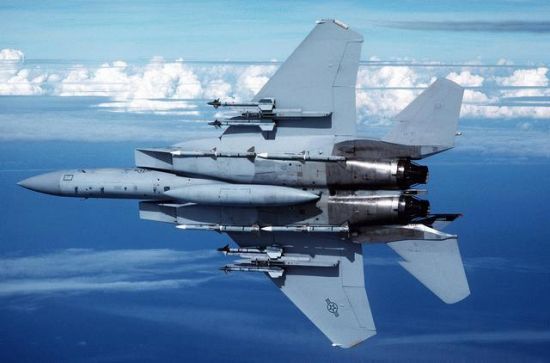
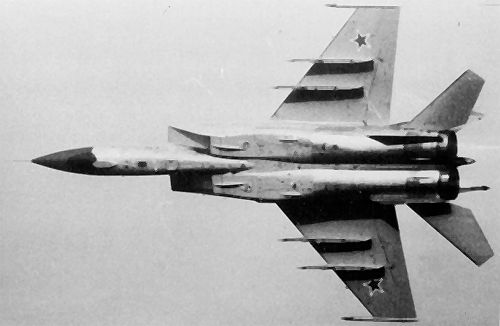
Now the question is why the YF-12 failed? well simple, as a fighter this was a typical third generation fighter, that traded speed and range for agility because in the late 1950s speed was considered better than agility, agility was considered something of the past, while the F-86 and MiG-15 were gunfighters in Korea, the YF-12 was designed as a super fast long range air to air missile carrier, Boyd was fixed with dogfights and it is logic he was a gunfighter with his F-86 in Korea, consider the YF-12 flew only 10 years after the korean war ended so as a fighter was at the time a super machine, probably it was deemed the best fighter ever in 1963.
Lack of thrust, low yield engines and heavy metals and alloys used in the construction of the YF-12 were traded for excellent aerodynamics in the late 1950s in order to make 3 Mach fighters, however supercruise at Mach 3 and very long range make the YF-12 non maneouvrable, this in fact will explain why the MiG-25 main variant was the interceptor while the main varian built of the SR-71 was recce, becasue the Russians made an interceptor a recce aircraft while the americans made a recce aircraft a fighter 😉
A YF-12 is almost 60% more heavy than a MiG-25 and an SR-71 is almost 100% more heavy than a MiG-25, all of this made it a non candidate to be offered as a killer of the Russian MiG-25.
MiG-23MLDMiG,
Yes the YF-12 was not a MiG killer…it wasn’t agile enough to do so….it was no designed to do so. S
It was not able to fulfill the requirements of the F-X programme….we knew that already, so did Lockheed as they DID NOT submit it to do so.. they designed something else, even in 1962…when the YF-12 was already flying.
We are finally getting down to the real cause of this damn arguement….
The YF-12 was submitted as the aircraft for the AMI spec.. the one for which the F-108 was proposed.
The FX spec was written conconcurrently to the AMI as hte fighter aircraft in the Interceptor/ fighter mix.
So… when the first FX designs were deem unsuitable in the light of experience and Boyd’s vocal attacks the FX spec was altered to respond. (Note Lockheed did not submit a variant of the A-12 family for this.. does it give you a clue?)
When it became clear that the AMI mission was not longer credible (as there were no Advanced bombers to counter) the AMI spec was redundant.
Now this is the key bit….
The AMI spec and the FX spec were very very different at the time the YF-12 was flying. The was no way an airframe suitable for the AMI mission would be able to fulfill the FX mission.. for one thing the FX spec called for a single crew fighter, plus a bubble canopy etc etc…none of these are compatible with the AMI spec….
So we have two different beasts doing two different jobs.
One has a future demand, one doesn’t. Which one gets canceled? The one that has no mission.
The Mig 25 interceptor was produced not because it was great, but because there existed a very high speed intercept mission…. at every border of the Soviet Union.
The Blackbirds were deployed to the West, to the East, they could have deployed to the South.
In order to counter that ‘threat’ even if just an intell plane a large number of relatively short range 25s were required.
In addition the recon version was a great asset to the Soviet and Client airforce, it was their best ‘collector’.
So it had a future, it had a mission to fulfil.
The YF-12 did not.. no Mach 3 threat, the existing airframes (F106) had more than enough performance to deal with the threat…so why spend the money on something that was not required.
But in no way can the FX be viewed as the main reason for its cancellation. Yes the money saved permitted other programmes to go ahead, but to say that the YF-12 was unable to be adapted is to avoid the fact that it was itself an adaptation of the A-12….
So you are, as ever missing, the overall picture…the fighter version of the A-12 was not procured, nor was the bomber version… nor was the M-21 drone carrier version…oh the Strategic recon version was purchased tho and used for the next 30 years quite happily.
So surprise surprise a dedicated recon bird was not really suited to do anything else.
So can we stop pretending the MiG 25 was the best thing since sliced bread because it was used operationally and that the YF-12 was a POS because it wasn’t and have a conversation about aviation, not about irrelevant facts and figures regurgitated ad nauseam?
Michelef
Undoutedly you like it or not the MiG-25 has been one of the best fighter-Interceptor aircraft ever built, it proved to be a better interceptor than the YF-12.
However we have to understand the limits of aircraft technology also influenced the aerospace trend in the aerospace technology seen in the 1960s.
Modern aircraft such as the Eurofighter Typhoon or the F-22 use large amonts of carbon fiber materials, the early MiG-25 used steel, while The F-15 fuselage is a conventional semimonocoque design. By weight, half of the latest F-15 structure is built from aluminum alloys and one third from titanium, in the other hand the Mig-25 designers instead chose welded steel for most of the primary structure with special alloys of steel and titanium for the hottest areas like the nose and wing leading edges. All told, about 80% of the plane’s structure was composed of tempered steel, 11% of aluminum, and 8% of titanium. The MiG-25 also required the development of advanced welding techniques to avoid cracking in the heat-resistant alloys. Over 75% of the airframe assembly required some form of welding while conventional riveting accounted for less than a quarter.
sources
http://goliath.ecnext.com/coms2/summary_0199-2697091_ITM
http://www.aerospaceweb.org/question/performance/q0239.shtml
The MiG-25 is quit heavy while the Eurofighter is very light with respect the MiG-25.
the use of modern composites, aluminum or even titanium helped to reduce weight, for example by 1981, the British Aerospace-McDonnell Douglas AV-8B Harrier flew with over 25 percent of its structure made of composite materials. Modern military aircraft, such as the F-22, use composites for at least a third of their structures, and some experts have predicted that future military aircraft will be more than two-thirds composite materials.
source
http://www.centennialofflight.gov/essay/Evolution_of_Technology/composites/Tech40.htm
This has to in part be consider to understand Boyd`s theories without the technology applied to the F-15 and F-16, Boyd`s E-M theory would not have great success since the YF-12 as the MiG-25 did not use the then latest technologies to reduce weight and increase the thrust to weight ratio .
The MiG-25 was in part not agile due to the materials used to make it, the Russians learned the lessons and the 9-12 MiG-29 was mostly built of aluminum, with some use of composite materials.
MiG-23MLDWrong, the MiG-25P is a high-speed interceptor only. Starting on the wrong foot again. The wing profile and structure does make a MiG-25 unsuited for a fighter role. The external experience is misleading about that, hence the miscalculation of early observers. Directional stability at high-speed was in need in a lot of tail-area. It has othe benefits too, but that can be used only when supported by a purpose-built wing-system and engine-system.
In the West there was no need of a purpose built fighter to intercept a MiG-25RB fe.e., just a capable AAM to an ordinary fighter.
The Mirage F1C with Matra 530 was such a system or the MiG-23 with R-23 f.e. So the Russians did not deploy MiG-25Ps in central Europe really. The basing of such regiments gives away the role in mind. See the present six MiG-31 regiments about that.
Libya did not use its MiG-25s against USN F-14s for good reasons. Seldom used at all and pretty useless. Just good looking for the home-audience.
Here is an European example too.
http://mm.iit.uni-miskolc.hu/Data/Winx/afes/bulgarian.html
or interceptions in the 80s
http://en.wikipedia.org/wiki/Dobroslavtsi_Air_Base
Sens
You seem to ignore the MiG-25 combat record in the Middle East and Persian gulf.
In the Middle east the MiG-25 was pitted against other fighters and many times it was able to dodge attack and destroy several enemies, the MiG-25 was used in anger there fighting F-15s, F-14s, F-4, F-111s and F-18s and other aircraft, in fact its kill ratio in the Middle East is close to 1:1 in aerial combat.
MiG-23MLDMiG,
Continuing in the vein you are will do everything to confirm your lack of knowledge and understanding of this subject.
The point you are making, that the MiG 25 is a better fighter than the YF-12 is totally irrelevant. Yes it probably was, but its is not relevant to the YF-12 programme.
If we do some time line research we will learn that the YF-12 programme started in 1961/2 with a mock up review in May 1963. This lead to the first flight of a YF-12 in August of that year. Note that by then the A-12 was beginning to reach its full performance envelope and the SR-71 programme was already underway.
By early 1965 the YF-12 was reaching M3.2 and beginning weapons trials.
These were continued thro 1965 into 1966.The entire YF-12 programme was formally canceled in Jan 1968, with a formal instruction in Feb 1968 to destroy all the tooling, jigs and drawings for the entire Blackbird line (A-12/ M-21/ YF-12B and SR-71).
Lets look at the known MiG 25 timeline shall we?
The first recorded instance is in 1961, leading to the flight of a prototype aircraft in March 1964 (very impressive, but it was the recon version that flew first..). The interceptor variant flew in September 1964.The record breaking flights staged during 1965 ,66, and 1967 certainly raised the profile of this aircraft’s performance. But it was in 1969 that production of the service standard aircraft commenced. The recon variant was introduced immediately, whilst the interceptor variant was introduced in 1972…three years later and some 5 years after the cancellation of the YF-12B programme.
It was only in 1976 that the real capabilities of the airframe were defined after examination of the Belenko interceptor.
Lets look at the FX programme shall we as well…..which emerged from a mass of options in the early 1960s. By 1965 it was clear that the emerging proposals would be unable to fight the then current war in Vietnam….as the fast, big and heavy fighters being used there were being defeated by the likes of the MiG 17…..this began a realignment of the spec, reinforced by the the records being broken by the Ye 155/166 and 266 airframes. By 1967 it became clear that the FX was going to be pitted against this new generation of airframes as well.
The McD proposal for the FX was declared the winner in 1969 and first flew in 1972, the B version entered service in 1974 and the first combat ready A models entered service in 1976.
If we look at the overlap there are a few years of overlap between the three programmes. However the important part of the overalp is missing entirely.
By the time the MiG 25 programme started the A-12 airframe was already ready, the RB-12 programme running and well as the YF-12 programme. Clearly its is challenging to design an airframe to combat an aircraft that does not yet exist, but allowances could have been made for this.
By the time the initial prototypes (recon) of the MiG 25 flew th YF-12B was already in weapons testing phase. Whilst the record flights of the Ye 166 in the period 1965 to 1967 certainly raised its profile there is little doubt that the Blackbird team did not regard these as a threat to the performance of its airframe.
It is interesting to note that the FX programme in this period was undergoing a massive realignment, taking notice of the inability of its current crop of fighter aircraft to deal with the existing threat.
So one could in theory understand that the emerging threat, when applied to the YF-12 programme could cause production funds to be vetoed.
But what about out friends the F-102 and F-106…lets look at some time lines there shall we?
Opps; the first flight of the F-106 (nee F-102B0 was in 1956… but problems revealled during testing delayed its service introduction until 1959.
It served all through the 1960s with gradual upgrades and modifications, regardless of the ‘threat’ posed by the new generation of Soviet aircraft, entering a ‘major’ upgrade program in 1972, some 8 years after the first flight of the MiG 25 and some three years after the awarding of a new generation of US fighters. Indeed it served until 1981 as a front line USAF interceptor…it left US manned service in 1988.
So here we have a potted history of the aircraft that the YF-12 was designed to replace with a fleet of 350 airframes (compared to the 93 F-12s planned). It managed to maintain its front line status for the entire period we are talking about, regardless of the potential threat from the MiG-25… it soldiered thro the FX development cycle and beyond the introduction of both the F-15 and F-16 fighters.
So what does that tell us of the cancellation of the YF-12 being related to the F-15. It tells us clearly that the role of the F-106, for which the YF-12 was the designated replacement; was not threatened in the mid 60s by the FX programme.
If for some reason it had been deemed necessary (and likely) for ADC fighters to tangle with MiGs do we not think that the F-106s would have been amongst the first to be replaced by the F-15? Say in 1976? The fact they were not and it took until 1981 for sufficient F-15s to be avaliable to fulfil this role (in addition to its pure fighter role) is an indication that whilst it was a possibility that the ADC fighters would go to ACM with MiGs it was improbable…it would have required all of the ‘fighters’ to have been defeated (in one fashion or another) for this to occur.
It remained throughout its life a dedicated interceptor, a single role aircraft. for the same airframe to survive the era of the F-4 without it’s exisitance being challenged in the name of flexibility or communality is remarkable…or it was right for its role and that the additional expense was unjustified.
So if we ‘reasonably’ eliminate the lack of suitability for its intended role of the YF-12; as evaluated by the life and performance of its intended replacee, we must therefore look to other reasons for its cancellation.
I think that far more telling and revealling is the short-time between the formal cancellation of the YF-12 programme and the order to destroy ALL of the Blackbird infrastrucutre. This suggest that political rather than military reasons underly the cancellation. This is further supported by the length of service of the remaining SR airframes…
So MiG, get your head out of the details, look to the context in its entirety and then evalutate what you are proposing. Its too easy to dismantle your opinions and thoughts.
Michelf
I do understand the difference in concept between the F-15 and the YF-12, in fact the MiG-25 concept is between both aircraft, the MiG-25 is an F-15 configuration with the role of the YF-12.
What i am arguing is the technical merits of the YF-12 did not allow it to survive defence cuts, that the aircraft was not capable of adapting it self as the MiG-25 did even despite no Mach 3 bombers were ever developed.
The F-X used Boyd`s theories, when the F-15 was designed they knew what they were doing, for example the F-15 has a difference in its favour in Sustained turn rate with the MiG-23 of 2 deg/s to 6 deg/sec depending in the altitute in speed range of Mach 0.9, it can do vertical turns with more energy to shake off a MiG-23 easily, in loops the F-15 will tire a MiG-23.
The MiG-23 with its wings set at the swept angle of 45 deg, had inferior acceleration characteristics and was less maneuvrable close to the maximum operationally permitted overload G limits than the F-15.
This allowed that to an F -15 in the progress of an air combat to gradually accumulate superior kinetic energy in speed and height.
The required entry speed into the vertical maneuver was also somewhat higher in the MiG-23 than in F -15. the maximum altitude to enter into the Nesterov’s loop for the MiG-23 was 4000 m, and for F-15 was 7000 m, in this case at the upper point of vertical maneuvres the MiG-23 had lower speed than the F-15.
This is what Boyd wanted, an aircraft that could shake off pursuers thanks to excess energy, the MiG-25 was not exactly a dogfighter and in the Bekka Valley the Syrians knew it, the MiG-25 was an affordable interceptor but did not use Boyd`s theories.
Boyd used computers to do part of his assessments of aerial combat between fighters, the MiG-25 was designed like the F-4, the Su-15 too, the MiG-23 was designed more with the intention of dogfight but only in the late versions, this was in part becasue the Soviets as the americans got infatuated with beyond Visual range air to air missiles.
However all the third generation aircraft were designed with those parameters, the SAAB AJ-37 and Mirage F1 were not different to the MiG-23 in design philosophy.
Boyd gave an excellent theoretical work in order to create the fourth generation, however was the advances in aerospace technology that allowed the fourth generation to appear, new materials, fly by wire, static unstability, more powerful engines and static unstability allowed the creation of fighters like the F-16
If you are going to dogfight you need bubble canopies, better turn rates, more excess power to defeat inertia, drag and gravity, all of these will allow a fighter to shake off enemies.
The only thing i am doing is saying the YF-12 was not capable of becoming a Mig-25 killer as the F-X demanded and that is because real only remarkable fighters like the F-4 and F-86 were deployed in both services (USAF and US navy) thanks to their adaptability and good technical qualities, however the YF-12 was a third generation fighter even with Mach 3 and what the F-X was about was a fourth generation mach 3 fighter, since the YF-12 was not so remarkable it could not survive defence cuts despite it was not very different from the MiG-25 concept
MiG-23MLDSo you’re saying that no aircraft ever served in one capacity and one capacity only?
Don’t you know what a Tu-128 is?
The B-1B always had a conventional bombing capability. It was the ability to employ PGMs that was added once the nuclear strike role was taken away from the aircraft at the end of the Cold War.
And it’s funny you’re talking about “economic investment”. That certainly applies today, look at the USAF adding an A/S role to the F-22A. Now go back and reinvestigate how haphazard the USAF was when spending money on new aircraft every few years back in the 50’s and 60’s…you know, the time period that is relevant to this discussion.
It was the A-12 being assigned a new role as the F-12. The jet flew in 1963 and was accepted for production in 1967…how quicker should they have moved to suit your tastes?
Of course it wasn’t suited to fight the MiG-25. It was neither designed to do that nor intended to serve in that role, that’s why the TAC FX program began, as opposed to the ADC program resulting in the F-12 (you still have not demonstrated any coherent ability to understand the separation existing between TAC and ADC, by the way). 93 of them were to have been procured. Hardly enough to retask to fly around the world performing MiG extermination.
You do know what a Tu-128 is! You just have the ability to selectively apply your lines of reasoning to Western products only.
Of course they needed to find a new aircraft to fill the air superiority role. There was a project to replace the F-4 in that role, ending up with the F-15. The F-12 had nothing to do with that as it was conceived to fill the requirement of a partially parallel program for an entirely different task.
So you do think you’re smarter than the man working at the OKB. Presenting the destruction of the credibility of your argument, if there was any left to begin with after you consistently reinvented USAF history.
Irrelevant to this argument.
Irrelevant to this argument.
SOC
Man you really defend the SR-71 as the greatest aircraft built, man realize this, as a fighter the YF-12 was limited, yeah very limited, so limited that Lockheed could not re-assign a new role for it as a fighter.
For you is irrelavant the success of the MiG-25 because clearly the MiG-25 was good enough to shot down a F-18 almost 27 years after it first flew see that the F-18 is a very agile aircraft a Boyd`s type of aircraft, and the MiG-25 is basicly not agile it depends in speed to carry out its missions as an interceptor .
Could have the YF-12 achieved the same feat? the MiG-25 was a better interceptor because was designed as a mass produced aircraft not as a extremely expensive low production aircraft.
The AA-6 and AA-8 were designed to kill aircraft at different altitudes speeds and overloads, the MiG-25 succeed because its missiles could shot down a vast range of aircraft ranging from F-4, B-70, F-15s and F-18s.
Your only defence is say the YF-12 had only one role and the reality is the YF-12 was ill suited for air combat and that killed it, it was not good enough to be offered as a MiG-25 killer, it faded away in history as straight flight missile carrier with a very expensive price tag.
In fact Boyd did not recommend such types of aircraft, he wanted an F-16 type aircraft that could use excess thrust to engage and disengage at will in air combat, an aircraft that could shake off easily any pursuer.
To kill the MiG-25 the F-X supporters used his theories to develop the F-15, the fighter mafia knew the YF-12 needed to be kill in order to have extra funds, they did not want a sluggish YF-12 niether were going to advocate for it
MiG-23MLDyou do realize you’re not using Boyd’s theory correctly! 😮 As I indicated before, turning flight relations have been known long long ago. I don’t know why you keep harping on that and didn’t even notice Schorsch’s graphs (i think it was him) are versus ALTITUDE! Dynamic manuevers require energy, that’s been known since Newton’s day. What’s new here is that atmospheric conditions (altitude in an averaged form) implies thrust relations as do compressibility. Instead of going into details, the EM theory (as do all energy theory) is very elegant and short and quickly tells you that the vertical plane manuver is not the “business as usual” type of manuever, especially for a supersonic aircraft. In that respect, the SR-71 did utilize energy manuever and TECHNICALLY that’s to use it to climb to the operational altitude. Without using it, it either fails most of the time or cost exordinary amount of fuel. SOC will tell you how an SR usually climbs to altitude…in fact, IIRC, it’s in the SR’s flight manual! Boyd as an officer also have the duty to influence DOD thinking…and that’s the politics side of his theory. One do need to separate the two because when it comes to politics, technical theories is his strength not organizational theories. No one can prove that more manueverable fighter is better when more manueverable missiles can be argued to be even better….those are all just THEORIES. It can’t be PROVED in clean cut analytical nor numerical form. Can you prove it? What happend in history with hindsight is not proof at all since it’s just one path…in no way is it the most optimal path.
Man Schorsch`s graphs are basic graphs, any aircraft is designed for some duty and specifictions; by the 1950s, the aeronautical science was well developed to know what is needed to design a fast and agile aircraft.
Boyd theories deal more in the way aircraft are flown after the study of dogfights, of course tactics were known since WWI, however Boyd implemented a mix of Physics with tactics.
Boelke organized the German aerial combat resources into Jagdstaffeln (“hunting squadrons”) commonly known as Jastas. Jastas were not attached to any ground units but traveled as needed. They did not patrol but were mobilized in response to sightings of enemy aircraft, which they then hunted down. The Jastas defined their mission as “aggressive aerial warfare.”
The pilots of the Jastas were trained to follow the Dicta Boelke, a series of aerial combat techniques Boelke had developed that covered both attack procedures and tactics. The Dicta included rules such as securing the advantage before attacking, firing only at short range, keeping the sun behind you, flying to meet an opponent in a dive, and always keeping a line of retreat. The Dicta also covered the basics of formation flying–between four and six airplanes was the desired number for an attack, and a plane was never to be stranded alone during a fight.
However Boyd stablish a relation of Physics and tactics using the basic principles of dynamics, this generated the idea that a light, small, with good visibility and high TWR fighter was going to be the best aircraft.
Previous to that the basic trend was fast aircraft with guided missiles.
Source http://www.centennialofflight.gov/essay/Air_Power/WWI_Combat/AP4.htm
http://www.belisarius.com/modern_business_strategy/coram/boyd_at_tech.pdf
Boyd`s theories basicly relate to the fact excess energy will always tip the balance in favour of the fighter with best TWR and lift
MiG-23MLDWhich is totally irrelevant as the F-12B was not intended to fight the MiG-25, a point you continuously ignore in order to continue propagating your opinions regarding the FOXBAT.
Irrelevant as the F-12B was not intended to combat fighter aircraft or the MiG-25.
Irrelevant as both aircraft were the products of entirely separate programs and not intended for the same roles.
Funny, the single-role interceptors of ADC had no problems justifying their existance. Nor did the U-2, SR-71A, C-5, and others.
Or are you saying that every aircraft the USAF bought was multi-role? What air-to-air weapons does the B-2 carry? What ISR package is fitted to the C-5?
They weren’t. The requirement the F-12B was intended to fulfill was for a strategic interceptor and nothing more.
Irrelevant as the F-12B was already an offshoot of an existing platform, demonstrating its use in multiple roles. The USAF had already requested and received Congressional funding for the F-12B, so saying they weren’t going to spend the money on it is also an outright fabrication, or an outright lie, depending on your motive.
Probably because you have no idea about why the MiG-25P was conceived. It was conceived to intercept Mach 3 reconnaissance aircraft, and that comes direct from the former General Designer of OKB MiG, who is infinitely more credible than you are. As a Mach 3 reconnaissance aircraft did end up in service, just not the A-12 the MiG-25P was intended to counter, it made sense to still procure it, didn’t it?
SOC
Come on please no weapon can remain exclusively in one role, aircraft have to adapt to new roles and to fill new niches, why aircraft are given new roles? simply economics, if an aircraft is not capable of doing more works the amount of money it is invested in it is not worthed.
Imagine if the B-1B would not had been given the new task of convencional bomber? or the F-16 would had remained as a light fighter? aircraft roles are not static, you have to milk a design to the degree it remains a viable economic investment.
The YF-12 could not be re-assigned for a new role as fast as its manufacturer wanted, they saw the aircraft basicly was not well suited for the role of interceptor and fighter, yes it was well suited for recce roles that is the reason it became the SR-71.
Why it was not well suited? well because they thought the MiG-25 was an agile fighter and it was not well suited to fight it
As an aircraft the YF-12 was too heavy, heavier than the Tu-128, if war would had broken, and the Tu-128 had to had faced an F-4, it would had fought it by need, in few words machines in war are designed to fight different weapons systems and some might be weapons systems that they were not designed to fight.
the YF-12 had a TWR of 0.4:1 still well below what Boyd recommended
What in reallity happened is the USAF knew the YF-12 did not fill the requierements specified by Boyd and that they needed to create another Mach 3 machine to fight the “agile” Foxbat
And contrary to what you are saying the Russians designed the Foxbat to intercept any western aircraft flying at Mach 3, that included the B-70, F-108 Rapier and YF-12, however they got a really good design and they decided that this fighter was even good to fight other aircraft that is the reason the Syrians and Iraqis got MiG-25 Foxbat Interceptors.
The MiG-25s even clashed with American, Israeli and Iranian aircraft ranging from F-4s, F-14, F-18 and F-15s.
The Foxbat was even able to shot down an agile F-18, see the Foxbat is not a dogfighter but an interceptor like the YF-12

MiG-23MLDQuote MiG-23
“If you are going to war you have to consider that your weapons should be flexible, and the most flexible weapons usually are the best”
This is exactly what Boyd was arguing. Boyd knew that war made it irrelevant as to the initial purpose of a design, he knew that flexibility was key.
But how you get from there to a debate as to whether or not the MiG 25 was better than the YF-12 based on its potential superiority in ACM is a mystery.
Yes, war may have forced the F-12 into ACM with the MiG-25 and after an exchange of missiles they may have mixed it up…and the MiG 25 may have proved superior.
But that was not the reason the YF-12 production order was veto’d by McNamara. He believed in interservice communality. He believed in ecomonies of scale in the industrial sector and he believed in the numbers.
He did not care if the a/c was multirole or not, but he failed to see why the USAF and the USN could not use the same fighter and light attack aricraft; hence his insistance on the F-4 and A-7 purchase by the USAF.
He failed to see why a ‘Tactical Fighter’ aricraft could not become a ‘Fleet Defence Fighter’…afterall they were both fighters… right? His belief was not of flexibility but in communality.
Had he beleived in flexibility the F-111 would not have had two dedicated version from the outset, the F-111 A would have been multi role…..as the F-4was…a fighter, a bomber, a recon platform…all achieved by external configuration changes…He already had the perfect (at the time) model in hand, yet failed to apply its fundamental principles to his favour a/c…this reveals his belief in communality was not a belief in flexibility.
Hence canceling the YF-12 was not one of belief in flexibilty but one based on other reasons…(indeed as it was highly shared with the Sr which the USAF was already procuring and had developed the overall cost was minimal cmpared to a new programme entirely).
No, the reason the F-12 was not procured in production quantities was the realisation that the threat was not sufficient to warrant the response. As the investment in the programme was minimal (compared to the production cost) the cancellation was possible…no sacred cows there…Lockheed was not going to bitch and moan too much, it had SRs to produce already. Sure it would mean they needed a new programme but they had invested little of their resources into the progamme, the CIA havng funded the entire development of the A-12 and the USAF having funded the design and construction of the YF-12…
But trying to say its focus on a single mission was the reason for its cancellation is incorrect. The U-2 is a single mission a/c….yet it still serves. The C-5 is a single mission aircraft, as is the VC-25…yet they are all in service… But they have an on-going mission, an on -going reason to be in service…remove that and they are gone. None of that means they are not good, merely not needed.
let us see one important aspect, both the MiG-25 as the YF-12 were developed to intercept Mach 3 bombers, both were intended to be produced in the same roles and combat niches:
MiG-25R:SR-71, MiG-25P:YF-12 see that basicly both nations did not deploy Mach 3 bombers, then why the Russian put into service the MiG-25P and the americans did not put in to service the YF-12?
The reason is both nations were looking for the same types of aircraft however the MiG-25 was smaller, cheaper, simplier, less sophisticated in few words the MiG-25 was a more adaptable machine in terms of economic terms, initially the F-15 was to be a Mach 3 fighter but the americans knew speed up to a degree is compromised by agility simple physics faster you go harder to turn it becomes.
In terms of technology Boyd`s theories could had not been put into practice in the 1950s in terms of jet technology, without the revolution in technology of the late 1960s Boyd`s work would had been a theoretical work rather than a practical one
MiG-23MLDQuote MIG-23
“Now you have two fighters to deal with the MiG-25 one is not agile but has good missiles of long range and Mach 3 plus speed, in the other hand you have a Mach 2.5 fighter with medium range missiles but 9G capability which fighter the USAF should finance?”
Now where did you get any notion that the YF-12 was supposed to intercept or deal with the Mig 25? Which sources are you using to formulate this hypothesis?
Please share them with us….
I’m just looking thro the proposals for basing the F-12s…all on the North American continent, admittedly one base in Alaska; which concievably places the extreme range of the F-12B in the area of the MiG 25…but to go from there to creating an arguement that ACM (rather than a long range missile exchange) between the two was a likely scenario is impressive or misguided.
But in order to seek out the information; what do you think would have been the result of the F-106 meeting the MiG 25, afterall the F-106 was the aircraft the F-12 would have superceeded? There I think you may find the 25 coming off second best….does that make it rubbish? No because in the F-106 V A-12/SR-71 scenario the 106 does not have a hope, the 25 at least the possiblity of doing its job, even if little probability.
So I’m interested in the reasoning, not the numbers, that support your position.
If you are going to war you have to consider that your weapons should be flexible, and the most flexible weapons usually are the best
This has been the trend since the beginings of combat aircraft.
If you make an aircraft with a single niche and limited use that aircraft like an living organisim can not adapt, in war the posibility of using a weapon in different roles is always present.
example the Me-110 from a heavy fighter to a night fighter and bomber, the Mosquito from bomber to fighter it was the same, the F-16 has been the same from light weight fighter to tactical fighter bomber, adaptability is a very important aspect of a weapon system.
The MiG-25 in fact was the YF-12 soviet equivalent, it was not a F-15 equivalent, the F-15 in soviet aviation was the Su-27, however the MiG-25 was developed to counter the B-70, the B-70 never entered production and still it continued and the program was developed to even new roles such as wildweasel, this proves you that saying that the Yf-12 would only have one role is not correct, in war is almost a fact the YF-12 would had need to face fighters as many other aircraft have done in the past.
Mc Namara was not a fool he demanded the YF-12 to be more adaptable to be more cost efective
MiG-23MLDQuote from MiG-23 MLD-
“use his mathematical formulas and you will see the YF-12 was not the best aircraft to fight the MiG-25 and that is the reason Boyd demanded an agile fighter every thing is basicly acceleration related to force either in angular velocity or vertical turning”
This demonstrates MiG why people think you are hijacking the thread…
Let me explain.
1) Boyd’s theories served a purpose, they were not an end in themselves. He was convinced that the trend towards more complex, higher tech, faster, heavier etc fighter aircraft was not the way forward. But he knew that the only way to provide a ‘quantifiable’ way demonstrating the qualities he had found were needed.
Your purpose it to create a hypothetical scenario where two disparate airframe would meet in a combat situation. This scenario ignores the prevalent doctrine on both sides and applies retrospective experience to the scenario.
What is sad is that despite this the answer you come up with is correct. The YF-12 was not as agile as the MiG-25, but that fact was a) not known at the time of the cancellation, b) air to air combat with other fighters or interceptors was not considered a primary consideration in the original spec that lead to the F-108, the YF-12 being an opportunistic stand in…. c) the doctirne that lead to the spec was based on missile technology, not a turning ACM style of combat.
2) You are trying to use a detailed approach to prove a hypothesis. However the inital hypothesis is unsound. The two aircraft are different, one designed as a strategic opticla recon platform and modified to other roles, the other designed as an interceptor of that platform and modfied to other roles.
With that in mind and hopefully you understand the vastly different design drivers of the two roles it is inevitalbe that the purpose deigned airframe will have the upper hand on the modified one.Was the SR-71 or A-12 a better recon platform than the Mig 25R…you bet. It was faster, had a longer range in the cruise, had a greater recon payload and variety of sensors and provided a more stable platform with better results as a ‘take’. Does that mean the Foxbat was not good. Of course not. It gave a very impressive platform an additional role and life and provided an additional capability, but it wasn’t as good as a purpose designed one.
The comparison that springs to mind is ‘is this orange painted apple as good as the real orange? Not its not , but its a better apple.’3) Your approach to the arguement is ‘dogmatic’. There is not pragmatic view, only dogma. This is exactly the underlying problem that Boyd sought to debunk with his E-M thoery. He felt, thorugh his experience, that moving away from the agile, simple fighter was motivated not by experience and demands, but by dogma and ambition, not war fighting necessities. Your approach is to show that becuase the numbers, selectively used, can support your arguement that you are right. It allows no room for the why, no room for the unknowns, no room for the intelligence.
It is this rigidity, this focused vision that Boyd fought in the later half of his career. Trying to demonstrate that the pragmatic approach has to be taken into consideration. The best example is his advice to the Officers analysing the result of the weapons testing on the Bradlet fighting vehicle. It passed all of the specified tests, it was ‘great’… and yet when he reviewed the tests in detail he swa the tests (and hence the numerical evidence used to support procurement of the Bradley) were designed specifically to underline its strengths and to ‘conceal, by omission any of its weaknesses. The prime example of this was the of AP shells against the hull. No AE…no penetration followed by fire. This simple test demonstrated that whillst the hull could resist the initial impact, it was unable to survive a fire….effetively meaning it was disabled by the inital AP round, which by merely considering the results of the AP round test would not have been seen.
You are doing the same, using numbers to shore up an arguement that if one is to look beyond its shown to be irrelevant.
So use your knowledge and interest in the subject to see beyond the facts and figures and equations and understand why they might be relevant and important.
Having an agile MiG 25 is great, but its no use if its still on the ground becuase your EW system has not given you enough time to launch or returning to ground having been hit by a long range AIM 47 during its climb out….
Michelef
I think you are not seeing my whole point of view.
The F-15 is not a result of boyd`s theories, the F-15 is the result of the technology achieved by the late 1960s why? well first are materials, aircraft technology has been using different materials, new higher yield engines and better aerodynamic configurations in order to improve new fighters and in that respect the F-15 is a result of that
Any aircraft has a manual any aircraft manual has graphs and this basicly are based in simple math and plotting of aerodynamic and performance results as such engineers knew since the very early begining of aviation powerful engines were needed to achieve agile fighters
What Boyd did through math is basicly stablish a general stament and premise to base the fundamental principles for agility, this was done in order to redirect the USAF form the trend of sluggish, fast, missile carriers combat aircraft aircraft like the F-4, F-105, F-102 and F-111 that despite excellent electronics were not dogfighters to the one of dogfighters like the F-15 and F-16


 Sign In







