 Amiga500
To admit I already got a lot of bashing today at other forums after I voiced some concerns or sceptics about the possible success of this project.
Commercially, it’d be a total disaster.
The MS-21 timeframes are nowhere to be seen – last I heard P&W downed tools because the fall out was that serious.
The ARJ-21 certification program is also an utter minefield. Years behind schedule with no real sight of light at the end of the tunnel.
The C919 has already been rescheduled a couple of times.
However, there is much more to the program than just $$.
MS-21 will be better than the Superjet. C919 will be better than ARJ21. This widebody will no doubt improve on them all. The gap relative to the others (Airbus, Boeing, Bombardier, Embraer) will close. Eventually, with perseverance, a commercially competitive product will be produced.
Amiga500Is that orders, commitments or options?
Kinda hard to keep track of all the legalese used these days.
Amiga500Airbase operations work well with high sortie rates, until the enemy penetrates your defenses and Red Horse crews are unable to patch holes in the runways as fast as the enemy can make them.
What makes you think there will be any “Red Horse” crews or equipment left after someone fires a few cruise missiles at the airfield?!?
Airbases work well when they are remote and safe from attack. When is the last time the USAF had to concern themselves with a direct aerial attack on one of their airbases?
Amiga500Dispersed operations work well for a few sorties when you eventually run out of jet fuel and munitions
Yes, because using a road as a runway means your very far from transport links to resupply…
oh, wait a minute.
or until the enemy puts a PGM into your makeshift runway.
In which case, you taxi around it and use the rest of the motorway… or turn around and go the other way.
Sweden (for instance) has over 1700 km of motorway. Good luck cratering all of that without shipping massive losses. Oh, and we’ll not mention the amount of regional roads which it was actually built to operate from.
Amiga500Should have war broken out, I am now confident that the Soviets would have slaughtered NATO pilots.
eh?!?
but but but… :confused: 🙁 Tom Clancy…. F-19…. robotic Ivans…. :very_drunk:
More seriously, the Soviet doctrine of majority IR AAMs versus the NATO doctrine of mostly (poor Pk) BVR on the rails would have been overbearing.
The MiG-29 may have many limitations, but what could truly live with an A-11 armed MiG-29 with HMS in a dogfight during the mid 80s?
Amiga500I too, am interested in the source of this claim. Gripen E will also have more composite material, thus a relative reduction of weight.
Ha. I definitely wouldn’t make the assumption that composite == lighter.
Indeed, as far as many PSEs go, the reverse is true! [But it does enable you to do other things metallics cannot.]
Amiga500You know very well that Gripen Demo is a Gripen B converted to Gripen D converted to Gripen NG Demo.
But is it made of paper?
And the Gripen NG Demo 39-7 since 2008 has weight and airframe diferent from the final 3 Gripen E prototypes 39-8, 39-9, 39-10, which will have about 7.8 tonnes of empty mass, greater than 10% more than than the expected value until 2009, 7.1 tonnes (so the maximum external load decreased from 6 ton 5 tonnes). Also the dimensions will be greater than previously expected
If the dimensions are greater than expected, then expect a corresponding increase in MTOW.
Amiga500Holy Hell…
News for you – the USAF happily admit “there’s nothing invisible in the radar frequency range below 2 GHz”.
Amiga500Sequester is the main culprit here
Is it?
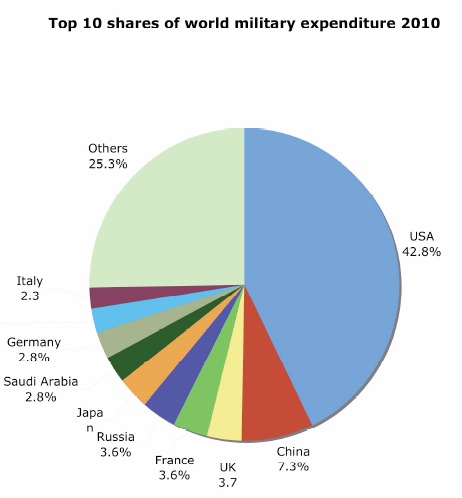
There is no shortage of money relative to the rest. I don’t think that:
It’s pretty hilarious how the American services continually embark on programs with no regard for realistic budgeting and then cry foul when the money isn’t available to service their fantasies.
Is too far removed from the truth.
Amiga500Hmmmm.
Been pondering the thread again when waiting for NASGRO to do its stuff…
There are a number of aspects we need to consider in greater depth I think.
1. Is the primary aim to provide a means of indirect fire to front-line troops engaged with enemy combatants in relatively close proximity? i.e. very tactical support, on a platoon/company level?
2. Is the primary aim to provide a means of increasing the effective range of the overall fire solutions available to the unit commander in the field? Wider tactical support, on a divisional/corps level?
3. Is the primary aim to provide a means of deep interdiction, removing targets that are more toward the infrastructure of the enemy’s fighting machine rather than the machine itself? Which would be support on a theatre level… if not quite strategic.
For (1) I’m thinking hovermast (as mentioned by lukos) which can be used by the troops to paint a target, then either rocket launched LGB or guided mortar rounds.
For (2) your looking at something a bit more A-10 than UAV, but probably with network integration with the ground troops to spread information both in the air and on the ground.
For (3), your going to have to penetrate AD belts. For which I think you’d need a pukka strike aircraft.
Amiga500Lockheed Preparing For F-35 U.K. Deployment
http://www.aviationweek.com/Article.aspx?id=/article-xml/awx_04_16_2014_p0-679080.xml
As I noted in the article, its a couple of ferry flights interrupted by a few circuits of an airfield or two.
Not deployment as understood in any military parlance. Buzzword and spin to paint a mental picture that doesn’t exist.
Amiga500I have 6 gbu-39s or 3 AMRAAMs ( 1 amraam = 2 GBU-39s )…and 2 AIM9Xs and 2 x 27 mm cannons. Also one GBU 31 fits when all AMRAAM are away…or 2 x AMRAAM and 1 GBU 32.
Combat range about 1000 km.
Ceiling 30 300 meters and mach 3 there ( getaway car ). Maybe 600 kts at low. You have to reload quickly to get same effect as you kite does.
So…
1. 5x AAM (1 less than F-22 and 1 more than F-35)… which must be stored internally to control RCS.
2. Mach 3 capable (which means afterburning engine(s), structure capable of dealing with the heat soak and variable geometry air intakes).
3. Combat range of around 1000 km, for comparison, the combat range of the F-22 is about 800km, the F/A-18 E/F about 700 km, the F-16 about 600 km. Your gonna need a fuel fraction in around ~0.35 to achieve that.
4. Use of the radar guided AMRAAM means you need fire control radar.
5. To remain low observable means you need advanced RWR, FLIR, IRST and ECM.
And you propose to do this for around 360/12.5 = $30 million per aircraft?
Might I respectfully suggest you don’t have a clue what you are talking about. You’d do well to pay heed to what your being told in the thread.
Amiga500Canada’s re-assessment of F-35 descends into farce:
What else did you expect?
The excuses for the buy might change, but the overall final decision will definitely not!!
Amiga500though I disagree that Afghanistan has much to teach us about naval aviation. Land wars in Central Asia simply aren’t the place for naval aviation and the Navy should not be designing aircraft around that mission
If the US expect its carriers, to be more precise, the aviation wing of its carriers, to be their primary means of (gunboat) diplomacy, then they need to be able to operate effectively anywhere around the world. If that includes being able to effectively control airspace and perform air support/interdiction missions hundreds of km inland, then so be it.
Furthermore, if the US expect its carriers to be able to operate in high threat environments (see Norwegian sea, Barents sea or South China sea), then the CVBG air defence bubble needs to be larger than it is currently.
If they don’t want to be able to perform either of the above, then the E/F Hornet is fine. But it is a regression compared to what a carrier group used to be able to do.
Amiga500The wingspan limitations imposed by LHA lifts on the A+B variants largely saved them from the acceleration issues plaguing the C model (in both drag and weight).
The LHD lift also imposes a length limitation; it is this length limitation that is largely responsible for the drag problems.
Short buff body pretty much means your never going to be very good at high speeds. You can only polish a turd so far… and Lockheed’s engineers, who are at worst the 2nd best fighter aircraft aerodynamacists on the planet, have been polishing flat out since ~2000.


 Sign In







