 Amiga500
Yeah absolutely good sense……apart from:
Attitudes like that are the reason we are in the sh!t in the first place.
Think long term and plan accordingly, rather than dance to the direction of the wind.
a) So switching to a carrier design where you are tied into a single aircraft supplier with problematic design issues and unknown actual aircraft price tags are of course going to reduce overall program costs.
b) The carriers are not here at the moment. They won’t be here for quite a while. Why would we need to throw up infrastructure right now for something we won’t have for 5 years? Your point is completely nonsensical.
Regarding OCU – I’m interested to learn how you plan to convert people to the F-35B without any costs. Furthermore, I’d point out that both the French and the US, to which the UK have strong and strengthening military ties have CATOBAR carriers to which pilots can be sent for both training and interoperability reasons.
c) From the 1998 SDR – there are numerous mentions of a joint aircraft between RAF and RN. While the report does mention JSF as a contender, it does not confirm its selection, nor does it enter into the STOVL/CATOBAR debate at all.
Some of the more pertinent quotes to the carrier’s actual requirements are:
Aircraft carriers and seaborne forces have a wide utility, particularly for power projection and rapid deployment operations
Future Aircraft Carriers and Carrier-borne aircraft. One of the key longer-term issues in the Review has been whether to replace the current generation of aircraft carriers and their aircraft, and if so with what. Our conclusion is that the ability to deploy offensive air power will be central to future force projection operations.
Future Offensive Air System. Future offensive air power requirements have been studied in conjunction with future aircraft carriers and carrier-borne aircraft. The proposals developed in the maritime context will meet a substantial part of Britain’s overall future offensive airpower needs. There will, however, be an important requirement to replace in around 20 years’ time the capability currently provided by the Tornado GR fleet in the offensive support role.
Planning to procure two large aircraft carriers, capable of operating up to 50 fixed wing aircraft and helicopters from all three services at one time (compared with a maximum of 24 aircraft now), which will give us a new, potent and flexible maritime capability to project power.
In the post Cold War world, we must be prepared to go to the crisis, rather than have the crisis come to us. So we plan to buy two new larger aircraft carriers to project power more flexibly around the world.
See the common theme there? Power projection. Power projection is a direct function of aircraft payload-range. Anyone with even a rudimentary grasp of air power understands that.
….apart from those small points yeah good sense! :rolleyes:
When you get a scooby about what you are talking about, come back to me.
Amiga500The way forward is simple.
Build a CATOBAR capable carrier.
When you have a definite handle on when it is going to be ready. Purchase the appropriate aircraft which can be ready at the appropriate time at the best cost:capability. Whether that is Rafale (IMO it would be) or F-35C.
F-35B is a joke. Always was, always will be (the wishful thinking of LM powerpoint notwithstanding!)
Amiga5001st April folks.
Amiga500The whole thing is a farce.
As usual, I could do a better cost:benefit analysis in 5 minutes in my head than the politicians could do in 5 years.
The carriers should always have been designed with CATOBAR capabilities.
If you subsequently want to buy STOVL jets (and cripple your range:payload accordingly), go ahead – but you have the option of buying real aircraft with real capabilities.
Amiga500Force due to lift > force due to weight.
No no…
In reality, we’ve installed a bunch of skyhooks which all aircraft everywhere dangle from… 😉
Amiga500I have my doubts.
Filton is going to lose the airfield shortly, so no sense having a new Beluga they cannot use to transport parts from all sites.
If that was their strategic thinking, surely EADS would buy the airfield off BAe.
Amiga500Dunno if it was realistic or not to be honest…
Why not just use the Queen’s flight?
I don’t think the RAF could afford to have an MRTT lying around for some hot-air balloon to use it every so often… and sure as hell any politician would have little respect for the complexities of military logistics!
(A4S – ye could do with editing the editing to correct spelling! “grammar” ;):diablo: )
Amiga500Further to the above:
While drag (and lift) vary linearly with density, drag (and lift) square with velocity.
Amiga500I’ve always thought it would make sense for the RAF to buy some medium-sized ex-airline jets e.g. A300-600R, 767-300ER for international base-base ferry flights for men & equipment – to supplement the Tristars (& without the tanker role).
I guess the new RAF A330 MRTTs will make this scenario very unlikely.
It’d make more sense to buy early A330s – commonality of parts and maintenance procedures (with the MRTT) for most of the aircraft. 🙂
That’d sure as hell cost less in the long run (albeit with a larger upfront purchase).
Amiga500Completely true.
If the US administration and congress really want to weed this problem out – several senior USAF officers should be facing jail time.
US servicemen that actually put themselves in harms way should not be at greater risk of death or injury due to “empire building” decisions by senior officials in a sister* service.
*I would near use the word “competing”, as from here, that is very much what it looks like. The USAF sees the Army request as competing with them and is responding as it deems it should.
Amiga500I must still be dreaming, because surely the MoD could not have made a procurement which resulted in such useful capability without wasting vast amounts of public money? 😮
Startling isn’t it?
I wouldn’t be surprised if it was down to it being a “small” decision made by a few competent people instead of the droves of idiots they normally get on the job.
Amiga500Acc these shots the RAF will take delivery of a ‘new’ BAe-146.
Do you know if it is just a single airframe?
BAe proposed the 146 for this kind of role some time back:
However, you can notice the 146M would be modified with a large rear door, while the aircraft in the photos at jetphotos.net has not.
Seems a cheap option but is this aircraft really suited for this kind of work?
Apart from the small door, yep – perfectly. Its a very strong airframe:
Amiga500I’m also would like to know how well the Wings feed the air off the the elevators further back, cause the way the wing connects to the elevators is something i’ve never seen before.
It looks like an extension of this design concept:
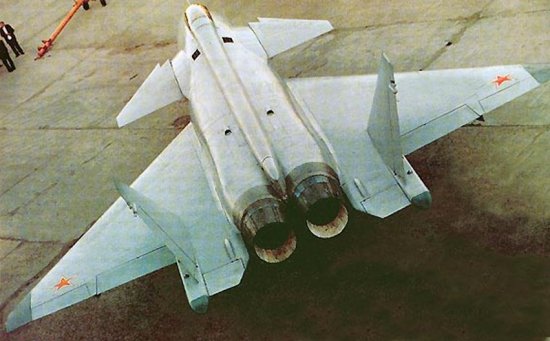
Amiga500In December 2011 the Russian government signed the contract to upgrade 60 MiG 31B/BS for the standard MiG 31 BM that would allow the Zaslon AM radar to detect 24 targets simultaneously and engage with the use of eight new missiles as air-air RVV-AE and R 37 Arrow, as well as the anti-radar missile Kh 31AD/PD
Any word on replacing the Zaslon with an AESA?
Surely its in the pipeline…?
Good capability upgrade using existing technology with minimal outlay.
Amiga500SuperSonic Business Jets (SSBJs)
There won’t be anything useful in commercial supersonics until the ICAO can define what allowable over-pressures are.
In terms of Bizjets – to the best of my knowledge they are all on the back-burner if even slow-burning anymore… someone somewhere may be moving beyond concepts, but I’m not aware of it.
But there has been loads of fundamental research done on quiet SSBJs, so I would assume this is just some more.
[Although I will point out the fuselage does shroud the engine inlets from any radars both forward and below the aircraft… :)]


 Sign In







