BlackArcher
Total Package not just bid price to decide winner of the MRCA contract. I’d ignore the prices mentioned in that article, since the Typhoon was eliminated well before any price bid was made in the Brazilian competition.
New Delhi: With commercial bids for the country’s $10.4-billion order for 126 multi-role combat jets likely to be opened by this month end, the stage is set for a showdown between two multi-role European fighters as both try to prove economically-efficient option by including offers like the lifecycle and maintenance costs.
Both the aircraft — Eurofighter Typhoon and Dassault’s Rafale — are being deployed in policing the no-fly zone over Libya and both are seeking export sales to compensate for defence-spending cuts at home. However, the declaration of the successful bidder will take a while.
According to the outgoing IAF chief, Air chief marshal PV Naik, “Once the commercial bids are opened, the final decision would still take a couple of months as it is not just the price but the package in terms of direct costs, support programmes, training, offsets and lifecycle costs which would determine the winner.”It may be noted that according to industry insiders, Rafale had quoted a price of $85 million per aircraft and Eurofighter $100 million per piece in flyaway condition in the recent Brazilian competition. For the Indian Air Force (IAF), the Rafale and Eurofighter quote is anybody’s guess, but according to the the industry the machines should cost anywhere between $75 million and $80 million per aircraft in flyaway condition.
The IAF will arrive at a final cost for the two aircraft based on various other factors like the lifecycle cost, maintenance cost, transfer of technology and cost of spare parts. Also, 50% of the total cost of the deal has to be invested in the Indian industry under the offsets obligation.
BlackArcherAnother.
thanks, looks good! But one thing that I noticed upon seeing the larger picture is that the radome is clearly quite small..the gray paint over the radome as well as a small portion of the fuselage behind it makes it look larger, but when you look closely the radome edge outline is farther away..what’s the array size of the Elta 2032 radar on board this F/A-50?
BlackArcher…..the upgraded MiG-29UPG is to get additional 3,500hrs, it would translate into 17.5years (200hrs/year) or 19.44years (180hrs/year). And if we consider that MiG-29 upgrade is happening at mid-life, then we would be getting a figure of 7,000hrs for the early model MiG-29s.
no it is not. the MiG-29UPG’s life get’s extended from 25years/2500 hours to 40years/3500 hours, viz an additional 15 years/1000 hours of airframe life. The TTL maxes out at 3500 hours, not even close to the 7000 hours you’re talking about.
The 62 upgraded MiG-29SMTs are expected to remain in service for 10-15 years, with their flight-hours lifetimes extended from 25 years/2,500 hours to 40 years/ 3,500 hours.
BlackArcherBangladesh Navy to procure 2 Do-228NGs from Ruag Aerospace..the entire fuselage, wings and empennage of the Do-228NG are built by HAL since they are the only ones with the licence to build the Do-228 now.
DATE:21/07/11
SOURCE:Flight International
Bangladesh navy buys two Ruag Do 228NGs
By Greg WaldronThe Bangladesh navy has purchased two Ruag Aviation Do 228NG aircraft for maritime patrol and rescue missions.
The Do 228NGs will become the navy’s first fixed-wing aircraft, said Ruag. The deal also includes crew training services and aircraft maintenance on-site in Bangladesh. Both aircraft are due for delivery in mid-2013.
Ruag said that the Do 228NG is a modernised version of the Do 228-212 that first flew in the 1980s. In the maritime patrol application the aircraft is useful for detecting oil slicks, performing border and fisheries patrol duties and conducting environmental research, it said.
BlackArcherMoD in negotiations with Israel for 2 more Phalcon AWACS on the Il-76 platform.
DATE:25/07/11
SOURCE:Flight International
India negotiates for more AEW systems
By Arie EgoziThe Indian ministry of defence is in negotiations to purchase an additional airborne early warning system from Israel Aerospace Industries (IAI).
If the deal goes ahead, the AEW system will be deployed on an Ilyushin Il-76 transport aircraft, as with the three systems IAI supplied last year.
India’s AEW aircraft are designed to integrate information from sensors carried on a number of manned and unmanned platforms.
BlackArcherwould be nice to see to see a bigger better quality picture of the FA-50.
BlackArcherActually, if you look at the JSF documentary(PBS Battle of the X-Planes), it was when Northrop Grumman joined the LM team that the talk of a V-Tail emerged (from their prior YF-23 work). There is a spot in the film where they decide to go with a V-Tail one day, and later reverse and go with a conventional tail (with vertical & horizontal surfaces).
I thought that it was McDonnell Douglas’ engineer and not NG’s who had suggested the so called “Pelican tail” (like a rotating V tail) for the X-32 instead of the LM X-35 like standard configuration. Initially that was chosen but later management changed it back to a standard X-35 like configuration.
BlackArcherDon’t concentrate on the performance. This is a trainer: a few knots more speed, or whatever, is of little or no importance. What matters is how good it is for training pilots. Cockpit design, handling, reliability, safety, etc. Once that’s sorted, one should consider lifetime costs, not initial purchase price.
Training pilots in basic aviation skills. They will not be flying fast jets right after flying these basic trainers- instead graduate to the Hawks and then to fast jets or transports. The KT-1 can certainly train them as well as a PC-7 MkII can if it’s docile enough to fly for a novice to mishandle it and get away, and has a relatively modern cockpit (which it does).
I agree that the performance aspect, even though the KT-1 has a more powerful engine (PW PT6A-62 produces 950 hp) than the PC-7 MkII (PT6A-25A turboprop that produces 550 hp)- after all the PC-7 MkII is a PC-9 with a lower power engine to reduce costs of operating it. Visually one can hardly tell the KT-1 and PC-7 MkII apart, they look so similar.
I’m not so sure about the KT-1’s safety record vs the PC-7 MkII though..can anyone else shed some light on that?
There is also the fact that India and South Korea have agreed to work on developing a strategic relationship. And there is nothing of that sort to gain from Switzerland. the KT-1 could form the basis of the beginning of a partnership where the two nations could join hands in new weapons programs that overlap the requirements of both their defence services (it will especially benefit the Indian Navy).
BlackArcherCombat aircraft commercial bids to be opened soon..
NEW DELHI: The commercial bids for the ‘mother of all defence deals’ – for 126 Medium Multi-Role Combat Aircraft (MMRCA), valuing over $10 billion, will be opened before July 31.
However, the winner of the contract – French Dassault or European Eurofighter – will be known only when the IAF finds out the lowest bidder based on various factors such as life cycle maintenance costs.
Highly-placed sources have indicated that the bids for the most-awaited tender will be opened within the next 10 days, before present IAF Chief Air Chief Marshal P V Naik demits his office.
“The bids’ envelope will be opened soon. But, the lowest bidder will not emerge immediately,” sources said and added: “We will be considering nine parameters, including life cycle cost, maintenance cost, cost of spare parts and so forth. The process is very tedious and will take couple of months before a price tag is put on the two down selected aircrafts.”
The opening of the bids will be followed by commercial negotiations around September with the vendors before the signing of the contract. “The contract negotiations will be based on 538 parameters based on which the IAF has arrived at a reasonable cost for the contract,” pointed the sources.
……
BlackArcherThis is what you said.
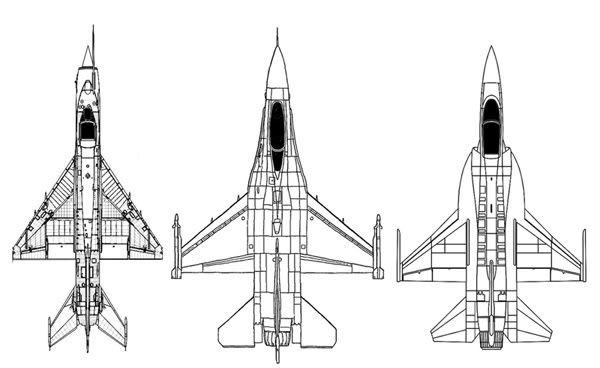
…but, it still inherits the basic Super-7 fuselage and general layout…
And as the pictures posted show, it does inherit the basic Super-7 fuselage and layout (the front fuselage and intake location are nearly the same), but as it has evolved (such as the wing design being changed to an F-16 style wing and the wider diameter RD-93 engine) it has had some obvious changes thanks to area ruling.
BlackArcherDepends on whether it’ll do the job as well as the PC-7 Mk II, or as well as the IAF thinks it needs.
There are reasons for the PC-7/PC-9 selling well.
Swerve, what big advantage does the PC-7 MkII have over the KT-1 when it comes to performance ?
And even if it does, a slight performance edge may not be that big a factor when you’re talking about a basic trainer. However, even a small price difference per unit adds up to a lot when you’re talking about 181 units. And the accusation that KAI made was that Pilatus was L1 in the tender because it hid some costs that will eventually appear when the cost negotiations begin.
But I wonder as to how KAI found out that Pilatus did any wrongdoing..
BlackArcher^^ Couldn’t agree more. But it’s one thing saying two different aircraft use a similar design approach, and something completely different when you say they use the same fuselage. Using your example, obviously the Mirage 2000 and Mirage 3 are completely different aircraft, there’s no interchangable components or panels, even though both look similar and use the same design approach, i.e. tailess delta.
Don’t put words in people’s mouths- nobody said that the fuselage was the same as the MiG-21’s. 😡 I said that the influence of the MiG-21 is clearly visible.
This is what I said in a post just 1 page before
and yet the basic MiG-21 influence as well as the influence of the Super-7 are quite clearly visible. It may not be just a modified MiG-21, like that Chinese trainer FTC-2000, but its not a brand new design either. it still has clear influences from the original project.
you and Type59 then jump the gun to try and defend the perceived slur to the JF-17’s honour.
BlackArcherYes I am bemused why some people are getting so upset and up tight over this subject considering the history of the JF-17 has been fairly reported.
Simply is a JF-17 just a Super 7?…no its very much a different aircraft. Does the JF-17 share an evolutionary history with the Super-7 and for that matter the J-7?…yes! That should hardly be seen as a negative thing or a slight on the Chinese or Pakistani aerospace industries.
A similar example would be the Mirage 2000 and Mirage 3. Is a Mirage 2000 just a Mirage 3?…no they are different aircraft. Does the Mirage 2000 share an evolutionary history from the Mirage 3?…Yes!
exactly what I’ve been saying. Yet, it is clear that some people tend to get upset if the inference is made that somehow the JF-17 was derived from a project that itself was a souped up MiG-21.
BlackArcherBlackArcherYou’re not making any sense at all…
You’ve just highlighted how the JF-17s fuselage can not be fundamentally the same as the Mig-21s, and yet keep banging on about how it’s still ‘basically a Super-7’.The fact that the JF-17 uses a completely different engine, completely different intakes (DSI eventually), completely different landing gear assembly into the fuselage, different cockpit, different wings, different tail plane…etc would all add up to the necessity of desiging a new fuselage. There’s no way you could configure all those changes into the limited Mig-21/Super fuselage, it’s just too limited in what you can do with it.
Using you logic, the JAS-39 and JF-17 essentially use ‘the same’ fuselage because they look ‘similar’. Have a look at the plan form of the two types on the previous page. Does that also mean the Gripen uses ‘essentially a Mig-21 fuselage’ as well?
nevermind..:rolleyes:
I can see that I’ve touched a raw nerve here for certain posters. Facts are there for anyone to see if they just compare the Super-7 concept and the initial FC-1 prototypes.


 Sign In