 BlackArcherBlackArcherBlackArcher
Mirage upgrade to boost UAE’s defences
While its years-long search for a future fighter continues, the United Arab Emirates has revealed a plan to modernise its in-service fleet of French-supplied combat aircraft.
During the Dubai air show on 14 November, Dassault confirmed that the UAE’s armed forces “have announced their intention to sign a contract for the upgrade of their Mirage 2000-9 fleet.”
The company declines to provide further information, but says it “welcomes this decision, and is grateful to the UAE authorities for their trust”. It also points to the single-engined fighter’s “high-quality participation in international coalition operations”.
“The Mirage 2000-9 has proven through time it is one of the best aircraft there is in the operational field,” the UAE defence ministry tells FlightGlobal. “The upgrade is to fulfill mission needs and requirements, which have changed based on what is going on in the [Middle East] area. It requires new technologies to be able to operate the aircraft.”
Avionics supplier Thales stands to benefit from the prospective contract, having supplied equipment including the Mirage 2000-9’s radar, mission computer, electronic warfare systems, cockpit displays and helmet-mounted cueing technology.
Flight Fleets Analyzer shows the UAE air force has an active fleet of 55 Mirage 2000-9s, including 14 trainers, plus 10 earlier-generation Mirage 2000s. The assets are aged between 13 and 28 years.
The cost is not even half that of the IAF’s Mirage-2000I/TI upgrade. Obviously, the Mirage-2000-9 standard already was one of the most advanced Mirages out there, whereas the IAF’s Mirage-2000H/TH was mostly 1980s technology, so to bridge the technological gap between a 1980s variant to a more contemporary standard cost the IAF more, but if all 55 Mirage-2000-9s are being upgraded then it doesn’t seem to be a very costly upgrade.
$350 MUSD for 55 units would give us only 6.5 MUSD per airplane. Maybe some avionics and structural upgrades for the fleet.
BlackArcherIN to buy 9 ATAS active towed array sonar systems for warships
New Delhi (Sputnik) — India has started the process of equipping its warships with active towed array sonar (ATAS) systems, which are essential for detecting enemy submarines. The Defense Acquisition Council (DAC) under the chairmanship of Defense Minister Nirmala Sitharaman has cleared a proposal for the procurement of nine ATAS systems. Presently, Indian warships are using bow-mounted sonar or hull mounted sonar systems, which are considered less effective.
“The DAC approved a $70 million proposal to procure nine active towed array sonar systems for frontline warships. This will help in submarine detection capabilities,” an official who wished to remain anonymous told Sputnik.
The financial approval for the purchase of the ATAS systems comes at a time when most of India’s warships, including anti-submarine warfare capable corvettes, frigates and destroyers, lack offensive capabilities in the absence of such sonar systems. The recently commissioned INS Kiltan and two other corvettes — the INS Kamorta that was delivered in July 2014 and the INS Kadmatt that was delivered in November 2015 — do not have their primary weapons and sensors to detect, locate, track and classify all types of sub-surface targets like torpedoes, mines, and submarines.
“The active towed array sonar [system] is vital for the Indian Navy, as most of the warships do not possess capabilities to detect submarines in the Arabian Sea, where the warm, shallow waters confound conventional hull-mounted sonars,” a senior navy official told Sputnik.
The ATAS system is towed behind a submarine or ship on a cable that extends deep below the surface and has no trouble in detecting sonar waves, as in the case of conventional sonar systems due to the difference in temperature at the surface and deep below the surface where submarines usually lurk.
As the presence of Chinese submarines in India’s backyard will certainly increase in the coming years, it is crucial for the Indian Navy to equip all its warships with effective sonar systems. Most of India’s warships are not equipped with the ATAS system, as the country had stalled the import of these devices in the mid-1990s after the state-owned DRDO promised to provide similar systems locally manufactured. However, as the DRDO has failed to develop the system even after 20 years, the Indian government in 2014 decided to take the import route.
BlackArcherNavy’s Women War-Fighters Hunt For Chinese Submarines In Indian Ocean
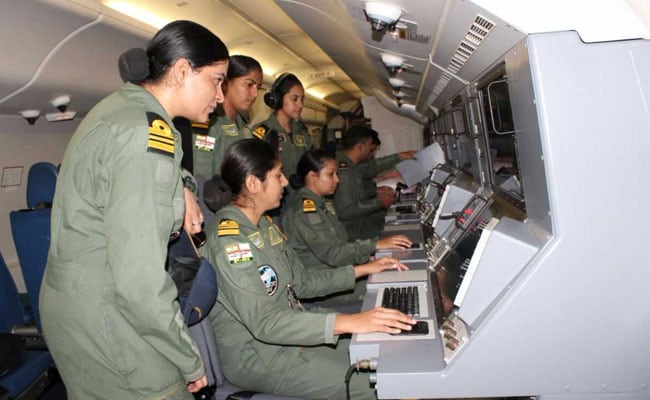
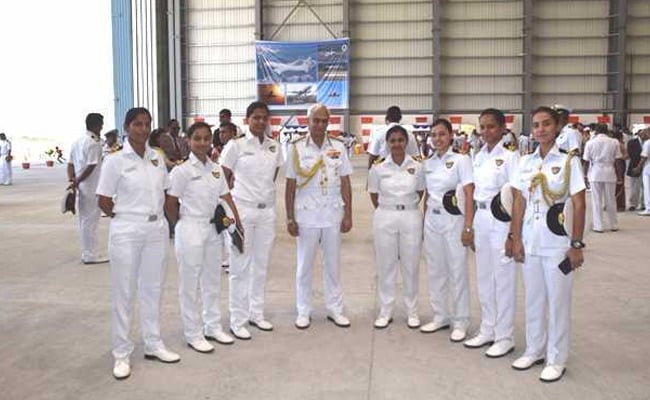
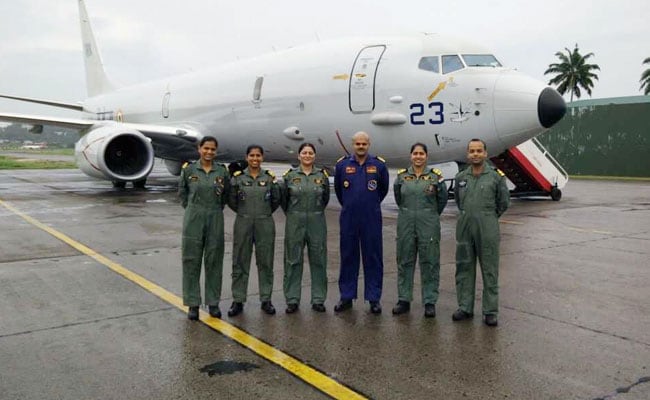
Navy’s Women War-Fighters Hunt For Chinese Submarines In Indian Ocean
Thirty more women officers are posted on the less capable Russian built Ilyushin Il-38 and the license-manufactured Dornier Do-228.
All India | Written by Vishnu Som | Updated: November 01, 2017 16:54 ISTIndian Navy women combatants now operate as highly skilled system specialists on P-8I anti-sub aircraft.
New Delhi: Breaking through a glass ceiling that has existed since the Indian Navy’s founding, 20 women combat aviators are now in the crew of its most sophisticated anti-submarine warfare aircraft, the US-built Poseidon 8-India (P-8I) used to detect Chinese warships and submarines in the Indian Ocean.Eight P-8Is, which were ordered from the US in a $2.1 billion deal, are based at INS Rajali in Arakonnam near Chennai with four additional jets worth $1 billion on order from Boeing in the US.
Thirty more women officers are posted on the less capable Russian built Ilyushin Il-38 and the license-manufactured Dornier Do-228.
“Mission Assigned, Mission Accomplished is our motto,” say their seniors.
Though women were first posted as observers on patrol aircraft in 2009, several officers are now experienced systems specialists, with the senior most woman combat aviator achieving the rank of Commander.
Indian Navy women combatants now operate as highly skilled system specialists on P-8I anti-sub aircraft.
New Delhi: Breaking through a glass ceiling that has existed since the Indian Navy’s founding, 20 women combat aviators are now in the crew of its most sophisticated anti-submarine warfare aircraft, the US-built Poseidon 8-India (P-8I) used to detect Chinese warships and submarines in the Indian Ocean.Eight P-8Is, which were ordered from the US in a $2.1 billion deal, are based at INS Rajali in Arakonnam near Chennai with four additional jets worth $1 billion on order from Boeing in the US.
“Mission Assigned, Mission Accomplished is our motto,” say their seniors.
Though women were first posted as observers on patrol aircraft in 2009, several officers are now experienced systems specialists, with the senior most woman combat aviator achieving the rank of Commander.
The women officers on P-8s and Il-38s operate all key sensors, including weapons systems. They will be war-fighters like their male colleagues if their aircraft were to attack enemy submarines or destroy warships using torpedoes or missiles in the event of a conflict.
They would also, like their male colleagues, face the very real danger of being shot down if their aircraft was hit by missiles fired from enemy warships or aircraft.
According to Vice Admiral AK Chawla, the Navy’s Chief of Personnel, women officers currently on P8s “have been extremely capable. In fact, in the Services Selection Boards, inevitably the top people are the women officers. We go purely by merit.”
Earlier this month, women officers on a Navy P-8 plane played a key role in detecting an empty life-raft off the Philippines after a 57,000 ton vessel, the MV Emerald Star, went missing with 26 Indian sailors on board. Ten crew members remain missing and are presumed dead. The rest were rescued by ships which responded to a distress call.
While emergency situations are uncommon, scouring the Indian Ocean for potentially hostile military vessels is routine for P-8I crew. Women crew spend more than four hours on each mission, monitoring sea-search radars and magnetic anomaly detectors that can track down submarines. Using the data available on their systems, they plot targets for AGM-84L Harpoon Block II missiles that can hit a target out at sea more than 250 km away. Similarly, once detected, an enemy submarine can be taken out with an Mk 54 Lightweight torpedo.
The Navy’s P-8Is and their crew are India’s most capable first responders to any naval threat and are continuously deployed at a time the Chinese Navy has significantly stepped up its presence in the Indian Ocean. Chinese Navy nuclear attack submarines have been spotted in Karachi in Pakistan and China maintains a Naval logistics hub in Djibouti in the Horn of Africa.
Earlier this year, Admiral Harry Harris Jr., the Commander of the United States Pacific Command, said China was increasingly in a position to sail an aircraft carrier into the Indian Ocean any day it chose to. In the process, “India should be concerned about the increased Chinese influence. If you believe there is only a finite amount of influence in the region, then whatever influence that China has is influence that India doesn’t have.”
The Navy is the second service after the Indian Air Force to enlist women officers in a combat role. In 1999, Flight Lieutenant Gunjan Saxena and Flight Lieutenant Srividya Rajan flew their tiny Cheetah helicopters in the Kargil war zone, where they came under fire from Pakistani forces. More recently, the first batch of women fighter pilots of the Indian Air Force completed their training and will now be deployed operationally in a MiG-21 squadron. Though women are not deployed in combat roles in the Army, the first batch of women are being inducted in the military police with Army Chief General Bipin Rawat calling it the start of the process to bring in women to serve in combat. At the moment, women who join the Army work as engineers, doctors, lawyers, teachers or signals officers.
While combat roles for women in the navy is a big step forward for gender parity, the force is still reluctant to have women serve on its warships in significant numbers. The design of warships, sleeping quarters and bathrooms on Navy ships cater only to men though the latest generation of ships, including the indigenous Shivalik class destroyers, do have space to accommodate both sexes.
BlackArcherHow Exercises With Japan Will Help India Assess Pakistan’s Main Anti-Submarine Aircraft
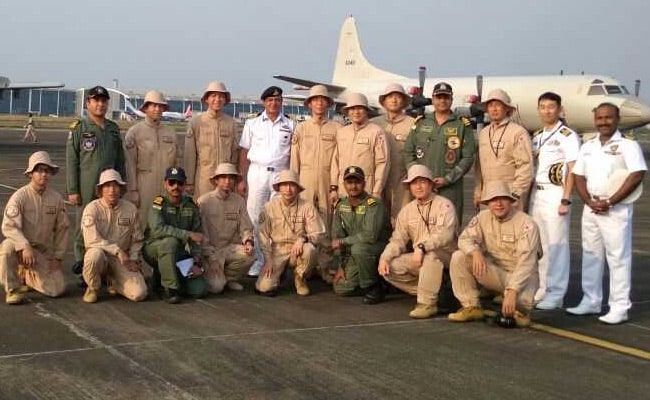
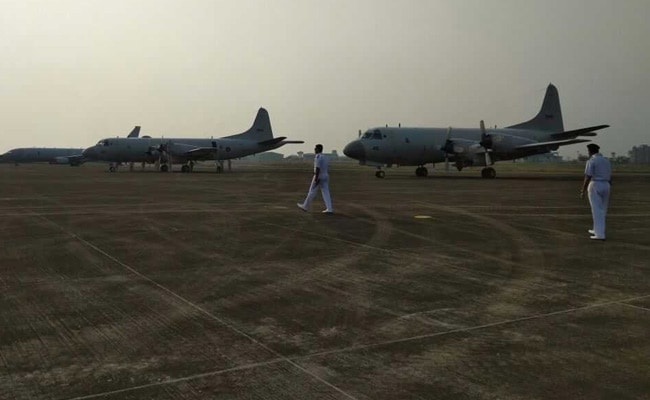
New Delhi:
Less than two months after India and Japan decided to fundamentally alter the level of bilateral ties, two Japanese P-3C Orion anti-submarine aircraft have landed in Goa for a series of joint exercises with the Indian Navy.The Indian Navy says the exercises, scheduled to take place over the Arabian Sea between today and Tuesday, will “take bilateral relations to an unprecedented level of strategic and global partnership”.
Two Indian Navy Boeing P-8I Long Range Maritime Reconnaissance anti-submarine warfare jets are also participating in the exercises with crews from each country training together on each other’s aircraft to evolve concepts for future joint operations.
For India, these exercises are particularly significant since it allows the Navy to “assess the performance of the P-3 aircraft which has been used by the Pakistan Navy for decades as its primary anti-submarine platform”. The Pakistani Navy received its first P-3Cs from the United States in 1996. Since then, these aircraft have been significantly upgraded by the US company Lockheed Martin with better sensors and weapons to make them a formidable challenge for Indian Navy warships and submarines operating in the Arabian Sea.
In early September this year, during his last foreign visit as Defence Minister, Arun Jaitley had visited Japan where both countries finalised plans to step up their bilateral military exchanges. While it is unclear at this stage whether the Indian Navy will subsequently deploy its P-8 anti-submarine jets in Japan for similar exercises, both countries share concerns on the growth and expansion of the Chinese Navy.
While India is concerned about the increasing presence of Chinese nuclear submarines in the Indian Ocean, China lays claim to the Senkaku Islands, a group of uninhabited islands currently controlled by Japan in the East China Sea. Over the last few years, the navies of India, Japan and the United States have come together to form what is increasingly being seen as a Naval alliance with a clear focus on the global deployment of the Chinese Navy, which now has a logistics base in Djibouti in the Horn of Africa. All three nations have challenged China’s claims to South China Sea, with each side stressing the importance of freedom of navigation in the disputed region. Earlier this year, India, Japan and the United States jointly participated in the Malabar Exercises in the Bay of Bengal, the most complex Naval war games India has ever been involved in. India is also considering the purchase of up to 18 Japanese US-2 amphibious aircraft in a deal which could be worth approximately $1.6 billion.
How exercises with Japan will help India assess Pakistan’s main ASW aircraft
BlackArcherTacAir acquired ex-RJAF F-5E/Fs and overhauled these to use them as Red Air aggressors. Something like these jets would be a far better fit for Botswana than new build Gripen C/Ds or FA-50s that would cost several hundreds of millions for just a squadron’s worth.
From AW&ST
One of the private firms competing for “Red Air” services contracts with the U.S. government has finished importing the Royal Jordanian Air Force’s divested fleet of Northrop F-5s.
Tactical Air Support (TacAir) received approval from the U.S. State Department in late 2016 to import 21 of the retired military aircraft. The company now reports it has received all 21 aircraft: 17 by ship and four aboard a Boeing 747 freighter.
..James Dormer, TacAir assistant vice president and business development executive, says the F-5s arrived in the U.S. earlier this year and the company now counts 26 in its inventory. The firm also has one early-model F-5B “Freedom Fighter” and four former Royal Canadian Air Force twin-seat Canadair CF-5Ds, originally built under license in Canada.
Dormer says all 21 single and twin-seat F-5E/Fs imported from Jordan are being reassembled and inspected by the original manufacturer, Northrop, at the company’s F-5 depot in St. Augustine. Of those aircraft, about half have been fully refurbished and painted. They arrive in one of two aggressor paint schemes: arctic white or desert brown.



 Sign In








