 BlackArcher
Holloweene is not a source on anything Russian, if his past posting is any indicator.
He may have his sources and they may be saying things which can be a little hard to digest. But it is a fact that a scaled down RBE-2 for the Tejas Mk1A has been flown, and theoretically the IAF could ask for a variant of that radar to be integrated. Russia won’t like it for sure, and it cannot be done without extensive and deep Russian support. Which may scuttle such a deal and make a Russian AESA the only feasible option. But one cannot say that the IAF will not be interested in what could basically be RBE2 variants equipping its Rafale, Tejas and Super-30 fleets, allowing for commonality across the majority of its fleet.
Does anyone really expect them to tear out the primarily sensor, develop a new array to fit the dimensions and weights of the Su-30, and integrate it with the rest of the weapons suite (let alone form a 3rd party/nation)…..when NIIP is already developing an AESA for the Su-57?
A new array scaled up to the Su-30MKI from the Rafale can be done, just like it was scaled down to fit the Tejas Mk1A, with its power requirements, and test flown in what Thales claims, was 6 months. The integration with Russian weapons will be the trickier part, but again, can be done if push comes to shove. e.g. the R-73E was integrated with the Elta 2032/MMR on the Tejas with help from the Israelis (as per India’s CAG). And Russia can always be compensated for their costs in helping with any such integration with a non-Russian radar. Only question would be- would the extra effort and cost be worth it? Perhaps not, unless India is pushing its own indigenous AESA variant of the Uttam. And that doesn’t seem to be the case. So, a Su-57 AESA derivative would seemingly be one of the more logical radars for the Super-30, especially if the IAF is going to be acquiring Su-57s as FGFA. But that isn’t clear either.
As it is, one of the primary air to air weapon for the Su-30MKI and Super-30 will be the Astra Mk1 and Mk2 when it is ready, which doesn’t require Russian integration support with any non-Russian radar. Brahmos integration was developed, tested and certified, along with all the structural mods to the aircraft, indigenously after the Russian response was deemed to be too expensive.
And going ahead, with SAAW, the NGARM and other glide bombs, there are more and more indigenous weapons that will be integrated onto the MKI and the Super-30. So, whatever radar they get, the IAF will want source codes that will allow them to integrate weapons whenever required.
Also regarding funding costs, if anything a Super 30 AESA will be benefiting from Russian-funded N036 development. Development and serial production of GaN T/Rs for example is driven by the PAK-FA program. That is a far costlier investment than AESA antenna mating on the Bars for the Su-30.
Obviously India will not choose some paper AESA radar or one that isn’t somewhat mature at least, for the Super-30. That would be inviting trouble, facing teething issues and having to debug and fix issues on an immature radar. What was once a mature fighter fleet with its Bars radar, will after MLU end up becoming immature once again then. So if Russia is to persuade the IAF to go in for a Russian AESA, it has to be a somewhat ready to use solution.
Russia is already paying for the development of the N036, isn’t it? But is it going to pay anytime soon for integrating any N036 radar variant on the Su-30SM? Unlikely. Very likely that they’ll piggyback on the IAF’s Super-30 program for that, since the export customer will pay for the integration and testing of the N036 radar variant – if it is the chosen radar that is.
BlackArcherMiG-21M, since the bis was to arrive in the 1970s. The MF too didn’t arrive till 1970. Some of the IAF’s later built MiG-21Ms survived till almost last year.
BlackArcher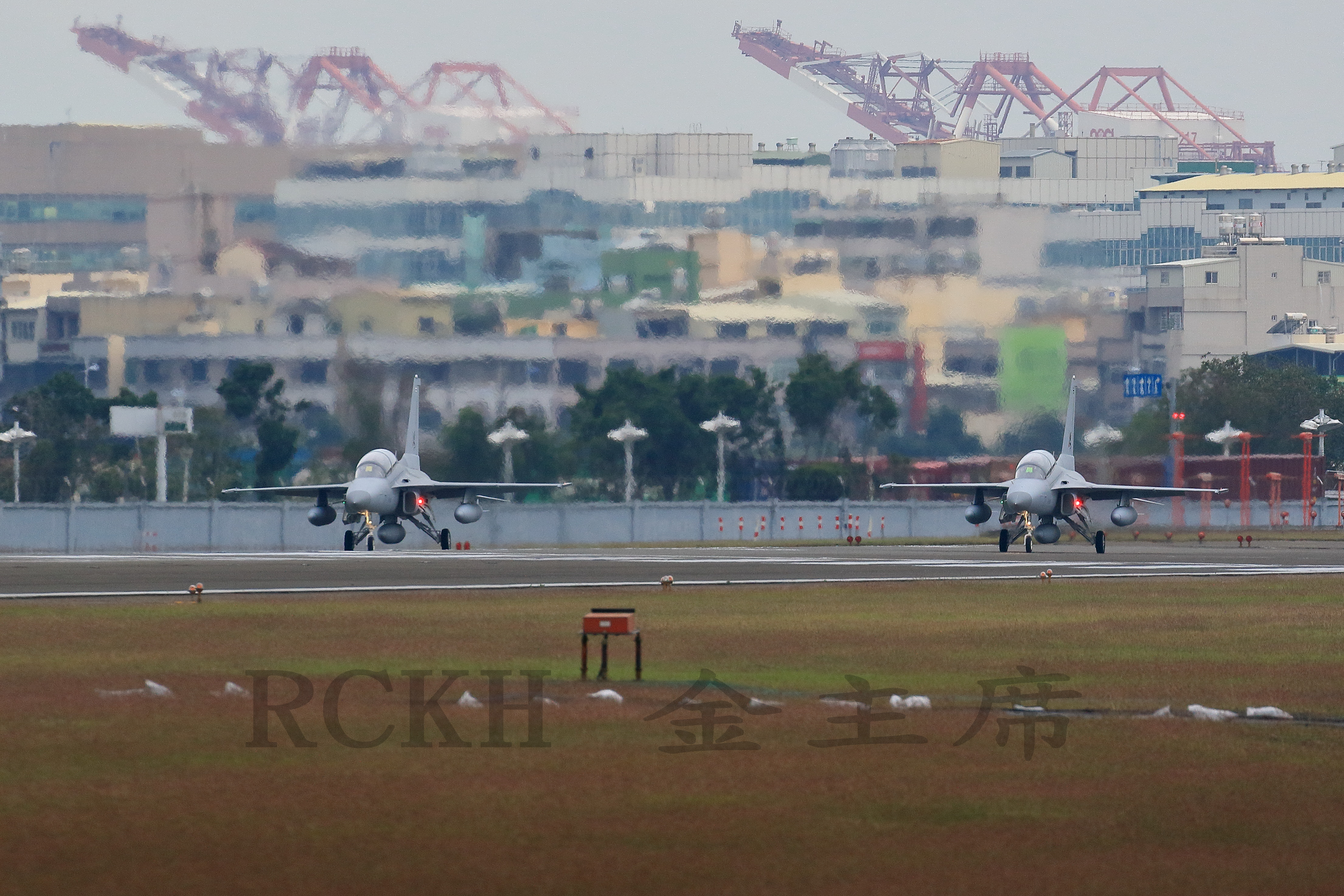
Head of the Royal Thai Air Force Air Chief Marshal Johm Rungswang told local reporters on Jan. 15 that two T50THs being delivered to Thailand will take another two more weeks to reach home.
The jets were on a ferry flight home when they encountered turbulent weather and diverted to Kuantan, Malaysia.
Post-flight checks revealed damage to the aircraft but it is unknown for now if the damage is on one or both aircraft.
Update: Bangkok Post is reporting that the engines on the aircraft were damaged.
BlackArcherLatest news on the Belgian’s trouble with their NH90
Belgium’s fleet of naval variant NHIndustries NH90s has been removed from operations while a problem with the helicopters’ radar system is rectified, the Belgian Ministry of Defence (MoD) confirmed to Jane’s on 16 January.
Three of the four NH90 NATO Frigate Helicopters (NFH) operated by the Belgian Air Component (BAC) are currently undergoing a factory-level modification to the European Navy Radar (ENR), while the fourth is undergoing a major overhaul.“The ‘situation’ [with the radar] was already known when the first helicopters were delivered [in 2013], so [we] were prepared for it,” an MoD spokesperson told Jane’s , adding that the navy’s Sea King and Alouette III helicopters can fill any capability gaps, as can NH90s from either France or the Netherlands.
The confirmation that all four of the BAC’s NH90 NFH helicopters are currently out of service comes on the back of Belgian media reports that the MoD is far from happy with the NHIndustries consortium of Airbus Helicopters (62.5%), Leonardo (32%), and Fokker Aerostructures (5.5%) over the issue.
“Everything went wrong from delivery,” BAC commander General Frederik Vansina, was quoted by Flemish VRT Radio on 12 January as saying, adding, “There are indeed penalty clauses included in the contract and NHIndustries [is paying] them, but we do not yet have a deployable helicopter.” Airbus Helicopters, the majority stakeholder in the international consortium, directed all questions to NHIndustries, which did not respond to a request for comment.
BlackArcherI am surprised the Russians still haven’t placed an AESA radar in any of its Flankers yet (35 is Pesa correct?)
The IAF’s Super-30 Su-30MKI upgrade will likely feature an AESA radar.
If Halloweene is to be believed, it could possibly even be non-Russian, although I find that hard to believe, since the Russians will throw a fit and very likely not cooperate if that were to be. They’ll likely want to use the Super-30 upgrade to fund the development, integration and testing of a Russian AESA on a Su-30, and then they’ll introduce it onto the Su-30SM fleet.
BlackArcherKAI T-50s on delivery flight to RTAF, grounded with unspecified issues. Delivery to RTAF has been delayed indefinitely.
KUALA LUMPUR—Delivery of two Korean Aerospace KAI T-50s to the Royal Thai Air Force (RTAF) has been delayed indefinitely after the trainers suffered unspecified technical faults in a difficult ferry flight.
The T-50s were flying over South China on the way to Thailand when they encountered severe weather that forced the crews to land at Kuantan Airport, on the east coast of the Malaysian peninsula, RTAF says in a statement.
Upon landing, visual inspection revealed that the aircraft need further, more thorough technical checks, it says. KAI told the RTAF that, pending the checks, delivery would be delayed indefinitely.Two RTAF pilots were onboard the two-seat trainers with KAI company pilots.
The statement did not specify the faults. But pictures posted in social media showed that at least one aircraft had several parts of its airframe covered with waterproof cloth held on by adhesive tape.
The aircraft are parked on the civilian airport apron at the Kuantan field, though a Royal Malaysian Air Force (RMAF) air base with hangars and aircraft shelters is also there.
The aircraft were supposed to arrive at the RTAF’s Takhli base in Nakhon Sawan province, 240 km (144 mi.) northwest of Bangkok, on Jan. 12. They left South Korea on Jan. 8 for the 6,700 km flight with stopovers at Kaohsiung, Taiwan and the Philippines.
Both were part of a four-aircraft order announced in 2015 for $110 million. The other two aircraft are due to be delivered in March.An additional eight T-50s worth $258 million were ordered in July 2017, with deliveries expected by 2020. T-50s will replace Thailand’s L-39 trainers, which will be decommissioned after 30 years of service.
The RTAF operates about 35 L-39s, survivors of 40 ordered in the 1980s, in the lead-in fighter trainer role. The number of L-39s suggests more T-50 orders are possible.
Although Thai T-50s will be used for training, they are fitted with radars and wired for weapons, providing the capabilities of the FA-50 light-attack version. Thailand is the third user of the T-50 in Southeast Asia, after Indonesia and the Philippines.
Just a data point- approx $32.25 million USD for each aircraft, escalated acquisition cost for the second batch and the earlier ordered batch, cost $27.5 million USD each, acquisition cost.
BlackArcherBangladesh Air Force lost two Yak-130s.
Two Air Force training jets crash in Cox’s Bazar, all four pilots safe
Wow..that makes it 3 Yak-130s crashed out of the 16 delivered. They have 13 left now.
BlackArcher

 Sign In








