Pics credit Vishal Jolapara

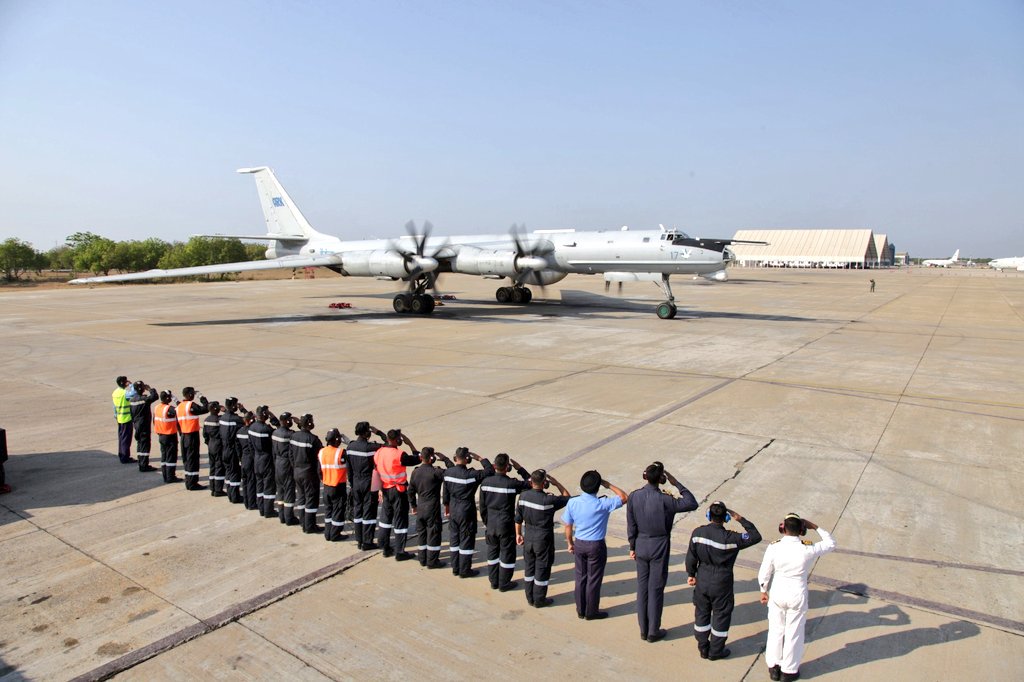
INAS 312 crew salute their CO as he & his team depart on the second last flight of this legend.

The INCREDIBLE cockpit crew of this magnificent aircraft of ours.
@IndianNavy Cdr Mair, Rana & Arjun (Sr Nav).
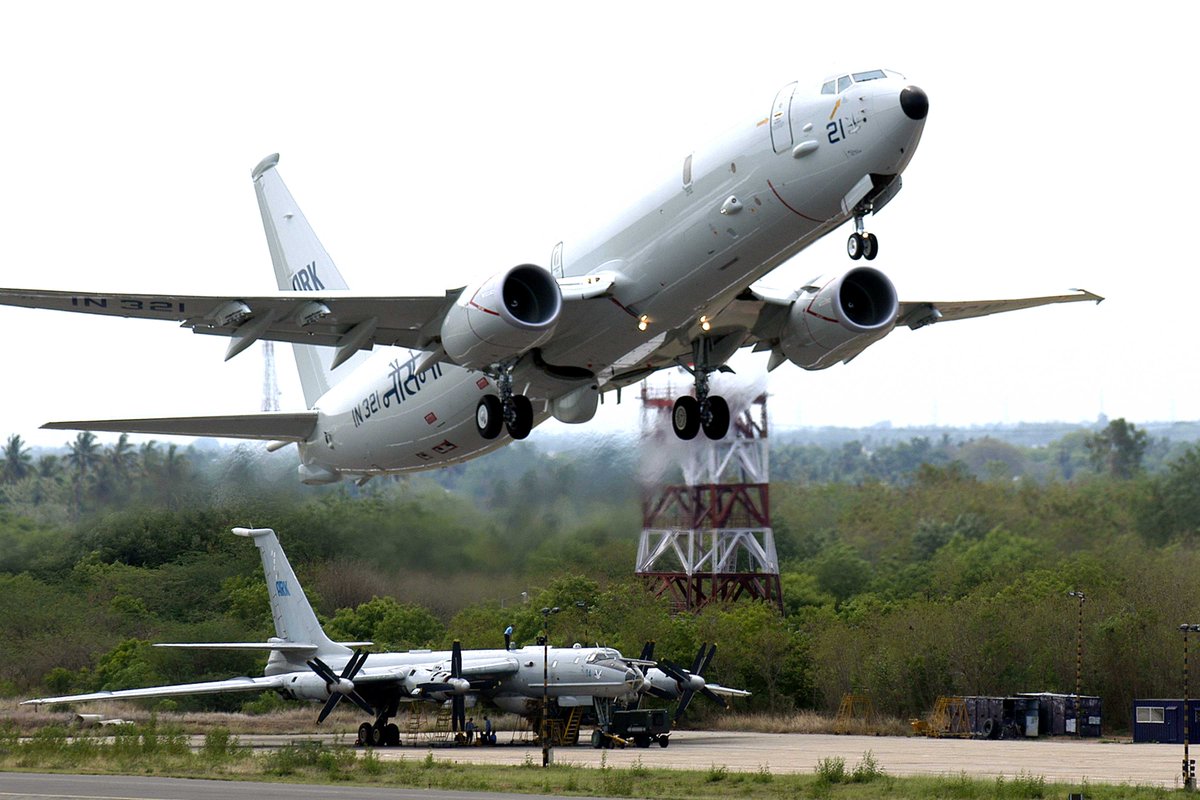
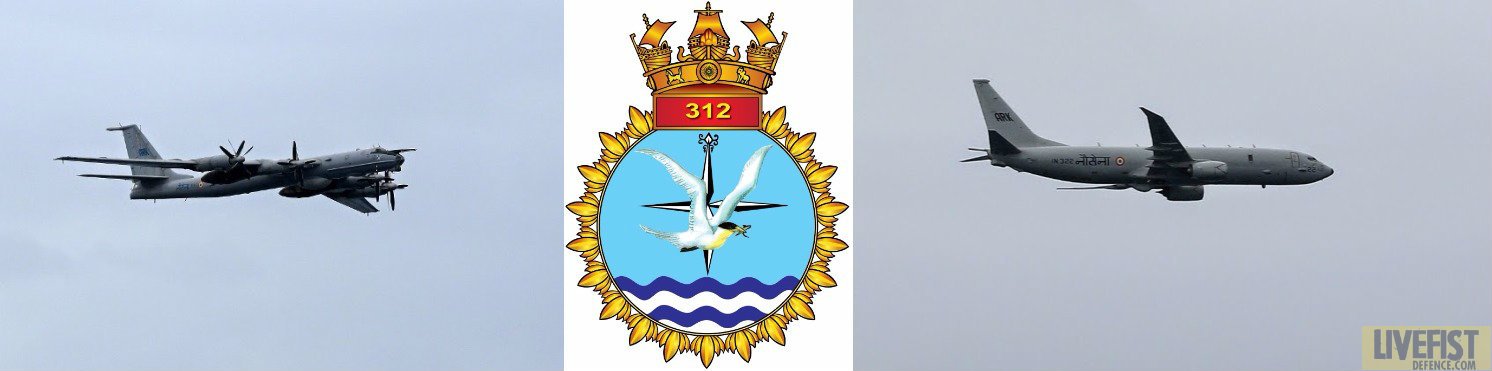
The past and the future of the IN’s maritime patrol, anti-surface and ASW fleet

On Mar 29, @IndianNavy’s INAS 312 ‘Albattross’ squadron will only operate @BoeingDefense P-8Is after Tu-142Ms retire. (Photos/@SitanshuRKar) pic.twitter.com/7pYNA6Hol7

Leonardo preparing itself mentally to lose the T-X competition
Leonardo fears US domestic politics will scupper its T-X chances
Poland shoots down used F-16A/B acquisition
Deputy commander in chief of the Polish armed forces Gen Jan Sliwka stresses that Poland had been “surprised” by how much Romania paid to upgrade a batch of F-16A/Bs acquired from Portugal.
“It cost more than the price of the same number of new aircraft,” he says.
“We could say that the cost of acquiring used a F-16 would be bigger than buying a new one and that is why we will not go in that direction,” says Kownacki.
i think what blackarcher meant was: in software controlled flight, gripen does not exceed 26 AoA,
software will see to it that it doesnt go further.
i wonder if its common to override software limit among regular pilots ?
is there disciplinary measures taken if they do ?
it may not be the smartest thing to do in a many vs many scenario,
but i think the pilots will have an itch to pull 12g on occasion
I doubt that the pilot is allowed to over-ride the FCS to pull it over 26 deg alpha during regular missions.
This Region II of the FCS and the auto-recovery that is mentioned, is a contingency measure that is taken to avoid the loss of control and possible stall, due to an inadvertent event that may lead to exceeding the 26 deg max alpha. Such as the loss of the Gripen during a training flight where the pilot entered into the wake vortices of the leading aircraft.
SHK’s final report – not available in English – concluded that the plane had passed through the other aircraft’s wake vortex while in a steep (−70 degrees) dive. When passing, the pilot’s pitch command was “up”, but instead the vortex inflicted a large aerodynamic transient on the aircraft, throwing it down into an almost vertical (−85 degrees) dive. These factors combined to create an angle of attack that was too large for the command to be obeyed, and so the ground-collision warning system alerted the pilot that a turn to avoid a crash would require more than 10 g. The pilot elected to vacate the aircraft in accordance with the flight manual. At the same moment the vortex effect ceased, reducing the angle of attack to within flyable limits. Although the aircraft could theoretically have been saved, the ejection sequence had already been initiated and could not be stopped.
The flight status at the moment of ejection was: altitude 750 m, flight angle −75 degrees, speed 350 km/h, angle of attack −8 degrees, and load −1.5 g.[5]

I found this interesting article on the FCS of Gripen:
http://www.icas.org/ICAS_ARCHIVE/ICAS2000/PAPERS/ICA3113.PDF
What does this actually mean? Is the (positive) AOA limit 26 or 55? Or both?
I found also this:
An extra 3g that is quite a lot!
So it seems the “soft stop” AOA is 26 degrees; does this then imply there is a “hard stop” AOA, as there is for the g above corner speed?
The Gripen’s AoA limit, as per multiple authentic sources (FG for instance) is 26 deg. In the Region II of the FCS (past 26 deg AoA), the Gripen’s FCS would basically auto-recover the airplane to prevent further departure from controlled flight.
The auto-recovery function is normally engaged in both region II and III but the pilot has an option to switch between auto-recovery and direct-link mode in region III. The direct-link mode is used to investigate spin behaviour. The auto-recovery
mode is divided into three phases:
1. Roll damping.
2. Yaw damping (anti spin)
3. Nose down (recovery from high/low AOA)In the event of a departure, the FCS will first try to reduce any roll oscillation, then stop the yaw rate and finally pitch the nose down by using AOA and pitch rate as feedback signals.
So it’s clear that in normal controlled flight, the Gripen cannot exceed 26 deg AoA. That is part of the care-free handling of the Gripen and all other FBW controlled airplanes.
Or if air policing and QRA is the main purpose, go for low operating costs and get 24 KAI FA-50 Fighting Eagles for the $823 million and call it a day.
24 T-50s for Iraq cost them $1.1 billion. Unlikely to be cheaper for Bulgaria.
Iraq takes delivery of first South Korean jets
South Korea’s Yonhap news agency announced in December 2013 that Iraq had ordered 24 of the FA-50 light attack variant of the T-50 trainer under a USD1.1 billion deal.
Saab shifts Gripen M focus from Brazil to India
I can’t figure out why Saab believes that it can meet the IN’s requirement for a twin engined carrier fighter. the RFI clearly states requirements that Saab’s Gripen M cannot meet.