BTW, the first interview with Asma Al-Assad. Quite an interesting talk with a beautiful and well educated woman. Spread herword,cozi have very strong doubts your ‘free’ Western media will showsomething similar.
Perhaps because it’s her first interview in 8 years – as mentioned in the first seconds of the video.
Here is her husband (the actual President of Syria) being interview by the BBC last year:
Russia has only two friends: Russian army and the Russian fleet. Why do we have to pay the Swedes?
Fighter model of the sixth generation of TsAGI
[ATTACH=CONFIG]249203[/ATTACH]
Russia, like many other countries, has no friends, only interests. It’s in Russia’s interest to go to Stockholm to buy its next gen combat aircraft.:rolleyes:
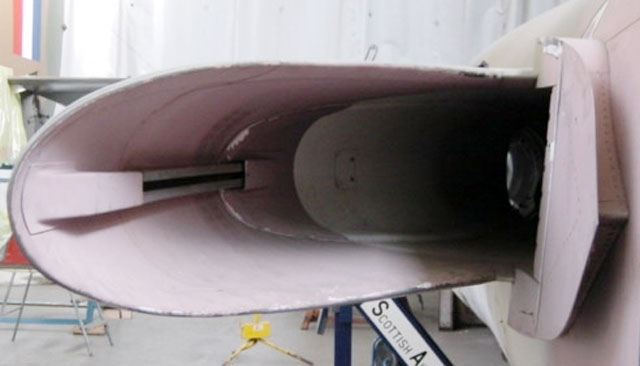
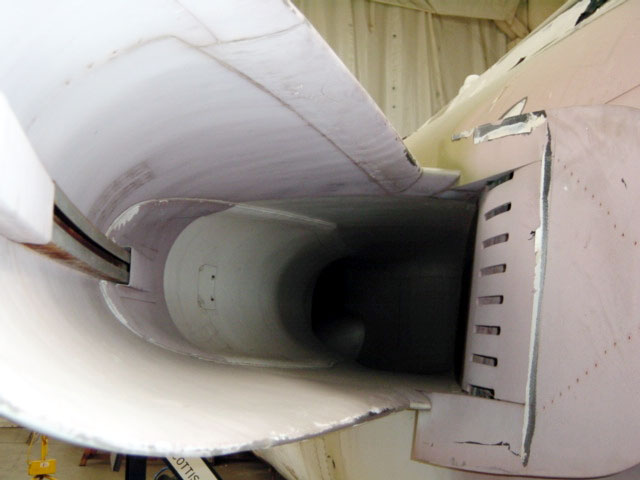
There are other types of inlets. You didn’t mention the F-105’s type.
You have to see the forward swept inlet of the F-105 at a few angles to appreciate it’s flexibility.
S-ducts!! And an internal weapons bay. The world’s first stealth fighter-bomber?
All of Europe will collect the money and pay Saab JAS 39 Gripen. If money is not enough then the fighter will make the Italians from the Alenia Aermacchi M-346 Master. In any case, it will be very easy fighter.
Maybe Russia could pay SAAB for its next 6th generation fighter?
D’assault baguette has an awesome history of doing it alone, all the way from the first to fourth gen modern aircraft. will they make a manned follow on to the Rafale?
Will the British do something? While they haven’t produced something on their own in a while, research wise they got closer with the BAe Replica and are a 1st tier partner for the F-35
Perhaps the UK and France shoul work together: British French joint projects seem to always go well, historically speaking. Concorde, Sepecat Jaguar, Martel missile, etc.
Speaking of engines, there can’t be too many frontline fighters that have had engines from 4 different countries tried in the airframe….French, American, British, and Russian.
Turbojets and turbofan.
What does that tell us about the original engine fitted to the Mirage?
I highly doubt either payload or range is much better on the Kfir vs Cheetah C. The J-79 thrust is not much greater than the Atar 9K50C-11 and the Cheetah has an extented fuselage like the F-1. And the Cheetah has canards, so all that together would mean they are close to equal.
Just plucking figures of the internet:
Kfir C7 was powered with a version of the J79 that produced 18,750 lbf (83.4 kN). ATAR on the Cheetah C produced 15,900 lbf (71 kN)
Why do you assume that?
You’re right, we can’t assume anything about either aircraft. I only came rushing to the Kfir’s defence when a poster above described it as a ‘POS’ aircraft – I’m almost pretty sure it isn’t (and very few combat aircraft can ever be described as such?)
The Cheetah C empty weight as quoted on Wiki is hopelessly inaccurate. I have its true empty weight.
In fact, the weight given there corresponds to the “official” weight given for the Nesher.
The Nesher is to all intents a Mirage 5. Which has an official empty weight half a ton heavier.;)This is exactly why I distrust the “official” weight given for the Kfir, and all it’s additions, never mind the Nesher.
If one looks at the Nesher being a Mirage 5, then the large additional changes changes that were done to the Kfir would show an empty weight much higher than the figure normally bandied about.
Then looking further at the Kfir C10 and the Cheetah C, with their further structural additions, and internal multirole avionics….about the most honest figure I’ve seen given publically is for the Cheetah C.Of course, we get to the issue of what exactly constitutes “empty” weight.
If we haven’t got accurate figures for each aircraft and we can’t trust what we are given, whats the point in trying to make a true comparison? Ultimately, if the Kfir has a greater payload and range, it can be excused for having a greater empty weight, surely?

On the topic of the Kfir, I have always had my doubts about the listed empty weight, considering the heavier engine, extensive heat shielding needed in the rear fuselage, canards, and the strengthened undercarriage with longer stroke oleos.
Well, just using Wikipedia as a quick reference, it’s stated that the Kfir has a 700kg greater empty weight compared to the Cheetah C, so nobody is denying that the Kfir is heavier. However the Kfir also has a 12.5% greater thrust. The Kfir is also quoted as having a 30% greater external payload, which is significant.
How to make a side-by-side comparison with both aircraft?
Books.. My best bet is Squadron/Signal, I don’t remember it all, anymore…
The performance was better, right, but balance and handling were terrible. Compared to ATAR, the J79 was short, heavy and positioned way too aft..
It musn’t have been that bad – the US Navy used it as an aggressor for many years.
From your own link
All aircraft based on the original 1950s Dassault Mirage III tailless delta design never had a good reputation for maneuverability – so what?
In the link it also says: The Kfir was utilized because they both shared the common characteristic of being very fast (Mach 2+) and fast-accelerating aircraft Many countries are still flying the Kfir it seems?
I am saying that it was classified as light strike fighter because it was otherwise a disappointment.. a truly POS fighter.. Created by a company with zero design experience, disliked by its crews, with not really fine-tuned handling and with the EL/M-2001 radar certainly not very useful, either..
where did you get all this info? It seems to me that the Kfir has had quite a few satisfied customers around the world, and certainly the use of the J79 motor instead of the ATAR should have improved performance somewhat.
https://en.wikipedia.org/wiki/IAI_Kfir#The_Kfir_in_foreign_service
And what other possibility do they have?
They could have bought Soviet, Russian or Chinese aircraft, as they have already done (i.e. MiG-29, Su-24, J-7).
What was the turbofan engine?
A South African Mirage F1 was tested with the RD-33 from the MiG-29.