 blackadam
blackadam you have been told before that wantchinatimes is not a good primary source when researching Chinese military procurement, actually it is treated in a rather derisory manor amongst enthusiast on the subject.
We have seen report after report over the last few years that an Su-35 order was needed or just around the corner but nothing to show from official sources that any such deal is happening or even close.
wantchinatimes is just rehashing old speculation based upon the recent release of pictures for the J-11D, this is becoming a habit for that kind of publication. Every time a new Chinese fighter variant is displayed there is a flurry of opinion articles from Taiwanese or Russian sites about a possible Su-35 purchase.
But the fact that China will buy Su-35, you can not deny this
blackadamAccording to what I looking for, all of the Chinese air force currently includes (with radar series NRIET KLJ):
JH-7A use radar NRIET Type 243H aka KJL-1/2 (range 75 km for A2A)
J-10A/JF-17/FC-1 using KLJ-3 radar or KLJ-7 (range 100-105km for A2A)
J-8DF/11A using radar KLJ-4 (range 150km for A2A)
J-10B/11B/15/16 will use AESA radar KLJ-10 or Unnamed radar AESA (range ?)
blackadamPLA needs both J-11D and Su-35 fighters: Sina Military
Staff Reporter 2015-05-03 13:58 (GMT+8)
The J-11D air superiority fighter. (Internet photo)
The J-11D air superiority fighter. (Internet photo)
China’s acquisition of Su-35 supermaneuverable multirole fighters from Russia is necessary despite the development of the J-11D air superiority fighter, writes the Beijing-based Sina Military Network.
The J-11D, an upgraded version of the J-11B, conducted its maiden flight on April 29, just as China is preparing to receive its first batch of 24 Su-35 aircraft from Russia.
The J-11D is equipped with active electronically scanned array radar technology currently being tested in the J-10C and has a mid-air refueling pipe. The aircraft also has different wingtip pylons to the basic J-11 model and the J-11B, which analysts believe will be to equip the new PL-10 high-mobility combat missile and add additional decoys. In addition, the J-11D will install a new digital fly-by-wire flight control system that is considered an upgrade from the J-11B’s system that was modeled after that of the Russian Su-27SK.
Sina Military said both the J-11D and the Su-35s are important for China to maintain a strong military presence in its three key strategic regions: the country’s southeast coast, the South China Sea and the China-India border.
The Su-35 is necessary because it bridges the gap in the People’s Liberation Army Air Force prior to the introduction of China’s new fifth-generation fighter jets, the report said, adding that without Su-35s China would need to figure out how it would go up against Japan’s F-35s and India’s Su-30MKI and T-50 aircraft. Even if the manufacture of the J-11 can be increased to two a month, the numbers would still be insufficient, not to mention it remains unclear whether the J-11 is technically advanced enough to take on fifth-generation fighters, the report said.
India’s Su-30MKI is regarded as more versatile and is significantly better than the J-11 at close and super-close range combat, as well as air-to-land and air-to-sea attacks. The Su-30MKI was designed not only with the J-11D in mind, but also the Chinese and Pakistani air forces’ J-10B, F16 and J-11B. Individually, the Su-30MKI might be superior to each of those jets, but together they are sufficient to take on the threat the Indian fighter presents.
Various sources indicate that in 2014, China only manufactured around 10 J-11B/BS fighters, which is clearly too slow, particularly given that the J-16, leaked four years ago, has still not entered into production. While the J-11D is an advanced version of the J-11B, analysts point out that it is still a J-11 model and cannot possibly match the supermaneuverable multirole capabilities of the Su-35.
The Su-35 has an internal fuel capacity 11.5 tons compared to the J-11D’s nine tons, meaning it would be more suited to surveillance missions in the South China Sea. It is also more structurally advanced with a durability of 6,000 service hours and superior maximum take-off, flight and landing weights. The J-11D’s structure, however, remains limited by the design of the original J-11.
Accordingly, the Su-35 is very important to the development of China’s aviation industry and its value is more than just that of a fourth-generation fighter, Sina Military said, especially as it will include the acquisition of the Irbis-E advanced multi-mode, hybrid passive electronically scanned array radar system.
China simply cannot wait another five or 10 years for next-generation aircraft to emerge, and the Su-35 does the job in boosting the PLA’s air defense capabilities and at least gives China an aircraft that can take on the F35. The J-11D is to take on current enemies, while the Su-35 is for the future because it can help speed up China’s development of multirole fighters, Sina Military said.
http://www.wantchinatimes.com/news-subclass-cnt.aspx?id=20150503000118&cid=1101
blackadamI think the MiG-23, MiG-27 is the answer of the Russians for Tornado ADV, Tornado IDS
MiG-23 & Tornado ADV = Air-to-Air combat
MiG-27 & Tornado IDS = Air-to-Ground combat
Tornado ECR may be compared with Su-24, EF-111.
JH-7, F-15 has no specific object comparison, it’s not the kind of swing-wing aircraft
blackadamForeign media speculation that Chinese military aircraft production status quo : J15 year is not enough of a group
According to “Chinese Defense Review” magazine reported 4, 2014 within a year, the various intelligence SAC plant produced a total of only 10 or so of the J-11B / BS, four years ago, was exposed J-16 multirole fighter does not seem to put into mass production. Year produced only 10 less than the J-11B / BS, meaning nearly two years of time can only equip a regiment.
blackadamJ11 — Su27SK‘s analog FBW
J11B — the same
———
J11BS trainer — digital FBW, during the test flight, one of the prototypes was lost due to the flaw of the flight control developed by China R&D team..and there was another accident recorded on the Serial Production plane when the trainer entered the PLAAF service..
J16 — digital FBW
J11D — digital FBW
.
.
.
.
All versions J-11 are no different, they almost exclusively used by the Chinese weapons production. J-11A / B / D / BH has yet to be used AGM and anti-ship, the jamming pod BM / China KG300G not trust installed J-11 series version, which they still use Jamming pod of Russia as type L-005 ECM. Each version of the J-11A—J-11D they localize some electronic systems, or new weapons of their own production. Is there any information about the name of the new AESA radar of J-11D, J-16 and J-15 are used? operating parameters!
Aerodynamic, they completely copy the Su-27SK.
PS:
J-11B – PL-8/9/12
J-11D – PL-10/15
blackadamEquipment military hardware clones made by China
J-11 aka Su-27SK (PL-8/9 aka Python 3, AIM-120A/R-77E)
J-8II aka MiG-21/23/F-4/Su-15 (is a combination of many different types of aircraft)
Z-9 aka AS365 Dauphin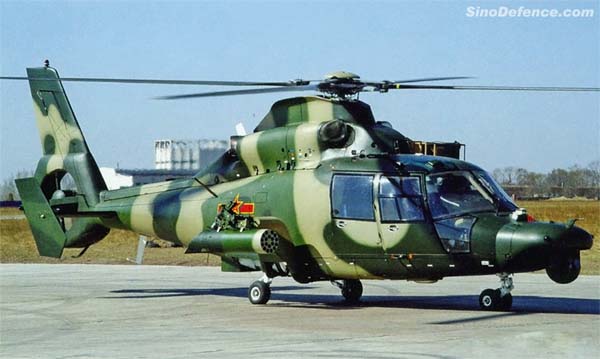
YJ-8 series aka Exocet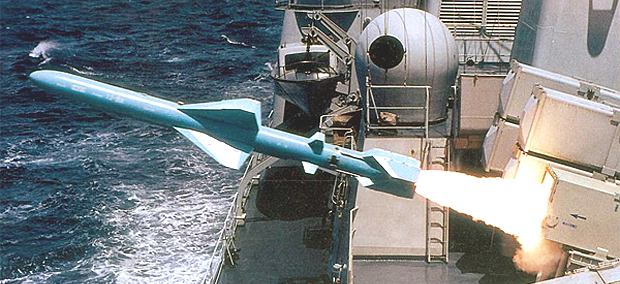
Type 96 aka T-72M (Although it has been edited for boxy, but it is still the characteristics of the T-72)
Type 86 aka BMP-1
Type 86-1 aka BMP-2
ZBD-97 aka BMP-3
Type 054 aka La Fayette ( HQ-7 aka Crotale )
blackadamYou must have some damn good sources. :rolleyes:
Some information for that PL-8 (and perhaps increase the scope PL-9) and PL-10 is capable of all-aspect, besides some other information that PL-10 is capable of IIR (红外 成像 制导) but I’m leaning towards, all three missiles capable all-aspect but not IIR seeker
http://baike.baidu.com/view/7410374.htm
http://www.ausairpower.net/APA-PLA-AAM.html
China has no missiles Python 5 (China has bought and copied into Python 3 aka PL-8), which can be copied ability IIR or LOAL its mode
blackadamDeino, do we have an estimate of the dimensions of the PL-10? I suppose there are people who have already compared its length with the J-20 to provide estimates.
PL10 is a copies Alenia Aspide missiles from Italy-based, with an infrared seeker, it is completely incapable LOAL, IIR seeker, all-aspect, the Chinese do not have access to this technology
blackadamAIM-120A/B: 48-55km
AIM-120C5/6: 70km
AIM-120C7: 50-80-88km
AIM-120D: 72-105km (no ramjet)
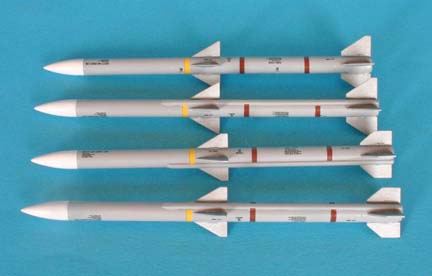
AIM-120 + ramjet (aka AIM-120C-8)
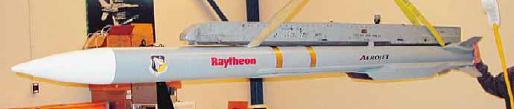
There are currently four main variants of AMRAAM, all in service with the United States Air Force, United States Navy, and the United States Marine Corps. The AIM-120A is no longer in production and shares the enlarged wings and fins with the successor AIM-120B. The AIM-120C has smaller “clipped” aerosurfaces to enable internal carriage on the USAF F-22 Raptor. AIM-120B deliveries began in 1994.
The AIM-120C deliveries began in 1996. The C-variant has been steadily upgraded since it was introduced. The AIM-120C-6 contained an improved fuse (Target Detection Device) compared to its predecessor. The AIM-120C-7 development began in 1998 and included improvements in homing and greater range (actual amount of improvement unspecified). It was successfully tested in 2003 and is currently being produced for both domestic and foreign customers. It helped the U.S. Navy replace the F-14 Tomcats with F/A-18E/F Super Hornets – the loss of the F-14’s long-range AIM-54 Phoenix missiles (already retired) is offset with a longer-range AMRAAM-D. The lighter weight of the advanced AMRAAM enables a hornet pilot greater bring-back weight upon carrier landings.
The AIM-120D is an upgraded version of the AMRAAM with improvements in almost all areas, including 50% greater range (than the already-extended range AIM-120C-7) and better guidance over its entire flight envelope yielding an improved kill probability (Pk). Raytheon began testing the D model on 5 August 2008, the company reported that an AIM-120D launched from an F/A-18F Super Hornet passed within lethal distance of a QF-4 target drone at the White Sands Missile Range.
The AIM-120D (P3I Phase 4, formerly known as AIM-120C-8) is a development of the AIM-120C with a two-way data link, more accurate navigation using a GPS-enhanced IMU, an expanded no-escape envelope, improved HOBS (High-Angle Off-Boresight) capability, and a 50% increase in range. The AIM-120D is a joint USAF/USN project, and is currently in the testing phase. The USN will field it from 2014, and AIM-120D will be carried by all Pacific carrier groups by 2020, although the 2013 sequestration cuts could push back this later date to 2022.
There are also plans for Raytheon to develop a ramjet-powered derivative of the AMRAAM, the Future Medium Range Air-Air Missile (FMRAAM). It is not known whether the FMRAAM will be produced since the target market, the British Ministry of Defence, has chosen the Meteor missile over the FMRAAM for a BVR missile for the Eurofighter Typhoon aircraft.
Raytheon is also working with the Missile Defense Agency to develop the Network Centric Airborne Defense Element (NCADE), an anti-ballistic missile derived from the AIM-120. This weapon will be equipped with a Ramjet engine and an IR seeker derived from the Sidewinder missile. In place of a proximity-fused warhead, the NCADE will use a kinetic energy hit-to-kill vehicle based on the one used in the Navy’s RIM-161 Standard Missile 3
The −120A and −120B models are currently nearing the end of their service life while the −120D variant has just entered full production. AMRAAM was due to be replaced by the USAF, the U.S. Navy, and the U.S. Marine Corps after 2020 by the Joint Dual Role Air Dominance Missile (JDRADM). This was unexpectedly terminated in the 2013 budget plan, and so the future replacement is uncertain.
AIM-120A
Initial model with solid-propellant rocket motor in a WPU-6/B propulsion section. The AMRAAM is fired in the general direction of the target, the WGU-16/B guidance unit bringing it to a (by the aircraft determined) point, using mid-course information from a data-link. In the final stage, the AMRAAM activates its own active radar seeker for terminal homing. Warhead is a 23 kg (50 lb) WDU-33/B fragmentation type with proximity and an impact fuze. Typical range is 50 km (30 miles) to 70 km (45 miles). The CATM-120A is a captive-carry training missile, the DATM-120A is used for ground-handling training and the JAIM-120A is equipped with telemetry electronics for test and evaluation purposes.
AIM-120BDelivered in 1994, the AIM-120B has a new WGU-41/B guidance section, reprogrammable EPROM modules, a new digital processor and other electronics updates. Model CATM-120B is captive-carry and JAIM-120B test and evaluation missiles.
AIM-120CA three-phase Pre-planned Product Improvement Program (P3I) has brought the AIM-120C missile version into inventory use. The AIM-120C-2 is programmable in the field and has ECCM improvements. In Phase 1, the AIM-120C-3, introduced in 1996, has clipped wings and fins to fit in the internal weapons bays of the F-22 Raptor. Moreover, the guidance unit is upgraded to WGU-44/B standard. Phase 2 includes the AIM-120C-4 (first delivered in 1999, with improved WDU-41/B warhead), AIM-120C-5 (introduced July 2000, with a slightly larger motor in the new WPU-16/B propulsion section and a new shorter WCU-28/B control section with compressed electronics and ECCM upgrades) and AIM-120C-6 (Target Detection Device). Phase 3 covers the AIM-120C-7, with improved ECCM with jamming detection, an upgraded seeker, and longer range. Training and development rounds are designated CATM-120C and JAIM-120C.
AIM-120DFormerly known as AIM-120C-8, the AIM-120D has a two-way data link, more accurate navigation using a GPS-enhanced IMU, an expanded no-escape envelope, improved HOBS (High-Angle Off-Boresight) capability, and a 50% increase in range, bring it to the 180 km class. The AIM-120D is a joint US Air Force/US Navy project.
MIM-120ACompany designation of a ground-launched application, developed by Norway as the NASAMS (Norwegian Advanced Surface-to-Air Missile System). The NASAMS, which became operational in 1995, carries AMRAAM missiles from a six-round box launcher.
There are two basic upgrade approaches to increase the range of the AMRAAM, of especial concern since the AIM-54 Phoenix. Actually, both can be implemented as incremental upgrades. Future medium range air-to-air missile (FMRAAM) is the high end, which replaces the existing engine with a ramjet using a high-energy rocket fuel. ERAAM would upgrade to a dual pulse rocket motor, and is estimated to give 80% of the capability of FMRAAM for 50% of the cost.
Competitors
Missiles comparable to the AMRAAM include the Russian Vympel R-77/NATO: AA-12 Adder. Competing against EMRAAM/FMRAAM would be the European Matra-Bae Meteor, which combines a ramject with the radar from the Matra-Bae MICA AAM, or a ramjet derivative of the R-77.
https://mikimiki248.wordpress.com/2014/06/07/aim-120-amraam/
http://wiki.scramble.nl/index.php/Raytheon_%28Hughes%29_AIM-120_AMRAAM
http://en.citizendium.org/wiki/AIM-120_AMRAAM
https://books.google.com.vn/books?id=dccE7YOi-54C&pg=PA142&lpg=PA142&dq=AIM-120C7+80+km&source=bl&ots=0j2gd0kGp5&sig=LYBgHExnqglX5sX3GyPhyFlKEFE&hl=vi&sa=X&ei=GqITVfbrOY_poATS3oHwDQ&redir_esc=y#v=onepage&q=AIM-120C7%2080%20km&f=false
http://www.deagel.com/Air-to-Air-Missiles/AIM-120D-AMRAAM_a001164006.aspx
http://www.pmulcahy.com/aams/us_aams.htm
http://www.deagel.com/Air-to-Air-Missiles/AIM-120C-AMRAAM_a001164003.aspx
blackadamNATO ashm almost impossible to cause damage to the system Aegis and the DDG-51 Flight IIA class, by their warheads very small majority eg: NSM (warhead NSM 125kg vs warhead 320kg P-270), Harpoon, Exocet. They subsonic speeds, the only advantage is the ability to stealth, but that is not enough, most of the fields surrounded RCS will increase many times over (eg: the Exocet, Harpoon are conventional missile with a cylindrical body, pointed nose and cruciform wings in the middle and at the rear). Radar small capacity of CIWS can detect them from afar. NSM also use wing fins, similar canard of aircraft Rafale, Typhoon or Su-30MKI, it is increase RCS up multiple times


blackadam[updated:LAST EDITED ON 02-09-02 AT 01:57 AM (GMT)]-PL-1
PL-1 is copy of Soviet K-5, which entered Russian service in 1957. USSR provided this radar-guided missile to PLA between 1958-1959. Some trial versions of PL-1 were produced in 1960, the official production was not approved until 1964 because there were testing equipment problems.
The 6-km range PL-1 was only in production until 1967. Due to its poor performance, PL-1 was never used in combat, PLA later converted PL-1s into target drones CX-1.
-PL-2
The origin of Soviet Siderwinder could be trace back to the 1958 Taiwan Strait conflict, in which PLA acquired AIM-9 fired by Taiwanese F-86 and handed it over to Russian. Soviet Union began K-13’s developement in 1959, and entered initial service in 1961.
PL-2 is a direct copy of K-13, which PLA obtained the licence along with MiG-21F-13s. PL-2’s appearance is similar to the early versions of AIM-9, and it’s a tail-chase uncooled lead-sulfide (PbS) IR missile homing only on the engine exhaust. The work began in Feb. 1962, and production started in 1967.
PL-2A is the upgraded version offered for export, with a thermo-electrically cooled seeker, longer range, longer body length, and heavier weight. PL-2B is an unpgrade program (guidance, infared fuze, motor) started in 1976, its range was extended from 8km to 10km. PL-2B entered production in 1980, and all PL-2 lines stopped in 1986.
PL-2 is the first PLAAF AAM in widespread service. Platforms: J-5, J-6, J-7, and A-5.
-PL-3
Development of PL-3 started in May 1965, firing tests began in 1974, production authorized in 1980. PL-3 could be used by J-7 & J-8. Compare to PL-2, PL-3 has better warhead, improved fuse, and the ability to attack high speed bomber flying at high altitude due to better flight control (larger control surface). However, because the development cycle was too long, it was destined to be eliminated early.
PL-3’s main contribution is the valuable experiences the personnels learned during the design process, many of these people later formed the teams for future AAM projects.
-PL-4
Not much is known about PL-4 except it’s a mid-range radar guided missile never entered service. Some sources said this project was originally planned for the defunct J-9, which would have carried four PL-4 as standard armament.
-PL-5
Although PL-5 is still based on PL-2, it represents a significant leap in PLA AAM development. The project began in 1965-1966, the SAR version PL-5A was tested but never entered service.
The IR PL-5B entered production in September 1986 (possibly two years earlier according to some sources), it features a cooled PbS IR seeker and higher off-boresight capability than PL-2. The high-explosive fragmentation warhead is much more powerful than previous AAMs, and has IR or radio proximity fuze. Range is approximately 16 km. Platforms include J-7, J-8 and Q-5.
PL-5 has been updated continuously, the E model is the latest version achieved IOC in 1997. PL-5E’s double-delta fins is similiar to AIM-9L, and claims to sustain more than 40G maximum loading. Besides the active laser fuze, wider off-boresight targeting, and InSb seeker, the biggest difference is the all-aspect engagement capability.
-PL-6
PL-6 is an experimental missile with unique aerodynamic design, possibly SAR. Never entered service.
-PL-7
There are debates on PL-7’s origin. Some analysts believe PL-7 is a double-canard missile based on PL-5B, others say PL-7 is a copy of French Magic with possible indigenous seeker.
The initial study on the feasiblity of PL-7 project began in 1977, China Aerospace Industry Department officially ordered No. 331 to proceed with R&D in 1982, and achieved IOC in April 1987. The development time is notably shorter than other projects, and single agency handling the research also differs from previous projects with multiple management.
The 15km-range PL-7 has a nitrogen-cooled InSb seeker with radar proximity fuze, and better seeker coverage. It’s unclear whether PL-7 has all-aspect capability. The production and further development probably already stopped.
-PL-8
Both Israel and China denied any AAM transfer, but most analysts agree PL-8 is a copy of Python 3.
The Israeli Python 3 entered service in 1982 and was reportedly used by IDF/AF in the 1982 Israel-Lebanon conflict. It has an all-aspect seeker, active radar proximity & impact fuzes, high off-bresight capability, and can sustain 56G. Maximum range is estimated to be 15km.
PLA got Python 3 in the late 80s. PL-8 could be carried by J-7 and J-8.
-PL-9
Information on PL-9 and later AAM projects are quite scarce, and usually contains many speculations. Several sources say PL-9 is derived from the PL-2 line. Like PL-7, there are different opinions due to PL-9’s apparence (somewhat similar to Python 3).
The PL-9 SAM was first displayed at the 1989 Paris Air Show. The PL-9 SAM and AAM were both expected to enter service in the mid-90s, but their status are unknown. The latest PL-9C could be considered third generation Chinese AAM, and has a multi-element InSb seeker with a radar proximity fuze. It has longer range (approximately 20km) and better IRCCM compare to the basic version. Platforms includes J-8 and possbily J-10.
-PL-10
There are some confusion about PL-10, because the lack of information on different projects (specifically PL-11). Three events occurred in the late 80s-
(a) Agreement to buy Italy Aspide signed in June 1986.
(b) IOC of HQ-61 SAM in November 1988.
(c) R&D of a SAR AAM completed in 1989.
Naturally different analysts made different associations. Some said PL-10 was a short term measure aimed to use HQ-61 to develope a mid-range AAM, because no other solution was available at the time. Others claim PL-10 is a direct copy of Aspide.
One thing is clear: PL-10 never entered service due to its poor performance. It was originally intended to serve with J-8
-PL-11
No details are available about this mid-range AAM, first revealed in 1999. Several articles indicated PL-11 is the copy of Aspide, not PL-10. Other sources also mentioned possible installation of the Chinese indigenous active radar seeker AMR-1. Like PL-10, J-8 will be PL-11’s main platform.
-PL-12
AR missile, status not clear. Seeker is possibly AMR-1 or from R-77.
blackadamChina has many SAM? below is a list of Chinese SAM (including some form under development)
HQ-2
HQ-7
HQ-9
HQ-10
HQ-12
HQ-15
HQ-16
HQ-17
HQ-18
HQ-19
HQ-26
HQ-29
HQ-61
HQ-64
blackadamChina Mobilizes Forces On Burmese Border
Response to fatal bombing by Burma
By Jeffrey Lin and P.W. Singer Posted March 17, 2015
China Burma Myanmar J-10
J-10A
east3y via lt.cdjby.net
This PLAAF J-10A, based in Yunnan Province, is running air patrols to deter and intercept any future intrusion by Tatmadaw aircraft.
China Burma Myanmar Bombing
At the Scene
This March 13th strike near Lincang City, Yunnan Province killed four Chinese farmers, and injured several more. As shown from the large carter in the mid background, the culprit is a large airborne bomb (such as one carried by a Burmese jet, like the Q-5 or Mig-29).
On March 13, 2015, a bomb from a Burmese fighter jet dropped a few kilometers across the Sino-Burmese border, killing four Chinese workers in a sugar cane field. This isn’t the first time Burma (also known as Myanmar) has bombed Chinese territory during the current fighting in the Kokang region of the Kachin State. On March 8, another aerial bomb crashed into an empty house inside China (though fortunately nobody was killed or hurt in that earlier incident). The backdrop of the strikes is higher tensions between the two Asian countries, as the Burmese military, the Tatmadaw, is engaged in a widening conflict in the ethnically Chinese Kokang region, as well as wider unrest in the Kachin State at large. Ironically, some accounts state that the offending Tatmadaw aircraft were Chinese made Q-5 attack jets, though other accounts identify the aircraft as Russian made MiG 29. (China and Russia are Burma’s two biggest arms suppliers.) As of writing, Nayipidaw (Burma’s capital) has denied responsibility for the incident.
China SAM HQ-12
HQ-12
Weibo
The HQ-12 SAM, also known as the KS-1, is a medium range air defense system with a 50km range and a 20km service ceiling, making it ideal for shooting down offending fighter aircraft.
Such incursions, either intentional or accidental, have been common in countries bordering states in civil war; Turkey and Israel have shot down a few Syrian aircraft in the past few years. In response these incidents, China has mobilized a wide military deployment in Yunnan Province, which borders Kachin State. Given that the vast majority of China’s military modernization drive has been aimed at offshore control and long range air and naval weapons, the forces of the inland Chengdu Military Region, which is responsible for defending Yunnan province, are a mix of the highly modern weapons and legacy Cold War platforms. The PLAAF has a regiment of 4th-generation J-10A fighters in Yunnan to patrol the border, along with two regiments of J-7 fighters (which first flew in the 1970s). To stop future intrusions, the PLA has deployed medium-range surface to air missiles (SAMs), such as the 50km range HQ-12 and 18km range HQ-64 SAMs, and PG-99 35mm anti-aircraft cannon. Mi-171 helicopters and mechanized infantry have reportedly also been deployed to watch for border infiltration attempts.
China Burma Myanmar J-7
An Old Classic
Weibo
Due to the Chengdu Military Region’s (where Yunnan is) relative lack of military threats compared to coastal areas, many of Yunnan’s fighters are the second generation J-7 fighters (based off the 1960s Soviet MiG-21), which have short ranges and are limited to short ranged infrared guided missiles. However, they’re much easier to maintain, and are capable dogfighters for opposing any bomb laden jets heading into Chinese territory.
To stop future intrusions, the PLAAF would likely rely on the more capable J-10 fighters to act as a rapid response force to intercept foreign aircraft, while the J-7s conduct constant close air patrol along the border. The SAMs and other air defenses would likely be concentrated near population centers. If the Tatmadaw were to fly close to the Chinese border again, the Chinese may be quick to shoot back.
http://www.popsci.com/chinas-long-march-space-rocket-5-takes-another-big-step-forward
blackadamMyanmar and Kokang conflict spilling over to China
In this past month, Myanmar air force has apparently waded into Chinese territory 3 times as part of its ongoing struggles with Kokang rebels. In the most recent time, bombs were dropped which killed 5 Chinese citizens. Due to the fact that the vast majorities of Kokang population are ethnically Han Chinese and use RMB as their currency, there is understandably a lot of sympathy in China toward the plight of Kokang. Many people have compared this to Russia and Crimea and others wonder if China should do more in this conflict.
As usual, China keeps to its official stance of not interfering with another country’s internal affairs while building up air defense capabilities in the border area. China painstakingly makes it clear that it’s not supporting Kokang rebels causes, because it has relatively good relationship with Myanmar and does a lot of business in the country. In the future, it is also possible that China would want to set up base in Myanmar to access Indian Ocean. So it should be quite understandable that PLA does not devote much resource in this area. There is 2 regiments stationed in the area, but they are quite a distance away from where the bombings took place. A lot of people were wondering about the readiness of PLAAF to respond to intrusions, but it seems like they really didn’t have that much time based on where the intrusions happened.
The interesting part is that Myanmar first reacted to these bombings by putting the blames on the rebels and absolving itself of all responsibility. They have since toned down their accusations and may have even offered compensations to the victim’s families, but I think they really looked quite foolish in the process. A swift apology and some kind of pledge to investigate the matters would have done a lot to pacify the anger in China right now. As it is, the Chineses gov’t is under pressure to do something.
So far, it looks like they have told Myanmar that this kind of action is not acceptable and will not be tolerated. And I think that if China wants to be the leader in this region, it certainly cannot allow repeated incursion of its airspace and bombing of its citizens. The way to do that is by building up more air defense weapon systems and installing more early warning radar in the range. If China’s radar cannot reliable track Myanmar’s Mig-29s, then they need to improve those radar systems. And if another deadly bombing does occur, then they probably need to launch strikes against certain Myanmar military targets. Other than that, it is in China’s interest to keep this as low-key as possible.
Posted by Feng at 9:31 AM
http://www.informationdissemination.net/2015/03/myanmar-and-kokang-conflict-spilling.html


 Sign In







