 cessna152towser
XJ823
Some new pictures from today, following XJ823’s recent repaint.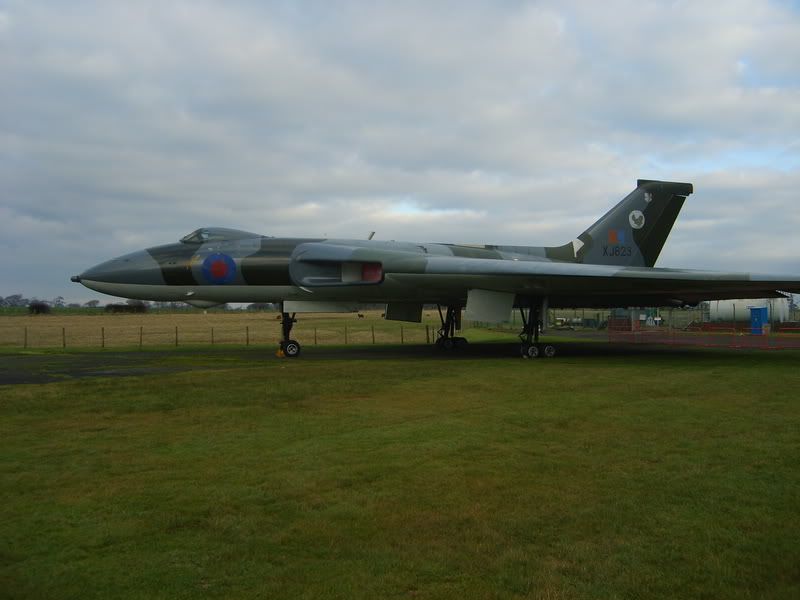
With the aid of a hired cherrypicker, some of the more difficult areas have been accessed and all the upper and exposed surfaces have been repainted last month.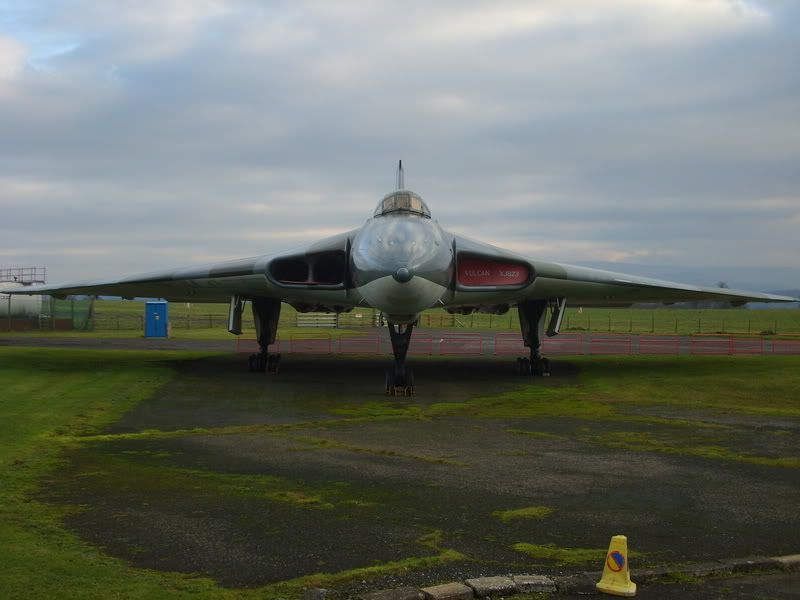
For some reason her starboard engine cover is currently out; maybe something to do with the repainting works.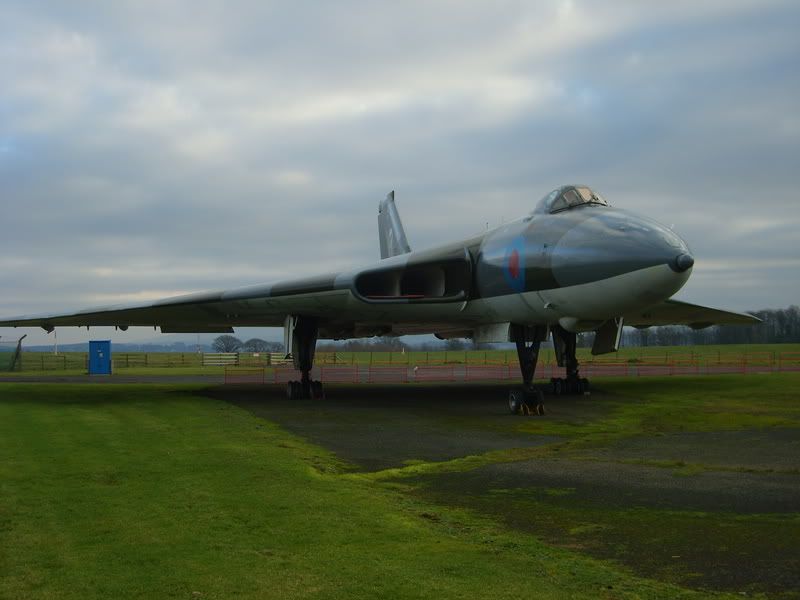
The camouflage scheme has been completely redone, which will protect her over the winter, leaving just a few details such as scripts etc. to be done in the spring, when she should look even better. Some protective paintwork has also been applied on the underside. With the cover off her starboard engines, she looks ready to fly here.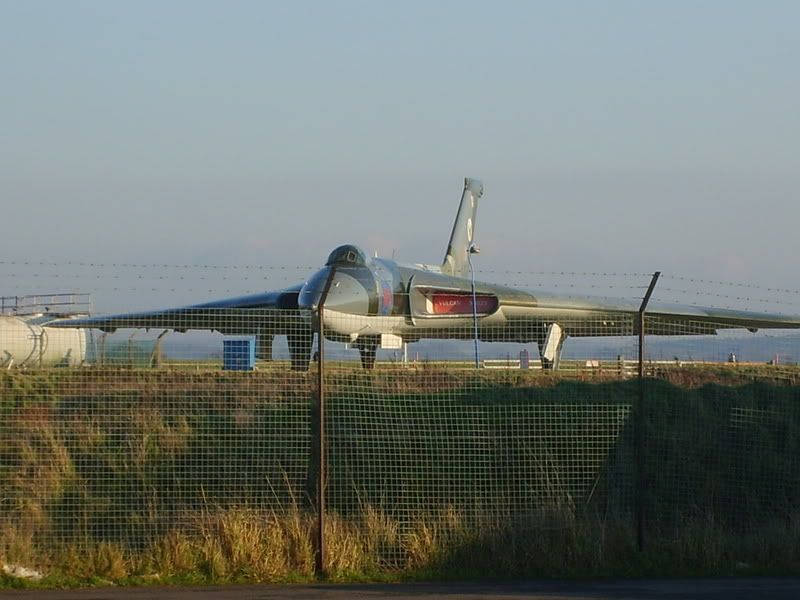
This one was takien looking back through the fence from airside after the sun came out, glinting on the fresh paintwork.
cessna152towserBA really need to fit the latest cat.3 autoland to their aircraft. Last month I went to Bristol on a foggy day and while Easyjet and Ryanair were able to continue flying normally, more expensive carriers, including BA were having to cancel or divert most of their flights.
cessna152towserThe Scottish Flyer Viscount service with G-AVHE/HK and IW which seemed to stop at every airfield from Aberdeen southwards.
That’s what my 1969 ticket was for. I flew Glasgow to Leeds and back to visit my cousin. Glasgow-Edinburgh on a BEA Viscount, then the Scottish Flyer from Edinburgh to Leeds/Bradford (HS748 G-ATEI) stopping at Newcastle and Teesside. On the way home a few days later G-ATEI again, taking off on the old runway 28 at LBA and using the full length before rotating, a brief visit to Teesside and this time I came off at Newcastle to catch my first ever flight on a jet – a BUA BAC-111 from Newcastle to Glasgow as part of the AMS-NCL-GLA route, which had all the seats facing backwards (may have been used on a military contract). In later years I moved away from the Glasgow area and did my PPL at Carlisle where I had to fly solo into both Newcastle and Teesside as part of my qualifying cross-country flight.
cessna152towserIt can usually be an advantage to check in early and get a Group A boarding pass. Though it doesn’t always work. I checked in very early for an Easyjet Newcastle to Bristol flight and had boarding pass 001. They called groups A and B and we got onto a bus and sat there for a while and by the time we were eventually bussed out to the aircraft the people who had checked in later had already got there first on another bus and had bagged all the best seats. I usually try for 24A or 25F on an Ezy 737-700 – a window seat right in the back row with nobody behind you to dig their knees into your backside.
cessna152towserNow that is a real interesting photo. I have a Channel Airways flight ticket from 1969 and the cover shows an illustration of a Trident in their colours. I remember they had ordered a few Tridents but I didn’t realise that they had ever actually taken delivery of any Tridents. This must be a real rarity and couldn’t have operated in that colour scheme for long.
cessna152towserOne thing you can do to mitigate radiation hazard is remove instruments with luminous paint on the dials from cockpits to which the public have access and then store these instruments in a thick walled cupboard; although I’d have thought the risks are very small since visitors to aircraft never sit in the cockpit for more than a few minutes at a time.
cessna152towserDitto – haven’t been to Lossie since – ohh -1978 – would love to see it again now, after nearly 30 years
Even longer for me. Flew into Lossie in 1967 on a Cherokee 6 and in 1971 on an Islander to help out with Loganair’s pleasure flights at the open day/air display. All changed there now; Gannets all gone. Thanks for posting these excellent pictures.
cessna152towserIf this really had been an aircraft joystick and not a chair leg it would have had a fixing or at very least a hole at one end to attach the control cables.
cessna152towserThanks for the tip, Peter. There were minor problems with water seepage, such that XJ823’s cockpit had to be covered in tarpaulin last winter. I think the problem’s been resolved but I can mention it to the engineer.
cessna152towserDid you get any other pics?
Here are a few from a previous visit aboard XJ823 in August, 2006, on the occasion of a volunteer guides briefing session prior to the start of the public guided tours.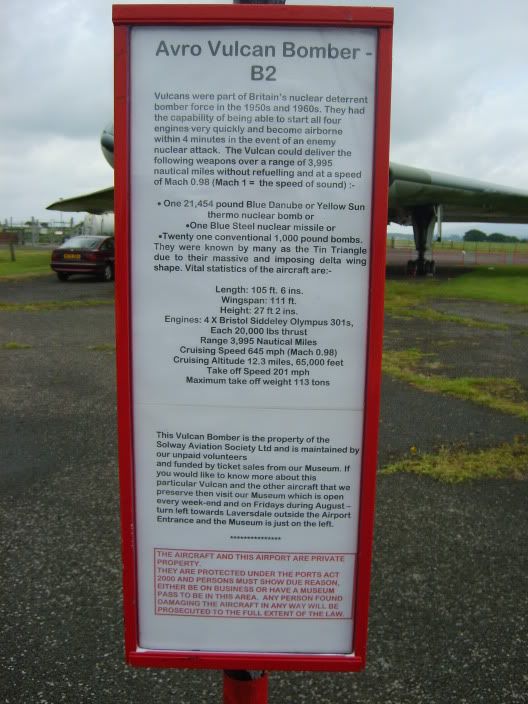
The new interpretation board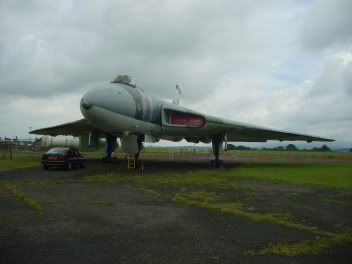
XJ823 viewed from the approach road, adjacent to the new notice board.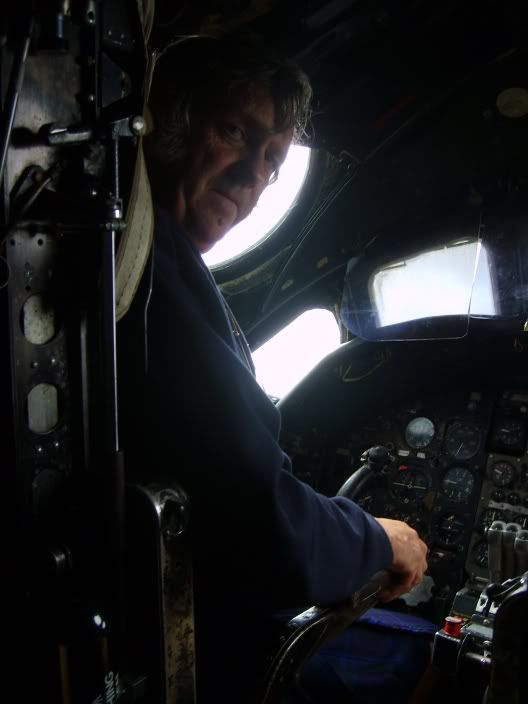
Sitting in the P1 seat.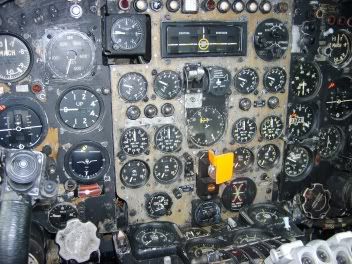
A section of the instrument panel as viewed from the P1 seat.
cessna152towserThe White Heather at Kirkbride in West Cumbria was originally built as the officer’s mess when Kirkbride Airfield was RAF Kirkbride.
cessna152towserWell done on getting involved with the Air Atlantique collection. As a club member I’m too far away to volunteer at Coventry (I’m a volunteer at Solway Aviation Museum, Carlisle) but when I do get to Coventry once or twice a year I appreciate the effort the volunteers put in at Coventry to help make classic flying achievable and affordable for the rest of us. I’m already booked on the Dak to Cosford for next June which will be my third consecutive Cosford open day by DC-3.
cessna152towserMaybe it is a nitrogen bottle. The chap who devised it brought it down from the museum and showed me how to work it, so that we could close up the Vulcan at the end of my afternoon on the Vulcan guide rota. He described it as an air bottle so I assumed it contained compressed air, which of course is almost 80% nitrogen, but for all I know it could have contained pure nitrogen.
cessna152towserNot much prospect of XJ823’s own APU being run up but it would be nice if XJ823 could be powered up using a ground power unit. The museum owns a Pelouste engine which was used in a ground support unit and hope to restore it to running order and I’ve suggested it could be used to connect to and power up the Vulcan. The other option would be to borrow a ground support unit from the airport. Either way there is also concern whether XJ823’s electrics are still sound enough to work from such a unit. One of the members has rigged up a method of running the air systems for opening and closing the hatch via a portable compressed air bottle brought to below the cockpit and connected from the outside, which has now made opening and closing XJ823 much easier. The hatch was very heavy to close manually when you had to push not only against gravity but also against the compression of the retracting arms, and for this reason the Vulcan had rarely been opened.
cessna152towser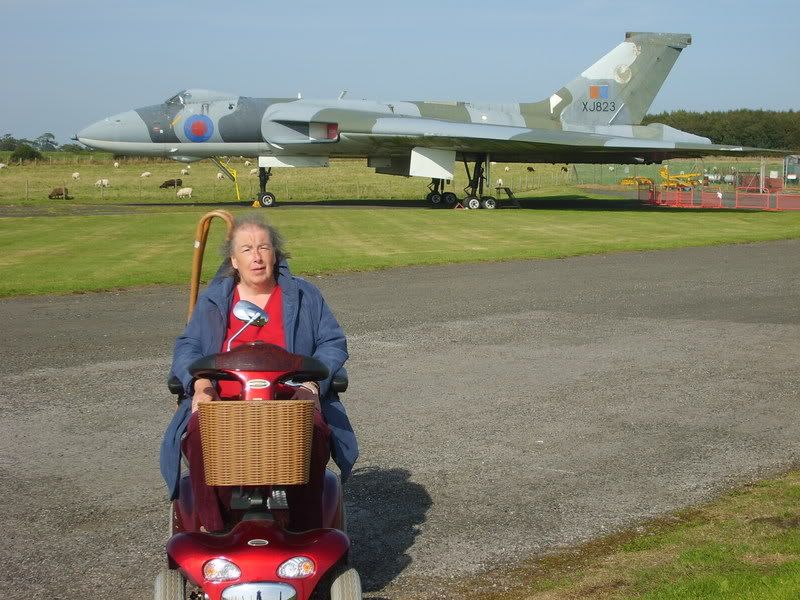

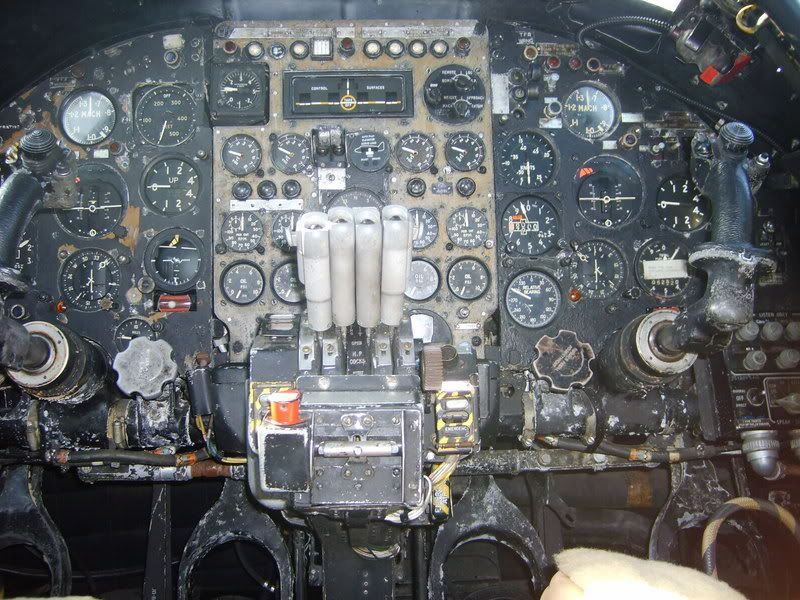
Cockpit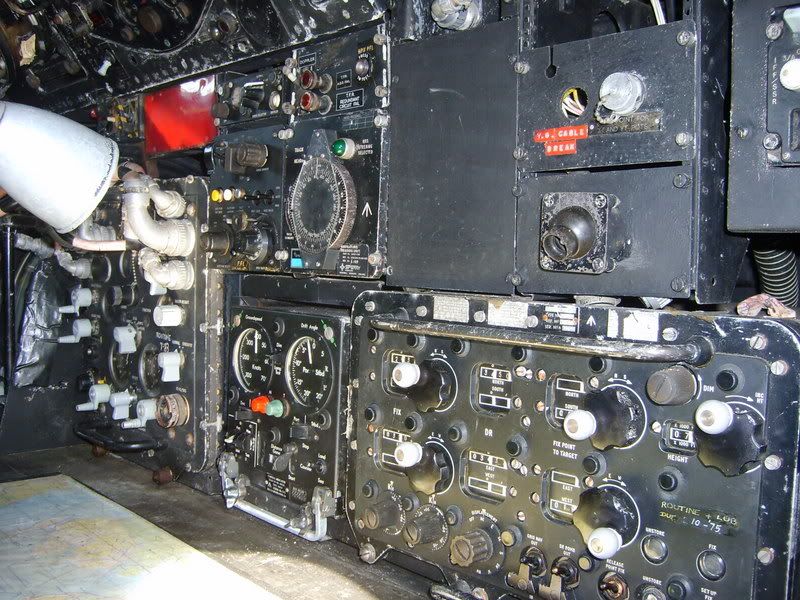
Flight Engineer and Navigator’s stations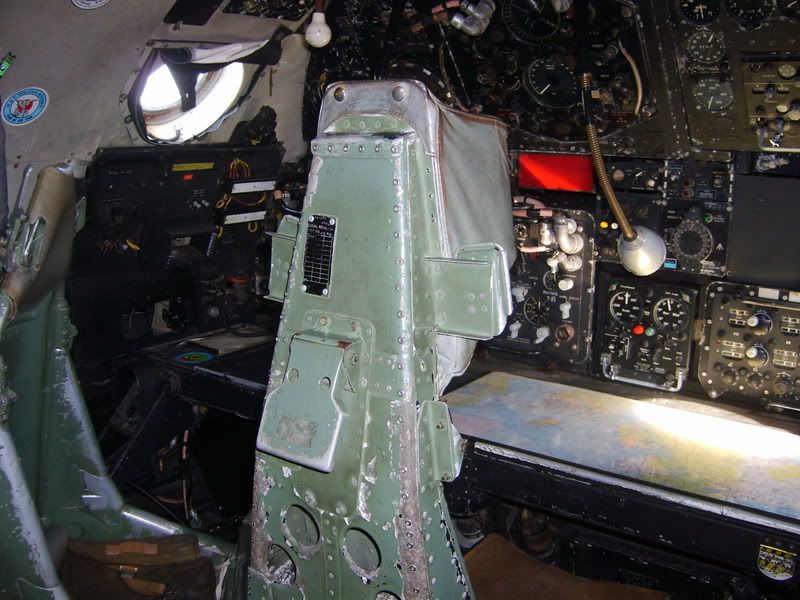
XJ823 at Carlisle was opened on Sunday afternoons during September and October, using an air bottle to power up the operation of the hatch. Here are a few pics form one of the September open days. Because she has been opened very rarely she’s in very good internal condition, but externally she has suffered the ravages of the weather and it is hoped to be able to repaint her in the near future.


 Sign In







