 TRIDENT MAN
Media Treatment Of Spotters (Merged)
Read this chaps,i think your blood will boil as mine did,also read readers comments and add yours as we are “not” anoraks!!!!:dev2:
http://www.manchestereveningnews.co.uk/news/s/1049708_ooh_is_it_a_tupolev_154
TRIDENT MANG-AWZK looks good on the article:D 😀 😀 😀 😀
TRIDENT MANAnd the next day the aircraft was by the ROMPER.:D 😀 😀 😀 😀
http://www.jetphotos.net/viewphoto.php?id=6234692&nseq=1
http://www.jetphotos.net/viewphoto.php?id=6234693&nseq=0
TRIDENT MANGone tech at MAN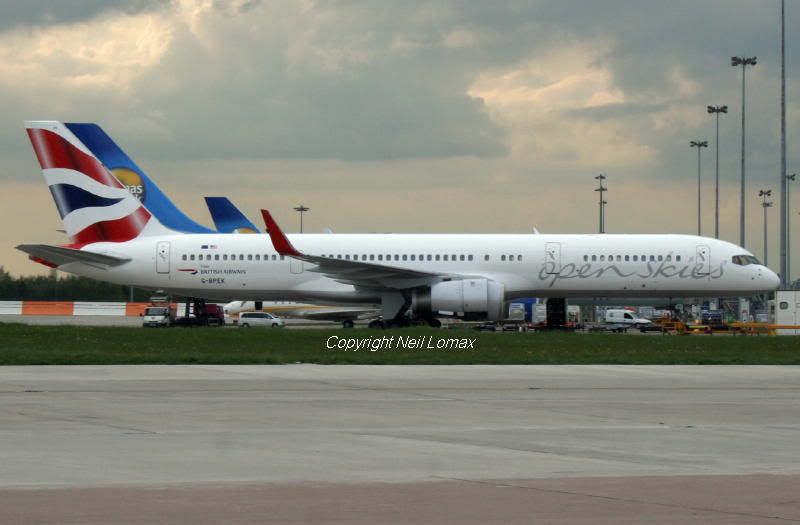
TRIDENT MANBA have engineers based at MAN (trust me i know a few of them very well) ,as i was leaving the ramp today the BA boys were checking out the number two engine.
Ill have more info tomorrow.:D
TRIDENT MANThanx for the info Mr P just seen it depart,i will be on the ramp at MAN tomorrow.Might bump into you.:D
TRIDENT MAN
Diagram of the stall,note bottom pic showing the disturbed air over the tail and engines.
Hope this helps explain the situation a tad better.:D
TRIDENT MANDeep Stall,in a nutshell:
Aircraft are supported in the air by an aerodynamic force called lift, which is generated by the wings of the aircraft as air is forced past the wings by the forward movement of the aircraft. The wings of the aircraft generate lift when they are pointed slightly upward with respect to the direction of the air flowing towards them. If the pilot tilts the aircraft upward, the wings form a larger angle with the airflow, and lift increases. This angle is called the angle of attack, or AOA, and is often symbolized with the Greek letter alpha. All else being equal, the heavier the aircraft and/or the slower the aircraft is flown the greater must be the angle of attack to generate the lift force necessary to maintain altitude.
Although raising the nose of the aircraft increases angle of attack and thus increases lift, this cannot be done without limit. Up to a certain angle of attack, called the critical angle of attack, pointing the wings upward continues to produce more lift. However, beyond the critical angle of attack, the airflow behind the wing separates from the wing and becomes turbulent, the aerodynamic effects that produce the lifting force largely disappear, and the wing stalls—that is, it suddenly and dramatically ceases to provide enough lift to support the aircraft. At the same time, the turbulence greatly increases drag, which slows the aircraft down as it moves through the air; this also reduces lift. As a result of these changes, the aircraft begins to fall towards the ground.
In many aircraft recovering from a stall is simple. Since the stall is caused by an excessive angle of attack, simply pointing the nose of the aircraft downward will arrest the stall by reducing the angle between the wings and the flow of air (this is for a fixed wing aircraft rather a helicopter). Some aircraft have a natural tendency to pitch downward (sometimes dramatically) when the wings stall; others must be directed downward by the pilot. As soon as the angle of attack drops below the critical angle, the aerodynamic stall of the wings will cease: the wings will start to produce lift and far less drag. However, the aircraft may still be flying too slowly to generate enough lift to prevent the aircraft from continuing to descend: complete stall recovery includes regaining this necessary speed.
In some circumstances stalls can result in more complicated problems, such as a ‘spin’ or a ‘deep stall’ (see below).
Typically a stall is caused by the pilot attempting to fly the aircraft too slowly, or to pull up too quickly from a dive, or to turn too steeply. Each of these causes the nose to be lifted until the wing’s critical angle of attack is exceeded. Increasing engine power counteracts the increased drag caused by the stall and also increases air speed, and this helps in recovery from a stall. The critical action in recovering from a stall is, however, reduction in the angle of attack, i.e., lowering the nose.
Altitude (height above the ground) is lost by the aircraft during the stall itself but considerably more height can be lost during the recovery. If the aircraft is already at a high altitude this is not a problem. If the aircraft is very close to the ground, however, a stall may cause the aircraft to lose so much altitude that it hits the ground before recovery from the stall is possible. For this reason, pilots are especially careful to avoid stalls during take-off and landing procedures, when the aircraft is very close to the ground.
Stalls in aircraft usually do not occur without warning. In addition to specialized sensors which alert the pilot when the aircraft is about to stall, experienced pilots can sense an incipient stall by noting changes in the behavior of the aircraft. Since the conditions that produce stalls are very well understood, pilots can easily avoid stalls, and many pilots never experience stalls outside of their pilot training. Standard pilot training includes training in the proper ways to avoid, recognize, and recover from stalls.
A few types of aircraft with a T-shaped tail or rear-mounted engines can enter a deep stall or superstall. This is a type of stall that produces turbulence behind the wings that can interfere with the operation of engines or the tail of the aircraft. Recovery from a deep stall can be impossible, resulting in a crash. Some aircraft with such characteristics are fitted with special control devices to prevent the aircraft from ever approaching a position that can cause a deep stall. An example of such a device is a stick pusher, which forces the nose of the aircraft down whenever it approaches a stall, regardless of any actions taken by the pilot.
TRIDENT MANThe 727 did not have a deep stall crash in testing.
I believe it was a Trident crash that brought that issue to the forefront.
Correct two Trident 1C’s were lost in deep stalls ie G-ARPY on a test flight in 1966 and G-ARPI on 18th June 1972 (commercial flight) due to pilot error ,and a BAC 1-11 was lost (during testing) BUT a Northwest Orient Airlines 727 (N247US c/n 202960) was lost on the 1st December 1974 due to a deep stall,this problem is prevelent in rear engined and high T tailed aircraft.So sadly the 727 was prone to it as well as other types with this layout.:(
TRIDENT MANThe AVP may well move in 5 or so years, the old AVP site is earmarked to move to, when and “if”needed.Ref airworthy aircraft they will stay at Bournemouth and relocated to the north side of the airfield so im told.
TRIDENT MANIremember the Gulf air 10’s parked at TBB LHR prior to the Golden Falcon livery around 1977ish.:eek:
TRIDENT MANIt is possible that they have been sold to raise revinue and leased back.Reading between the lines so to speak.
See link:
http://www.reuters.com/article/companyNewsAndPR/idUSL1757835920070417
TRIDENT MANOn lease maybe?
TRIDENT MANSadly the Herad is too small for what is proposed for the 1-11,beside we want a collection that represent’s Jet aircraft that paved the way for Concorde.The Herald was not a sucess on a level of the 1-11 ,146 and Trident,Concorde was indeed different in many ways.Remember the best selling British Turboprop was the Viscount.:D
TRIDENT MANDont panic,G-AWZK has lived outside for 22 years and she has harldly any corrosion,care and maintanance on a daily basis is the key,but yes they need a nice warm and dry hangar!!:D


 Sign In







