 Dare2
Dare2Also the reticle 4 “crosshair” lines in the Mirage are the same. In the Rafale, it appears bigger.
distance is well below 2000 m more like 750 m looking at the “clock”…
ATLC : L’interview du commandant de l’escadron de chasse 01.007 Provence !!!
samedi 19 décembre 2009 :: Débat :: Alerter la modérationLa participation de six avions de combat Rafale F3 au récent Air Tactical Leadership Course (ATLC) qui s’est déroulé aux Emirats arabes unis du 15 novembre au 9 décembre a été”un succès total”. “Nous avons fait carton plein” assure le lieutenant-colonel Fabrice Grandclaudon, commandant de l’escadron 1/7 Provence (Saint-Dizier).
La participation à ce grand exercice international était très importante pour la France alors que les négociations pour la vente de 60 Rafale aux EAU se poursuivent. Clairement, un bon point a été marqué par les Français auprès de leurs collègues émiriens. D’autant que la disponibilité des Rafale a été”exemplaire” : ils ont pû participer à tous les exercices à raison de deux patrouilles de quatre avions par jour, depuis la base d’Al Dhafra
Le “plateau” réuni pour cet ATLP était impressionnant : F-16 C/D block 60 et Mirage 2000-9 (Emirats), F-16 MLU (Jordanie), F-7 [une version modernisée du Mig-21] (Pakistan), Typhoon [Eurofighter] (Royaume-Uni) et F-16 CJ et F-22 (Etats-Unis). Plus des Awacs et des tankers. L’exercice consiste à simuler des raids importants, jusqu’à quarante avions, dans “des missions réalistes représentatives d’un conflit de haute intensité”. Les appareils doivent faire face à une oppositon aérienne et sol-air.
Au plan du combat aérien, son optronique secteur frontal (OSF) a permis aux Rafale d’identifier visuelement des cibles jusqu’à 30/40 kilomètres, alors que l’identification habituelle en défense aérienne se fait entre trois et cinq kilomètres. En matière de guerre électronique, les Rafales ont détecté des menaces sol-air que les F-16 CJ américains, dont c’est la vocation principale, n’avaient pas vu. Un Rafale a pu simuler le tir de six munitions air-sol (A2SM) sur 6 objectifs différents (programmés) à une distance de 20 à 40 kilomètres, puis tirer trois missiles air-air Mica, le tout en une minute – ce qui témoigne de la polyvalence de l’avion.
Lors d’affrontements air-air, le Rafale a “mis des tôles” aux Typhoons de la Royal Air Force, assure le lieutenant-colonel Grandclaudon. En version dégradée, à quatre contre quatre, les Rafale ont réalisé des scores de 4 à 0 et de 3 à 1.
L’avion de combat français s’est également frotté au F-22, le chasseur le plus moderne de l’USAF. Au cours d’une rencontre, ils se sont affrontés à six reprises, le F-22 ne mettant qu’un seul coup au but.
Cet article est celui de Monsieur Merchet, journaliste à Libé. Ce qui est reporté est une bombe dans le monde de l’aéronautique militaire. Enfin, nous savons ce que vaut réellement le Typhoon, le Raptor et le Rafale…
Je ne dirai pas Cocorico, mais simplement que la France a une nouvelle fois démontré qu’elle fut et est toujours une très grande nation aéronautique : Après avoir fait voler les tous premiers avions il y a près d’un siècle, après le célèbre Mirage III puis le Mirage F1 puis le Mirage 2000, la France est clairement très en avance aujourd’hui avec le Rafale.
http://blog.francetv.fr/capitaine-romain/index.php/2009/12/19/158245-atlc-linterview-du-commandant-de-lescadron-de-chasse-01007-provence
Interviw of the 1/7 Vendee Commander, lieutenant-colonel Grandclaudon, confirmation:
RAF Typhoons got trounced by AdlA attack squadron pilots… 😀
Dare2Found this video of Interview with F-22A Raptor Demo Pilots at Dubai Air Show 2009.
Very good post and good to archive too!
I have to point out that Rafale pilots have passed many of the PSM this F-22 pilots is mentioning and flow the aircraft in mock combat at controled speeds as low as 18 kt.
TVC works for F-22 due to its weight and TWR, Rafale posses aerodynamic qualities which makes PSM possible (like HIMAT for ex).
Dare2Certainly not. What I repeatedly said is that I have my doubts that operational pilots pull 11g on a regualre (or routine) base. This very pilot has done so during his airshow routines, that doesn’t mean that every MN/AdA Rafale pilot is pulling 11g with ease on a regulare base and this has nothing to do with the aircraft, but the pilot.
What you repeatedly say it total BIASED desinformation and is SUSTAINED, with an apparent and interested great enthusiasm.
Cptn Ruet IS an operational pilot flying at the 1/7 Vendee, and YES they CAN and DO it since they have to practice good and bad weather demos (higher g loads), i don’t see why another 1/7 pilot wouldn’t be able to do it.
The fact that you don’t want to aknowlege it doesn’t mean you can feel untitled to counterdict him and make up stories about physiologic limits, desinform posters in this forum in the process, this pilot knows what he says, we all can understand what he says, you do not or do not want to.
END of story.
Dare2This is obviously not sustained G loads.
11.0 g on Rafale NO and yet we don’t know for sure because at 15.000 ft and 9 g it still accelerates and have the correct Maximum Structural Load to do it.
If anyone have the Rafale cl and Drag coefiscient, you can compute it with its wingloading, the air density and TWR, the missing values being the only thing preventing me to say it is (or not) its possible sustained turn rate at these altitudes.
No one pretended 11.0 g is sustained but 9.0/10.0 during Red bull yes they do it without suites and at every races over at least 180* if not more (Split S).
BTW g onset is a lot more straining than sustained because the pilot CAN practice his/her contraction breathing and help the heart pomp the blood up to the brain, onsets don’t let time for that, the reason why other aircraft don’t pull 11.0 g is because they CANT.
Ignorance have no limits nor have the intellectual deshonnesty of some. 😀
Dare2pfcem = 😀
Cruise will be the subsonic sub-Mach at which your engine SFC will allow for the highest number of Nautical Airmiles per Pounds of Fuel used in this regime.
Supercruise will be the supersonic Mach at which your engine SFC will allow for the highest number of Nautical Airmiles per Pounds of Fuel used in this regime.
@obligatory
Why do you even bother, the boy think supersonic starts at M 1.5.
Dare2Nice pics, Dare, and they certainly show a Typhoon getting its ass kicked.
But by what? You can’t see enough to see the OSF bumps, so it could be a Mirage 2000 (even more humiliating) or something else entirely.
And when? Certainly not ATLC as these pictures pre-date that.
They first appeared on Flicker, and the dates are interesting.
I suspect it’s Rafale M and Italian Typhoon, and from years ago, which we already knew about, but that someone’s released them now to latch on to the UAE story.
So we sign a peace treaty then?
Done deal.
Dunno about the pic, not enough details, some say 2000, looks also like part of a Raffi HUD, i coludn’t tell, part of the things that catch me short… 😀
Dare2Award BEST topic quote:
I suspect that with the UAE order still in the air, the French don’t want any HUD video emerging showing Rafale with a Typhoon pipper on it
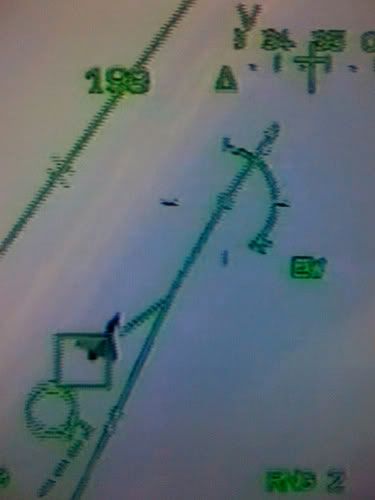
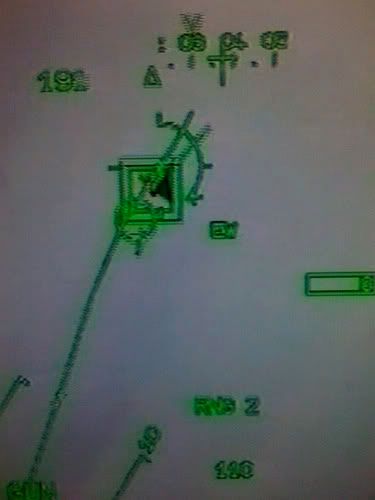
😀
Dare29g, 10g, 11g or 12g doesn’t make a difference when you have a 60g missile on your tail.
It DOES and we don’t know what you mean by 60g AAMs.
DATE:13/11/96
SOURCE:Flight International
Terminal velocity
The push is on to provide ramjet propulsion for the Eurofighter EF2000’s extended-range air-to-air missile.
Douglas Barrie/LONDONProviding more than twice the punch for the same mass in comparison to solid rockets has inevitably made ramjet propulsion attractive to missile designers. In the air-to-air missile (AAM) arena, however, the benefits of ramjets have previously been literally outweighed by their disadvantages. Ramjet sustainer units have been just too big.
Recent developments in ramjet propulsion have overcome design limitations which, militated against AAM applications: that is, the ability to design a ramjet propulsion unit with a calibre small enough for use on a beyond-visual-range (BVR) AAM.
The UKMinistry of Defence has under way a competition to procure a BVR weapon for the Royal Air Force’s Eurofighter EF2000. Whatever the outcome of Staff Requirement (Air) 1239, the winning missile is almost certain to have a ramjet sustainer.
Energy Equates With Survival
For the missile-design fraternity, the key advantage of the ramjet sustainer is that it offers considerably greater energy for similar mass, providing about double the kinematic range of a comparable solid rocket.
While a solid-rocket-motor-powered missile, such as the Hughes AIM-120 Advanced Medium-Range Air-to-Air Missile, will have a greater peak velocity than that of a comparable ramjet design, the ramjet will have a greater sustained velocity. In an air-to-air missile battle, superior energy equates with survival.
Grp Capt Graeme Smith, British Aerospace’s military air advisor, says that”-current medium-range weapons suffer from a lack of overall total energy in that they do not have the manoeuvrability required to achieve a kill against a highly agile opponent: that is, they have a relatively small no-escape zone”.
It is believed to have been just such a conclusion that prompted the RAFto look beyond a conventional solid-rocket design (for the EF2000, the AIM-120B) to a more capable missile with a greater energy for the “end-game engagement”. There is no point in a missile reaching the final stage of the engagement if it cannot deal successfully with a target manoeuvring at 9G-plus. As a rule of thumb for a successful BVR engagement, a missile needs to have a minimum of three times the manoeuvre energy of its target. If a target pulls up to10G in an evasive manoeuvre, then the missile will need to sustain 30G-plus turns at the end of an engagement to record a kill.
Some sources indicate that RAF simulations of the Sukhoi Su-27 Flanker and Flanker Plus derivatives and associated missiles versus the EF2000 with the AIM-120B revealed an unacceptably poor exchange ratio. The focus fell on providing the EF2000 with a missile, which has a far greater no-escape volume at BVR ranges.
As Smith points out, the BVR environment is also expanding, as heralded by the emergence of the Russian Vympel’s long-burn R-27RE (AA-10 Alamo). Traditionally, the BVR engagement has gone out to around 40km (22nm). The next generation of BVRAAMs will push the engagement envelope to around 100km.
As well as providing increased absolute range, the rocket-booster/ramjet-sustainer design, more importantly, offers an increased no-escape zone. A ramjet-sustainer AAM potentially triples the volume of space within which the probability of a kill remains high.
Cost Catch
With such an increase in performance, there has to be a catch. In the case of the rocket/ramjet AAM, this equates to cost; this propulsion approach is estimated to be about twice as expensive as that of a solid-rocket design.
This, however, is hardly prohibitive when one considers the potential advantages a rocket/ramjet missile brings to a BVR engagement. Paying more for improved propulsion is infinitely more attractive than losing a $40 million-plus fighter in an air-to-air engagement against a capable opponent.
The UK competition has resulted in the emergence of two teams: BAe (now Matra BAe Dynamics), leading Alenia, Daimler-Benz Aerospace, GEC-Marconi, and Saab in offering the Meteor missile; and Hughes UK, which is proposing an AIM-120 ramjet derivative, teamed with Aerospatiale, Fokker, Shorts and Thomson-Thorn.
In part, the charm of the ramjet is its design simplicity – air intake (or intakes), a combustion chamber, fuel injectors and a fuel tank are its primary constituent elements. Moving parts are unnecessary. In terms of efficiency, the ramjet motor, however, is dependent on being accelerated to around Mach 2 before it achieves anything approaching operational effectiveness. This requires that the ramjet sustainer be designed along with a solid-propellant booster. Integrated nozzleless designs are now the norm as far as the booster is concerned.
While there is a general design consensus in this area, different solutions remain in designing ramjet sustainer motors. These are based around the choice of fuels and how the combustion process is managed. The FMRAAM uses a direct injection ramjet, while the Meteor is understood to be being proposed with a boron-doped solid-ramjet design. Not surprisingly, there is a considerable amount of combustion between the propulsion advocates in both camps.
The basic advantage of the ramjet is that it uses atmospheric oxygen rather than a packaged oxidising agent for combustion. Where the challenge arises is in the management of the combustion process across the altitude regime, given the variance in air pressure.
The simplest solution, as initially used by South Africa’s Kentron and Somchem, is effectively to ignore the issue of regulation. While considerably easing design issues, such an approach restricts the missile to an extremely limited-altitude flight regime if the ramjet is to operate at its optimum performance. The solution initially considered by missile-designer Kentron was to fly the AAM down its specific altitude corridor, leaving this only in the final phase of the engagement when ramjet performance was no longer a concern. The limitations of this design approach, however, have led power plant-manufacturer Somchem to begin work on an active mechanical-valve system which would act as a throttle.
Propulsion Solution
Aerospatiale defines four basic ramjet designs: self-regulated solid-propellant ramjets, boron-doped solid-propellant ramjets, direct-injection ramjets and regulated-liquid ramjets. Within the Hughes bid for SR(A) 1239, Aerospatiale, not surprisingly, has responsibility for developing the propulsion system.
The company has drawn on several study projects in developing its propulsion solution for what Hughes calls its Future Medium-Range AAM (FMRAAM). In the late 1980s and early 1990s, it carried out studies into the development of small-calibre ramjets (SPCs) suitable for AAM applications. The company was a subcontractor to Onera and Matra on the Rustique ramjet project for a self-regulating power plant from 1990 to 1995. The SPC 1 programme, which ran from 1988 to 1990, looked at using a smaller derivative of the ASMPramjet for AAM applications, with the design using two intakes 90í apart, rather than 180í apart. Although technically successful, Aerospatiale says that even a smaller ASMP-style engine remained prohibitively costly for the tactical AAM
The SPC 2 programme looked at modifying the fuel-injection architecture, shifting it from being mounted at the elbows of the ASMP’s air intakes to the front of the combustion chamber. While again being a technical success, Aerospatiale considered that a solenoid valve remained too heavy, and too expensive, to be used for regulation.
Following on from the SPCprojects, the company is studying further programmes aimed at cost reduction under the composite ramjet-structures programme. The second of these looked to develop a simplified fuel tank, inexpensive pressurisation system, and a compact direct-injection system. In turn, this project fed into the simple regulation ramjet (SRS) project, which began in 1994. This was aimed at drawing together all of the company’s recent work on small-calibre-ramjet design.
The end result of Aerospatiale’s studies was that it has opted for a liquid-fuel direct injection ramjet, using a regulation technique which resulted from its SRS project. It decided that a regulated solid-fuel ramjet was less suitable because of what it deemed to be an unacceptably high level of technical risk as well as high development and production costs. The self-regulating ramjet, while suitable for the anti-radiation-missile application, was not acceptable for an AAM because of what Aerospatiale viewed as its inherent limitations across the altitude envelope. Matra is more positive about the “self-modulating” approach explored within the MPSR programme. Regulation on the MPSR test missiles was purely by means of the flow rate being sensitive to atmospheric pressure variation.
The regulated-liquid ramjet, as used in the ASMP, while technically acceptable, was financially prohibitive.
Aerospatiale’s solution – what it describes as a direct-injection ramjet – uses an elastomer bladder within the fuel tank, which is then linked to a pressure-reducing valve, with the fuel then fed into the combustion chamber via a four-injector assembly.
In choosing a propulsion solution, it also considered that solid propellants, with metallic additives such as boron or aluminium, raised detection concerns in both the visual and radar environments. Unburnt metallic particles, argues Aerospatiale, provide a good radar scatterer, risking exhaust-plume detection. The company also contends that unspent metallic agents in the plume could degrade the guidance datalink performance between the launch aircraft and the missile during the mid-course phase of the engagement. Finally, it raised concerns that a boron-based powerplant courted unacceptably high technical risks.
DASA power plant subsidiary Bayern Chemie, which is involved in providing the ramjet sustainer for the Meteor, contests the Aerospatiale conclusions. It has gone as far as writing to the German defence ministry in attempting to counter the Aerospatiale claims over boron-based solid ramjets.
The company claims that, as far as the technical risks are concerned, it has the experience of several successful technology-demonstrator projects, which it believes validate such a design approach. As far as plume metallic residue is concerned, the company says that tests carried out so far have been encouraging, with the results being nowhere as bad as Aerospatiale would suggest. Further tests are planned.
In prosecuting its case for a boron propellant, Bayern Chemie argues that a solid-ramjet solution (because of the higher fuel density than that of a ramjet design) allows a for a greater amount of propellant energy to be packed into the same volume of space.
It also claims, in supporting the choice of a solid ramjet, that there have been concerns over the combustion stability of small-diameter liquid ramjets at high-altitude flight profiles, suggesting that the BAe Sea Dart missile’s Rolls- Royce Odin ramjet suffers from such a problem. Another concern it raises is with the choice of JP10 for the FMRAAM sustainer, suggesting that the corrosive properties of this fuel cause doubts about suitability for long-term storage.
The UK MoD is expected to announce a decision by July of 1997 on which bid has won. Above and beyond a requirement for up to around 1,000 missiles for the RAF, the competition could also determine whether Hughes effectively becomes the de facto standard manufacturer for future BVR weapons.
Were the UK MoD to select the Hughes-led team, it is unlikely that the other European nations would pursue an independent missile solution to meet their own extended-range BVR needs. Developing such a BVR weapon even within a collabrative project is costly. Considering developing a contestant to a UK-supported ramjet AMRAAM derivative could prove prohibitively so.
The irony for Hughes is that, at least for the moment, it cannot publicly bring the US Air Force to the table as a potential collaborative partner. The USAF has no stated requirement for an extended-range BVR missile, although there is little doubt that it will eventually procure a derivative of the AIM-120 with a considerably enhanced engagement envelope.
The USAF’s concern is that it does nothing to jeopardise the Lockheed Martin/Boeing F-22 advanced tactical fighter. There are those in Washington who might view a ramjet AMRAAM, coupled with an upgraded F-15C, as just such a threat. Were the USAF not to purchase an enhanced-range AIM-120, it would raise serious issues about the F-15C and the Lockheed Martin F-16 in terms of their BVR capability against emerging threats. The US Navy’s position is slightly different in that it has a stated long-term need for a extended range AMRAAM for its McDonnell Douglas F-18E/F now under development.
For Matra BAe Dynamics, winning SR(A)1239 would secure not only the EF2000 nations as customers, but also in all likelihood Sweden for the Saab JAS39 Gripen, and France, for the Dassault Rafale multi-role fighter. It would also guarantee export independence from the USA for a primary AAM for Europe’s three fighter projects.
There is concern among the European nations that, in a transatlantic fighter-export battle, the USA could shackle European competitors by dragging its heels over the releasability of the AIM-120. Problems over integrating the AIM-120 on the Gripen for Sweden effectively ended Saab’s chances in the competition, won by the F-18. The machinations over this competition resulted in European fighter manufacturers being reluctant to be dependent upon the supply of a US-designed next-generation BVRAAM for their aircraft.
The Meteor team members also contend that key AAM development technology skills need to be maintained within Europe, and that a US solution would jeopardise these, notwithstanding that Hughes UK is leading the bid into the UK money. Those lacking charity might view Hughes UK as being little more than a “wooden horse”.
Perhaps the political end game yet to be played is the fact that BAe and Hughes are bidding together for the US Air Force/Navy requirement for a Sidewinder replacement, the AIM-9X, with variants of the BAe Advanced Short-Range Air-to-Air Missile. The US Department of Defense could yet make an overture on linkage between SR(A)1239 and the AIM-9X. The prize of becoming the successor to the Sidewinder – with some 150,000 sold – could prove a tempting bait indeed.
http://www.flightglobal.com/articles/1996/11/13/9972/terminal-velocity.html
Dare2Okay let me rephrase that as it obviously was confusing. Which modern WVR AAM(i.e. Python V, AIM-9X, Iris-T, ASRAAM, R-73/74, MICA, etc..) if fired in their NEZ, would be able to hit a 7g target but not an 11g target? Every single one of these missiles are 50g or higher missiles, so the target would have to be pulling >16gs to have a chance, if it was in the NEZ.
Wel i guess you believe confusion to be a generality, you should try to serve in an Air Force, learn these things and get us all confused! 😀
OPIT is a lot more up to date than me and explained it a lot better too since he still lis there dealing with these matters, perhaps you could take the opportunity to ask questions about what you don’t know, i do occasionaly… 😀
Dare2I’ve already stated that the Raptor’s most economical speed is likely in the M.85-.95 range.
NOT in supersonic which is NOT subsonic.
Two different regime TWO different resulting endurence.
And that’s where you’re confusing SC with max non-afterburning speed. The F-22 can fly faster than its supercruise speed without afterburners, but then it is using fuel at a greatly increased rate.
Sorry YOU do not comprehend the meaning of the word CRUISE in the first place and try to apply it to ONE regime when there are TWO.
Q: Is subsonic the ONLY flight regime these aircrafts are flying at?
NO. People spoke of supersonic cruiser in the case of some projects so the drag involved doesn’t matter, what matters it the optimum speed at which the lowest fuel flow is obtained in THIS regime.
SO. Read again.
Cruise will be the subsonic sub-Mach at which your engine SFC will allow for the highest number of Nautical Airmiles per Pounds of Fuel used in this regime.
Supercruise will be the supersonic Mach at which your engine SFC will allow for the highest number of Nautical Airmiles per Pounds of Fuel used in this regime.
Got it this time or not?
Dare2We’re talking in circles arguing whether or not it’s Happy or Glad. You’ll notice how I include endurance in my statements, as the important part of the definition(i.e. if you exceed Mach X, your endurance is degraded due to the increase in fuel usage).
Sorry YOU are talking in circles.
Supercruise will be the supersonic Mach at which your engine SFC will allow you for the highest number of Nautical Airmiles per Pounds of Fuel used.
You are arguing the that regime at which cruise is achieved matters which it does not, since subsonic and supersonic are two different regimes it is obvious the resulting endurence will be dependent on the drag involved in these regimes.
The FACT that you refuse to ADMIT that the definition of cruise won’t change with the regime speaks volume about your motivation which is NOT to learn but stick to your fantasies.
Your lot.
Dare2All modern WVR missiles would kill an 11g target just like a 7g target, if they were fired in their NEZs.:eek:
Actually NO this is false, and the reason why there are new generations of AAM with higher kineric energy being studied and developed.
AGAIN: 3 X Time the number of g needed, so not all AAMs will achieve this, too close or out of their NEZ.
This have been known for a long time now…
DATE:13/11/96
SOURCE:Flight International
Terminal velocity
The push is on to provide ramjet propulsion for the Eurofighter EF2000’s extended-range air-to-air missile.
Douglas Barrie/LONDONProviding more than twice the punch for the same mass in comparison to solid rockets has inevitably made ramjet propulsion attractive to missile designers. In the air-to-air missile (AAM) arena, however, the benefits of ramjets have previously been literally outweighed by their disadvantages. Ramjet sustainer units have been just too big.
Recent developments in ramjet propulsion have overcome design limitations which, militated against AAM applications: that is, the ability to design a ramjet propulsion unit with a calibre small enough for use on a beyond-visual-range (BVR) AAM.
The UKMinistry of Defence has under way a competition to procure a BVR weapon for the Royal Air Force’s Eurofighter EF2000. Whatever the outcome of Staff Requirement (Air) 1239, the winning missile is almost certain to have a ramjet sustainer.
Energy Equates With Survival
For the missile-design fraternity, the key advantage of the ramjet sustainer is that it offers considerably greater energy for similar mass, providing about double the kinematic range of a comparable solid rocket.
While a solid-rocket-motor-powered missile, such as the Hughes AIM-120 Advanced Medium-Range Air-to-Air Missile, will have a greater peak velocity than that of a comparable ramjet design, the ramjet will have a greater sustained velocity. In an air-to-air missile battle, superior energy equates with survival.
Grp Capt Graeme Smith, British Aerospace’s military air advisor, says that”-current medium-range weapons suffer from a lack of overall total energy in that they do not have the manoeuvrability required to achieve a kill against a highly agile opponent: that is, they have a relatively small no-escape zone”.
It is believed to have been just such a conclusion that prompted the RAFto look beyond a conventional solid-rocket design (for the EF2000, the AIM-120B) to a more capable missile with a greater energy for the “end-game engagement”. There is no point in a missile reaching the final stage of the engagement if it cannot deal successfully with a target manoeuvring at 9G-plus. As a rule of thumb for a successful BVR engagement, a missile needs to have a minimum of three times the manoeuvre energy of its target. If a target pulls up to10G in an evasive manoeuvre, then the missile will need to sustain 30G-plus turns at the end of an engagement to record a kill.
Some sources indicate that RAF simulations of the Sukhoi Su-27 Flanker and Flanker Plus derivatives and associated missiles versus the EF2000 with the AIM-120B revealed an unacceptably poor exchange ratio. The focus fell on providing the EF2000 with a missile, which has a far greater no-escape volume at BVR ranges.
As Smith points out, the BVR environment is also expanding, as heralded by the emergence of the Russian Vympel’s long-burn R-27RE (AA-10 Alamo). Traditionally, the BVR engagement has gone out to around 40km (22nm). The next generation of BVRAAMs will push the engagement envelope to around 100km.
As well as providing increased absolute range, the rocket-booster/ramjet-sustainer design, more importantly, offers an increased no-escape zone. A ramjet-sustainer AAM potentially triples the volume of space within which the probability of a kill remains high.
Cost Catch
With such an increase in performance, there has to be a catch. In the case of the rocket/ramjet AAM, this equates to cost; this propulsion approach is estimated to be about twice as expensive as that of a solid-rocket design.
This, however, is hardly prohibitive when one considers the potential advantages a rocket/ramjet missile brings to a BVR engagement. Paying more for improved propulsion is infinitely more attractive than losing a $40 million-plus fighter in an air-to-air engagement against a capable opponent.
The UK competition has resulted in the emergence of two teams: BAe (now Matra BAe Dynamics), leading Alenia, Daimler-Benz Aerospace, GEC-Marconi, and Saab in offering the Meteor missile; and Hughes UK, which is proposing an AIM-120 ramjet derivative, teamed with Aerospatiale, Fokker, Shorts and Thomson-Thorn.
In part, the charm of the ramjet is its design simplicity – air intake (or intakes), a combustion chamber, fuel injectors and a fuel tank are its primary constituent elements. Moving parts are unnecessary. In terms of efficiency, the ramjet motor, however, is dependent on being accelerated to around Mach 2 before it achieves anything approaching operational effectiveness. This requires that the ramjet sustainer be designed along with a solid-propellant booster. Integrated nozzleless designs are now the norm as far as the booster is concerned.
While there is a general design consensus in this area, different solutions remain in designing ramjet sustainer motors. These are based around the choice of fuels and how the combustion process is managed. The FMRAAM uses a direct injection ramjet, while the Meteor is understood to be being proposed with a boron-doped solid-ramjet design. Not surprisingly, there is a considerable amount of combustion between the propulsion advocates in both camps.
The basic advantage of the ramjet is that it uses atmospheric oxygen rather than a packaged oxidising agent for combustion. Where the challenge arises is in the management of the combustion process across the altitude regime, given the variance in air pressure.
The simplest solution, as initially used by South Africa’s Kentron and Somchem, is effectively to ignore the issue of regulation. While considerably easing design issues, such an approach restricts the missile to an extremely limited-altitude flight regime if the ramjet is to operate at its optimum performance. The solution initially considered by missile-designer Kentron was to fly the AAM down its specific altitude corridor, leaving this only in the final phase of the engagement when ramjet performance was no longer a concern. The limitations of this design approach, however, have led power plant-manufacturer Somchem to begin work on an active mechanical-valve system which would act as a throttle.
Propulsion Solution
Aerospatiale defines four basic ramjet designs: self-regulated solid-propellant ramjets, boron-doped solid-propellant ramjets, direct-injection ramjets and regulated-liquid ramjets. Within the Hughes bid for SR(A) 1239, Aerospatiale, not surprisingly, has responsibility for developing the propulsion system.
The company has drawn on several study projects in developing its propulsion solution for what Hughes calls its Future Medium-Range AAM (FMRAAM). In the late 1980s and early 1990s, it carried out studies into the development of small-calibre ramjets (SPCs) suitable for AAM applications. The company was a subcontractor to Onera and Matra on the Rustique ramjet project for a self-regulating power plant from 1990 to 1995. The SPC 1 programme, which ran from 1988 to 1990, looked at using a smaller derivative of the ASMPramjet for AAM applications, with the design using two intakes 90í apart, rather than 180í apart. Although technically successful, Aerospatiale says that even a smaller ASMP-style engine remained prohibitively costly for the tactical AAM
The SPC 2 programme looked at modifying the fuel-injection architecture, shifting it from being mounted at the elbows of the ASMP’s air intakes to the front of the combustion chamber. While again being a technical success, Aerospatiale considered that a solenoid valve remained too heavy, and too expensive, to be used for regulation.
Following on from the SPCprojects, the company is studying further programmes aimed at cost reduction under the composite ramjet-structures programme. The second of these looked to develop a simplified fuel tank, inexpensive pressurisation system, and a compact direct-injection system. In turn, this project fed into the simple regulation ramjet (SRS) project, which began in 1994. This was aimed at drawing together all of the company’s recent work on small-calibre-ramjet design.
The end result of Aerospatiale’s studies was that it has opted for a liquid-fuel direct injection ramjet, using a regulation technique which resulted from its SRS project. It decided that a regulated solid-fuel ramjet was less suitable because of what it deemed to be an unacceptably high level of technical risk as well as high development and production costs. The self-regulating ramjet, while suitable for the anti-radiation-missile application, was not acceptable for an AAM because of what Aerospatiale viewed as its inherent limitations across the altitude envelope. Matra is more positive about the “self-modulating” approach explored within the MPSR programme. Regulation on the MPSR test missiles was purely by means of the flow rate being sensitive to atmospheric pressure variation.
The regulated-liquid ramjet, as used in the ASMP, while technically acceptable, was financially prohibitive.
Aerospatiale’s solution – what it describes as a direct-injection ramjet – uses an elastomer bladder within the fuel tank, which is then linked to a pressure-reducing valve, with the fuel then fed into the combustion chamber via a four-injector assembly.
In choosing a propulsion solution, it also considered that solid propellants, with metallic additives such as boron or aluminium, raised detection concerns in both the visual and radar environments. Unburnt metallic particles, argues Aerospatiale, provide a good radar scatterer, risking exhaust-plume detection. The company also contends that unspent metallic agents in the plume could degrade the guidance datalink performance between the launch aircraft and the missile during the mid-course phase of the engagement. Finally, it raised concerns that a boron-based powerplant courted unacceptably high technical risks.
DASA power plant subsidiary Bayern Chemie, which is involved in providing the ramjet sustainer for the Meteor, contests the Aerospatiale conclusions. It has gone as far as writing to the German defence ministry in attempting to counter the Aerospatiale claims over boron-based solid ramjets.
The company claims that, as far as the technical risks are concerned, it has the experience of several successful technology-demonstrator projects, which it believes validate such a design approach. As far as plume metallic residue is concerned, the company says that tests carried out so far have been encouraging, with the results being nowhere as bad as Aerospatiale would suggest. Further tests are planned.
In prosecuting its case for a boron propellant, Bayern Chemie argues that a solid-ramjet solution (because of the higher fuel density than that of a ramjet design) allows a for a greater amount of propellant energy to be packed into the same volume of space.
It also claims, in supporting the choice of a solid ramjet, that there have been concerns over the combustion stability of small-diameter liquid ramjets at high-altitude flight profiles, suggesting that the BAe Sea Dart missile’s Rolls- Royce Odin ramjet suffers from such a problem. Another concern it raises is with the choice of JP10 for the FMRAAM sustainer, suggesting that the corrosive properties of this fuel cause doubts about suitability for long-term storage.
The UK MoD is expected to announce a decision by July of 1997 on which bid has won. Above and beyond a requirement for up to around 1,000 missiles for the RAF, the competition could also determine whether Hughes effectively becomes the de facto standard manufacturer for future BVR weapons.
Were the UK MoD to select the Hughes-led team, it is unlikely that the other European nations would pursue an independent missile solution to meet their own extended-range BVR needs. Developing such a BVR weapon even within a collabrative project is costly. Considering developing a contestant to a UK-supported ramjet AMRAAM derivative could prove prohibitively so.
The irony for Hughes is that, at least for the moment, it cannot publicly bring the US Air Force to the table as a potential collaborative partner. The USAF has no stated requirement for an extended-range BVR missile, although there is little doubt that it will eventually procure a derivative of the AIM-120 with a considerably enhanced engagement envelope.
The USAF’s concern is that it does nothing to jeopardise the Lockheed Martin/Boeing F-22 advanced tactical fighter. There are those in Washington who might view a ramjet AMRAAM, coupled with an upgraded F-15C, as just such a threat. Were the USAF not to purchase an enhanced-range AIM-120, it would raise serious issues about the F-15C and the Lockheed Martin F-16 in terms of their BVR capability against emerging threats. The US Navy’s position is slightly different in that it has a stated long-term need for a extended range AMRAAM for its McDonnell Douglas F-18E/F now under development.
For Matra BAe Dynamics, winning SR(A)1239 would secure not only the EF2000 nations as customers, but also in all likelihood Sweden for the Saab JAS39 Gripen, and France, for the Dassault Rafale multi-role fighter. It would also guarantee export independence from the USA for a primary AAM for Europe’s three fighter projects.
There is concern among the European nations that, in a transatlantic fighter-export battle, the USA could shackle European competitors by dragging its heels over the releasability of the AIM-120. Problems over integrating the AIM-120 on the Gripen for Sweden effectively ended Saab’s chances in the competition, won by the F-18. The machinations over this competition resulted in European fighter manufacturers being reluctant to be dependent upon the supply of a US-designed next-generation BVRAAM for their aircraft.
The Meteor team members also contend that key AAM development technology skills need to be maintained within Europe, and that a US solution would jeopardise these, notwithstanding that Hughes UK is leading the bid into the UK money. Those lacking charity might view Hughes UK as being little more than a “wooden horse”.
Perhaps the political end game yet to be played is the fact that BAe and Hughes are bidding together for the US Air Force/Navy requirement for a Sidewinder replacement, the AIM-9X, with variants of the BAe Advanced Short-Range Air-to-Air Missile. The US Department of Defense could yet make an overture on linkage between SR(A)1239 and the AIM-9X. The prize of becoming the successor to the Sidewinder – with some 150,000 sold – could prove a tempting bait indeed.
http://www.flightglobal.com/articles/1996/11/13/9972/terminal-velocity.html
Dare2If you got your enemy as close as shown in the HUD-pics, he’s/she’s toast. 9 or 12g makes NO difference. You can’t out turn a modern short range AAM. Just grab the handle and step out of the aircraft….
LOL! It depends WHERE the enemy will be and what AAM will be fired at it.
AAMs obbeys to the same laws of physics/aerodynamics than aircrafts and btw at this distance you wont be able to fire it unless it is 180* behind you and have to travel long enough to arm itself and for some, achieve a reasonable level of kinetic energy to make the turn, minimum firing distance is 500 m for most.
Dare2Supercruise as the USAF/LM views it
NO.
Sorry dude THIS is your guys interpretation and obviously one conveniently stuiting the fantasms of those who wants F-15 to supercruise because “it would mean M 1.5”.
L-M doesn’t write the book, USAF service either NOT, the Flight Test Center does and it is its primary function to do so, L-M and USAF can publish any commercials they want, they still compute endurence by the book.
CRUISE have nothing to do with Machs it have to do with ENDURENCE.
If your thrust allows you to reach a high enough number of Nautical Airmiles per Pounds in supersonic, then you have supercruise capabilties, supercruise is a tactical flight regime not a fashionable forum topic.
Since Mach involes a higher level of DRAG it will ALWAYS mean a trade off but it wont change the definition of the word CRUISE (since it will be achieve at a different regime than subsonic or transonic).
As i was saying you keep looking at the wrong end of reality.
Dare2I have never said that the F-22 CRUISES at M1.75, and neither has anyone else on this forum. The F-22’s cruise speed is likely in the M.85-.95 range.
Of course; with all these agruments, you still canot figure the meaning of the word CRUISE since you IMAGINE that supercruise is NOT cruising in supersonic.
What did i say?
AGAIN:
Stabelised Cruise point is reached when your stabelised cruising speed (whatever it is) is reached with your Specific Range (SR) defined in terms of Nautical Airmiles per Pounds of Fuel used at its highest.
Range Factor (RF) is your Specific Range multiplied by gross weight.
In non-afterburner operation a change of 1% in drag is going to result in a change of 1% in fuel flow.
Now your problem is to figure at which Mach your aircraft will be flying, at the closest to your best fuel flow in order to reach your stabelised cruise point, THIS is what CRUISE means. = Range Factor = RANGE = ENDURENCE.
THIS also apply in the supersonic regime and you’re more than welcome to stop revising every single definitions in the books to suits your fantasies.
Supersonic is NOTHING particular regarding your resulting Stabelised Cruise point in this flight regime and supercruise will be the supersonic Mach at which your engine SFC will allow you for the highest number of Nautical Airmiles per Pounds of Fuel used.
Now if you can’t comprehend this don’t bother joining the A-F you won’t make it as a mechanic, you won’t even be able to compute the range of a Cessna F-150, let alone a M 2.0 jet.


 Sign In







