 Vnomad
I see a risk that F-35 operation can be controlled by the US government, whoever the operator is. If F-35 user A wants to strike a target and the USA government disagrees, the user can be prevented from striking that target by being denied updates to their mission data files. Come to think of it, won’t the USA inevitably know what a user’s government is planning to do militarily if mission data files have to be updated in the USA? I can’t imagine there being a Chinese wall at LM where the government agrees that LM will not leak military secrets of other countries to the US government.
Only if you subscribe to this ridiculous notion that the pilot has to file flight plans with the JPO before undertaking a sortie.
VnomadOn a different note, I don’t recall seeing this posted on the thread before, so..
(Mostly just a summary of program’s achievements over the last year.)
_______________________________________________________________________________
2015 DOT&E Report – Public Response Statement
Lt. Gen. Chris Bogdan, F-35 Program Executive Officer // January 29, 2016
The independent program review from the OSD Director of Operational Test and Evaluation (DOT&E) is an annual occurrence, and the process was executed with unfettered access to information and with the full cooperation of the F-35 Joint Program Office (JPO). There were no surprises in the report; all of the issues mentioned are well-known to the JPO, the U.S. services, international partners and our industry team.
Once again, the annual DOT&E report points out the progress being made by the program. This includes the U.S. Marine Corps declaring Initial Operational Capability (IOC) in July 2015. The USMC declared IOC with Block 2B software because it provides increased initial warfighting capability. Marine F-35s have the necessary weapons to conduct close air support, air interdiction and limited suppression/destruction of enemy air defense missions. Currently Marine F-35s can carry the following weapons internally in stealth mode – the AIM-120, GBU-32 JDAM, and GBU-12 Paveway II. When the developmental program is complete in the fall of 2017, all F-35 variants will be able to carry more than 18,000 pound of munitions internally and externally.
2015 ended with more than 150 operational (fleet and operational test) and 18 developmental test jets operating at 10 U.S. locations and the Italian Final Assembly and Checkout (FACO) facility in Cameri, Italy. Together, the entire fleet has flown more than 48,000 hours.
The program delivered 45 aircraft in 2015 – the most aircraft delivered in one year in program history. These deliveries included the first international delivery from the Italian FACO, and bring the overall operational delivery total to 154. Along with Italy, Norway took its first delivery in 2015. Five partner nations – Australia, Italy, the Netherlands, Norway and the United Kingdom – along with the U.S. Air Force, Marine Corps and Navy, now fly the F-35. Israel and Japan will take their first deliveries in 2016.
Pilot and maintainer training increased substantially in 2015. More than 250 pilots including the first two for Australia, Italy and Norway respectively entered training. More than 2,800 maintainers are qualified to service the jet, with a majority graduating from the F-35 Aircraft Training Center at Eglin AFB, Florida.
Although the DOT&E report is factually accurate, it does not fully address program efforts to resolve known technical challenges and schedule risks. It is the F-35 Joint Program Office’s responsibility to find developmental issues, resolve them and execute with the time and budget we have been given. Our government and industry team has a proven track record of overcoming technical challenges discovered during developmental and operational testing and fleet operations, and delivering on program commitments. A few recent examples of issues that are resolved include the F-35C tailhook, the F135 engine rub, and F-35B STOVL Auxiliary Air Inlet door. The F-35C has now “caught the wire” more than 200 times at sea, the engine rub fix is incorporated on the production line and delivered engines are being retrofitted, and the F‑35B has performed more than 1,000 vertical landings safely.
Currently, mission systems software and the Autonomic Logistics Information System (ALIS), are the program’s top technical risks. Disciplined systems engineering processes addressing the complexity of writing, testing and integrating mission systems and ALIS software have improved the delivery of capability, although challenges remain. There is more work to accomplish in both mission systems software and ALIS before the end of the development program.
Continuing on 2015’s results, Block 3i software was released for flight test in May 2015 to support the U.S. Air Force IOC declaration later in 2016. Coding for the final development software block (known as 3F) was completed in June 2015 and the software has been released for flight testing. Additional updates are planned throughout the year with 3F tracking for completion by the end of the System Development and Demonstration Program (SDD) in the fall of 2017 in order to support U.S. Navy IOC in 2018 and the start of IOT&E. Throughout testing, interim software test builds are provided to both the developmental test and operational test teams allowing them to experience the software as early as possible to provide feedback to our teams. As of Dec. 31, the program completed 80 percent of SDD test points and is on track for completion in the fourth quarter of 2017.
At the completion of the F-35 SDD program, the objective is to deliver full Block 3F capabilities (Mission Systems, Weapons & Flight Envelope) for the Services and International customers. The F-35 program will continue to closely coordinate with the JSF Operational Test Team (JOTT) and DOT&E on key test planning and priorities to successfully meet key SDD program milestones and objectives.
The flight test program made significant progress in maturing the capability of the aircraft during 2015. For example, the program:
– Completed the third F-35B sea trial aboard the USS Wasp and the second F-35C sea trial aboard USS Dwight D. Eisenhower for a total of five sea trials since 2013.
– Completed six-months of climatic response testing at the McKinley Climatic Lab at Eglin AFB, Florida. During these tests, the jet operated in ranges from 120 degrees to minus 40 degrees and various ranges of humidity and weather conditions.
– Completed F-35A 3F software high angle of attack and performance testing and continued envelope expansion for all variant 3F software.
– Achieved aerial refueling certification with the Australian tanker (KC-30A) and Italian tanker (KC-767), including night operations.
– Completed GAU-22 25mm ground gun fire testing and began airborne testing on the F-35A.
– To date, completed 90 weapon separations – GBU-12, GBU-31, GBU-32, AIM-120, GBU-39 Small Diameter Bomb, U.K. Paveway IV, and first F-35 AIM-9X. This includes 18 for 18 successful live fires of AMRAAM, JDAM, and GBU-12s.
– To date, completed 17 Weapon Delivery Accuracy events (GBU-12, GBU-31, GBU-32, and AIM-120)
– To date, successfully verified F-35 low observable stealth signature 146 times with both flight test and operational jets.
These accomplishments prove the basic design of the F-35 is sound and test results reinforce our confidence in the ultimate performance the U.S. and its partners and allies value greatly.
As a reminder, the F-35 program is still in its developmental phase. This is the time when issues are expected to be discovered and solutions are implemented to maximize the F-35’s capability for the warfighter. While the development program is 80 percent complete, we recognize there are known deficiencies that must be corrected and there remains the potential for future findings. Our commitment to overcoming challenges is unwavering. The Joint Program Office will continue to work with the F-35 enterprise to make corrections and improvements as quickly as possible. At the completion of the F-35 development program, the objective is to deliver full Block 3F capabilities (Mission Systems, Weapons & Flight Envelope) for the Services and International customers. We thank the DOT&E for their assistance as we remain focused on developing, delivering and sustaining the world’s finest multi-role 5th generation aircraft.
VnomadAs Defense-Aerospace.com reported last November, “All F-35 aircraft operating across the world will have to update their mission data files and their Autonomic Logistic Information System (ALIS) profiles before and after every sortie, to ensure that on-board systems are programmed with the latest available operational data and that ALIS is kept permanently informed of each aircraft’s technical status and maintenance requirements.
“ALIS can, and has, prevented aircraft taking off because of an incomplete data file,” the report revealed.
This technical limitation on the F-35s constitutes a critical weakness from Israel’s perspective for two reasons. First, as the Defense-Aerospace article points out, the need to constantly update the ALIS in the US means that the F-35 must be connected to the Internet in order to work. All Internet connections are maintained via fiber optic underwater cables.
Nonsensical story. The air forces operating the aircraft don’t expect to have internet access in a war-zone. The USMC’s F-35B tests on the USS Wasp, lasted for well over a week with zero ALIS support. Serviceability was limited due to a variety of reasons – immature build variant, lack of trained personnel, lack of support infrastructure. Lack of broadband internet however was not one of the problems.
Edit: Lockheed Martin says that the OT-1 tests were conducted with the ALIS installed – F-35’s ALIS at Sea.
The 2015 DOT&E Report on the other hand, says different –
The operational logistics support system, known as the Autonomic Logistics Global Sustainment system, was not available. A potentially non-representative set of spare parts was loaded onboard the ship, and the program and Marine Corps provided extensive supply support to ensure replacement parts reached the ship faster than would be expected in deployed combat operations.
Vnomad^ So basically Dassault is demanding about $13.5 billion, while the Indian MoD isn’t prepared to sanction more than $10 billion (these figures probably include an allocation for a substantial weapons complement). Still.. seems to wide to be bridged, more than the likely profit margin for Dassault.
VnomadThe Rafale business is still very far from a done deal, which further suggest that they may look elsewhere for an MMRCA alternative (possibly with local assembly) –
No Rafale deal unless price is right: Parrikar
Ajai Shukla, New Delhi
February 18, 2016
Defence Minister Manohar Parrikar bluntly stated on Thursday that negotiations for buying 36 Rafale fighters from French aerospace vendor, Dassault, were deadlocked on the issue of price, and that no deal would be signed until the price was right.
Well-informed defence ministry sources that are close to the negotiation say there is a wide gulf between the two sides. “The difference between what France is demanding and what India is willing to pay is too large to bridge easily – about 25 per cent.“
Business Standard understands that Dassault has quoted about Rs 91,548 crore, while Indian negotiators are refusing to go above Rs 68,499 crore.
Parrikar told India Today TV: “Price is the problem which has to be resolved. Unless I get the right price, I cannot sign.”
Debunking recent media articles that a deal was imminent, most recently in Hindustan Times on February 11, Parrikar said ironing out the remaining issues would take “a few months”.
Pressed on the question of time-frame, Parrikar responded: “You can’t commit yourself to a time, because this is not a negotiation for a few hundred crores. This is thousands of crores. I should not… put a time line on my price negotiation.”
On January 25, during his visit to Delhi, French President Francois Hollande declared after signing an inter-governmental agreement for the supply of 36 Rafales, “There are some financial issues that will be sorted out in a couple of days…” It now appears he may have been speaking figuratively.
On January 27, French ambassador to New Delhi, Francois Richier, put a deadline of four months for the price to be negotiated.
On Thrursday, Parrikar also confirmed that India had demanded offsets worth 50 per cent of the deal value, and that Dassault had agreed to that condition.
“We have resolved all the other issues. There were terms of guarantees, there were terms of supply, there were terms of how it will be done”, said Parrikar.
The defence minister denied that the window was open for buying more Rafale fighters, beyond the 36 being currently negotiated. “As of now, the negotiation is for 36 (fighters). There are many possibilities, but this deal is for 36”, he said.
When Prime Minister Narendra Modi, on a visit to Paris last April, requested for 36 Rafales, New Delhi and had Paris agreed the price would be less than what Dassault had quoted in response to the Indian tender of 2007 for 126 medium multi-role combat aircraft (MMRCA). Of those 126 fighters, the first 18 were to be supplied in “flyaway condition”, i.e. fully built. Since 36 Rafales are now being bought in “flyaway condition”, their per-piece price must be lower than what Dassault quoted for those 18 fighters.
The Indian Air Force had chosen the Rafale on January 31, 2012, in India’s tender for 126 MMRCA aircraft. However, in protracted price negotiations that followed, the defence ministry found problems in Dassault’s financial bid. Eventually, Modi chose to abandon the MMRCA tender, and instead buy 36 Rafales over-the-counter.
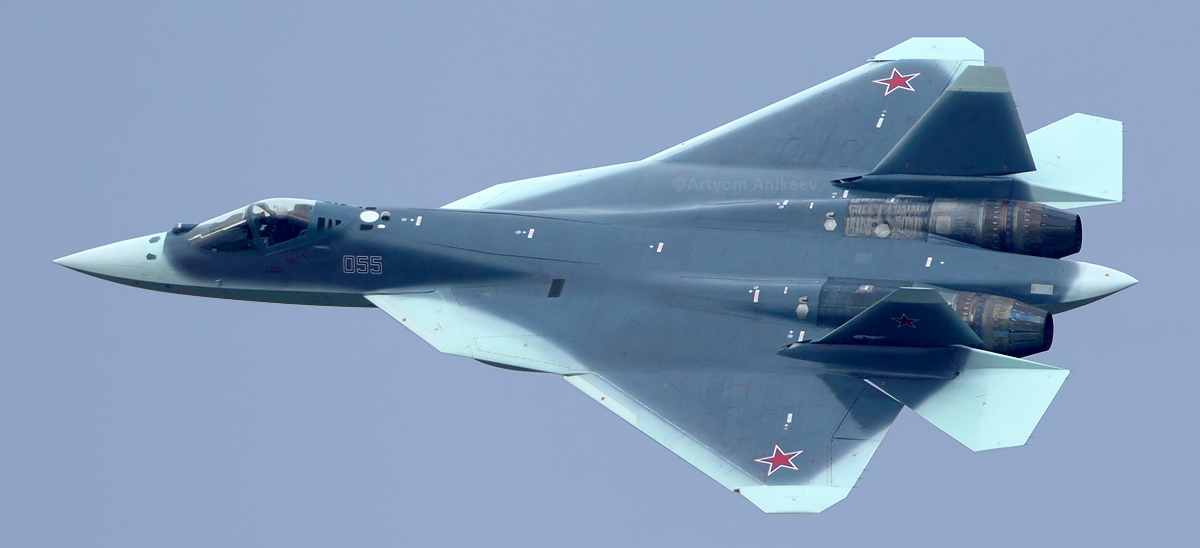
VnomadMaybe its just me then. Can’t say I’m fond of this new paint scheme. The white is screwing up those beautiful chines. Its predecessor in contrast, was absolutely gorgeous. Wish they’d stuck to that camo.
VnomadNone of this however invalidates my opinion that the F-35 does not have the range required to fulfil the interdiction role that I believe Oz actually have a requirement for.
Sure tanker support can get the planes out there and get them back, until the opposition decide to remove the tankers from the equation.
A requirement calling for an aircraft type that doesn’t exist. The F-22’s combat radius is no better than the F-35’s, while the F-15E isn’t survivable in a threat environment where the opposition has the capability of simply ‘removing the tankers from the equation’. Neither the SHs nor the Eurocanards make the cut. Which leaves.. nothing. Unless Australia would like to independently finance the development of a clean-sheet F-111 replacement.
VnomadVery true, but that’s assuming that (1) the pram of today is still the same as the pram of 10 years ago, and (2) that it won’t take you another 10 years to decide not to buy a bicycle after all because now you’d prefer a motorbike! :dev2:
1) Even a motorized pram.. will still be a pram. 2) True. On the other hand, there are only two brands of bicycles available (and a long wait time for one of them), and it’ll take another twenty years for the motorbike to enter the market :D.
VnomadAnd once that realistic timeline (i.e. post-2030 before the first such vessel would be operational) is acknowledged, additional questions arise, namely are Vikramaditya and Vikrant alone sufficient to service IN requirements out to 2035 as they may have to, or would a third 40k/STOBAR/MiG-29K carrier that could be inducted well before mid-2020s be an affordable and useful option?
True. And I do believe they will order a second 40-45K carrier, though how much time they’ll take to reach that decision is an open question. Just as important is the matter of the air complement.
The N-Tejas is a cheap option that can be built in numbers, provide attrition replacements as well as carry out shore defence duties. So its an obvious choice. But they’ll still need something at the higher end and the MiG-29K simply won’t cut it. You probably won’t like this bit, but given the ski-jump requirement, at some point the IN will have to order the F-35B, if its to provide a battle group (comprising of upto $10 bn in naval assets), with effective air cover in an increasingly lethal threat environment.
An additional factor, once realistic timelines are acknowledged, is the question of Vikramaditya‘s service life and the possibility of replacing her with an additional production unit of the next-gen carrier project. A third >65k/EMALS/VLO carrier could be completed only by 2040 at the very earliest, and more likely 2045, by which time Vikramaditya would’ve seen thirty years of Indian service and her MiG-29Ks would be EOL in any case with limited prospects for replacement or replenishment.
Thing is, once critical mass in terms of experience and capabilities is built up, the going gets much easier. The IAC program is coming along nicely (after a funding crunch 2011-2013). Similarly, the first P-15B ship will probably be commissioned within two years of the last P-15A ship. While the 65K IAC-2 is a far more complex program, given the expanded domestic technical base and, in particularly, technical assistance from the US, delivery by 2035 is very doable.
VnomadPersonally I think India should build Vishal to same specs as Vikrant and operate the same air wing (with suitable upgrades), and then commit to a next-generation >65k ton carrier program with nuclear power, EMALS, VLO aircraft etc. designed to reach fruition in early 2030s. Airwing options for this carrier would be AMCA, F-35, and whatever the Russians and potentially French have to offer at the time, plus UCAVs of one sort or another. Probably three units would be built over the course of 10-12 years, with the last replacing Vikramaditya by mid 2040s.
INS Viraat II, eh? There is a proposal to do just that. And the idea hasn’t been officially rejected so far.
CSL offers to build another aircraft carrier
Amidst report of the Defence Acquisition Council granting Rs.30 crore to the Indian Navy to start working on a second indigenous aircraft carrier, it has emerged that Cochin Shipyard Limited (CSL), which is constructing the first indigenous carrier INS Vikrant, has urged the Navy to place an order with it for a follow-on carrier of Vikrant-class.
Vikrant is set for undocking from CSL’s building bay later this month.
CSL assurance
The CSL is learnt to have assured the Navy in end-2014 that in case a follow-on order for a carrier is placed, it would be able to deliver the vessel in just four years from the time of delivery of INS Vikrant, scheduled to take place in 2018. The Navy has not responded to the proposal yet. “A follow-on carrier would be advantageous for the Navy, as there would be no time lost on detailed design, development of specialised material, technology, honing of skills of the workforce and so on. Since the Navy desires to operate two carrier task forces at any given time, it would be a good option to exercise,” said a CSL official.
“The carrier INS Viraat is retiring [next year] and the refurbished 45,000-tonne INS Vikramaditya [undergoing a short refit now] will be joined by the 40,000-tonne INS Vikrant a few years from now. Should there be a second Vikrant-class carrier with the same specifications and equipment, it could be operationalised in early or mid-2020s. It makes perfect sense as two carriers would always be operational even as the third remained under refit,” he added.
The lead time taken for the construction of INS Vikrant was in sync with the global average of nine years, said another official. “The follow-on vessels of a class always take much shorter periods to deliver,” he contended. However, a senior Navy officer told The Hindu that the force had firmed up the plans to have a super carrier displacing 65,000 tonnes after Vikrant. It would most likely be nuclear-propelled, with an electromagnetic aircraft launch system, widely referred to as EMALS catapult, and would embark a whole new fleet of naval fighters, he said. CSL’s proposed larger dry-dock capable of taking on ships of any size would be ready by the time the Navy floats the tender for a second carrier.
It would be especially attractive since even an ‘accelerated’ i.e. optimistic schedule for the INS Vishal, takes the in-service date as late as 2033.
A 65,000-ton nuclear powered CATOBAR Vishal would be an exceedingly more complicated shipbuilding program. Under the accelerated timeline, Vishal could commission as early as 2033, according to Jane’s. – USNI
VnomadLOBL with the missile still in the bay?
Typo. Should have been LOAL.
Unless.. there are two doors meeting at the bottom (sort of like two petals around the missile). In which they could unfurl/open to let the missile seeker acquire the target before launch. Bit like how the Aim-9 on the F-22 pokes it nose out prior to launch.
VnomadEjected, probably sideways.
So it has only one door then? Is the bay there on the existing prototypes? I can’t seem to spot the seams.
I find the dimensions quite astonishing frankly. Looks like a very tight fit after accounting for the ejection mechanism. Given that the wing isn’t very deep (so the bay doesn’t really eat into wing volume), is there any reason why it cannot be adopted as a bolt-on system for other fighters?
Won’t the missile need to acquire target first?
LOAL will be adequate, though it should ideally feature a data-link.
VnomadAny chance we know how the auxiliary bays work? Is the missile ejected sideways or downwards or is it on a rail?
VnomadIts worth noting is that the F-35 has at least a dozen export customers lined up depressing the unit cost (something that’s caused much angst in certain quarters), whereas the F-22 would have been seriously considered only by Japan & Israel (and maybe Australia). Add in orders for the B & C variants and the F-35 is still far ahead on the numbers-cost spectrum.
VnomadDoes this Come off to you as F-35 replaces Prowler??
What.. You are not making any sense here..
Well.. the Prowler retired from USN service a few months ago. The only serving Prowlers are operated by the USMC and are supposed to be replaced by the F-35B/C. They may equip them with the NGJ (the facts are a bit unclear at the moment).


 Sign In







