 Vnomad
Let’s not get carried away too much here.. For decades, Belgium has been living off few dozen of mediocre fighters, be it Mirage V, F-104 or F-16AM/BM, virtually without any advanced capabilities..
“Lets not get carried away” … :p
Each of the three types listed was a very modern, if not cutting edge, design when originally acquired. And while the F-104 had its issues, nobody has ever described the Mirage V & F-16 as ‘mediocre fighters’.
The whole issue stinks “tailor-made requirements for the F-35”.. Let me predict what happens next, they will spend trains full of banknotes buying those F-35As which won’t have DEAD weapons for another two decades and no one will miss that capability in Belgium, anyway.. nothing to see here, move on..
IOC for the AARGM-ER is scheduled for 2023 and it’ll be operational on the F-35C and by extension the F-35A. Also, while the Eurocanards don’t have any ARMs integrated, they as well as the F-35 Blk3 are capable of performing DEAD with other standoff weapons (Blk 3F: JSOW, SDB I; Blk 4: JSM, SDB II).
Vnomadreality is that Dassault did not bid as it was a government to government RFP. Then, the french have considered (juste as Boeing and Saab, that belgium procedure was a mascarade destined to make a F-35 buy look legal (basically, describe the F-35 in the requirements and ask competitors to be as close as possible to it). So the french government made a partnership offer to Belgium outside that RFP.
Please elaborate.
But, while the nationalists make lots of noise, the belgian government has sent a team to work out a full proposal with the french and see if it can legally be considered, so, you can be sure that you’ll keep seeing press publications increase, trying to derail and discredit the french offer
A competitive technical assessment of the Rafale vis a vis the F-35 & EF by the BAF should still be on the cards then, right? This is just about accommodating the French industrial offer.
Vnomad– C919 first flight
– MS-21 first flight
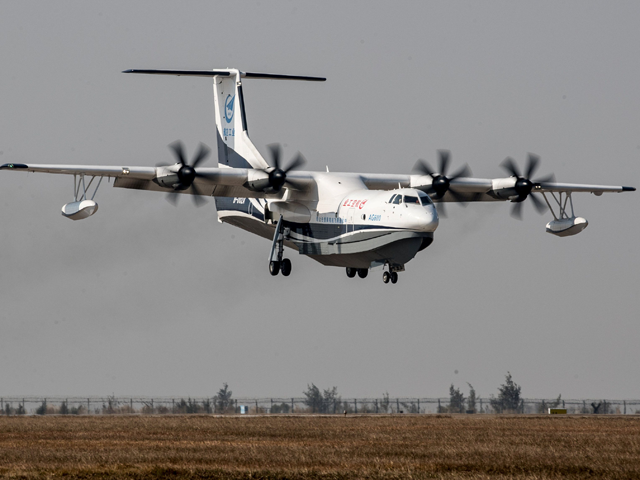
Lets not forget the AG600
VnomadDoes anyone know the exact breakdown of the €20 billion? This article seems to suggest that it includes run-of-the-mill civilian investments that are effectively being held ‘hostage’ to the deal.
Translated from Dutch –
Geert Noels: “France blackmails Belgium as if it were a colony”
Suppose President Trump would put Belgium under pressure to buy American fighter planes or else all American multinationals would leave the country. Suppose it would go even further, and threaten to destabilize US banks that carry our financial system like Bank of New York, Swift and Euroclear if we do not purchase those jets. How would we interpret this? Would not we doubt whether we are still dealing with a friendly nation?
However, it is exactly what the French government is doing with our country today. France wants our country to buy the French Rafale fighter plane to replace the old F16s. The French do not meet the formal and procedural requirements, but play it differently.
For example, they propose that Belgium would receive 20 billion euros in economic compensation when buying the French jets. However, 16 billion euros of this 20 billion euros are the sum of the current activities of French companies over a period of 20 years.
With this, France says that these activities are uncertain if we do not opt for their jets.
France also uses the weak Belgian position in Dexia to put pressure on our country. Our southern neighbor pushes in the direction of ending the bank license of the fallen bank.
This appears to be a technical matter, but it would make the financing of the bank more expensive and Belgium would have to add 15% debt to its already sizeable public debt of more than 100% of GDP.
This threat is a potential bomb for Belgium, which may have consequences for our creditworthiness, interest charges and economic and financial stability.
This threat is also only possible because Belgium has to guarantee more than 60% of Dexia, compared with only 33% by France, and that despite almost no Belgian credits being secured (26 billion French versus 2 billion euro Belgian credits).
France not only puts Belgium under pressure with the banking file and French companies, but also with disruption of our energy sector. Once again weak strategic insight and weak negotiation lie at the basis of the control of French Engie on the Belgian energy sector.
In 2009 Belgium let itself be ringeloren and stopped asking for a “Golden Share” (a blocking vote) and accepted a vague “consultation committee” to defend its interests. Whether this committee has ever taken place and has teeth is not clear. What is clear is that the Belgian energy market is very vulnerable to French decisions.
Here, too, France does not behave like a friendly nation, but as a colonizer.
Belgium owes this weak position mainly to itself. Poor strategic insight, insufficient prioritization and years of budgetary neglect are present in each of these files.
Belgium spends the least of all NATO countries on defense (less than 1% of GDP, and 0.5% of GDP or 2 billion euros per year less than the average of all other countries). In addition, our country spends the least of this budget on equipment (5% compared with an average of 20%).
In the financial sector, Belgium turned out to be the most vulnerable country in 2008 with failures from virtually all major banks, which meant it had to negotiate chaotic and unprepared.
In the energy dossier, Belgium has postponed decisions for years, signed agreements such as the Paris Climate Agreement, without explaining to the population what the necessary investments would entail and the associated cost price.
Belgium therefore undergoes many important trends instead of being able to lead them. This makes our country a plaything of the great powers, and countries that are better prepared.
But nevertheless the United States or Germany do not treat us like the French today.
France treats Belgium as a colony. The blackmail in the defense file is shocking. You could ask the question if France is still a friendly nation.
If our government bends for the blackmail and chooses the French Rafale, then we know immediately how our country wants to be treated in the future. As an independent nation, or as a blackmailable country.
The sympathetic Emmanuel Macron lets Belgium blackmail as the antipathetic Donald Trump does not do today. What are we waiting for to condemn this sharply?
Vnomader, Rafale there is 36 signed orders and option for 36 more, in fact. If they sign for the second batch, that would be 72 rafales
That’s the current status. The EF’s deal is similar to the one signed for the Rafale last year (24+12).
VnomadI don’t understand the thought process of buying three different twin engine heavy fighters from three different countries? If Qatar wants political influence through arms purchases then buy aircraft/helicopters from one country, ships/submarines from another country, and air defense/ground equipment from the third country. That seems a lot more balanced then buying three different twin engine fighters that all fill the same role.
Fighter jets are the most manpower-light capital-intensive investments one can make in defence. Going from 12 Mirages to 100 odd aircraft over a period of 5-7 years isn’t that big a challenge (relatively speaking). They’d need to train a 100-120 odd pilots with most of the maintenance element being contracted out to the OEM.
Alternatively, they could remain understaffed and put the aircraft back on the market in 10-15 years time. India would very likely be interested in surplus Rafales, with probably South Korea & Japan being viable options to offload the F-15Qs.
Now if they had decided to spend $ 8 billion on naval vessels, they’d have found themselves having to operate a fleet of 10-12 frigates or submarines. That’s a massive jump up from the half a dozen 500 ton FACs they operate today. They’d need to build a entire new naval base to accommodate them while facing even more serious manpower challenges – recruiting officers to fly fighter jets from the airbase next door is far simpler than recruiting sailors & technicians to go out to sea for weeks at end while being paid a significantly lower wage.
Similar problem with air defence/ground equipment. Operating it is by-and-large a blue collar job. Which makes their purchase less than ideal for a country where blue collar jobs are performed by immigrant/expat workers.
VnomadOnly 24 Eurofighters at the moment. 12 more are optional (similar to the Rafale deal).
I understand you don’t want to put all of your eggs in one basket but this seems like a financial disaster with training and logistics for three different types of fighters.
On the contrary, this is about wanting to curry political influence through arms purchases.
Qatar is a city state with a local citizenry only around 300,000 strong, most of whom live very comfortable (and decidedly non-martial) lives. If its GCC neighbours decided to roll up at the door, there is little the govt can do to prevent it from being absorbed into the Saudi state. And given Qatar’s resources, it’d be a rather profitable invasion.
But through these deals, influential Western states (along with Turkey and others) have been given a strong business interest in the continued survival of the Qatari state. Keep in mind, all these aircraft ordered will be delivered over the next 5-10 years. In the meantime, if the incumbent regime is overthrown, these contracts are likely to be torn up or at least heavily “renegotiated” by the new establishment.
VnomadAll this is politics only. France would love Germany to buy RAfale because it is not in dire need of an EFCAS and as so Answering ‘yes” to Germany is a political gesture towards more european army structures. Therefore many consider that Germany could “send back the elevator” buying some interim Rafale.
Err.. Germany isn’t in a dire need of an FCAS either. We are after all discussing a system that will enter service in the 2040s. Feasible or not, its not a one-sided deal. Germany gets a far greater degree of local investment than the alternative (presumably the US F-X) while R&D as well as production costs for France are lowered. The French can go solo but they’ll have to foot the full bill for a 5.5 gen fighter with little respite likely through export sales since the market will most probably have been cornered by whatever the Americans are churning out by the dozens. There’s no obligation on Germany to respond to the ‘gesture’ with an unnecessary Rafale purchase that wouldn’t go down too well with the GAF anyway.
Vnomad1/ Because why pay for the development & procurement of something when the capability is available for already less money and time?
Acquiring Rafales will be cheaper and quicker than integrating CFTs on the EF? Please. That’s ridiculous.
BAE has already completed the wind tunnel testing of CFTs and conducted ground fitment checks. RAF T3s are plumbed for CFTs. There isn’t a huge distance to go to complete the job.
2/ CFT should be much more cumbersome than external tanks to fit and remove, adding man hours of maintenance to even just fit or remove them. I’m guessing than in the end they would stay on the aircrafts permanently, which would add some drag & weight for all the flights that don’t require them (even if it isn’t that much, over 30 years of use it’s going to be costly).
I have never heard of CFTs requiring substantial maintenance. And assuming they’re similar to the F-16s, which can be installed/removed in about 2 hrs, the labour cost isn’t particular worrisome either.
3/ You never know if you will require some range improvements. Better having some margin to increase rather than being sorry later on.
The AdlA & MN have done without that extra fuel for 17 years. I imagine the Luftwaffe could manage similarly.
Vnomadfact is that there’s no “more or less sensible option”… politicians have decided that Rafale wasn’t one… so , comparing a possibility with nothing.. there’s no comparison
So you’re convinced that the Germans will not fund the Tornado replacement program. Fine. That’s not the topic of debate here.
Some of our resident Keypubbers have insisted that Germany ought to be looking to buy the Rafale (assuming the money/political will wasn’t a limitation) and not doing so is a snub to France. My contention (as well as the general opinion, I believe) is that it brings little to nothing to the table, over what an upgraded EF could do at a far lower cost for Germany.
Hopefully that clarifies the boundaries of the discussion.
would it be better, from the operational stand point, than the EF? as a striker, definitely.
Would it be substantially better than an upgraded EF (CFTs + DASS upgrades) as a striker? Not necessarily.
What other point was brouight here was the relationship between Germany and France who claimed some 6 months ago that they’d develop together a replacement for Typhoons and Rafale, yet, as Germans have to replace part of their fleet, they don’t even want to consider the possibility to trade with their “partner”.
Why should they ‘consider the possibility’? What exactly will the Rafale do for them that they can’t achieve for themselves investing in their own aircraft?
VnomadYou just don’t want to understand, right?
The F-15, air superiority fighter, received the investments needed to make it multirole.. the Typhoon has not, and the funny part is that it is mostly because of Germany that it did not have them.. yet you keep claiming that “suffice to invest” to make it good as if it was obvious that the nation we speak about has the will to do it.. it’s not about rhetoric, it’s about blindness.
Ahh.. that implies that given adequate investment the Typhoon can be developed into an adequate Tornado replacement. That at least settles one part of the debate. That just leaves the question of what CFT-integration and DASS upgrades will cost. The Taurus & AESA integration is already on the cards, as is the SPEAR-3.
once more you obviously do not want to understand.. it is not about availability of money, it is about the political will.. Germany never invested as they should have to make it progress as it could have progressed. NEVER. Not that they could not as they were probably the richest partner in the Eurofighter consortium all along, but because there was NO POLITICAL WILL to do it. And today, nothing changes, it is a matter of political will that makes that it WILL NOT receive the funding it needs, just as it is because of political will that they WILL NOT buy the Rafale.
Money or political will, it amounts to the same thing, and is irrelevant. The debate here i.e. on Keypub was comparing the options of a new batch of (upgraded) EFs with a German acquisition of Rafales (or F-35s). If it turns out that they can’t spare the funding for either, so be it, but that doesn’t change the fact that between the two Eurocanards, the former is the far more sensible option for the Luftwaffe.
VnomadSo comparing an EF with CFT to Rafale without?
Case in point I would say.
Are we not discussing Germany anymore? If the EF can deliver the ranges with CFTs similar to the AdlA’s serving Rafales – why should the Luftwaffe consider the latter as far as this particular parameter is concerned? Are its operational requirements more serious than the AdlA’s in this respect?
VnomadI simply state the reality, even if you don’t like it: it was never (not even today) developed for that purpose. The multirole development of the Typhoon is just like F-22 bombing role.. an afterthought to try to justify it as pretty muvch every aircreaft today HAS to be multirole to have any sort of credibility on the market and in the minds of the politicians who are the ones who decide how much cash an airforce can get.
Like I said before (and you ignored), the F-15E was derived from the F-15 designed with the idea of “not a pound for air to ground”. If you wanted to question the EF’s air-to-ground potential, come up with an actual logical argument on technical grounds with specifics rather than just rhetoric/philosophy.
Typhoon is lagging in that department for two reasons:
– first: it was not developed with that in mind (for example, how about the low wing and narrow landing gear space in the fuselage limiting severely its capability to carry large stuff underneath it.. you can do what you want, but being able to carry enough fuel AND large weapons will require some serious engineering
I believe we’ve covered this. All needs in order to carry adequate fuel along with ALCMs is CFTs.
– second: the will to upgrade was never sufficiently present.. not even today. The British were pretty much the only ones pulling it forwards while the Germans have spent their time delaying, postponing and, basically saying “we don’t need this”.. and now you’d want us to believe that it is just a matter of simple “investing in upgrades”? wake up, what you do is just wishful thinking… it’s Germany we’re talking about… it will be a cold day in hell before they start seriously investing in Typhoon upgrades to try to make it what you wish it to be. Rememebr that they have claiming that “stuff will be there with upgrades” for the last three decades… some of it still isn’t there today
I’m merely pointing out the rank hypocrisy involved in dismissing the possibility of EF upgrades as ‘wishful thinking’ while at the same time claiming the the Rafale was a genuinely feasible option. No money for upgrades to the Eurofighter but enough money for a (far more expensive) Rafale acquisition? Yeah right.
VnomadIt’s only a matter of purchasing the CFTs.
Its ‘only’ been 15 years (the CFT trials were done in 2002 AFAIK). When exactly do you expect the purchase to be concluded?
Fact is that it seems the AdlA feels the 2000L tanks are sufficient.
Riiight.. but if the EF were to use CFTs to achieve the same ends that ought not to acceptable to the Luftwaffe?
In any case the EF will always lag behind.
Which might give you Guinness book style bragging rights but its still pointless to offer up an irrelevant capability as a reason for Germany to purchase the Rafale.
Besides max ext fuel for the EF is 5000L in a buddy buddy config (2 x 1000L + 2x 1500L + 1 refueling pod) which it doesn’t even have.
As compared to 6,500L for the Rafale but with a lower drag fuel penalty. In either case, buddy refueling is only really a priority for naval fighters and a weak justification for a potential GAF acquisition.
VnomadWe’re talking tornado replacement. What is absurd is to state tha tthe Typhoon which was not developed for that purpose and had lagged (and still is lagging today) for 30 years behind the Rafale in the multirole department can all of a sudden be the equal of it… the obvious and only logical answer is: it can not. Now, if they decide to concentrate on Typhoons only (which would be a logical political move), ok..
Are you claiming that an aircraft that ‘wasn’t developed for that purpose’ cannot be used in it? So the F-15E & F-16C/D are failures as strike aircraft in your opinion?
If they decide that they need to buy something else as the Typhoon is not and won’t ever be a real striker, teh Rafale rdefinitely does the job at least as well and probably better than anything they may get from the US, except probably the F-35 once it’s, more or less, finished.
Well you’ll need a more convincing argument than just stating “it won’t ever be a real striker” à la “mine is only true religion” and expecting it to be accepted at face value. If the Typhoon is ‘lagging’ in the strike dept. the obvious answer is to invest in upgrades (unless they choose to acquire the F-35 that is preferred over its older peers by practically every air force).
CFTs will take care of the hardpoint problem. The DASS & AESA upgrade schedules can be advanced. Meteor, Taurus, Brimstone & SPEAR-3 integration is already funded. If the FCS requires tweaks that can be done too. All at a fraction of the cost associated with inducting the Rafale.
Not including the rafale in their study while asking for information about the F-15 and F-18 means that they simply stay away from the Rafale as they don’t wont that to face the questions like “and why that french thingy you’ve been saying is garbage compared to our 9th marvel of the world is bought today to do a job that our thingy can not?”.
The chances of the Germans buying the SH or F-15E are quite simply negligible. Asking for information means nothing – they could well just be building a pool of data for future cost negotiations on the F-35A or the prospective Franco-German project. Its just as likely that Dassault was ignored, to support their advocacy of Airbus as the lead contractor on the FCAS.


 Sign In







