 Tu22m
Tu22mOk, so I looked up some stuff on Gripen’s flight envelope.
http://www.icas.org/ICAS_ARCHIVE/ICAS2000/PAPERS/ICA3113.PDFSo if my understanding is correct-
In Region I (unspecified angle of attack, some sources claim a +26 degree limit), the FCS allows the pilot full liberty (or at least very liberal control).
In Region II (+55 to -25), the FCS pushes the aircraft back into normal flight regime, ei Region I.
Region III (beyond +55 and -25) is not permitted in normal flight mode and available only to test pilots, in which Gripen has recovered from angles as high as +110 degrees ?
Thx. I did some eye measuring from the presentation. +55 and -25 degrees is the correct figure for initial AoA.
Tu22mAre some stealthy ordnance pods in the planning?
Sure, but unless anyone orders it it won’t go into production.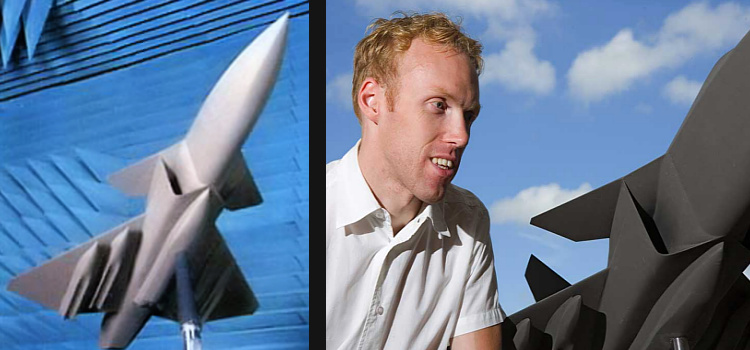
It’s just like CUDA for the F35. The concept exists, some partial concept tests have been done. What holds it back is a lack of customer orders/funding. FA18E/F in Brazil have those pods today btw.
There are a lot of ways it can go, Turkey could use some of the scrapped plans that SAAB already have tested and make the 5th gen Gripen. (like the conformal weapon bays, stealth radome, stealthy pods, TVC etc)
Thats stuff that is already designed and if Turkey put it together then it will be a low cost 5th gen fighter.
Tu22mBesides, Brazil can tailor the SH and the rafale as much as they want too…I don’t see where you found such a difference.
If that is the case then is a closer call than i expected.
I just know that usually the others are reluctant to give away as much as SAAB.
Tu22mIt think that is a non starter. The JSF was not designed to do such a thing (SC). It is entirely possible that with an optimum fuel level/altitude and a little transonic push it could hold mach 1.2, but that would be pointless because that is not how the aircraft will operate.
Its just a talking point that has come up since O’Bryans comment.
I wanted to put an end to the claim.
Tu22mSince transonic drag at m1.0 is higher than m1.2, it’s entirely possible that it needs a little AB to maintain 1.0 but none to maintain 1.2.
We also do not know the altitudes, fuel states, or loadouts of either of these statements.
Excellent comment. By that I assume we can stop making the claims that it can supercruise?
Please note the difference between stopping to make claims that something is true vs calling it a lie.
Tu22mGripen C is already LO. You mean VLO.
I had the same idea but I think Gripen C and E falls under RO, with internal carriage it might become LO.
Remember that the biggest difference in RCS (frontal) between a jet like the F35 and a 4,5 gen is the external carriage.
Tu22mLM supercruise term is fly at speed of mach 1.7 without afterburner => no f-35 not supercruise , other producer supercruise term = fly at speed more than mach 1 without afterburner => F-35 is supercruise ( it dont need afterburner at speed higher than mach 1 )
the point about radar i also make assumption like the way you assume that J-20 will be superior to F-35 in kinematic
Read O’Bryans quote again. “It could sustian mach 1,2 for a dash of 150 miles without the use of ab.”
Do you know is wasn’t in a dive, with a constant speed drop, with low fuel?
Pilots say it needs an occasional push from the ab to stay supersonic so we know the dry thrust isnt enough to stay at mach 1,2. You do the math from there.
MSphere is correct below btw.
Tu22mLook, i do love Gripen, but i’m not sure the parts ToT etc. are true, we only have second hand whispers…
Lets wait for that Brazilian journalist trial, he flew SH, Gripen and Rafale.
I can tell you the offer from SAAB and then you can tell me if that is a deal nobody dares to brake or not.
Current offer:
Brazil will be responsible for 40% of all future development in the Gripen system (globally)
Embraer will lead all future Gripen sales in latin America
Brazil can tailor the Gripen as much as they want (maybe the Sea Gripen or EPE version?)
Full access to source codes
Own production of Gripen (almost nothing will be produced in Sweden)
Basically this means thet Brazil can develop their own Gripen platform since production and development mostly will be done by Embraer.
Walkthrough http://www.youtube.com/watch?v=DbN1TOahqAE
Tell me Boeing or Dassault are willing to offer a similar deal and I am willing to back away from my claim. Oh, and Embraer will be the lead partner for ERIEYE.
So when we look at the finances and ToT the Gripen looks good. I know Dassault also have a good offer and if brazil wants a heavier jet then there is only one candidate left (Raffie). But in general I like the Gripen package better here. So just to be clear, I like both Raffie and Gripen but I try to be as pragmatic about it as possible.
Tu22mGripen for Brazil at least.
* Best offset package (by far)
* Best technology transfer + possibility for Embraer to make a bundle with the ERIEYE package.
* Preferred choice of the air force
* Preferred choice of the industry
* Lowest cost
* Equal or very similar performance to the competitors in general (for the Gripen E at least)
* Highest redundancy and the most flexible solution
In India it’s tricky. Should they kill the Tejas and get something functional (Gripen E) or should they keep that weight class for the Tejas?
As a MiG 21 replacement I think Gripen E is the best choice followed by Rafale and F16V. When considering politics (like the consequence of killing Tejas and get a Jet that does not offer the independence from vendors that India wants etc) I think Rafale is the best pick.
And they wanted a heavier fighter so Raffie is probaly the perfect fit for India.
Tu22mIf we just recap what has happened briefly…
North korea has declared ‘state of war’, threatened the US, Japan and South Korea with nuclear attacks and they cut the diplomatic ties.
It sure sounds like they want someone to bomb them back to the stone age, or as they call it in North Korea “present time”.
Tu22mWhat is happening with Sea Gripen? Assuming that the Rafale deal goes through in India, will it be dropped if Brazil decides to order F/A-18 or Rafale? I don’t see any other prospective buyers.
AFAIK the project is still alive. What is holding it back is lack of buyers.
The countries who can affort carrier ships for the Navy usually can afford the F35 as well. Basically there are two potential customers, Brazil and India and maybe one or two countries in Asia. Thats the market for Sea Gripen.
Or will UK drop the F35 and carrier adaptation of Typhoons?
Tu22mF-35 DAS Ballistic Missile Defense Capabilities
Image magnified 10 x ..
Will it be able to track targets in a dog fight?
If that is the case then it looks good.
Tu22mYou fell into a similar trap with your claim about IRST-systems. Such face similar limitations in range and detection capabilities. The claimed range data can be achieved only, when the fighter has a rough idea in which sector at a given time a prominent IR target will show up. Datalink is a tool to get that in time f.e. Just at that moment you can close in with you fighter do the IFF till you get a lock from the sensor of your weapon to allow its release. In general IRST-systems were operated similar to fighter radar. Radar have similar reductions in detecting something in an otherwise wider envelope and went active in the last moment to prevent early detection at all. By the way more and more modern fighters are equipped with sensors to warn of the release of an AAM. Today positioning and time-management are key-parameters in A2A combat, to win the time-race to hit the target, before the firing cycle can be broken. The closer you can get undetected the higher is your hitting propability. All claims about performance gains are time limited, because that trigger a response to deny that by tactics and/or technical items giving a constant technical race to achieve that.
I wont argue against that as it is very sensible.
But IRST systems of today have pretty fast scan speeds so I would call the search time negligeable. What is needed is high resolution (as in pixel/m² at long range, not high resolution imaging chip), fast enough scan speed and good sensor fusion. Also, the sphere the EODAS creates prohibits magnification of the imagery. This means that the same 10 year old camera could be used by competitors with a different lens and by that getting 10 times longer detection range (at the expense of a narrower search band).
There are so many different ways one can use technology. If there is enough space one could use variable optical zoom and thus combine wide angle of search with a narrower band for ID.
Most jets today don’t fly alone so the probability of the narrower band search missing anything is pretty small.
This is what the F35 is going to face @ 2018.
* Enemies that have advanced high resolution IRST-systems with higher resolution/detection range than the EODAS.
* Enemies with more powerful jammers (like the Flankers)
* Enemies with more modern radars
* Enemies with radar warning receivers that can track LPI fairly easy.
* Enemies that can kill supporting AWACS from 400 km range (like MiG 31 with R37)
* Enemies that have superior kinematic advantage
What the F35 offers at the same time
* Lower radar cross section, possibly first shoot capability if the AWACS can lead the way. Using the own radar makes the F35 a target unless the enemy doesn’t have semimodern RWR.
* IRST that has wider search than the rest but lower resolution than all modern competitors. Luftwaffe might be an exception. Unless the F35 has another IRST-system apart from the fixed magnification 6 camera setup this will be the case.
This is where we are. If I see variable magnification being part of the EODAS I might remove the last point.
And then we have a plethora of cool stuff that has been defeated in other arenas. One of them is DIRCM that was defeated by using IR tracking with better dynamic range and better filtering (Shtora being one example that now is scrapped). Sure, DIRCM might give an edge for up to 10 years until new seekers are being installed on a wide basis. Also it will have trouble with multiple incoming IR seekers.
DIRCM is a temporary solution that works on legacy systems when fired one at a time.
Tu22mLooks like its a lot of fanboy trolling going on.
Apparantly…
[INDENT]…the F35 will be more agile than all other jets despite physical limitations saying otherwise. (Like wing loading, thrust/weight, drag coefficient etc)
…kinematic performance has no impact at all. Firing missiles with 180 degree turns does only effect performance on other jets but not on the F35.
…its pixel resolution of 1 pixel per sqm at <690 meters makes the EODAS so superior so no jet can’t get within 50km without being engaged first with a 180 degree Aim9x shoot.
…the force concentration to a few locations (due to costs) is not a tactical disadvantage. It is only beneficial because its more efficient while giving no redundancy or survivabiliy drawback…
…no other jet will ever have anything better onboard. The current russian Irbis E is not more powerful, has not wider search area and the ES05 is not more modern.
…LPI is undetectable, despite the fact that several modern jets already have specially designed LPI-intercept antennas with interferometry. Only exception is the F35 that has superior RWR and thus can intercept LPI-signals as easy as pie.[/INDENT]
I guess we learn something new every day.
Could it be so that many are buying the hype and not actually reading the specs? Current IRST-systems from Russia will detect the F35 head on at around 45/50km (OLS35M) and from 90km behind. This is passive tracking that the F35 can’t detect without having eyes on the enemy first. And it is with yesterdays systems from Russia.
Just consider the possibility (or rather impossibility) of a F35 performing a 180 degree engagement under these circumstances at say 30km or so when the enemy has OLS35M, Pirate or something more modern. There is a very good reason why other jets have experimented with it and ditched it (rear engagements). The range loss is too great. But it looks good in commercials so it might actually stay.
Tu22mSure does remind me of the F16 XL in the current wing shaping.. My guess its just concept art at this moment.


 Sign In







