 richw_82
However the venerable Shell book cannot find the dreaded OX87 for the Nimrod, and no alternatives are in place 🙁
OX–87
HYDRAULIC FLUID: Aircraft
Specification: DTD 900/6103A (AFS 1897) Nimor 87
Composition: Polyalkylene glycol ethers, polyalkylene glycols and inhibitors.
Characteristics: Density 20°C … … … … 1.01–1.03 gm/cm3
Viscosity at 40°C, min … … … 4.5 mm2/s(cSt)
Viscosity at 0°C, max … … … 22 mm2/s(cSt)
Viscosity at –40°C, max … … 1000 mm2/s(cSt)
Flash point, open cup, min … … 95°C
Cloud point, max … … … –40°C
Reflux boiling point, min … … 200°C
The specification also includes tests for pour point, ash, low temperature
stability and effect on standard IR rubber.
Uses: Hydraulic systems in Nimrod and Comet aircraft only. Known
previously as Nimor 87 and replaces OF–4 in both systems.
Standardized Alternatives: None.
Stores Numbers:
NATO Stock No Nominal Size Navy Army RAF
9150-99-770-2899 20 litre – – – – 34B
9150-99-617-3398 5 litre – – – – 34B
These are the specs I can find. May be worth looking at OF-4 if that was used in Nimrod and Comet before.
Regards,
Rich
richw_82These might help with finding equivalents?
http://www.hmvf.co.uk/pdf/POLcompact.pdf
http://www-static.shell.com/static/aviation/downloads/publications/aeroshellbook/aeroshellgreases.pdf
Regards,
Rich
richw_82One of “Duffy’s Mob” on 617 Sqn. The account in Tom Bennett’s book of the battle between his Lancaster and the three night fighters is a real thriller. It always impresses me when you read of the innovative way that crew went about the defence of their aircraft.
For instance – a system was worked out with the pilot (Flt Lt Bill Duffy) of the Lanc whereby at a prearranged signal he would chop the throttles and bring the night fighter suddenly into range of both the gunners .303’s. There was WO Mclean’s own mix of ammo, dispensing with the ball round in favour of tracer and armour piercing rounds – to better effect.
RIP. Another hero gone.
Rich
richw_82I suppose those smaller tyres are Shack tail wheel tyres and not boots suitable for, say, a Victor?! 😀
Suitable for duty as a Canberra nosewheel, or Shackleton tailwheel if we’re talking proper aeroplanes… :p Can’t you ‘borrow’ spare tyres off some unsuspecting Nimrod? They look about the same size.
Grant or no grant, the return to flight plan is on the shelf and not to be looked at in the forseeable future. If any money becomes available, the first thing we want to do is get 963 a roof over her head.
Regards,
Rich
richw_82Hi,
The intention is to be able to fast taxi, with a view to offering places to the public on board as is done by the DC3 and DC6 at Airbase, and more famously by the Lancaster at East Kirkby.
We set a rough target of the end of this year to have her back out on the runway. It’s looking achievable, but it’s not a date set in stone… we need to be sure WR963 is fit and well before she goes for a wander round the airfield under her own power.
Regards,
Rich
richw_82Lion Rock..
Glad you like the thread!
Reading back, I notice I never put pictures up after the event. I can’t get to them right now (works firewall stops me..) but I’ll put them up this evening.
Regards,
Rich
richw_82Sorry, I didn’t, as it was very much a spur of the moment visit. Good to see the grass field full with the re-enactment groups and the car park was pretty full too!
I always like going to Aeroventure, just when you think you’ve seen it all you notice something new.
Regards,
Rich
richw_82Well done guys. I know what a pain it can be to try and get this kind of thing done outdoors.
richw_82Wow, what a spares holding! Is that a full length bomb door?
Unfortunately not, though it was checked. There’s a couple of forward doors in there too. In the bottom of the packing crate (which you can’t see as it’s about 12ft up) is a load of retract jacks and other parts.
We’re hoping to shift some of this around before long as we need to get a few mainwheel/hub/brake units out, and we could do with getting into some of the other boxes lower down the pile. There’s still some glazing unaccounted for which we could do with.
Regards,
Rich
richw_82It doesn’t matter how long you’ve been away from them.
Some of our group worked on the Shackleton back in the 1960’s and early 70’s then only came back to them in preservation. Come down one Saturday and see how you find it – you’ll be more than welcome.
Kind regards,
Rich
richw_82Come and help out grollie, it’ll bring the feel and the smell of things back too!
richw_82I had a wander up to visit this afternoon! Brilliant event.
richw_82Am I right in assuming that Atlantic Airlines owns the type authority, or is it the Shackleton Association itself?
If so, what would be required for a return to flight (other than millions of pounds) ? Are we talking about new spars or new spar webs? Would the CAA give authorisation? (I know that the CAA wouldn’t let Mr. McHenry fly back from the US, but don’t know the reason) Details please….. 😀
As I undertand it the type authority rests with the SPT. The drawings (both blueprint and original) are all ours as is most of the archive on the type that was cleared out by BAe.
The CAA implied that if enough evidence could be found about the programme used by the RAF to operate beyond the fatigue life specified, they may have been satisfied that the aircraft could operate on a Permit to Fly. It was a bit tentative and not encouraging.
The SPT had a feasibility study done, which concluded that it was possible to return the aircraft to flight. Work was done into finding out what would be involved and several of our member spent months organising all the drawings and various other bits of paperwork. It was a combination of finances, and the fact that we would be building more or less a brand new wing that stopped things.
To avoid any issues with its ageing aircraft status, a return to flight would involve at least the replacement of all lifed components – which include spars, webs, attachment hardware, skins – there’s a list that runs to about three or four pages. This is realistically the only way to get around the various SI and STI checks introduced and the fact that the CAA consider the aircraft to be life expired.
As for the problem with WL790, it was to be grounded on return to the UK, without having a look through that aircraft’s paperwork I wouldn’t know why. I’m guessing it would be due to the same reasons as with WR963.
Regards,
Rich
richw_82I’m sure there are a few operators of historic airworthy aircraft that would love a spares holding the size of that :). Nice update Rich .
I’m sure they all have their own parts holdings. We’re lucky in some respects yet not in others – there’s a lot of major airframe and engine parts, yet not much by way of electrical components, which can make life a little irritating!
richw_8213 August
Long time no update! This doesn’t mean we haven’t been busy though, far from it. Its always difficult to keep momentum at this point in the year as people are off on holiday. For a couple of weeks the numbers of our crew were diminished, but now we’re back to strength.
What’s been going on?
We started with a few niggles. We’ve always had a few bits that were needing replacement but the trick was finding the parts. So we’ve been raiding the store. This time I took my camera.
WARNING! NOS Shack parts pictures coming up so if you struggle with things like this, sit down before reading on.. 😀 )
We have a mainwheel swap coming up. Not a problem. We counted around 10 and a few spare tyres. Lots of brake units too, which is good.
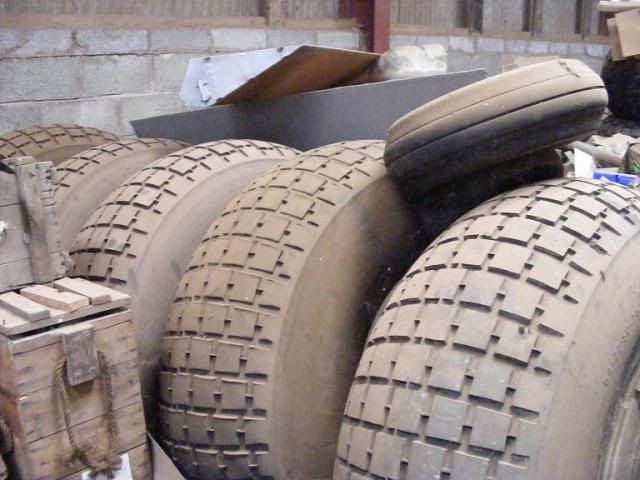


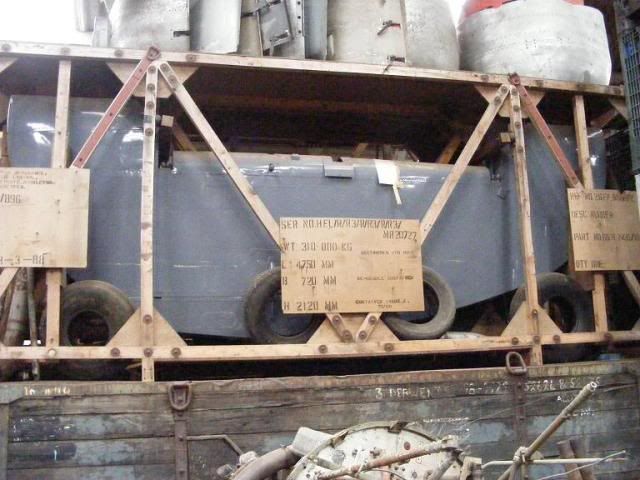
Airframe parts…
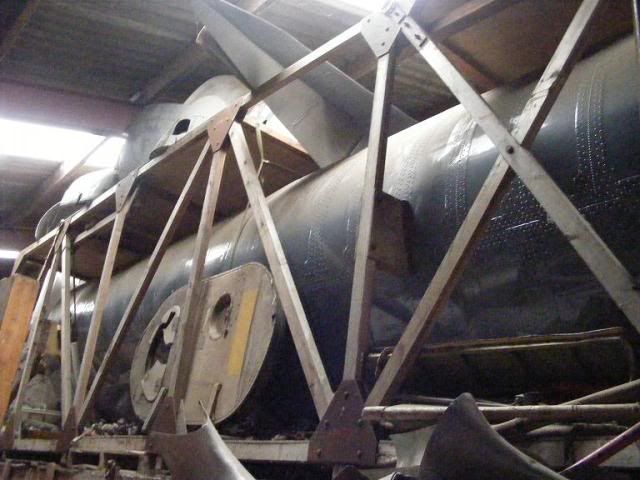

Powerplants…
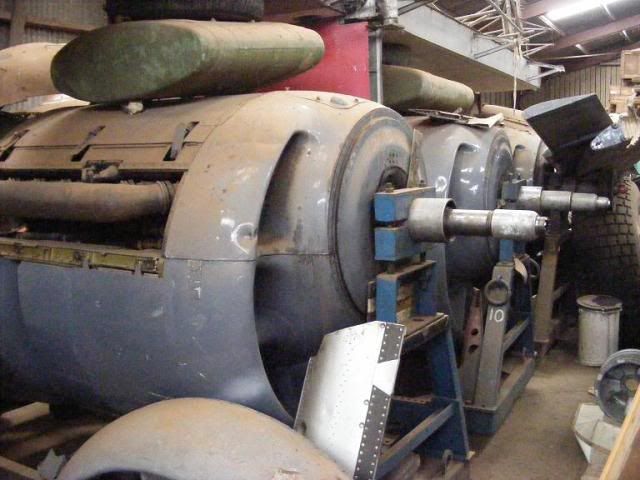
Including this one… possibly the last overhauled by the RAF?
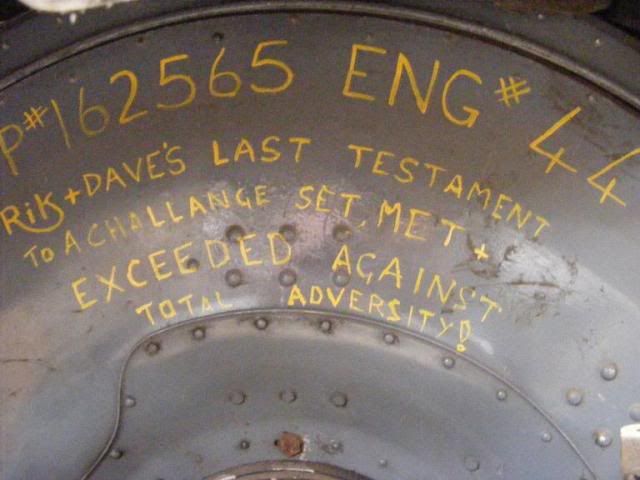
Spare props…
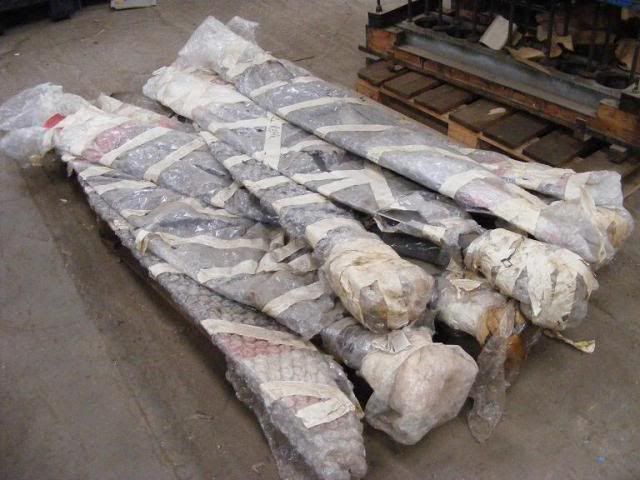
We also found a couple in boxes. Speaking of boxes…
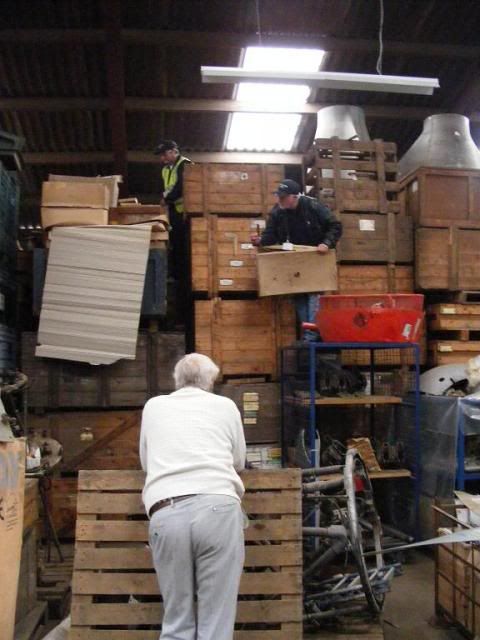
This gives you an insight into how much of a pain it is to find some of our stuff. In that pile alone we came across fuselage frames, a couple of brand new bomb aimers windows, some Grifffon cylinder banks – and that was just in the boxes we could get to.
But it all helps.
We now have a complete aerial set up, with a brand new tensioner on the starboard fin. It had been safety wired in place after the last one failed, and had annoyed us a long time. Standing inside the aircraft now you can hear it hum merrily in the wind.
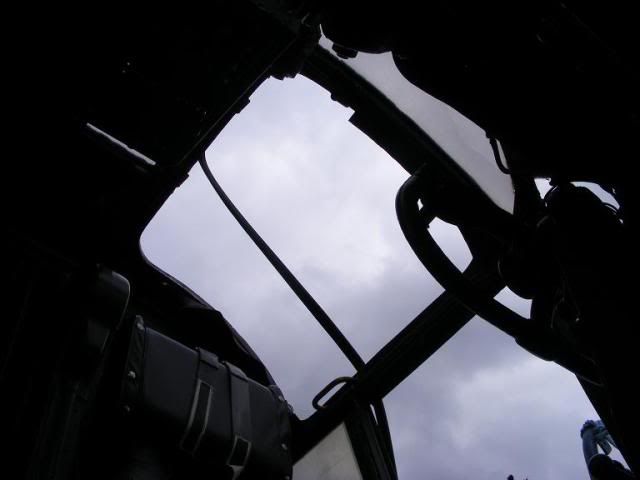
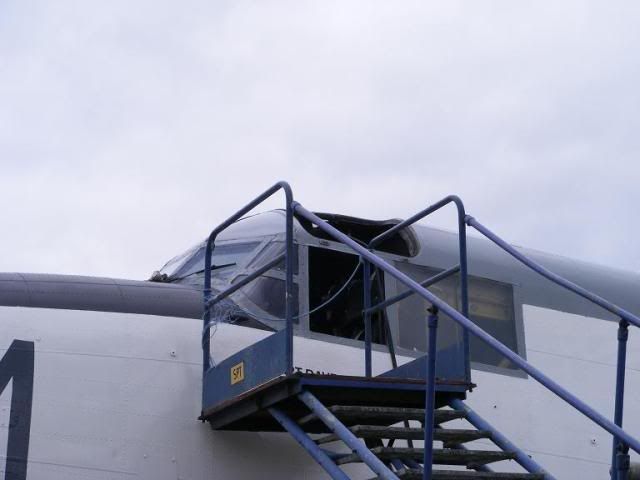
A major part of the search has been for glazing panels. we now have nearly a full set of cockpit glass, the latest part being a brand new pilots escape hatch.
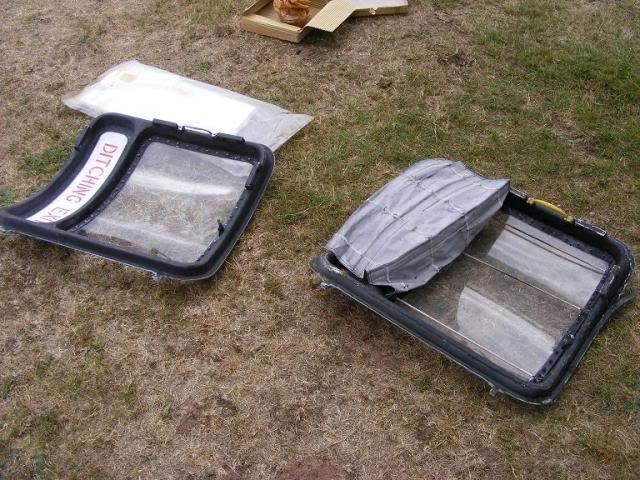
Fitting a new hatch is fairly easy, but the great thing is by consulting the schedule of parts, we found brand new seals to fit with it to keep the water out. I took a few shots while Vic was fitting this.
We’ve been continuing with replacing as many access hatches as we can, though the vast majority need drilling out and tapping. Where we don’t have the panel or it is badly damaged, we’re having new ones made.
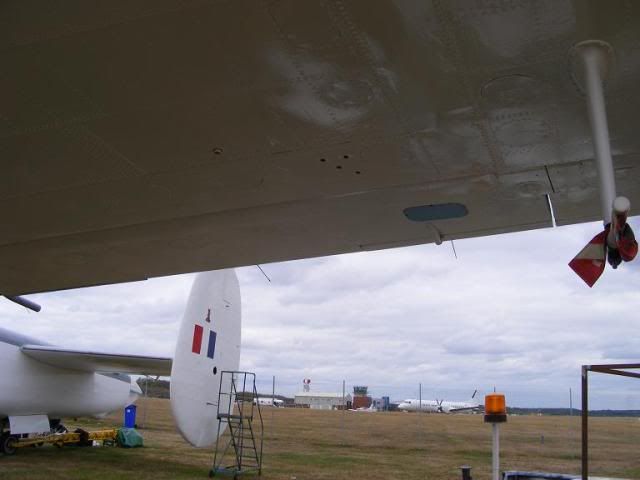
We are prioritising which ones we do, the most recent ones are to get access to the trim cables and sprockets. We’re still working at freeing them off, the rudder is starting to behave but still needs attention.
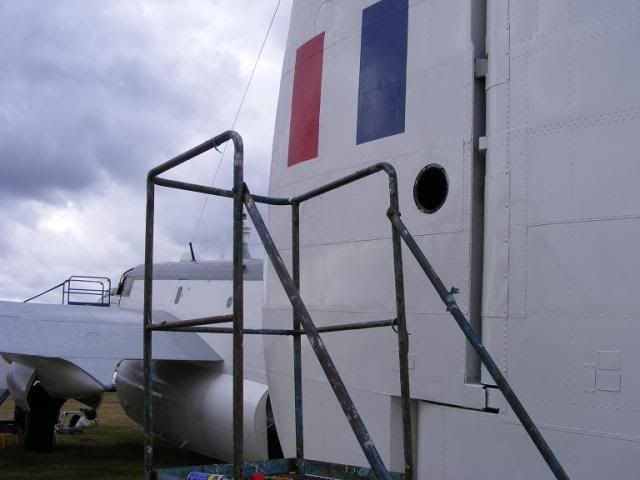
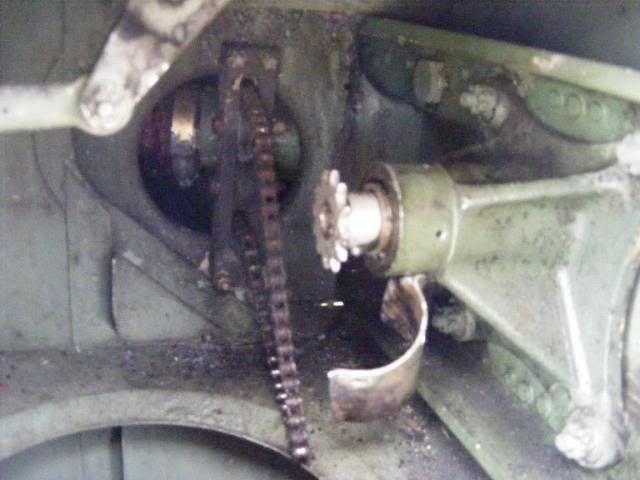
20 years outdoors has caused a little corrosion inside but we’re pretty happy that we keep going fairly deep into the aircraft yet she seems to have held up well.
The engine guys have been going at the engines, with filters, hydraulics, cams coolant, and a multitude of other tasks getting attention. The news is good with No 3 still behaving, the wear hasn’t got any worse. We’ll still keep a close eye on it, but it looks like it will make it to the end of the year. I’ll report back on No 1 and 4 as they are done.
And last but not least… our old tug..
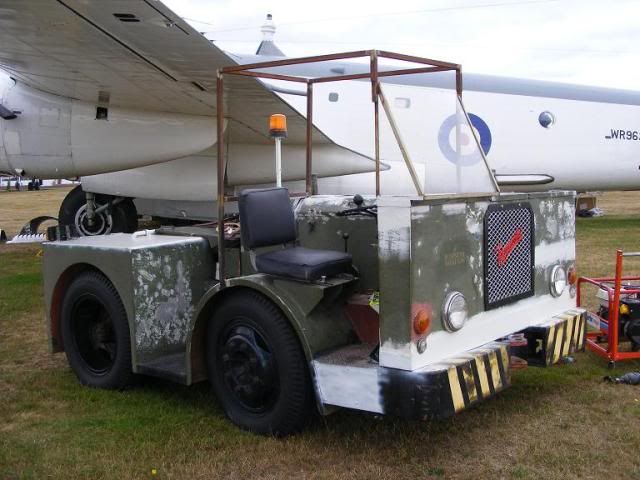
Finally this old beastie earned its keep, shoving WR963 forward a few yards so we could put steel plate under her mainwheels to stop sinkage and help protect the tyres. There was a bet going on whether it would, and it seems it found some guts from somewhere! It’s been getting some attention too to smarten it up and give it a long overdue service.
More from me next week…
Regards,
Rich


 Sign In







