If the engine is an original complete rotary you could be worth a lot more ……
So finally we maybe can compare the price of a newly build Spitfire ( dataplate restauration ) versus the real thing …..
It’s funny if this Spitfire crashes and is rebuild it will be the first Spitfire which lose a lot of it’s value
I spent a few days in the dutch Aviodrome aviation museum archieves and during those few days 3 families passed by with the inheritance of the parents with aviation related items. Not to offend the families we gracefully accepted the inheritance, but almost 99% of the books and folders ( Fokker ) went straight into the waste paper bin.
I would/could expect something like this here in the Netherlands but in Great Britain in “the” RAF Museum ??
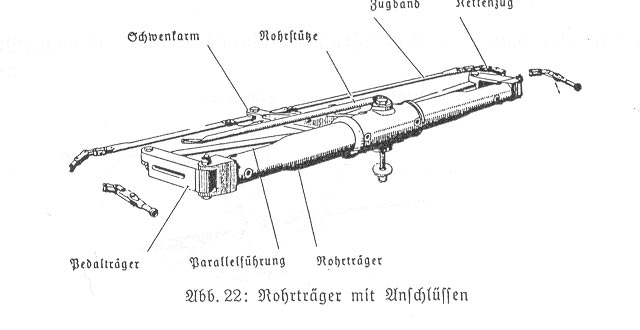
Found it ! Early version of the end of the pedal rudder bar mount, see “Pedaltrager”

If they would fix the downlock mechanism on the landing gear that would solve halve of the Spitfire accidents today,
If they would change the landing gear from retracting inboard instead of outboard they would solve the other halve of accidents
I prefer anything with an open cockpit, I would go for the Tigermoth.
My first flight in a P51 was a bit disappointing, so smooth.
Maybe a Hurricane with fabric fuselage ……..
This project had nothing to do with a restoration, it was an attempt to fly/run an aging passenger airplane with normal paying passengers under current certification rules.
Y2K problem……probably ?
“It is almost unflyable”, he says. “Never mind crossing the Channel — I wouldn’t cross the River Trent in it!
Remember he is talking about a their Bleriot with a 25 HP Anzani engine , Mikael Carlson flies it with a 50Hp Gnome
[ quote ]This is the Mikael Carlson article I mentioned – https://vintageaviationecho.com/mikael-carlson-bleriot/[ /quote ]
Article Title says it all : “Unlearn what you know about conventional flight“
Thanks Oracle for pointing out those books.
I liked the “Aeroplane” 1914 by Claude Graham-White a lot
A small excerpt :
It is amusing, nowadays, to look back, say, to the year 1908, and recall some of the statements that were made about learning to fly. It was, for instance, when the Wrights began to train pupils, declared impossible to teach an ordinary man to balance himself in the air. [Pg 227] The Wrights could do it—yes; but they, contended the critics, were altogether abnormal men. It was argued, indeed, quite seriously, that the brothers had some phenomenal gift—that they could move far more quickly than ordinary men; that they were, in a word, two aerial acrobats. But, when put to a practical test, such arguments were proved idle. The first pupils who went to the Wrights did learn to fly. They learned easily, and without accident; and after this, growing in numbers with rapidity, the world’s airmen were numbered in fifties and hundreds, and then in thousands.

Exactly.
Look at how someone will look at our cars in 50 years time. He will find it a death trap with something possible terrible going to happen every second.
They learned to fly those planes by them selves with only some ground instructions!
Real difficult planes to fly where the century series jet fighters, killing experienced pilots by the dozen.
Good example are a jetski. Most accidents happens because the driver closes the thottle when a collision is imminent. Wrong ! no power no steering. No steering you collide
I am a maintenance engineer at the “Early Birds” foundation in the Netherlands for the last 30 years.
In my opinion the early planes were not difficult to fly….. if you were a pilot at that time.
The problem with flying them today are the pilots which have many hours on planes which have:
– enough power
– quick throttle response
– benign stall characteristics
– good en proportional steering characteristics
– full wheel brakes can be applied any time
Put such a pilot in a sudden difficult flying situation and he will probably automatically make the wrong decisions