 Jō Asakura
If it was that easy to swap an old system out and a new, entirely different one (in terms of mass and size)… I would expect them to have at least mass and probably size representative ballast or something in their, otherwise they would have to alter ballasts and/or adapt the control laws accordingly to keep the CG within permissible boundaries. We aren’t talking about something close to CG but about a position that is farthest away from CG.
Fighters’ designs account for a range of Cgs. I’m sure minor tweaks to ballast and FBW would suffice, as has been the case with all the prototypes to varying degrees since the first flight of T-50-1.
And you know that T-50-4 lost KS-U shortly after T-50-5’s fire, how?
At 04:24 you can see that ‘054’s tail KSU has been removed. I would suggest this footage @ Akhtubinsk was filmed in the Autumn of 2014:
Jō AsakuraProbably needed to free up space to install the first example of the rear-facing AESA – itself probably pulled from T-50-5 (which was devoid of all KSU installations).
The timeline would fit: ’55’ gets burnt to a crisp on 10/06/14, shortly afterwards ’54’ loses its tail KSU.
The architecture of the current test systems is chunky MMIC GaAs, the definitive systems will be more compact and hence the rear KSU installations will likely reappear later.
Jō Asakura…
:origin()/pre00/1bfd/th/pre/f/2008/114/f/5/eurofighter_by_toonmascots.png)
Jō AsakuraCalm yourself Mr.Scorps. I’m only going on company statements for all three. Here for SPECTRA:
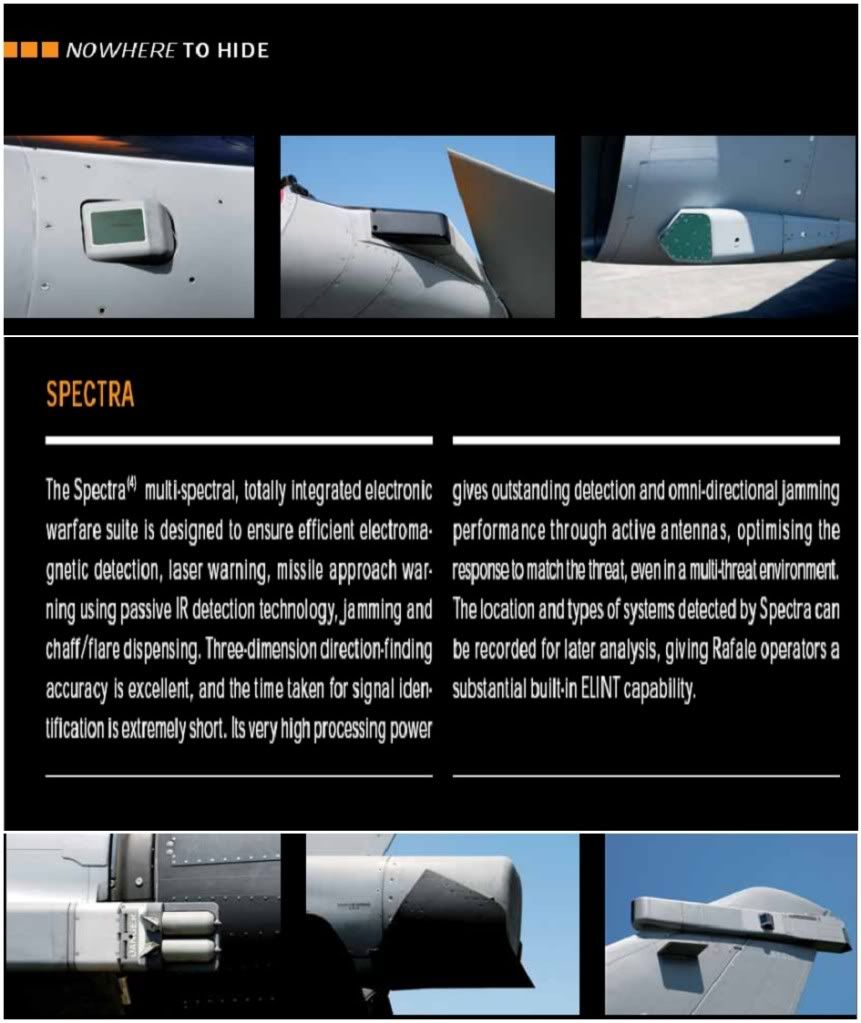
By “targeting emitters autonomously” did you mean an ARM against a ground based, fixed radar site? …Just that I don’t think the phrase “three-dimensional direction finding is excellent” instills much confidence against high performance fighters.
Also, Selex seem to think E-scan IFF operation with ESM is a nice thing to have:
http://www.ainonline.com/aviation-news/defense/2012-07-08/selex-galileo-leads-europes-e-scan-drive
…and the KRET article in English:
Jō AsakuraThe question, T-VIP, is whether EF’s DASS & Rafale’s SPECTRA actually have the ability to track emitting targets. Official literature for the former claims only “broadband emission detection” and “high-accuracy direction finding”.
As for the Su-35S’ L-150-35, its spatial location of the emitting targets would by very definition have to be highly accurate in order for the E-scan IFF to interrogate them (supported by company statement below).
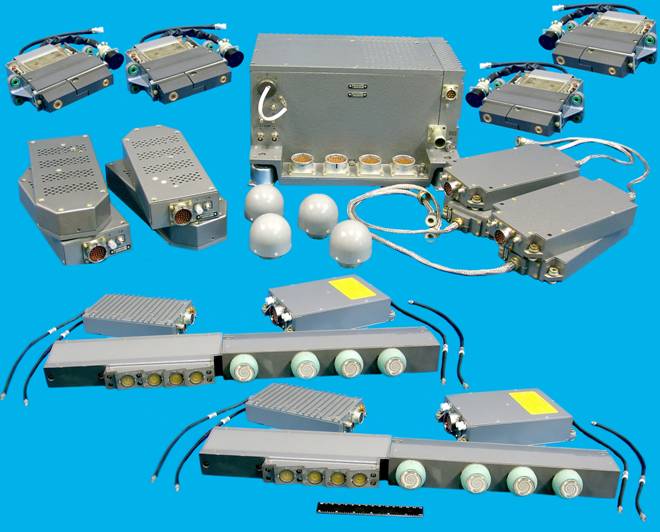
Company literature for the L-150-35 “System of electronic intelligence” (“станции непосредственной радиотехнической разведки”) states:
Designed and manufactured FTP module based on a monopulse receiver of direct amplification with a broadband phase difference microwave signals calculator, direct conversion of wavelengths, instantaneous transfer rate – that will ensure detection of radar sources, [their] precise targeting and guidance for modern high-precision weapons…
So clearly, it is much closer in capabilities to AN/ALR-94 than the ‘Eurocanards’ kit.
Jō AsakuraSo what you are talking about is IFF interrogations against ESM tracks?
I’m talking about IFF interrogation of sources/emitters of radar signals whereby their spatial location has been calculated by measurement of the phase angle of their microwave signals (i.e. interferometer algorithms).
More precisely: IFF interrogation of ELINT tracks.
I thought that the L-band antennas would be integrated into the slats on T-50 as well. Would have made sense due to the larger span and thus aperture vs the LEVCONs.
You may well be right.
Jō AsakuraYou do know that IFF requires you to know where the target is and the target has to answer back? The IFF (even this L-Band and version) will not help you find a target that you are not currently tracking.
Yes, but think of it like an AN/ALR-94 sensor-fused with an E-scan IFF (but both operating independently of radar).
You mean the results of IFF interrogations and ESM identification capabilities are fed into the sensor fusion engine? Everything else wouldn’t make much sense to me. Capabilities like these are available on some modern aircraft designs.
The 4283MP is known to employ digital beamforming with sophisticated algorithms, I would guess passive/LPI tracking at long range is quite a big deal…if the likes of EF and Rafale already employ something similar – then kudos, but iIrc, neither has a system comparable to AN/ALR-94 which the Su-35S’ L-150-35 is in all essence.
You say LEVCON, do you mean the slats or really the moving LERX?
LE slat on one:

…LEVCON for the other.
Jō AsakuraWhy should it be technically “unviable” to integrate the E-Scan IFF INT on the main radar antenna? Rhat is already common practise with many western designs.
I meant the LEVCON mounted AESAs acting as L-band radars are “technically unviable” in the conventional sense.
I’m pretty certain the Su-35S’ 4283MP IFF AESA is sensor fused with its L-150-35 ESM/EW which would afford the pilot relatively stealthy (passive) identification & location of targets. I would expect a similar (but more advanced) set up for the PAK-FA (i.e. ‘Himalaya’) – but it’s still a far cry from anti-stealth L-band radars.
You’re correct that IFF antennas have been integrated into main radar arrays for some time now on Western types, albeit with two-part joint structures for the repositioner to avoid polarisation problems.
Anybody?
Why not Java?
Jō Asakura…I think people tend to take Piotr Butowski’s educated guess as a confirmed truth.
Agreed, the Su-35S has confirmed AESA IFF interrogators in its LEs*, the counterpart to Selex’s SIT-426 active E-scan IFF.
Why Butowski claims this function has now been transferred to the NO36 on the T-50 and that the AESAs in the LEVCONS perform an L-band radar function, needs thorough explanation due to its technical unviability. Personally, a case of ‘filling in the gaps’ gone too far, me thinks.
Jō AsakuraI was about to say that if the russians went into all this trouble of putting all that staff on the plane and risk having to solve the problem of a partially exposed engine facet and it is still only marginally faster than its direct competitor, the raptor, then all this was for what?
Never ending headache
This is the actual duct:

Do you see the engine has a high mounting (denoted by thick lower circular structural stringer sections) at least a quarter of the compressor is mounted above the wing) then the duct bends down sharply – denoted by the thickening upper circular structural stringer sections (in this port duct it bends around the MLG bay and offsets to the left but this is not visible).
Above is the lateral offset (that orange crate is vertically aligned with the upper, outer corner of the intake).
Very important to note here how the lower cowling departs significantly from the upper – a source of much confusion/misrepresentation:
http://forum.keypublishing.com/attachment.php?attachmentid=238845&d=1435841679
As can be seen from the top pic the duct extends thru a significant part (if not all) of that elongated yellow panel in front of the cowling:
http://sukhoi.org/img/gallery/wallpaper/1_29_01_10/1002101_80.jpg
…so as the actual duct is under that yellow panel, then it’s a very funky and revolutionary design (short & aggressive bend in the duct):
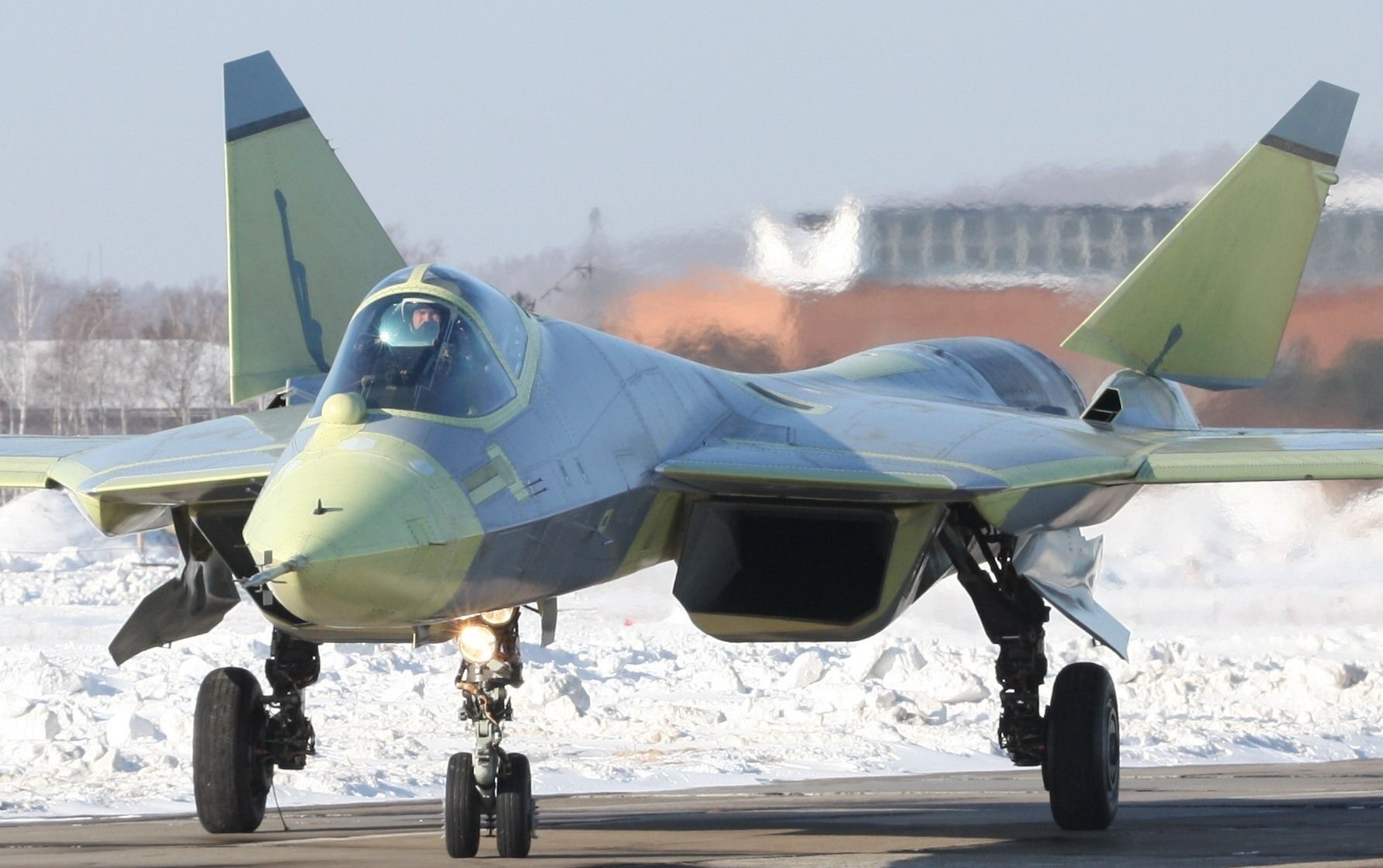
Incidentally, the height of the MLG wheel is approximately the same as the compressor, so one can easily visualise how much of the comp will be visible (now that we know precisely where the engine is mounted and what direction the duct takes).
That thing you refer to as “engine facet” (from that infamous ‘PAK-FA in the night’ pic, cannot be reconciled as the compressor either vertically, nor laterally. These observations (and most importantly the CAD screenshots) confirm insiders’ and the official patent claims of the existence of S-ducts.
Which begs the question of that ‘thing’ in the intake, what is it? Pay attention!
As intimated before, it is a device to facilitate high pressure recovery to the compressor (near 100%)- the fixed vanes are installed downstream of the bend and precisely orientated to match the static pressure field. In that infamous PAK-FA pic you can even see the same shade of grey duct behind the vanes as precedes them – this is the aggressive bend.
The T-50 would have a flight time of a few seconds if this guide vane structure wasn’t installed.
The beauty of it is that it doubles as a “radar screen” known as ‘Device 9/Устройсво 9’ in the official patent “set straight in the intake, offset and partially obscuring the [engine’s] guide vanes”- clearly neither the compressor nor duct are “set straight” vis-a-vis the intake.
The “radar screen” function of the vanes negates the need for a ‘long S-duct’ to absorb/neutralise incident and reflected radar waves. I’ll leave it to more learned members to explain the precise mechanics of the RCS of intake cavities but, clearly, it is a World apart from a radar ‘blocker’ in the conventional sense as installed on 4G legacy fighters.
The advantages of the design compared to conventional S-ducts are a huge reduction in system length (and hence weight) and overall a more integrated fuselage design as demonstrated by the T-50’s lower profile compared to the F-22/35/J-20 ‘fatties’.
It is advances in CFD software’s predictive accuracy and raw computing power that have made this revolutionary S-duct a reality* and I believe these design elements will be replicated in upcoming US 6G contenders.
Pics 1&3 ℅ Mr. Paralay.
Jō AsakuraNot only heat associated with high speed, fighters’ vertical fins experience dramatic buffet loads in high AoA flight conditions (especially in the transonic regime), and these buffet loads would cause huge vibration and dynamic stress on the vertical fin structure. The F-22’s huge fins with their large surface area would be particularly susceptible to such loads.
For both the F-22 and T-50, it is the highest and most efficient sustained dry military thrust of the engine and hence the aerodynamic efficiency of the respective designs that is off the utmost importance. Bickering over top line speeds on afterburners is meaningless.
An example of the upcoming new, high-temperature composites can be seen utilised here on T-50-5’s LEVCON:
http://www.knaapo.ru/media/rus/gallery/aircrafts/combat/t-50-5/t-50-5_02_hires.jpg
Jō AsakuraThe L402 ‘Himalaya’ sensors are distributed all over the fuselage and act in interferometer mode fusing data to the 4 main X-band AESAs both to generate narrow, LPI radar beams to target AAMs AND jam (EA) incoming AAMs (see official T-50 avionics patent).
The only way I see the L-band active arrays being used as radars would be if the L402 picked up suspected radar emissions from a stealth fighter and then the pilot would carefully point the PAK-FA at the suspected source to get confirmation. Of course, (notwithstanding the humongous power requirements) this does the PAK-FA no LO favours. Still think the L-band radar is highly unlikely.
Anyways, me thinks me figured out why they need a 3rd static tester (provisionally T-50-12):
http://clients2.weblink.com.au/clients/quickstep/article.asp?asx=QHL&view=6723688
ASX:QHL appears quite coy on their customer described as a “Leading European aerospace composites manufacturer ORPE Technologiya”, aka ONPP Technologiya (ОНПП «Технология») – the primary composites manufacturer for the T-50 (along with “carbon fibre parts which will be used to shield satellites during launch”, of course).
Sanctions? What sanctions!! But granted this contract has been in the works since July 2013:
http://www.quickstep.com.au/Business-Units/Quickstep-Aerospace/ORPE-Large-Quickstep-Curing-System
Jō AsakuraThe *grounded* ‘053’ flies into Zhukovsky, interesting (I wonder, soon to be minus its vertical stabs;))
As regards the FGFA, the most important details are a pre-order for 154 machines and the release of US$6bn for the development programme from the Indian side.
What kind of Digital Signal Processing ( DSP ) and CPU’s does PAK-FA avionics uses ?
I remember reading Su-30 used to use badget process in mid -2000
For serial machines most likely the ‘Elbrus 8S’ (use GT):
http://ria.ru/technology/20150526/1066559857.html
http://www.mcst.ru/vosmiyadernyj-mikroprocessor-s-arkhitekturoj-elbrus
…though I wouldn’t rule out upcoming 3D TSV developments also due to commence serial production in 2016.
Jō AsakuraApparently, T-50-4 is due @ Zhukovsky to have it’s vertical stabilisers removed and temporarily installed on T-50-6-2.
This would imply T-50-6-2 (the first of the ‘Stage 2’ prototypes) will have it’s first flight from Zhukovsky and the definitive fins will be carbon fibre composite.
Strange that they didn’t cannibalise the grounded T-50-3.
Jō AsakuraInteresting recent overview of modernisation & retooling of NPP ‘Pulsar’ for the production of microwave integrated circuits and HEMTs (particularly GaN) for radar, including airborne applications. Project has been completed (use GT):
http://pro.eltech.com/projects/gosudarstvennyy-zavod-pulsar-g-moskva
It may be slightly dated because there are more recent advanced developments – which I’ll refrain from posting for want of my subsequent post being titled ‘Things to Do in Tokyo When You’re Dead’.


 Sign In







