Just downloaded the patch. Thanks for the heads up.
On another note, I recently picked up a Track-IR 3 and the Vector Expansion. Falcon 4 Allied Force is amazing using this device. Very immersive.
😀
😀
Not even the Hubble Space Telescope can resolve the equipment left at the Apollo landing sites. Supposedly there is going to be a survey satellite put into lunar orbit soon that should be able to show the lander & rovers.
Don, you describe the process perfectly. I keep a digital thermometer with me and if the temp changes significantly I take another set of dark frames.
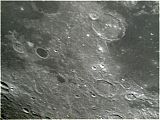
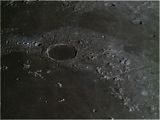
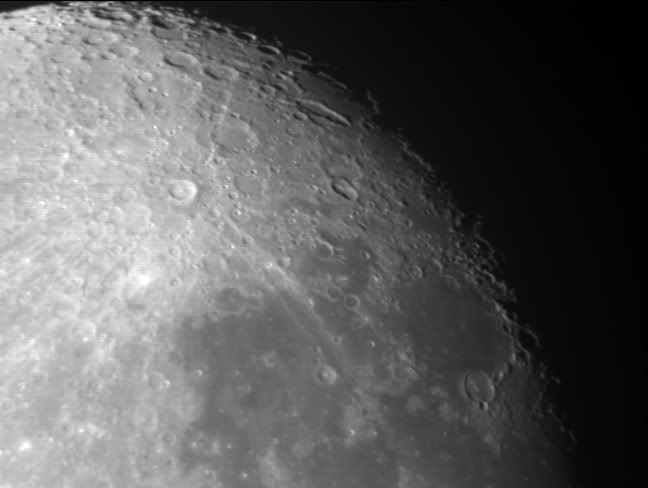
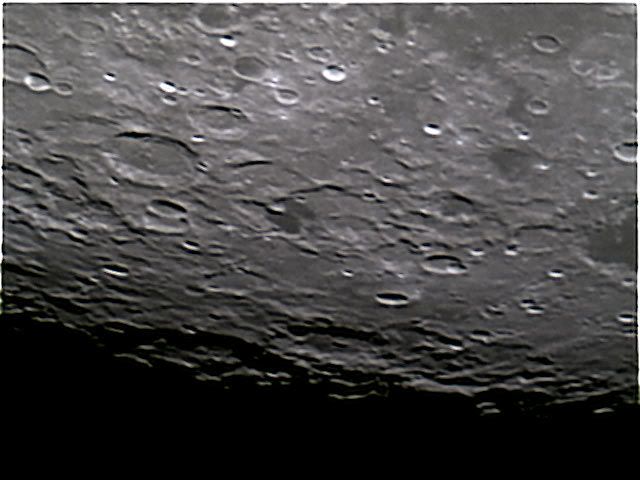
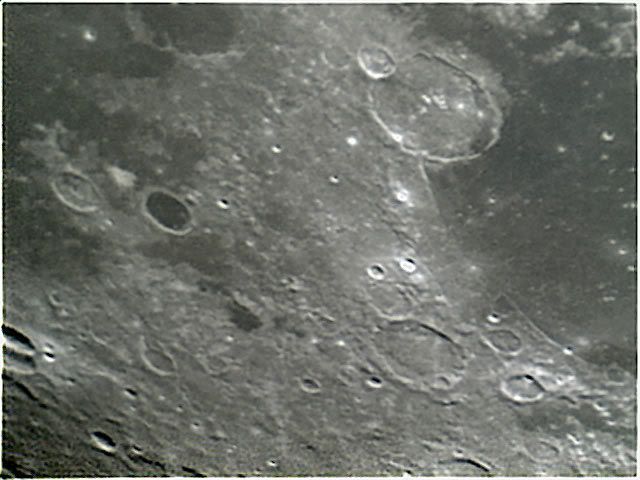
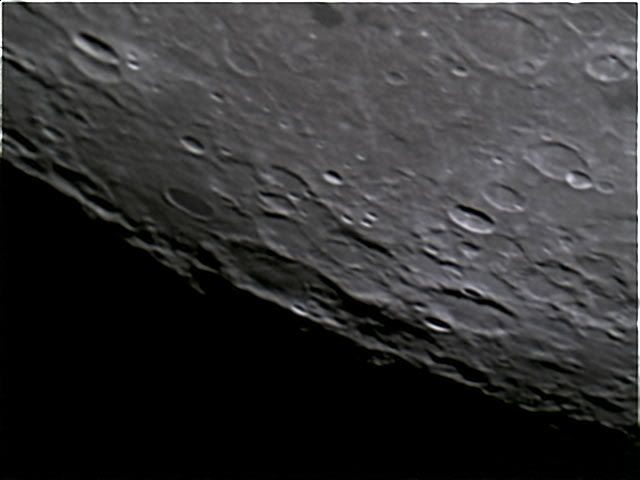
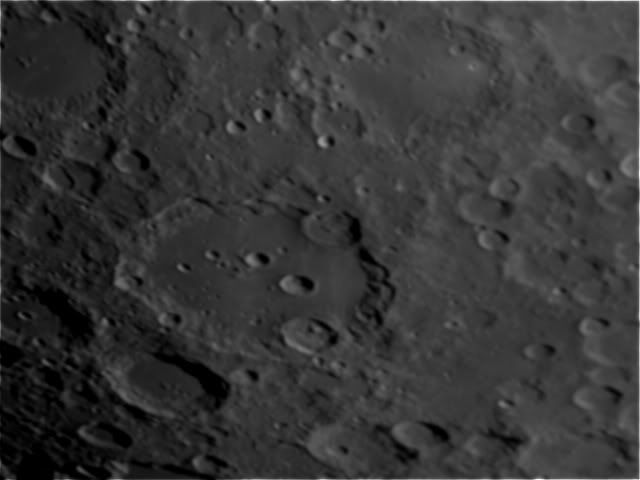
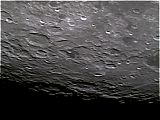
Dave, the first image shows the crater Tycho (the brightest crater). The prominant double crater is Gassendi at the edge of Mare Humorum. That means it does not show the Apollo 17 landing site (which is at the southeastern rim of the Mare Serenitatis).
Good questions guys.
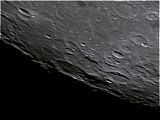
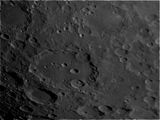
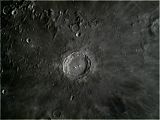
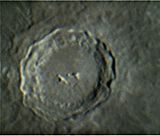
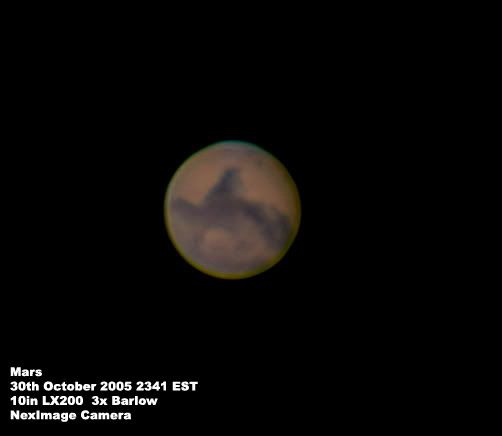
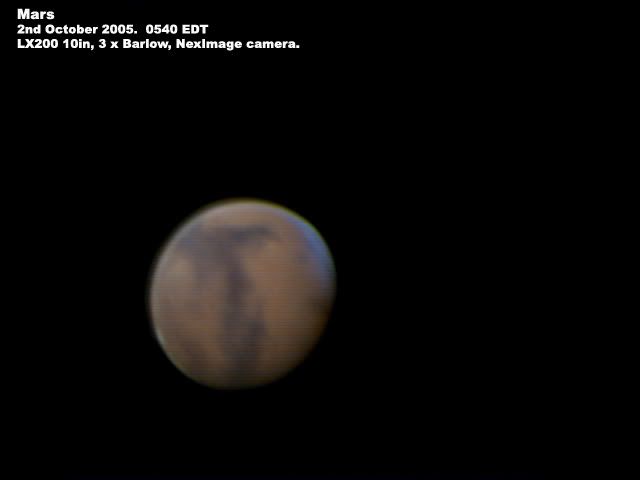
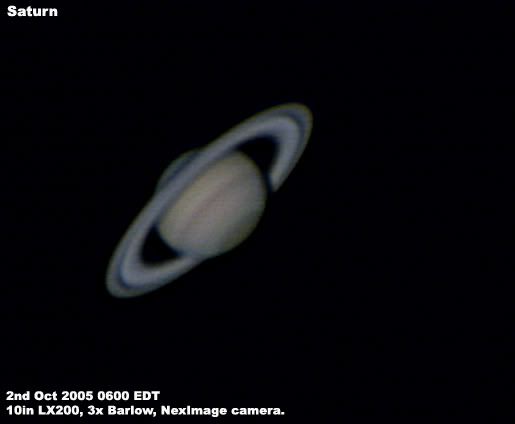
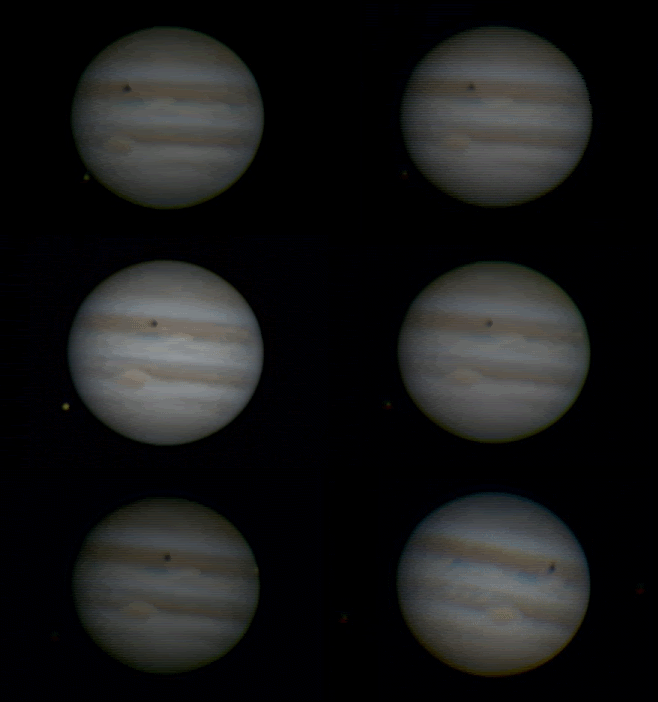
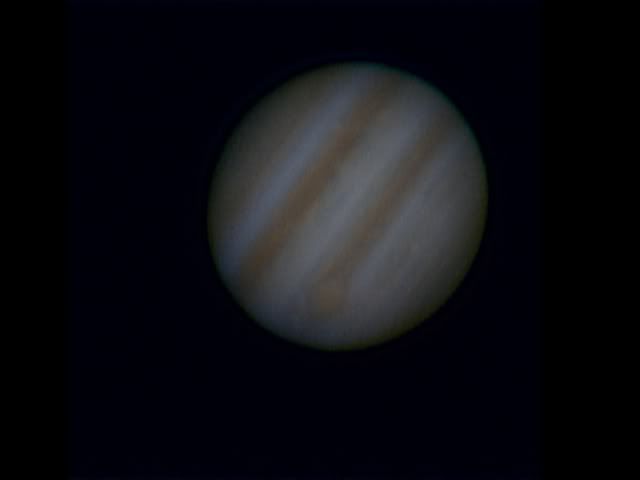
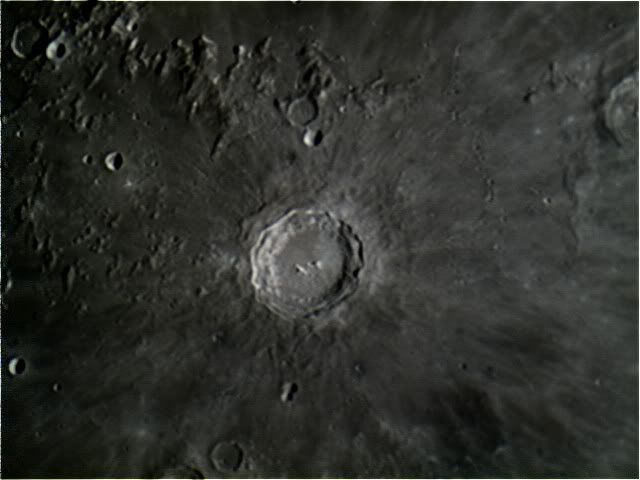
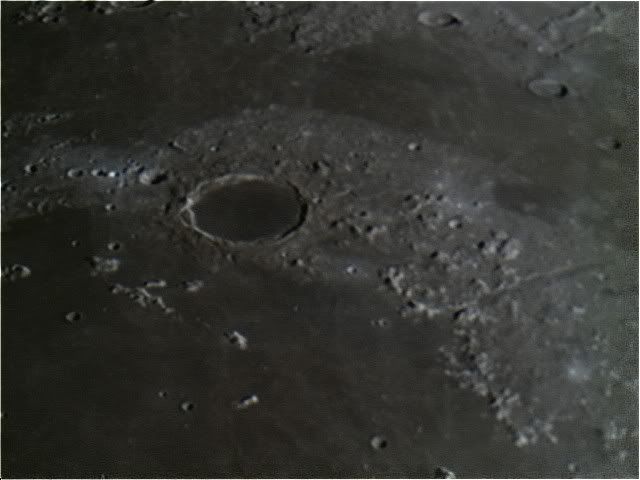
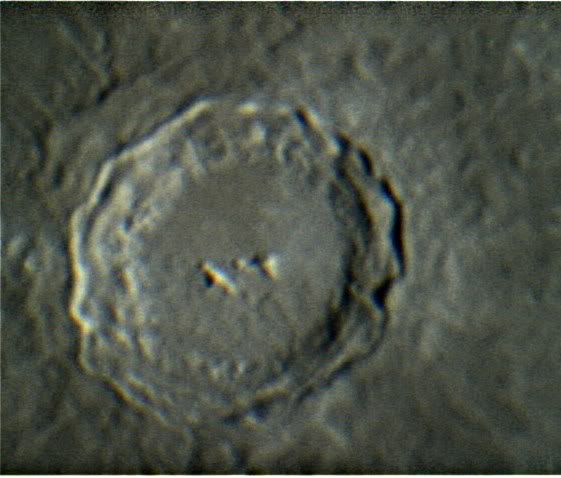
Dave, here is a selection of moon images I have taken with the LX200. The camera I use for planets and the Moon is a Celestron NexImage, basically a repackaged Phillips ToUcam II Pro webcam.
Don, The image of M16 uses 30 second exposures. The camera is monochrome, so I shoot 4 sets of data. Luminance (for the detail) and then Red/Green/Blue through filters. Each set is a stack of averaged frames. In this case 30 x 30seconds for Luminance and 20 x 30 seconds each for RBG.
Seeing on the night I took the M16 shot was average to good. At my location we are about 900ft AMSL. Transparency was good that night too. I do this from my back yard and as I live in a town, light pollution is a problem.
The large ‘Lens Hood’ is a dew shield. It does two things for me, first, it puts a layer of stable air in front of the objective lense. That helps to prevent moisture settling on the lense when the air starts to get saturated. Secondly, it acts as a lense hood, preventing off axis light from entering the telescope (important with the streetlights in the vacinity).
Hmm.. M3. Looking through my archive, I have one shot f it taken not long after getting the telescope last year. I used a different camera and was still learning how to use it.. so be gentle :)..

I need to go back and image it again with my new camera and a year of experience under my belt….
Costs of the equipment. Well, I bought most of the gear second hand.
Telescope : $1800 with a bunch of acessories including the Dew Shield. Equatorial Wedge was $90, Focal Reducer $150, DSI Pro camera $400 and a laptop PC (It is not a new one, about 4 years old which used to belong to my brother Neil). Hopefully he would approve of how I am using it. Buying everything new would make your estimate pretty close to the mark.
As for the stars appearing large, you are right, if you bring out the faint detail then the bright areas have a tendancy to become over exposed. Also, they are not perfectly round due to tracking error (which is why my next project is to perfect autoguiding).
Good questions guys.
Dave, here is a selection of moon images I have taken with the LX200. The camera I use for planets and the Moon is a Celestron NexImage, basically a repackaged Phillips ToUcam II Pro webcam.
Don, The image of M16 uses 30 second exposures. The camera is monochrome, so I shoot 4 sets of data. Luminance (for the detail) and then Red/Green/Blue through filters. Each set is a stack of averaged frames. In this case 30 x 30seconds for Luminance and 20 x 30 seconds each for RBG.
Seeing on the night I took the M16 shot was average to good. At my location we are about 900ft AMSL. Transparency was good that night too. I do this from my back yard and as I live in a town, light pollution is a problem.
The large ‘Lens Hood’ is a dew shield. It does two things for me, first, it puts a layer of stable air in front of the objective lense. That helps to prevent moisture settling on the lense when the air starts to get saturated. Secondly, it acts as a lense hood, preventing off axis light from entering the telescope (important with the streetlights in the vacinity).
Hmm.. M3. Looking through my archive, I have one shot f it taken not long after getting the telescope last year. I used a different camera and was still learning how to use it.. so be gentle :)..
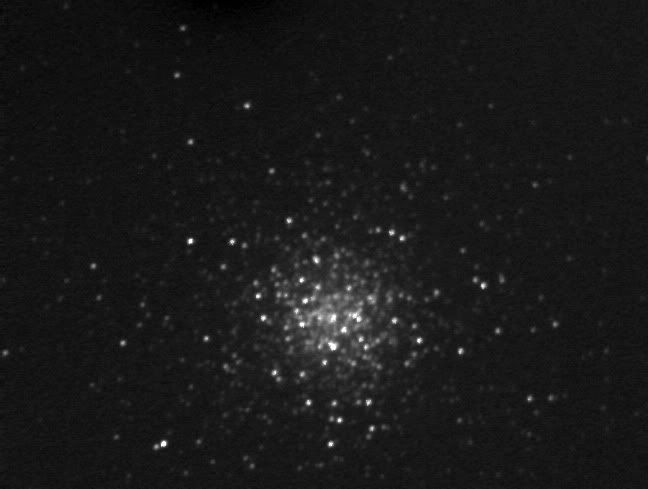
I need to go back and image it again with my new camera and a year of experience under my belt….
Costs of the equipment. Well, I bought most of the gear second hand.
Telescope : $1800 with a bunch of acessories including the Dew Shield. Equatorial Wedge was $90, Focal Reducer $150, DSI Pro camera $400 and a laptop PC (It is not a new one, about 4 years old which used to belong to my brother Neil). Hopefully he would approve of how I am using it. Buying everything new would make your estimate pretty close to the mark.
As for the stars appearing large, you are right, if you bring out the faint detail then the bright areas have a tendancy to become over exposed. Also, they are not perfectly round due to tracking error (which is why my next project is to perfect autoguiding).

Glad you like them Dave.. I have a lot of fun taking them (nights literally slip away when I am out there, especially now it is warming up a little :)).
Here is a photo of the scope all set up for imaging:
Dince taking this photo, I have added a small refractor telescope which is piggybacked on the large one to act as a guidescope.
The Telescope is a 2003 Meade 10inch LX200 ‘Classic’. The camera I sue is a Meade Deep Sky Imager Pro (DSI Pro). You can find out a lot of info about the scope and camera at http://www.meade.com
Glad you like them Dave.. I have a lot of fun taking them (nights literally slip away when I am out there, especially now it is warming up a little :)).
Here is a photo of the scope all set up for imaging:
Dince taking this photo, I have added a small refractor telescope which is piggybacked on the large one to act as a guidescope.
The Telescope is a 2003 Meade 10inch LX200 ‘Classic’. The camera I sue is a Meade Deep Sky Imager Pro (DSI Pro). You can find out a lot of info about the scope and camera at http://www.meade.com