 MadRat
I don’t know, those IR seekers might have to be rethought with the new laser-based blinders called TADIRCM, or “Agile Eye”. Very fitting name considering this topic.
MadRatThank you for the insights!
MadRatIt would be nice to connect the dots between MERs and TERs to the pylons, load limits of a hardpoint, and their related interfaces. Ever since the universal bus design weapons integration deals more with these factors and real world performance than anything else. Some of the lighter bombs actually pose a hazard to aircraft even if it would allow for a bigger spread. Some adapters physically connect but there is no serial lockout for the bus to control weapons functions. And so on, and so on…
MadRatChemical injection causes a spectrum shift. Its not the visible light that typical gets you – at least in broad daylight – its those invisible infrared spectrums that light up the IR seekers in the IRSTs and AAM’s.
MadRatCumulatively speaking we’re at an outward appearance resembling this: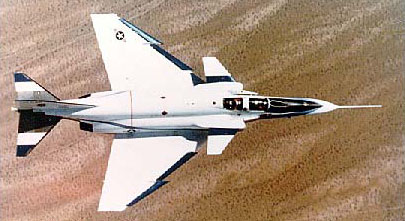
…but with an elongated and fatter nose.
**** dimensions ****
Wingspan 38 feet 5 inches, wing area 530 square feet
length 62 feet 11 inches, height 16 feet 6 inches
**** internal fuel ****
1142-gallons (post-block 40; 1260-gallons in early models cramped internal space)
630-gallons in the wings
**** external fuel/mounts ****
fixed inflight refuelling probe; plumbed externally into boom refuelling receptacle (Kurnass)
one fuselage centerline bomb rack and four pylon bomb racks
1x 2,345L Sargent Fletcher centerline ext. fuel tank; mounted on Aero-27A ejector rack
1x 4,230L conformal fuel tank under the fuselage (instead of 2,345L centerline tank) with integral AN/ALE-40 chaff/flare dispenser and pair of mounts for AMRAAM/2x Mk82
2x 1,420L underwing McDonnell tank ext. fuel tank(s); mounted on MAU-12 outboard underwing pylons
2x 4,800L conformal tanks on the sides of the fuselage spine (F-4X)
centerline hard point with Aero-27A ejector rack and MER parent attachment (6 child attachments; 1000-pounds per child)
inboard hardpoint with LAU-17/A pylon and BRU-41 MER parent attachment (6 child attachments; 1000-pounds per child)
(NOTE: underwing BRU-41 MER limited to 5 bombs – 3 in front and 2 aft – due to clearance issues)
outboard hardpoint with MAU-12 pylon and BRU-42 TER parent attachment (replaces ext. fuel tank; 3 child attachments; 1000-pounds per child)
**** cockpit caveats ****
one-piece wrap-around windscreen
Martin Baker MK GH-7(A3) Ejection Seat
color multi function cockpit screens
Have Quick V/UHF and long range HF radios
Kaiser/El Op holographic HUD
PACT fly-by-wire (YF-4E demonstrator)
hands-on-throttle-and-stick control system
Twin-stick controls
**** mechanicals ****
2x Pratt & Whitney PW1120 (two engines were on one ‘Kurnass 2000’ F-4E demonstrator in 1987) = TF30 equivalent thrust
F-4S wings (F-4J’s big wing with extra control surfaces)
AN/ASW-21 data link digital communications system for automatic carrier landings
canard winglets (YF-4E demonstrator)
F-4F nose
telescoping front undercarriage leg (British FG.1)
F-4E stream-lined gun fairing attachment for MIDAS 4 gun gas diffuser
leading edge manuevering slat-equipped main wings with flow fences
slotted leading edge stabilizers
retractable cockpit access ladder
**** Sensors/Designators ****
Norden AN/APG-76 Multi-Mission Radar System (SAR, GMTI, rbGM, DBS; Kurnass test prototype)
Elbit ACE-3 mission computer (mated to AN/APG-76)
Texas Instruments AN/APQ-172 J-band monopulse radar for terrain avoidance/following (replaces internal cannon; RF-4C)
Westinghouse AN/ASQ-153 Pave Spike; mounted left forward missile bay when in use (guides LGB’s)
Northrop AN/ASX-1 Target Identification Set Electro-Optical (TISEO); on left leading-edge of wing (USAF F-4E)
ELOP Condor 2 Reconnaissance Pod (replaces G-139 pod with CAI KS-127F LOROP); attached direct to centerline station (IAF)
LN100GT GPS/INS navigation system (TuAF)
KB-35 Strike Recording Camera
Rafael AN/AAQ-28 Litening II targeting pod (HAF/TuAF)
AN/AVQ-9 laser target designator; slaved to TISEO
AJB-7 low-altitude bombing system system equipment; nuclear weapons capability
**** ECM ****
Elta FG-3 Flight Guard IMI-RSD self-protection system (uses AN/ALE-47 dispenser)
Raytheon AN/ALR-50 L-Band rwr
Litton AN/ALR-69 1-16GHz ECM programmable reciever (works with ALQ-119 sets to acquire and jam signals)
Litton AN/ALR-74 threat warning reciever; mounted instead of cannon or a forward missile bay when in use
Litton AN/ALR-91(V) ECM C/D-band DF and IFM/SHR threat warning reciever
Elisra Group SPS-1000V-5 radar warning system; internal (replaces Litton ALR-46/69)
Elta EL/L-8233 internal ECM (Kurnass test) vs. Mikes AN/ALQ-178V3 passive embedded SPEWS
General Electric AN/ALQ-71 1-8GHz 2-channel noise jammer ECM pod; installed in AIM-7 Sparrow bays, or three-cannister pod mounted on an inner pylon
General Electric ALQ-87 1-8GHz FM, barrage jammer ECM pod; installed in AIM-7 Sparrow bays
ALQ-101 ECM pod; under LAU-17/A twin launcher
Westinghouse AN/ALQ-115(V)-15
ALQ-119(V-10) ECM pod; installed in AIM-7 Sparrow bays (works with AN/ALR-69; F-4G)
ALQ-131(V-14) ECM pod; installed in AIM-7 Sparrow bays (F-4G)
Mikes AN/ALQ-178V3 passive embedded SPEWS
Raytheon AN/ALQ-184(V)1
Elta EL/L-8222 active ECM pod (TuAF) vs. ALQ-87 vs ALQ-119
Agile Eye TAD-IRCM missile-seeker blinder (QF-4 test drone)
**** Weapons ****
4x AIM-120B AMRAAM (German F-4F ICE); installed in AIM-7 Sparrow bays with Frazer-Nash ejectors (ICE)
(NOTE: front bays typically support an accompanying pod underneath; i.e. ALQ-87, ALQ-119, or ALQ-131 ECM pods)
4x AIM-9M (HAF), Python-3 (IAF), Type 90 AAM-3 (Japan), or IRIS-T (german test F-4); 2x AAM on each u/w twin-rack LAU-17/A launcher
(NOTE: LAU-17/A twin launchers typically support an accompanying pod or TER underneath, i.e. ALQ-101 ECM pods)
(NOTE: inboard LAU-17/A can support 2x AIM-9 or 1x AIM-9/120)
(NOTE: Up to 4x AIM-4B were carried by early model F-4E for strictly bomber-intercept missions)
Matra rocket pods with 18 × SNEB 68 mm rockets each; attached direct to MER or TER
LAU-3/A 19-round 70mm (2.75-inch) Rockets launcher; attached direct to MER or TER
LAU-10/A 4-round 127mm (5-inch) Rockets launcher; attached direct to MER or TER
LAU-130/A 19-round 70mm (2.75-inch) Rockets launcher; attached direct to MER or TER
LAU-131/A 7-round 70mm (2.75-inch) infrared-marker Rockets launcher; attached direct to MER or TER
AFDS gliding submunition dispensing weapon (Autonomous Flight Dispenser System; HAF)
AGM-12B/C Bullpup; attached direct to pylon
AGM-45 Shrike; attached direct to LAU-34A launcher
AGM-62 Walleye; attached direct to MER or TER
AGM-65B/D/G Maverick; attached direct to LAU-117/A single-rail or LAU-88/A triple-rail launcher
AGM-78 Standard ARM; attached direct to inboard pylon(s) using LAU-80 or LAU-77/A launcher
AGM-88 HARM; attached direct to LAU-118/A HARM launcher
AGM-142 Popeye/Have Nap (Kurnass 2000); attached direct to pylon
SUU-16/A external pod (ram air-powered M61A1 20 mm cannon; 1,200 rounds); attached direct to hardpoint/replaces pylon
SUU-23/A external pod (self-powered M61A1 20 mm cannon; 1,200 rounds); attached direct to hardpoint/replaces pylon
SUU-30H/B dispenser (650 BLU-63/B or 650 BLU-63A/B submunitions); attached direct to pylon
Mk82 500-lb GP/LDGP bomb; maximum of 15; attached direct to MER or TER
BSU-49 500-lb Baloot bomb; maximum of 15; attached direct to MER or TER
Mk83 1000-lb bomb; attached direct to pylon, MER or TER
Mk84 2000-lb bomb; attached direct to pylon
M117 750-lb GP bomb; attached direct to pylon, MER or TER
M118 3000-lb LDGP bomb; attached direct to pylon
Mk15 Snakeye; attached direct to MER or TER
Mk20 Rockeye; maximum of 12; attached direct to pylon, MER or TER
BLU-1/B firebomb
CBU-52 785-lb cluster bomb; maximum of 15; attached direct to pylon, MER or TER
CBU-87 1000-lb cluster bomb; maximum of 15; attached direct to pylon, MER or TER
GBU-1B
GBU-2/2A/B
GBU-3
GBU-5B
GBU-8/8B 2000-lb HOBoS Electro-Optical TV-Guided Bomb; attached direct to pylon
GBU-10/10A/C/E/F/G/H/J Paveway II 2000-lb bomb; attached direct to pylon
GBU-11
GBU-12 Paveway II 500-lb bomb; maximum of 15; attached direct to MER or TER
GBU-15 2000-lb modular guided glide bomb; attached direct to pylon
GBU-16 Paveway II 1000-lb bomb; attached direct to pylon, MER or TER
Mitsubishi Type 80 ASM-1 antiship missile; attached direct to pylon
(Mitsubishi Type 93 ASM-2 antiship missile; attached direct to pylon?)
“Turkish JDAM” (TuAF); attached direct to pylon
TAAS-Israel Industries Deliliah/STAR-1 turboject UAV
MadRatThere are two types of changing locations, distance and displacement. If you move from point A to point B the distance is the displacement. If you move from point A to point B to point C there may be significant distance without a displacement if point A and point C are identical.
MadRatAll the poor sports should be sanctioned by the WTO… wait, these players are the senior WTO members…
MadRatDrones don’t act predictable in heavy jamming environments. It would matter how strong the enemy is at EW before you assert hardware like that close to the action. If a ground commander had a direct link without the 6-8 seconds of delays to control it then you could do some amazing work with it.
MadRatFor the marginal differences I’m surprised they’d move to such high weights. The 100-, 200-, 400-, and 800-kilogram weights would suffice. Seriously, why carry the extra 25% when it makes no real world difference in effect?
MadRatI would have thought they would standardize NATO bombs around kilograms, rather than U.S. Standard Weights. There’s plenty of room for 100-, 200-, 400-, and 800-kilogram versions. Not a lot of difference between a 440-pounder and a 500-pounder, just as the difference between an 880-pounder and a 1000-pounder would be moot. You can obliterate buildings with a 100-kilogram bomb with today’s precision packages, making the smaller size worthwhile. No reason you would need more than an 800-kilogram/1760-pounder, in which case you would want to move to a specialty weapon. The less fuel burnt carrying them would be a real operational savings.
MadRatFrance locks you into their equipment, the supply chain, and their service. Saab washes their hands of you slower when you deviate from their feeding hand.
MadRatNo, just more precise rocket strikes. Means you could theoretically carry a rocket pod to replace a rack of bombs. What kind of cost comparison is it to gps-guided Mk82’s?
MadRatDisplacement versus direction.
MadRatWhat does radar have to do with an anti-radar missile? Wouldn’t that be more of an issue of the self defense gear onboard? For example, the F-4G had the AN/APQ-120 radar of the F-4E, but I believe its AN/APR-38 (later -47) RHAW gear was the primary instrument in its use of the AGM-78 and AGM-88.
Only certain fire control interfaces fit certain radar packages. While the AGM-88 didn’t slave off the AN/APQ-120, it did require that interface for the missile compatibility, interface compatibility that is shared with more recent radars. I don’t know if that compatibility is deleted with the AN/APG-76 or not as those missiles are largely obsolete now.
You’re probably right on the radars, was going off short-term memory. Was thinking that the AN/APG-76 was demonstrated but not deployed. Seems like for other than reconn its a little overkill for a country that doesn’t operate JSTARS-equivalent and run a complete battlespace management program. SAR radars (with some trouble) can be all linking their information together for increasing the granular picture of battlespace.
MadRatTankers are known to be tough.
Exactly, and crude is positive buoyant. Not to mention tanks were topped off with inert fluid to keep airspace to a minimum. And that most missile strikes on shipping were not Exocets, but rather missiles designed to attack land vehicles namely TOW and Maverick.


 Sign In







