 Andraxxus
you do realize that the original MiG-29 had an extreme deficiency with its range right? a growth in internal fuel capacity was an attempt to rectify this problem as the MiG-29 was a point defense fighter to begin with.
Extreme deficiency, because MiGs had to use wing EFTs to maintain CAP along with other NATO aircraft, says germans. And when inner wing pylons are used for DT, MiG-29 couldn’t carry any BVR missiles. That “deficiency” is debatable because original F-16 (that MiG-29 supposed to match) couldnt carry any BVR missiles in the first place, and late model MiG-29s can carry R-77s on other 4 (or 6) wing pylons, not to mention increased internal fuel capacity, so I think its more than just rectified.
AndraxxusAs for F-16E. Keep in mind the drag of those CFT! They nullify the extra thrust by far 😉
Though they do look draggy, CFTs on F-16 have little to no impact on perfromance when they are empty.
A lot of talk about how the F16 is a better bomber than say a Mig-29. I think wrong because the way I see it both are more so equivalent of each other. The F16 has her Paveway line of precision bombs though the Mig also has hers with the KAB series of bombs as well, so its not like one aircraft has some edge over the other.
One thing I do like to mention is that the Mig-29 has the ability to launch stand of precision munitions. I doubt the F16 has anything similar to a X-31 high speed long cruise missile or a 3M54E ASM.
Its just not even funny to even compare the two and no don’t tell me that the F16 can carry so many more short legged JDAMs because something like that has no strategic tactical advantage over the later I mentioned above.
The problem is, most F-16s currently flying are either MLU or block30 and above, which has pretty decent A-G capabilities. Apart from few 9.13s and SMTs in RuAF all MiG-29s are limited to dumb bombs and rockets. They also lack targeting pods and useful pylons, putting it pretty behind F-16. Even when comparing dumb bomb payload, an F-16 can carry 18 Mk-82 bombs plus 2x AIM-120, 2x AIM-9, a centerline fuel tank, and lantirn pods. I have yet to see a MiG-29 with multiple ejector racks anyway.
If you are comparing a late model F-16 vs a late model MiG-29, your comment would be debatable.
GBU/JDAM series = KAB series
Mark series = FAB series
CBU series = RBK series and KMGU b/h
AGM-65 = Kh-25
AGM-130 =~ Kh-29
AGM-88 = Kh-31P
Harpoon = Kh-31A and Kh-35
LAU-xx = S-xx
SLAM-ER =~ Kh-59
AGM-154 = ?? (MiG has no equivalent)
AGM-158 = ?? (MiG has no equivalent)
AndraxxusMiG-29 9.12 was introduced in August 1983. MSIP Stage II F-16s introduced in July 1984. So there was a 1 year period where no F-16 had BVR capability but MiG-29 had. The bigger issue is, no Block 25 F-16 was ever exported. So any F-16 that MiG-29 would encounter -before Block 30 was exported in 1987- would have no BVR capability.
AndraxxusHe is talking about rivets used in construction. Not the most modern technique around
[ATTACH]211680[/ATTACH]
how uber “stealth” nozzles look in close up.
[ATTACH]211681[/ATTACH]
Andraxxus“Stealth ship vs stealth fighter” comparison is way too generalised. If you take Fridjof Nansen for example, the ship has no point defense, only 8 surface to air missiles and two fire control radars to guide them.

Theoratically, a pair of (non-stealthy) F-18Es, both carrying 4x harpoons and a jammer pod, can sink it without much difficulty, and live to tell about it.
AndraxxusThis statement requires a bit of elaboration, at least to me. How can a part that is invisible from a certain angle affect the RCS value??

However general consensus is right, you cannot just assume how affects RCS by using eyeball. With appropirate continuity (which PAK-FA has by using very large composite panels) and correct RAM application (which PAK FA will certainly have in serial version) it may virtually be non-existant.
AndraxxusYou try to compare the aircrafts without giving any credible sources. We don’t know at what alt these acceleration was achieved by those fighters, so the comparsion is baseless. You try to prove that EF-2000 performance is not better than the F-15, F-16 and Su-27, but You fail to provide any credible sources.
I provided my source as -1-1, and given the figures. And you respond by saying that is not credible?? WTF? Do you even know what you are talking about???? Oh wait I will post it here;
[ATTACH]211492[/ATTACH][ATTACH]211493[/ATTACH][ATTACH]211494[/ATTACH][ATTACH]211495[/ATTACH]
Can the F-15C or Su-27 ( not Su-35) supercruise with 6AAMS ?
1- F-15C can go M1.0+ with 4 conformal AIM-120s. Su-27 can with wingtip 2 R-73s and 2x R-27s. Even F-16 can do so with 2 wingtip AIM-120s. Though thats merely going supersonic. Does that count?
2- What does it matter really? Su-27 can maintain 30+ minutes of afterburner at high altitude. Can Eurofighter supercruise for 30+ minutes? Maybe, maybe not. We just dont know that.
You were wrong in previous post saying
Thats your subjective opinion on how the encounter or merge may occur. In the event where Syrian MiG-29s merged with Israeli F-15s, F-15s still had their EFTs on.
Andraxxus@ff1987;
While I think a pilots comments of his own aircraft is valuable, I think it gets very idiotic when comparison with other aircraft begins. Same goes for x beat y incidents. For example, if we take pilot claims and incidents as fact:
a)
-Accoding to USAF pilots, F-16 is better dogfighter than F-18 and F-15.
-According to VVS pilots, Su-27 has better maneuverability than MiG-29.
-According to one USAF pilot MiG-29 cannot do most maneuvers F-18 does easily.
-Two Israeli F-15s downed equally numerous MiG-29s in close air combat.
Conclusion: Su-27>F-16>F-18>F-15>MiG-29
b)
-German MiG-29s consistently defeated F-16 and F-18.
-An USAF colonel claims F-15 and F-22 is better than Su-30MKI.
Conclusion: F-22>MiG-29>F-16>F-18>F-15>Su-27
c)
-Eurofighter pilot claims MKI had better maneuverability than they had but EF is sustains turns better than F-22.
-Ethiopian Su-27s consistently defeated Eritian MiG-29s without losses.
-Su-30MK pilots claim its better than F-15/16.
-Bulgarian MiG-29s defeated HMS equipped F-16 with R-60 missiles and without HMS.
Conclusion: Su-27>Eurofigher>F-22>MiG-29>F-16>F-15
If we try to merge these three, it will only conclude pilot’s comparisons are pretty much nonsense.
Also, same subjective plus/minus appear in different habits of the pilots with their respective airforces. For example, western pilots on Su-27 will hate its center stick, ergonomics and will find difficult to use. On the other hand russians tried side stick, no one liked it and they reverted back to center stick. And I havent seen a Russian pilot complaining about the difficulty of using his radar or anything.
In a sense, manufacturer of Eurofighter undisclosed some numeric performance data, which we can compare to other aircraft we know. Do you ask drivers opinion about cars’ acceleration if you knew both cars’ 0-100, 0-160, 0-200, 400m and 1000m times?
200kts to 680kts acceleration: Eurofighter = 30 seconds, F-16 blk50 = ~30 seconds, which looks equal to my eye.
TsAgi data says Su-27 can accelerate from 600 to 1100 km/h in 15 seconds.
If I interpolate F-16 flight manual data for same speeds, F-16 takes 15,74 seconds. By merging these two independent comparisons am I wrong to conclude in terms of acceleration Su-27 is better than Eurofighter?
Andraxxus“Flexible wing” idea has some definitive advantages but not in the way you “flex” it.
If you curve the wing like the way you did, curved areas would still create exact same drag, because you wont be changing frontal area or wing area of the aircraft. You are also not changing the wing sweep or cross sectional areas, so no impact on wavedrag either. On top of this, in order to fly in level any aircraft needs to balance its weight with its lift. By curving half of the wing, lift created in curved parts will cancel out each other, putting unnecessary strain on airframe and will require more lift to be generated by non curved part, and this will increase your drag. You will also need stronger, heavier airframe to overcome the mentioned the stress, and as lift requirements will increase, so does drag.
Only use of that wing design is in very high supersonic you can reshape it for compression lift and lateral stability, but it would be near impossible for a flexible construction to maintain its integrity under these circumstances.
Now what is tested on F-111 MAW and X-53 is completely unrelated to your design. MAW tests the possibility of smoothly changing airfoil. Instead of deploying flaps and slats to increase lift, airfoil shape changes smoothly. If theory was applicable, it would mean an aircraft could use a high lift airfoil to take off, and switch to a very thin one for fast flight.
X-53 was a testbed for controlling aeroelasticity. Basically the idea is to allow wing to flex, and control this flex by LE flaps or other aerodynamic means. For example, In order to roll right, plane flexes its left wing to have higher AOA towards its tip. this will make the left wing create more lift and plane will roll.
AndraxxusNobody is going to turn, climb, or accelerate with this bomb load,
so why argue or even ask about it ?
Around 1000 kg is the benchmark for A2A loadout, and the deltas do have less drag in transonic in particular,
a very visible result from this comparably low drag is the supercruise capability
4x AIM-120 + 4x AIM-9 = 952 kg missiles only.
2x1500l + 1x1000l external fuel tanks = 3248 kg fuel only.
Add to that fuel tank, pylon and adapter weight it will easily be a 5 ton CAP payload. And yes, in BVR, they will have to climb, turn and accelerate with it. They will probably jettisson EFTs and unfired AIM-120s before close air combat but thats another story.
If we generalize, they have less drag coef true, but EF has smaller wing area and require more AOA to generate same lift to carry same weight. Thats why an F-16 with 4 ton load wont be turning as good as F-15 with equal load.
Supercruise is a lot more complex topic than just drag. For example, if you re-engine F-22 with F-135s it wont be supercruising due to lower exhaust velocity at dry thrust.
No Eurocanards served in Iraq, to my knowledge.
What’s your point? F-15E served in Iraq, it did what its designed to do. Eurofighter served in Libya, and it didn’t. You may say it was/is not fully operational, and that is my point actually: However old/obsolete its claimed to be, F-15E actually works at the moment.
Typhoon has phenomenal acceleration, it is known for the 0 to Mach 1.5 sprint in 150 seconds, I dont think that even F-22 can do this.
I wouldnt call this phenomenal anyway, but i will ask you to source it. To my knowledge typhoon can accelerate from 200kts to Mach 1.0 (680kts) in 30 seconds at sea level.
Since I have F-16 manual with me right now, I will post some F-16 data to compare to both claims;
F-16 block 50 drag index 0 can accelerate from 200kts to 700kts in 31 seconds. (you can interpolate for 200 to 680 to find 29,76 seconds)
at 20k feet same F-16 can accelerate from M0,44 to M1,56 in 85 seconds.
source, -1-1, figure A8-9 and 11. all data are for %100 internal fuel load.
It is known F-15C has -a lot- better acceleration than F-16, so may I ask, where is this “phenomenal”, “unmatched by anything” acceleration?
You are not serious. Especially with the latest rise of passive tactics and datalinking I dare to say that IRST becomes equally important to the primary radar sensor.
Like I’ve said, I see the merits of IRST.
They obviously are not. But my eyes are quite good BS detector and they clearly recognize that you posted an image of the DA1 prototype which did not have any RCS treatment in the first place.
Ok then, If I am mistaken, can you provide images of a serial production eurofighter, with RCS treatments?
Looks like they are starting to regret this – all F-35s do/will have it.
They should be.
PS @MSphere:
Lets do some more comparsion with published EF data and F-16 data: unclassified data about Typhoon says it can reach from brakes off to 35k feet and M1.5 in 2.5 minutes (by saying 150 seconds, were you talking about this?)
With full fuel load and drag index 0;
-An F-16 can climb from 0 to 35k feet in 60 seconds by starting optimum climb schedule at M0,91 at sea level and maintaining airspeed.
-At sea level F-16 can accelerate from M0,30 to M0,91 in 23 seconds. This means From 0 to M0,91 it takes 34 seconds, assuming constant acceleration.
-At 35k feet F-16 can accelerate from M0,91 to M1,5 in 63 seconds (interpolating from 30k and 40k figures)
Add these times and you will see F-16 can do 0 to 35k@M1.5 in 157 seconds. Only 7 seconds slower than the “phenomenal” eurofighter. Note that this is not optimum flight plan for both accelerating and climbing at the same time. By accelerating to M0,91 at sea level first, then following a climb rate that will make the aircraft reach 35k feet and M1.5 at the same time will improve this time considerably.
Now may I remind you that;
a) F-16 is not woved for its sustained climb or acceleration abilities
b) the heavy F-16 Block 50 is not the best performing F-16 variant around
c) F-15 has the best acceleration of all 4th gen fighters, and mostly the best sustained climb rates (second only to Su-27 at some altitude).
I am sorry, I am not buying your -unmatched- claim. If an heavy, underperforming variant of an F-16 can approach a plane’s performance by 96%, not even by following the correct flight plan, I think F-15C can at least match, or quite possibly exceed it. (when we are talking about climbing and accelerating of course)
AndraxxusWhat “projected capabilities” did i “accept”? I´ve only mentioned one single capability that is Typhoon “only” related and that one is firmly in service. The Meteor i was refering was related to the Flygvapnet chaps.
I think you not only answered but explained this by yourself in this post, see my following two quotations:
The Rafale sure has hell offers identical ATG capabilities to the F-15E with the single exception of the massive Bunker Buster GBU-28
IIRC in Libya, Eurofighter couldn’t paint its own targets as its targeting pod was not operational. Rafale lacks either in range or payload (or both depending on mission) when compared to F-15E.
On the other hand in Iraq, F-15E was called the “only aircraft reliably target ground targets” etc etc. I dont remember exact texting but i can source it if you like.
Except a massive inprovement in transonic accelaration turning, climbing
If you have some factual data about Eurofighter’s performance, I am willing to compare. Other than that, I just dont buy your -or some PR guy’s- “massive improvement” claim. If we are going for estimates, I don’t think eurofighter will outturn, climb or accelerate F-15C when both are with 5+ tons of payload and full internal fuel.
passive sensors
IRST is an arguable advantage. While I may agree with you on this, most will insist on saying its a pretty useless and unreliable technology. Remember Su-27 vs F-15 talks?
an arguably better radar
“Arguably” being the right word. A definite advantage on radar size and output for F-15C, while better technology advantage goes to Eurofighter. However when ultimate range in STT mode with High PRF is concerned, my money is still on APG-63(v)1.
LWR´s,
Irrelevant for A-A combat, and not all Eurofighters have them.
a vastly superior cockpit, a vastly superior HMD
Subjective; if HMD and cockpit of F-15C is good enough for their pilots to get their job done, thats not a performance related issue.
and a much lower frontal RCS…
Seriously, do you have any graphs to compare, or you take the PR guy’s word. If latter, care to show the RCS treatments on the Eurofighter’s intakes?
[ATTACH]211427[/ATTACH]
[ATTACH]211428[/ATTACH]
[ATTACH]211429[/ATTACH]
Obviously my eyes are not RCS detector, but I dont see any RCS treatment or LO shaping around there. Not that much of a “S-duct” either, I can see the nozzles in the 3rd picture.
Nothing much…
Yeah, other than having an IRST and MAWS, there is nothing much actually. That said, MAWS can be put on any aircraft with ease, and IRST was never important for USAF guys, even F-22 doesnt have it.
First production deliveries were already done, the equivalent of an American “IOC” has already hapened with the Flygvapnet and a FOC will be at 2015/16 with the Swedes.
Source it. As I know it, first deliveries were scheduled for August 2013.
?! The RVV-SD is a slightly upgraded R-77. the AIM-120D uses the same engine that is present on the “C5” and its seeker less than one year and a half ago had the small problem of auto reboot himself in flight, among several other problems.
Whats wrong with being an upgrade? Are you saying F-22 still uses AIM-9B from vietnam era, and AIM-120A from 1980s?
I dont even understand what the R-37 is doing here
You asked what new missiles be around by Meteor becomes operational, and I think R-37 will be one of them.
the chances of a Russian BVRAAM hitting Sqn´s before 2020 is more or less zero.
So, you believe PAK-FA will be conducting missile tests with R-27s. Maybe they should also fire some R-23s to see how it goes? MiG-23 came with R-23, Su-27 came with R-27, MiG-31 came with R-33. And today, with so many prototypes around, with Russians clearly stating they are for PAK-FA project, and some drop tests from the Su-47 already done, why so much pessimism?
AndraxxusDid they?
Yes, like others said it was petr ufimtsev’s works that allowed the calculation of radar wave returns. Even LM admitted they used Petr Ufimtsev’s theories for designing Have blue, which lead to F-117. Unfortunately, skunk works didnt (or couldn’t) develop the knowledge further to calculate curved surfaces, and computer power were not sufficient to iterate by using flat surface formulae. Thats why F-117 had such a faceted shape, which possibly put a smile on Soviet physicists’ faces.:) With US understanding of the theory developed, no other LO design had such faceted face. (I think this single historic event alone shows why “if it doesnt look like X-XX it isn’t stealth” idea sounds more than idiotic.)
What low observable “things” did the Soviets design and manufacture?:confused:
Does Kh-101 missile count? Its a stealthy reshaped version of Kh-55.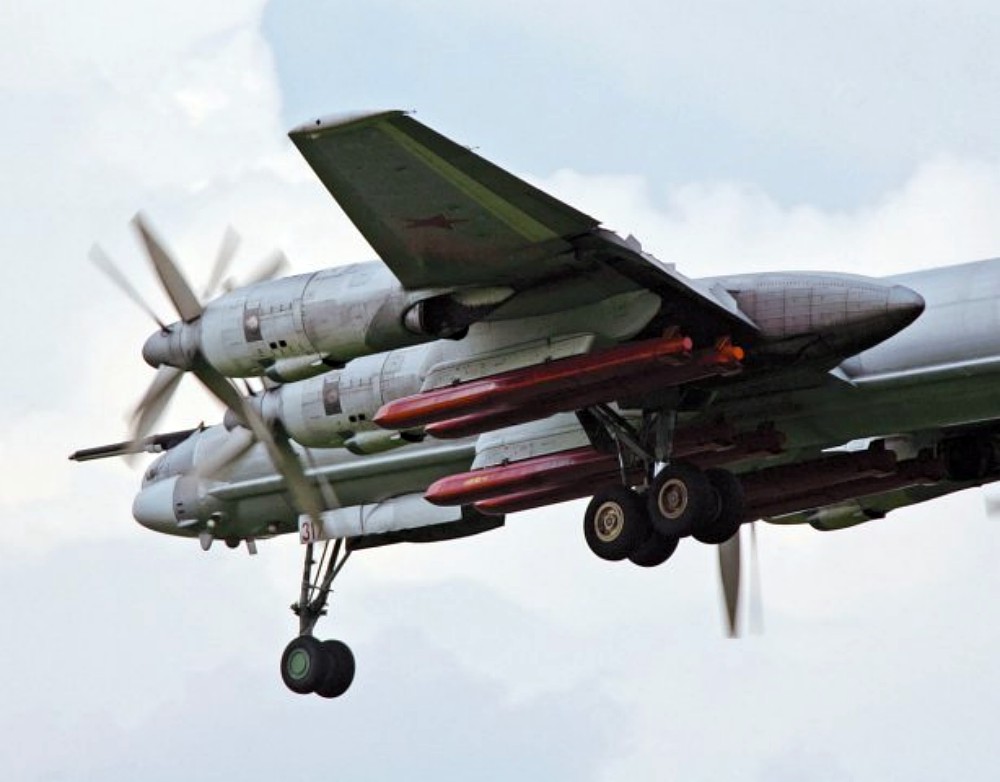
Soviets never designed a military equipment solely on LO shaping, but there are clear traits that they benefited from it. Like others stated Tu-160 and upgraded Su-25 MiG-29 and Su-27s have RAM. On Kirov class cruisers, every wall on the superstructure is angled:

Intitute of Theroratical and Applied Electromagnetics has a self-built RCS prediction software and testing grounds. Here is an image from RCS testing ground, although may not be from Soviet times.

AndraxxusPrecisely the “E”? Anti ship.
The “K” is a diferent story.
Thats more related to USAF requirement. “E” should not have any problems carrying AGM-84 with HIAK kit as it can already carry SLAM-ER. But OK, you got one. Still, I think you are missing my point.
Last time i´ve checked the Dassault Rafale never used “mechanically steered pulse doppler radars”…
I write “eurocanard” while typing in a hurry. Read: “Eurofighter”
And capabilities provided by things like the HEA helmet, the MBDA Meteor, the RBE2 PESA or the EW suites of the heavier Eurocanards for the time being are totaly out of reach of the old “C”´s or Vipers block 30, at least until the USAF upgrades the F-15 fleet to the “Golden Eagle” standard and chooses the AESA set for the Viper.
Now things like the “SH”, “K”, “SG”, “Block 60”, diferent story.
True, but since F-15C upgrade is in progress, and there are more HMS and AESA equipped F-15*C*s flying than AESA equipped Eurofighters, I still dont see your point. I also fail to understand why do you accept projected capabilities of Eurofighter as available, but not when it comes to F-15C fleet. At this very moment, there is no Meteor, no AESA for Eurofighter. Right now, neither Rafale nor Eurofighter has the A-G capabilities of F-15E. Eurofighter with its *current* A-A capability, does not offer anything significant to F-15C.
If you are talking about WHEN they are fully operational, WHEN they are fully upgraded, thats another story which should involve throughly upgraded F-15/16s etc.
When do you think Meteor will be fully operational?
First production deliveries will start at the end of 2013 IIRC. IOC by 2015 and full operational capability by 2018 is a logical assumption I guess?
Not a chance in hell of either situations happening.
I think your answer is already given by;
Around 2015 – there will be RVV-SD, AIM-120D and Meteor.
@Sintra; Add to that R-37 as part of MiG-31BM programme. Plus there are also some 2-3 new missiles we keep seeing on the PAK-FA news thread. State testing of PAK-FA will start this March, which will -eventually- involve live missile trials. You seriously don’t expect them to launch R-27s from it, do you?
AndraxxusSo much points I have to disagree;
I’ve been thinking that US aviation is really going downill badly recently with badly run and technically flawed programs such as the F-22, F-35A, B and C, Dreamliner, Super Hornet, Boeing tankers
I think none of those platforms are technically flawed. A “problem” does not automatically translate to a “flaw”. If its something unsolvable, that the users of the product has to live with it, than thats a “flaw”.
on top of that the USAF fall back option, their 4th gen fighters, are all thoroughly outclassed by Euro canards etc etc.
Please, tell me one single mission that Eurofighter, Rafale or Grippen can do, but an F-15E can’t. All eurocanards still use mechanically steered pulse doppler radars, lack of software and attack pods limit many ordnance capabilities, they are not -at present- technological marvel to my eyes; even when compared to good old F-15C or F-16 blk30.
Add to this that when the Meteor comes online
“When” being the appropirate word. When that happens there will also be many new Russian missiles around, and possibly a new AMRAAM variant to counter it.
the rest of the world has now learnt how to design and manufacture low observable warplanes ending the US ‘stealth’ dominance
Stealth is not a “dominance” as some biased people put it. Its just another way of getting things done. That said, may I remind you Soviets knew how to design and manufacture low observable “things” all along?
All that money available to the US and yet its all gone so very wrong, why is this?
Distiller’s post explains it.
AndraxxusWith its wings fully deployed and folding mechanism removed, IMHO, it would make an excellent Close air support aircraft. 4 non-afterburning engines would provide excellent thrust and survivability. By using a very thick airfoil on wings -which would be optimized for slower speeds- can provide excellent turn performance, payload and fuel capacity.
However if you are looking for a high supersonic interceptor, it wont work for many obvious reasons. IMHO, instead of drawing a design first, you should make your design goals, learn fundementals (not engineerings but reasons why some designs are well-recieved but others abandoned) and let the form follow it. Lets go to the boring part:
1- Shock geometry: If you want to draw something that goes fast, you should take a look at your shock angles first. Obviously this will be near useless on 3d analysis, but should give an idea about it. For example, your nose to wingtip angle is around ~32deg which will translate to around Mach 1,9. This will be your approximate top speed unless you have plenty of fuel to waste in order to go above it (which your design doesnt have). Also your wing leading edge shock cone translates to M1.15. Without using any mechanisms to move the shock away from the wings, it would also hinder supersonic acceleration. While talking about shockwaves, note that XB-70 has a very long fineness ratio that prevents folded verticals to be caught in the supersonic shock wave created by the aircraft’s nose.
2- Area ruling: For anything that moves fast enough to compress air in front of it, (general assumption in fluid dynamics is speeds above M0.85) area ruling becomes very important. Area ruling dictates shape of the aircraft is not important, as long as cross sectional areas of the design follow the lines of Sears haack body.
For example in F-5 below, note that body goes thinner as the wingspan reaches its max, in order to “balance” the extra cross sectional area added by wings. These area ruling is present on any transonic/supersonic aircraft since 1950s, but is better blended and less evident.
3- Engines: Number of engines must always follow your design needs. Do with the smallest # you can. For 99% of the time, one big engine with same thrust as two smaller engines will always provide better economy. Other than that, there is so much to say I think a numerical comparison should be more clearer:
4x F-404 in total will weigh 4,2 tons. Each engine will require its own individual inlet; If you want your plane to go M2.5+, you will have to go for a multi oblique shock inlet. You would love a 5 shock design but there is no point in putting an inlet that weighs more than these little engines behind them. Not to mention there will also be size constraints. Your plane will need four individual hydrolic systems to move these inlets, and individual sensors and ICS computers to control them. It will need extra structure to hold each engine and all the components i’ve mentioned. All this means weight; possibly measured in 3-4 ton range. When combined, those engines will have 195 kN dry 315 kN reheated (static) thrust, and have SFC of 82,6 kg/kN.h dry and 177,5 kg/kN.h reheated.
Imagine this; 1x NK-25s from Tu-22M will weigh 3,4 tons. It will require a single inlet, which can be better optimized for efficient supersonic operation (as there would be less weight and dimension constraints). It will be easily embedded into body, requiring a lot lighter structure and reduce the frontal area (and drag) by ~60%. As it will only need single hydrolic and ICS, overall system will possibly weight (a lot) less than 50% of the 4 engined design, while providing 137 kN dry 245,2 kN reheated (static) thrust, and have SFC of 73,6 kg/kN.h dry and 170 kg/kN.h reheated. Also, by removing 4x engine pods and switching to one engine embedded in a streamlined body will improve area ruling considerably. With 3-4 tons reduction in weight and drasdic improvements in shaping, this single engine layout would go faster even it has 23% less thrust than the 4 engined one, while providing better fuel economy both due to lower SFC and lower drag.
4- Going high supersonic always require large amounts of fuel. MiG-31, for example, carry 19,9+ tons of fuel. Density of fuel can be found easily by googling; make sure you have internal volume to pack some fuel, or -like others said- your plane wont make 200 miles.
About wing and tail design: You have to understand concepts of turning, stable/relaxed stable aircraft and how elevators work: Its always the lift created by wings itself that makes the turn. Before stalling, lift is directly proportional to the AOA. Elevators merely change the AOA of the airplane; lift vector pulls the aircraft to the center of the turn circle. For example an aircraft pulling 9Gs is creating 9 times lift force as its weight. Now stability: On a stable plane like F-15, lift vector is behind the center of gravity, so if unattended, extra weight at the front will decrease AOA, and by doing so decrease the lift vector, returning the aircraft to minimal AOA state (hence stable). On stable designs, elevators make a downward force to maintain the AOA state. On unstable designs like F-16, lift vector is in front of the CoG, and inertia of the plane continiously tries to increase AOA. If unattended, this will also increase lift, which futher increases AOA by a feedback loop, likely ends up in breaking the airframe (hence unstable). On these designs, elevators create a downward force to increase AOA to desired angle first, than try to stabilize the aircraft by creating upward force.(hence relaxed stable) This allows very quick AOA response, and elevators’ upward force contributes to lift, so aircraft makes a quicker and more energy efficient turn.
Now going back to your design. First, size and position of elevator depends on your design’s stability and angular inertia. Ideally, you will want a neutral stable aircraft with zero angular inertia and miniature elevators. But real life is different than ideal, so you have to estimate your aircraft’s physical charactheristics. If you have an inteceptor in mind, it shouldn’t need huge elevators. It shouldnt even have the ability to turn hard, otherwise you are wasting weight/space on useless areas that should better be spend on fuel capacity.
Most important of all, redirecting engine thrust is pretty useless for an high speed interceptor. With high speed air flowing above elevators, even slightest change of 3-4 degrees will create a very large force. In such that deflecting it to its max will be impossible because hydrolics wont be able to. If hydrolics could, such deflection would break elevator itself. If it doesnt break, such large AOA correction will destroy the airframe in an instant. Its THAT big of a force and will make engine thrust laughable.
I tried to make it simple best I can, hope it helps:D


 Sign In







