 packard
More pics from Anatolian Eagle 2006.
http://www.hvkk.mil.tr/Faaliyetler/anadoluKARTAL/AnadoluKartal2006_2/index.htm
packardTurkey and Pakistan close in on tactical UAV deal
Lale Sariibrahimoglu JDW Correspondent
Ankara
Pakistan and Turkey plan to sign a deal on 10 July for the joint production of six to seven tactical unmanned aerial vehicles (UAVs), according to Turkish and Pakistani defence industry sources.
During a visit to Turkey, Chief of the Air Staff, Pakistan Air Force, Air Chief Marshal Tanvir Mehmood Ahmed confirmed to Jane’s that the two countries would co-operate on UAV production but declined to give further details. The decision to co-build UAVs came after months of study in the two countries.
Local industry sources told Jane’s that the planned agreement, to be formally confirmed in Ankara in July, envisages the platforms being produced in Pakistan and the electronic warfare suites in Turkey.
ACM Ahmed stated that the lifting of the US embargo against Pakistan, following Islamabad’s alliance with Washington in the war against terror, has paved the way for Pakistani-Turkish co-operation in both the military and the defence industry fields.
“Once the US administration approves Lockheed Martin for the mid-life upgrade of Pakistani Block 15 F-16s, Turkey’s TUSAS Aerospace Industries could be a potential candidate for their modernisation,” AM Ahmed said.
Pakistan is interested in installing Turkish-made avionic systems on its the JF-17 Thunder multirole fighter aircraft entering Islamabad’s inventory in 2008 in the longer term, he said. Pakistan also plans to buy 150 JF-17s that it co-produced with China and is considering buying a Turkish-made Electronic Warfare Tactical Training Range simulator worth around USD30 million.
AM Ahmed said that since the US embargo of the early 1990s, when Pakistan tested its first nuclear bomb, Pakistani pilots had participated for the first time in the multinational exercise ‘Anatolian Eagle’ in 2004, staged at Turkey’s Konya range in Central Anatolia.
Six Pakistani F-16s participated in the ‘Anatolian Eagle 2006’ joint air exercises for the second time in an exercise that ended on 23 June.
Pakistan and Turkey plan to hold joint air exercises next year.
packardA few random pictures.
packardMore pictures from NATO Anatolian Eagle meet. PAF participated with six F-16 Fighting Falcons. Images courtesy of “ADEEM” on http://www.pakdef.info .
packardSaab confirms deal with Pakistan for Erieye radar
Robert Hewson Editor Jane’s Air Launched Weapons
Linköping, Sweden
Sweden’s deal to sell the Erieye airborne surveillance system to Pakistan is “soon to be official”, a Saab representative has told Jane’s. The formal contract has already been signed and only the last few legal papers need to be approved, which Saab says will take place “in one or two weeks”. This move will seal the SEK8.3 billion (USD1.05 billion) Erieye order for the Pakistan Air Force (PAF) announced in October 2005, after several years of negotiation.
Saab confirmed that the PAF will acquire six Saab 2000s, each fitted with the Erieye phased-array radar. The Erieye is soon to be a Saab product, following the 12 June announcement that Saab AB would acquire Ericsson Microwave Systems (EMW).
This merger will be completed by September. Previously, EMW had a one-third share of the Pakistan project, but the programme will now be entirely controlled by Saab. The value of the contract has not changed, according to Saab.
The Saab 2000s will be configured with a number of onboard operators’ stations (probably five), to undertake the airborne command and control (C2) role. The six aircraft will be former regional airliners, 30 of which are currently owned by Saab Aircraft Leasing (SAL). SAL will recover the Saab 2000s at the end of their current leases and return them to Linköping for conversion.
Saab and Ericsson sources told Jane’s that the first Erieye aircraft for Pakistan will fly in about 18 months. However, the addition of the dorsal radar demands several modifications. For example, the tail area has to be increased to provide additional control. Previously, Saab sources have said that the entire process of modification, flight trials and qualification for a Saab 2000 Erieye platform would take about 43 months from the signing of a contract. While the aircraft, radar and most onboard systems (including the operators’ stations) are supplied by Sweden, some mission equipment, such as the ‘identification friend or foe’ and secure communications gear, will be acquired elsewhere, largely using commercial-off-the-shelf sources. It is not clear if the PAF aircraft will be fitted with additional electronic surveillance and self-defence systems, but this is likely. Saab will assist in the integration of the Erieye system into Pakistan’s existing air defence C2 network, but it will not be expanding or enhancing that network beyond what is required to accommodate the Erieyes.
Sweden now has to address the issue of technology security and how to control access to the advanced Erieye radar. Concerns have already been expressed that Pakistan’s strong links with China could provide invaluable insight for Chinese engineers into the Erieye’s highly sensitive active phased-array design. China already appears to have built and tested a system that outwardly resembles the Erieye radar in almost every way – and is now flying it on Shaanxi Y-8 testbeds. Ericsson is aware of the existence of these “Chinese copies” and is categoric in its assurances that China has had no access to its technology at any time.
Saab says that security issues regarding the Erieye in Pakistan will be covered in a government-to-government agreement. Saab also notes that a technology transfer programme with Pakistan has been discussed, but as a separate arrangement and not as part of any offset agreement.
__________________
packardSaab contract for Surveillance System to Pakistan becomes effective
http://www.saabgroup.com/us/MediaRelations/Pressreleases/pressrelease.htm?PressreleaseId=134019
Saab signed a contract in October 2005 to supply an airborne Surveillance System for Pakistan to the value of 8,3 billion SEK. The last outstanding conditions have now been finalized and the contract becomes effective immediately.
“This is a very important order for Saab and it confirms our strong position in the world regarding airborne surveillance systems. We look forward to working with our customer in Pakistan”, says Saab CEO Åke Svensson,
This surveillance system will, together with existing ground based radars, provide border security and contribute to the monitoring of natural disasters and consequent search and rescue operations.
The airborne surveillance system includes Saab 2000 turboprop aircraft equipped with Ericsson Microwave Systems airborne radar system ERIEYE. Two third of the order value is for Saab and one third for Ericsson Microwave Systems, which is, after the Saab acquisition, expected to be a part of Saab in September this year.
This means that Saab will book this order in second quarter of 2006.
packardImages from ACM’s visit to Turkey in relation to “Anatolian Eagle”
(Images posted by “ADEEM” on http://www.pakdef.info forums.)


packardPakistan air force F-16s participate in multi-national exercises in Turkey
ISLAMABAD: Chief of the Pakistan Air Force Air, Chief Marshal Tanvir Mahmood Ahmed, is visiting his airmen in Turkey where PAF F-16s contingent are engaged in a large scale multi-national operational exercise “Anatolian Eagle”.
Interaction with friendly Air Forces of the world has always been a high priority with PAF Air Staff. Mutual visits and joint air exercises in Pakistan and abroad have been a learning ground for PAF and allied forces.
environment. PAF contingent of six F-16s, led by Group Captain Azhar Hassan Rizvi, flew out to Turkey routing through friendly Islamic countries, where a warm welcome was accorded to the Pakistani contingent.
The flying operations at Turkey would not only supplement training of PAF officers and men but would also serve as a milestone in strengthening ties between countries participating in the Exercise. Chief of the Air Staff, Air
Besides Pakistan, leading air forces from United States, Germany, France and Turkey are orchestrating air battle scenarios in a demanding operational Chief Marshal Tanvir, witnessed the culminating point of high intensity air operations of Exercise Anatolian Eagle. During his visit he also interacted with the personnel of PAF as well as those of other participating Air Forces.
packardpackardSri Lanka looks to Pakistan as conflict looms
ROBERT KARNIOL JDW Asia-Pacific Editor
Bangkok
* Sri Lanka has asked Pakistan to service its T-55 main battle tanks and C-130 transport aircraft as its security situation deteriorates
* Talks on Colombo buying defence equipment worth about USD60 million are also under way
Sri Lanka is looking to Pakistan for support in building up its military capabilities as Colombo faces the prospect of renewed civil war amid a tottering ceasefire, according to documents obtained exclusively by Jane’s.
The Sri Lankan conflict has claimed more than 60,000 lives since 1983, when the Liberation Tigers of Tamil Eelam (LTTE) began their armed campaign for secession. A ceasefire in place since early 2002 has been under increased threat in recent months, with mounting violence including a sea battle on 11 May that saw at least 50 people killed and several vessels lost.
Tension was further escalated when the EU acted on 30 May to ban the LTTE as a terrorist organisation, with a significant dampening of its fundraising activities among the consequences. The LTTE has already been formally banned by Canada, India, the UK and the US.
According to the pro-LTTE Tamilnet website, rebel political leader S P Thamilselvan said on 27 May that the group would be “forced to reconsider the relevance” of the ceasefire if the EU enacted the ban.
Documents obtained by Jane’s detail high-level discussions between Colombo and Islamabad as the security situation in Sri Lanka deteriorated. One of these, dating from 1 March, includes a plea for Pakistan to swiftly provide technical assistance.
“It would be greatly appreciated if arrangements could be made to invite a technical team to Colombo to carry out an immediate survey on T-55 main battle tanks (MBTs) and C-130 [transport] aircraft,” the document states. “Since a number of MBTs and C-130s are in need of urgent technical repairs it is earnestly requested that this be given utmost priority and a suitable technical repair team be arranged to carry out immediate inspection in order to complete the required repairs at your earliest [convenience].”
Other documents separately detail Sri Lankan military requirements, which Islamabad is asked to facilitate with high priority. These also note that Pakistan has offered “a large stock of 100 mm [MBT] ammunition free of charge”.
Requirements shown for the Sri Lankan Army have a combined value of USD20 million. The list of air force requirements is worth a further USD38.1 million, but the value of items requested by the navy is not known. The army’s list includes 10 Baktar Shikan anti-tank guided missile systems, together with 300 standard/tandem warheads and two training simulators. These are respectively worth USD1.5 million, USD4.5 million and USD120,000.
Also required are 1,000 tactical radios valued at USD8 million and 100 radio base stations costing USD1.47 million, with a further USD1 million for radio spare parts. Other items include 50 Land Rover Defenders and 260 night-vision devices.
The navy’s shopping list is limited to land equipment. This includes 5,000 81 mm high-explosive mortar bombs and 2,000 81 mm illuminating mortar bombs, together with 250 night-vision devices. The navy otherwise wants a range of vehicles that include 20 buses, 20 heavy trucks, 30 Land Rover-type vehicles, 10 ambulances and 30 trail motorcycles.
The air force has more extensive needs, beginning with one FT-7 advanced jet trainer costing USD3.2 million and two unmanned aerial vehicle systems valued at USD5 million. Reconnaissance capabilities should be further enhanced through one high-resolution day/night tactical camera reconnaissance pod for use by Kfir and F-7 fighters and two gyro-stabilised electro-optic day/night cameras for the Super King Air B-200 transport aircraft. The former is priced at USD1.5 million and the latter at USD600,000.
Ordnance requirements include 20 AIM-9P/R-550 air-to-air missiles together with an upgrade of three F-7 fighters and 20 “suitable” air-to-ground missiles for Mi-24 helicopters together with an upgrade of six Mi-24s to accommodate them. The helicopters would also get a stock of 500 80 mm rockets with fuel air explosive warheads.
These are supplemented by a range of specialised bombs, including: 1,000 250 kg general purpose bombs; 600 250 kg fragmentation bombs; 50 cluster bombs; 50 fuel-air bombs; 30 deep-penetration bombs; and 20 laser-guided/precision-guided bomb kits. Also included are radar-warning receivers, scanners/ receivers to monitor radio traffic together with direction finders and jamming devices for use against remotely operated improvised explosive devices.
Some 100,000 rounds of 7.62 mm ammunition and 2,500 40 mm rocket-propelled grenades are also on request together with various other equipment, training and services. The latter includes explosive detectors and satellite imagery.
packardIAF cannot relieve pilots at their will
(IANS)
19 June 2006
NEW DELHI — The Indian Air Force (IAF) says it cannot relieve every pilot who wants to quit service as this would impair its mandate to preserve national security. Neither does it agree to the suggestion that pilots wanting to quit pay a lump-sum amount to cover the cost of their training because it was impossible to put a value to this.
All this in a scenario in which the IAF admits that it is short of about 250 pilots. “If we do this (relieve every pilot who wishes to leave), national security will be impaired and that is not acceptable,” the IAF chief, Air Chief Marshal S.P. Tyagi, told IANS in an interview.
“I have to answer this question to the people of India: Are we safe? I’d better make it safe because the taxpayer pays me to do this,” he maintained. Media reports some weeks ago said some 200 IAF pilots had put in requests to quit, citing harsh service conditions and fat pay cheques being offered by private airlines. Tyagi had rubbished the report, saying the number was in single digit. He repeated this during the interview.
“The number of guys who have applied to be relieved is not large, so that doesn’t worry me. But I suspect many of them have not applied because they know I will not relieve them. So I do not know which came first — the chicken or the egg. For me to say nobody wants to leave the air force would be wrong. The fact is that whenever there is a large differential between the market and government salaries, people will leave — be it from the civil services or from the armed forces,” Tyagi said.
At the same time, he added that the government could never match market salaries and that the market ‘will always pay more’.
Tyagi said it was impractical to even think of formulating a scheme under which pilots wanting to quit could repay the IAF for what it had spent on their training.
“I don’t know how to calculate that money. Because when I train a fighter pilot to strike an army formation, huge numbers of tanks have been put out. Then I fly him in a formation. To train this guy I have to put three more aircraft in the air.
“So, how do I calculate the training cost? It is not simple mathematics of 200 hours multiplied by X number of pilots. It doesn’t work like this.
“Then, if after all this training, supposing I accept the money. What do I do with it? I have relieved someone with five to 10 years of training. It will take me another five to 10 years to train another pilot.
“Those are my difficulties. I want my boys to get more money but I don’t know how to run the air force and get them Jet Airways salaries,” Tyagi maintained.
He also pointed out that pilots joined the IAF with their eyes open and could not later complain of poor salaries or harsh service conditions.
“When you join the service, you join with open eyes. This is the contract… The contract is that you will serve till the president of India so desires. You join at a particular salary, you join with these conditions — have I broken that contract? No,” he asserted.
packardArrival of new FENNECS at Faisal Air Base Karachi. 12 have been ordered so far…..
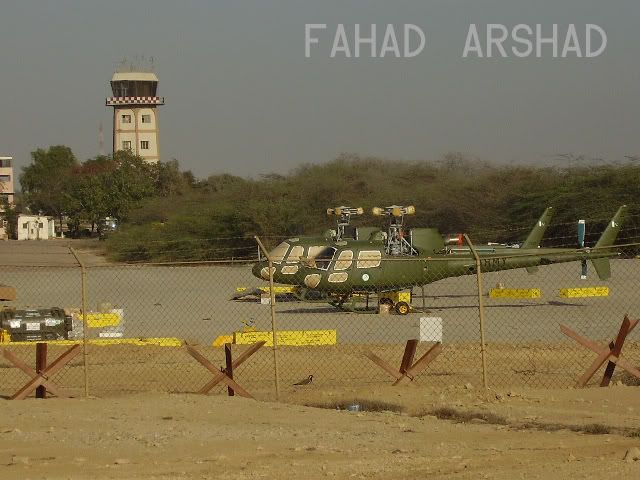
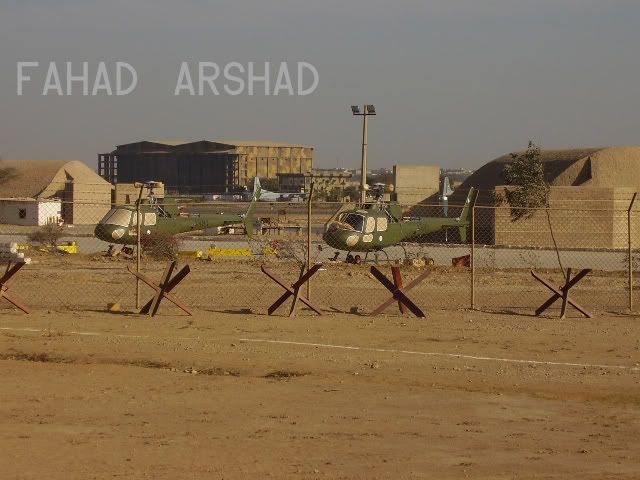
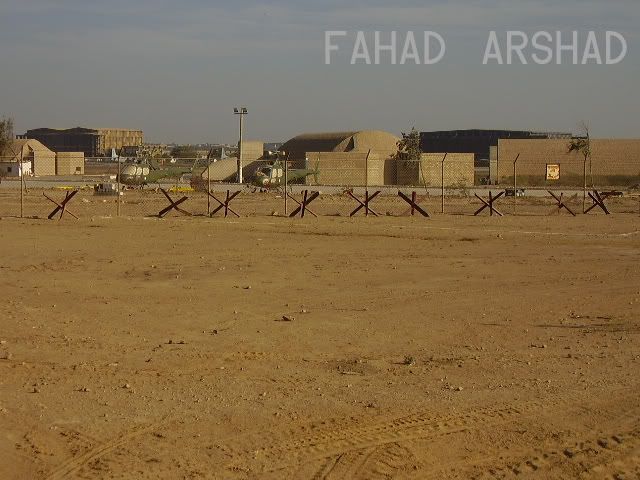
credits : “LUP” on http://www.pakmilitary.net
packardEgypt.
In that vein, the K-8 has become practically a Chinese-Pakistani-Egyptian project.
Does anyone know when are the 27 new PAF K-8’s due for delivery ?
packardPage 15 of the May AFM:
“In a separate project, Iranian Aircraft Manufacturing Industries (HESA), near Esfahan, has so far modified nine retired F-5As to F-5B Simorgh ( a mystical persian bird) configration, with help of Pakistani engineers. This modification which adds a second cockpit, is to fulfill an IRIAF requirement for more fast jey trainers. All the aircraft serve with the training unit based at Shiraz”
packardDoD OKs $370 Million Deal To Sell Missiles To Pakistan
Wednesday May 31, 10:37 AM EDT
WASHINGTON -(Dow Jones)- The Pentagon has signed off on a proposed $370 million deal with Pakistan for about 130 Harpoon anti-ship missiles, along with launch systems and related equipment.
Boeing Co. (BA) (BA) is the lead contractor in the deal.
The Defense Security Cooperation Agency said Wednesday it has notified Congress of the sale, which is not yet final. Congress has the power to block the deal but rarely steps in.
Pakistan seeks 50 submarine-launched missiles, 50 surface-launched missiles and 30 air-launch missiles, the agency said. The weapons are compatible with Pakistan’s existing arsenal and will be used on P-3 aircraft, surface ships and submarines.
The defense agency said the sale would help U.S. interests by strengthening a friendly country and upgrading Pakistan’s military technology.
“The AGM-84, HARPOON Block II upgraded targeting capability significantly reduces the risk of hitting non-combatant targets,” the defense agency said.
“The proposed sale of this equipment and support will not affect the basic military balance in the region,” the agency said.
-By Rebecca Christie, Dow Jones Newswires; 202-


 Sign In







