 packard
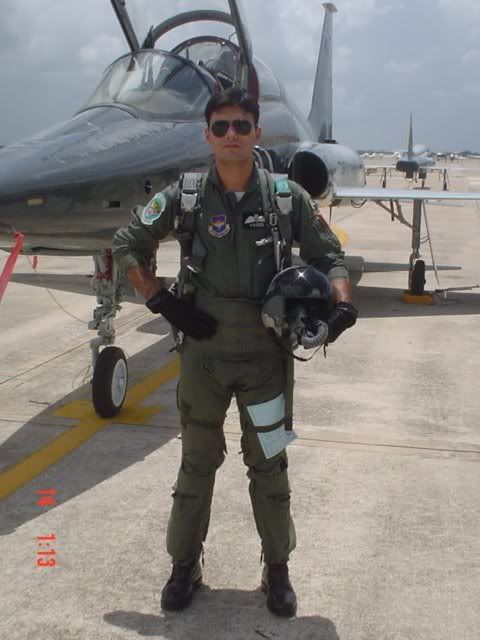
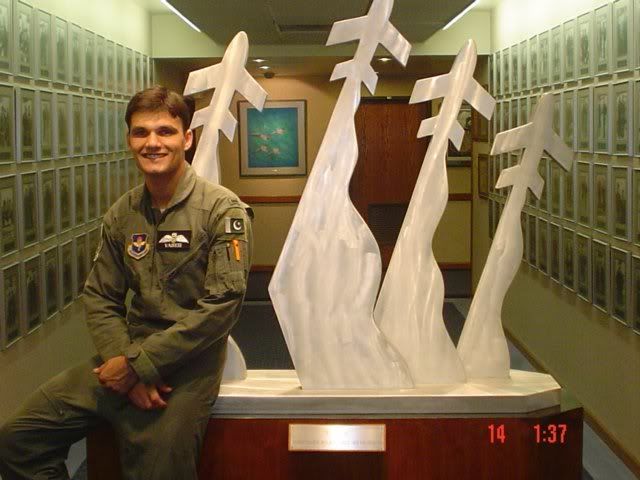
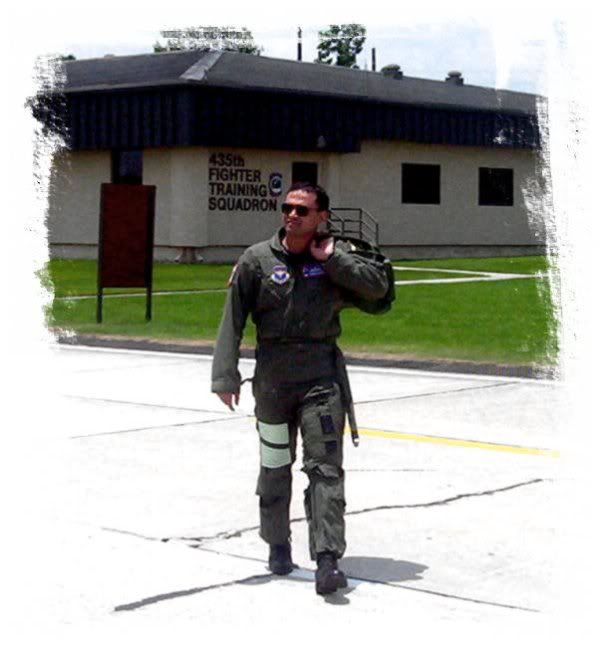
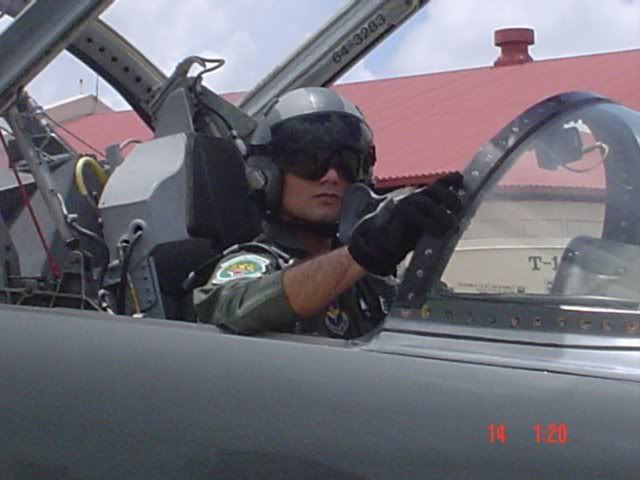
After this i will post pics of my favourite type of crew. :diablo: :diablo:


packardmore crew shots for anna…


packardFor anna, more crew shots


packardInternational Pilots Train to Fly U.S. Fighter PlaneBy Priscilla Huff
Tucson, Arizona
31 July 2006The U.S. military’s F-16 Fighting Falcon is one of the most popular fighter jets ever. About 4,500 have been sold all over the world. But pilots must be trained by Americans — and that means traveling far from home and learning an entirely different way to fly. VOA’s Priscilla Huff has the story from the desert of the American Southwest.
http://www.voanews.com/english/imag…jul06_150_1.jpgThe F-16 Fighting Falcon is one of most popular fighter planes in the worldPilots who want to fly the F-16 fighter jet must come here, to the desert near Tucson, Arizona. One of the instructors is Lieutenant Colonel Mike High. “Our mission is to train students from all over the world — whoever flies F-16s and whoever wants the training — to train them to fly the F-16.”
The 162nd Fighter Wing of the International Guard hosts the U.S. military’s program to train pilots from allied nations. But before they arrive, they have to master one skill — speaking English. This is critical, says squadron commander Lieutenant Colonel Will Johnson.
http://www.voanews.com/english/imag…31jul06_150.jpgLieutenant Colonel Will Johnson”It’s the language. Every country comes in and they understand English but sometimes, they don’t understand our gang signs or our slang, so that is confusing. But once they figure us out and we figure them out, it’s no problem.”
It is about more than just the language. The F-16 training program also involves learning the American approach to flying the $30 million aircraft. Lessons start with a lot of classroom time.
http://www.voanews.com/english/imag…31jul06_150.jpgLt. Col. Ross Stepaniuk, Polish Air ForceThe American training emphasizes more independent thinking during a mission. Pilot Ross Stepaniuk of the Polish Air Force must learn a different leadership style. “Most of us need to get accustomed to the procedures here. The way of doing things that we are used to in our Air Force, they are totally different here. It is a huge transition for pilots from our system of flying to where, first of all, there is a lot of traffic in the air, second, you fly a lot, and finally, you have to meet very, very high expectations.”
http://www.voanews.com/english/imag…31jul06_150.jpgLt. Col. Mike HighIt will take Stepaniuk and the rest of the Polish Air Force several years to completely make the transition from the Russian MiG to the F-16. Lieutenant Colonel Mike High explains, “I would say there is a very big difference between what he’s been doing, and what he’s learning how to do now. Which means it may be more of a challenge than it may appear to the casual observer. The F-16 is much, much more advanced than the MiG; much more advanced – it’s 21st century technology, whereas the MiG was 1950s technology. Really, I mean, it has been upgraded, but it is a very, very old aircraft.”
http://www.voanews.com/english/imag…31jul06_150.jpgA pilot on an F-16 training missionThe F-16 was first built in 1976. The planes are now assembled under a consortium deal managed by NATO. Parts come from several nations. Once a purchase contract is signed with the U.S. military, the preparation process begins, as ground crews and officers learn how to care for the jets.
And, of course, the pilots need to learn how to fly the planes, which can reach speeds of Mach 2: 2400 kilometers per hour.
Ross Stepaniuk is one of the first seven Polish pilots to graduate from the program after nearly two years of hard work.
http://www.voanews.com/english/imag…_31july_150.jpgColonel Stepaniuk at his graduation ceremonyBut his training is not complete. Stepaniuk must remain in Tucson to earn his wings as an instructor pilot for the Polish Air Force.
“It’s a wonderful aircraft. It feels very good, maybe it’s too good,” he says. “But, it’s still difficult because the more experience you have, the higher the expectations go. You have to know more and more about this plane we all fly, so you have to have tremendous experience in so many areas.”
Pilots from Singapore, Sweden and the United Arab Emirates also are being trained in Tucson. And the next F-16 training program is in the works for Pakistan.
Some footage courtesy Lockheed-Martin
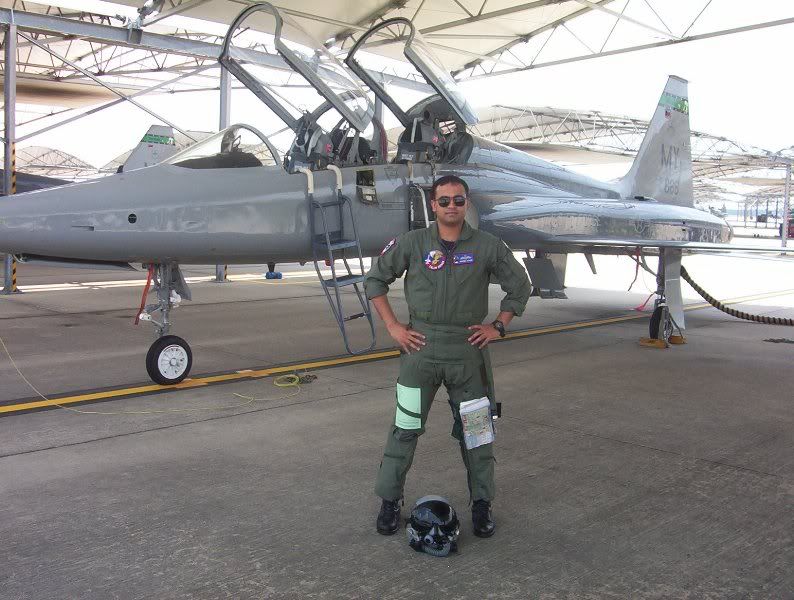
I guess this is what the above article is talking about.


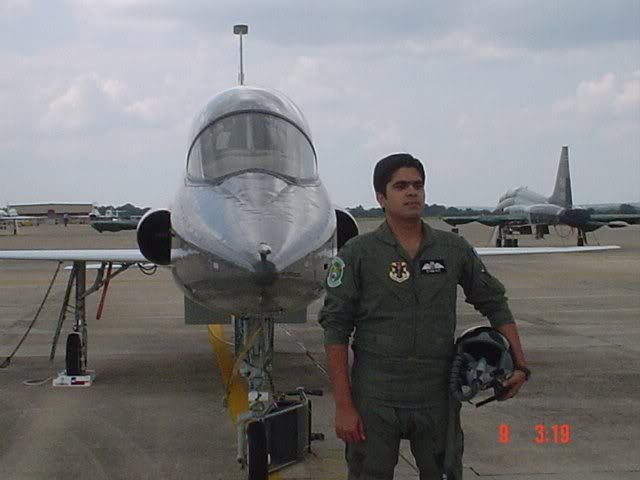
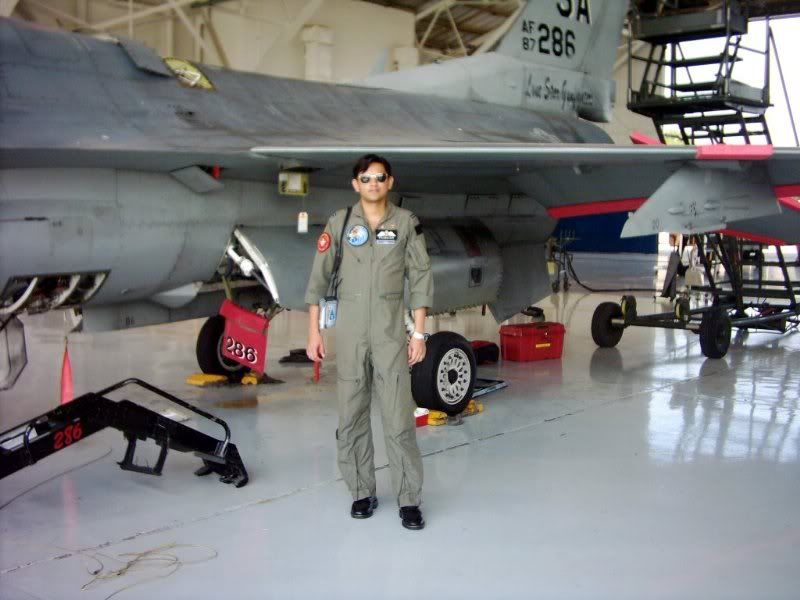
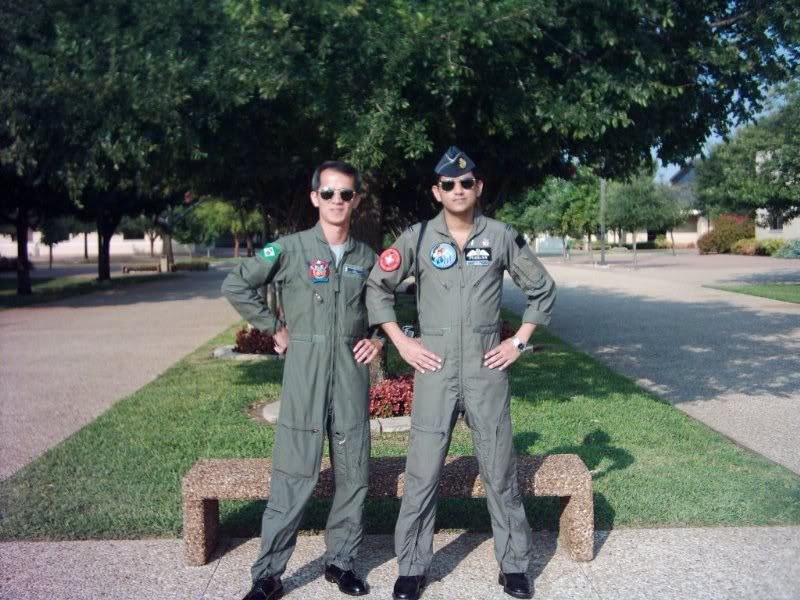
packardPakistan-US to formally sign agreement on Sale of F16s Shortly
By Khalida Mazhar ‘Pakistan Times’ US Bureau Chief
WASHINGTON (US): The month-long mandatory notification period allowed to Congress to propose any changes or effect any review, as laid down under U.S. constitution, expired Friday midnight, the U.S. administration’s proposal for sale of F 16s to Pakistan is construed to have gone through smoothly. Experts state that as of next month, signatures are likely to be affixed on a formal proposal for sale of F16s and related weapons, details of which would be known soon, and delivery would follow. The U.S. Defence Security Cooperation Agency (DSCA) notified Congress on June 28 intent of the U.S. administration for sale to Pakistan of 36 new, and 26 refurbished F- 16s, as well as updates valuing up to $5 billion.
The U.S. administration notified Congress on June 28 of its intent for sale of F16 aircraft to Pakistan. As provided for in the U.S. constitution, Congress was empowered to raise objections to review the proposal within a month’s time.
Sources said Pakistan and Bush administration had taken necessary steps to remove apprehensions of the Congressmen in respect of sale of F16s.
It may be noted that the House International Relations Committee met last week at the Rayburn Office Building of the Capitol Hill for a hearing on the proposed sale of F16s to Pakistan.
Media have quoted an expert in weapons systems at the American Institute of Peace, saying that intent for sale of the high technology aircraft is going to be transacted shortly.●
packardPakistan imports Y12 aircraft from China
BEIJING (August 02 2006): Pakistan has recently imported some light aircraft from a manufacturer in north-east China’s Heilongjiang province to meet its domestic needs. The 19-seat Y12 series planes were twin-engine, general-purpose monoplanes designed and developed by the Harbin Aviation Industry (Group) Ltd (HAI).
According to the company sources, the aircraft would be mainly used for troops transport and emergency rescue operations. By the end of 2005, HAI had sold more than 100 such aircraft to 20 countries and regions, such as Pakistan, Nepal, Peru, Zambia, Tanzania and Namibia.
Copyright Associated Press of Pakistan, 2006
packardhttp://www.dailytimes.com.pk/default.asp?page=2006/07/30/story_30-7-2006_pg7_1
This what they are referring to, when they say that the functionality has been degraded(and it has been!!). ie the aircraft are incapable of dynamically creating new jamming signals and transmitting them.. by only what has been preloaded with…
AN/ALQ-184 Electronic Counter Measures pod without DRFM
AN/ALQ-131 Electronic Counter Measures pod without DRFM
AN/ALQ-187 Advanced Self-Protection Integrated Suites without DRFM
AN/ALQ-178 Self-Protection Electronic Warfare Suites without DRFM
posted by GAF on pakdef.info
🙂
packardPlan to sell F-16s to Pakistan cleared
BLOOMBERG NEWS
WASHINGTON – A Bush administration plan to sell as many as 36 Lockheed Martin Corp. F-16 jets and other equipment to Pakistan, the largest U.S. arms sale to the South Asian country, has emerged unscathed from a congressional review period.
Friday was the deadline for the Republican-controlled Congress to block the $5 billion sale. Without a two-thirds vote in both the House and Senate to kill the sale, it is automatically approved under the laws governing international arms sales.
“This sale is really a done deal now,” said Christine Fair, an expert in South Asian political and military affairs at the U.S. Institute of Peace, a nonpartisan group founded by Congress.
The U.S. is trying to reward Pakistani President Pervez Musharraf for his support in the war on terrorism in the face of domestic opposition. The U.S. is also trying to help Pakistan step up the fight against al Qaeda and allied fighters along its border with Afghanistan.
Lockheed has delivered more than 4,300 F-16s, built at its west Fort Worth plant, and gets about $3 billion in annual sales from the fighter. International F-16 deliveries are scheduled through 2009, when the line would be shut down unless there are additional orders.
The Pakistan deal includes 36 advanced pilot helmets that display target information on the visor and up to 500 Boeing kits for ground-attack, satellite-guided bombs.
© 2006 Star-Telegram.com and wire service sources. All Rights Reserved.
http://www.dfw.com
packardIndian Forces seek cruise missiles with n-tips
http://timesofindia.indiatimes.com/articleshow/1719497.cms
NEW DELHI: With the country’s ballistic missile programme spluttering once again on Sunday, with the Agni-III ballistic missile test flopping, it’s time that defence scientists speeded up their plans to develop nuclear-tipped land-attack cruise missiles (LACMs).
The armed forces have sought LACMs, with ranges in excess of 1,500 km for precision nuclear strikes, say sources. Defence Research and Development Organisation has been working towards this end for quite some time now but sources say it will take at least another couple of years for such LACMs to become operational.
Pakistan, meanwhile, has already stolen a march on LACMs by conducting two tests of its Babur LACM, touted as being capable of carrying nuclear warheads to a 500-km distance, with China’s help.
Plans are now afoot to induct at least one full regiment of Babur missiles, with their road-mobile launchers, into the Pakistani Army by 2008.
Pakistan, in fact, speeded up its cruise missile programme after India began showing interest in the American Patriot Advanced Capability-3 and Israeli Arrow-2 anti-ballistic missile systems in its eventual quest for a missile defence shield.
Cruise missiles, unlike ballistic missiles, do not leave the atmosphere and are powered and guided throughout their flight path. They can penetrate missile and air-defence systems more effectively since they evade enemy radars by flying at low altitudes, virtually hugging the terrain.
In contrast to the far more complex ballistic missiles, LACMs are also much cheaper, more accurate and easier to operate since they can be transported in canisters, giving them more operational flexibility.
The Indian Navy, of course, has already begun inducting the supersonic BrahMos anti-ship cruise missile (ASCM) in some of its frontline warships, with destroyer INS Rajput being the first off the block.
But the land version of BrahMos is still far from becoming operational despite being tested for the first time in December 2004. As reported first by TOI, the Army has already begun raising a special BrahMos regiment with the hope of inducting the missile as a precision strike weapon.
But BrahMos has a strike range of only around 290 km at present, developed as it has been jointly with Russia, which has to adhere to the 300-km limit of the US-sponsored Missile Technology Control Regime.
Sources, however, say work is now in progress to both increase the strike range of BrahMos as well as increase its speed from the present Mach 2.8 (almost three times the speed of sound) to around Mach 8.
Contracts worth Rs 3,500 crore have already being signed for BrahMos’ mass production, even as scientists are trying to configure the missile for the Sukhoi-30MKI fighter jets.
packardNo F-16s to Pakistan without security vow: Rice
By Carol Giacomo, Diplomatic Correspondent
http://www.washingtonpost.com/wp-dyn/content/article/2006/07/26/AR2006072601507.html
WASHINGTON (Reuters) – Pakistan must provide written security assurances as part of a deal for $5.1 billion in American-made F-16 fighter jets and no equipment will be transferred until anti-diversion protections are in place, U.S. Secretary of State Condoleezza Rice has promised Congress.
Aiming to ease lawmakers’ concerns over the weapons package offered to a key American ally in the war on terror, Rice said in a letter obtained by Reuters on Wednesday that before the first aircraft is delivered, Pakistan will sign a document that details Islamabad’s security commitments.
In addition, “no aircraft or munitions will be delivered until U.S. officials have determined that all security measures are in place” and Congress has been briefed on those procedures, she said.
Rice was responding to a letter from Republican Richard Lugar of Indiana, chairman of the Senate Foreign Relations, and Senator Joseph Biden of Delaware, the panel’s senior Democrat, who had asked her for written assurances addressing concerns raised by him and other lawmakers.
“There should be no ambiguity regarding Pakistan’s obligations in the security realm,” the senators told Rice.
“There should also be no ambiguity regarding Pakistan’s capability to meet and enforce its security obligations,” they added.
On June 28, the Bush administration formally notified Congress of plans to sell Pakistan up to 36 F-16C/D Block 50/52 Falcon fighters built by Lockheed Martin Corp. in a deal worth $5 billion if all options are exercised.
Some lawmakers have expressed concerns about Pakistan’s past nuclear proliferation record, citing fears technology used in the Lockheed Martin Corp F-16s could be leaked to China, Pakistan’s close military ally, and by extension help Chinese arms customers like Iran and Iran’s clients in the Middle East, including Hizbollah, which is now fighting Israel.
DIFFICULT TO BLOCK
Under U.S. law, Congress could block the sale by enacting a resolution of disapproval in both houses within 30 days of the notification date, but such action is rare and it is difficult win the two-thirds majority vote needed to overcome a presidential veto.
Congressional sources said there is no credible effort to do that now and the sale is expected to go through.
A spokesman for Lugar, asked if Rice’s assurances satisfied the senator, said: “He believes it is an important response that is helpful in answering questions raised by members of Congress.”
But other congressional aides said they were still wary of the security plan, which was still being negotiated and should have been completed before the sale was formally proposed to Congress.
In their letter, Lugar and Biden also expressed concern about administration plans to install upgrades to Pakistan’s existing older F-16s at a location in Pakistan because this might allow China — also a major supplier of new fighter aircraft to the Pakistani air force — to gain information about the high-performance U.S. fighter.
But Rice insisted the updates will not be done in Pakistan. A Senate source told Reuters the work likely will be done by NATO ally Turkey, one of six non-U.S. sites approved for this sensitive work.
“This sale is a presidential priority and is a key element of our strategic partnership and reflects our long-term commitment to Pakistan,” Rice said.
The administration advanced the F-16 sale as the U.S. Congress was taking action to approve a landmark civil nuclear cooperation agreement with India, Pakistan’s nuclear rival. Islamabad has asked for a similar deal but the administraiton rejected it.
packardI guess red tapism doesnt know international boundaries!!! Anyway India has absolutely no trouble aquiring the best hardware from various supliers in the world . Top russian fulcrums (mig-35) Top european fighters (rafale,EF typhoon , gripen) and highest block US 4th gen fighters (F-16 block 70 and SH) are knocking at the door wanting a peice of the pie. Cant see them being in a better position to choose a fighter!!!
Act fast else Pak will have an edge: IAF
Shiv Aroor
New Delhi, July 20: Deeply aware of a rapidly depleting fleet that will pull down the IAF’s strength to a shocking 28 fighter squadrons by 2012, IAF chief Air Chief Marshal SP Tyagi for the first time spoke out on Wednesday on the critical threats to the country’s fighter strength.
In an exclusive interview to The Indian Express, Tyagi said that since it would take 15 years for the 126 new fighters under consideration to be fully inducted and operational, Air Headquarters has told the government that it needs an immediate stopgap acquisition of fighters to tide over the crisis.
‘‘The 126 new fighters will take 15 years. We cannot afford to wait that long. Numbers are falling. We absolutely have to increase the number of aircraft. Our only option is to get something in a hurry. We are looking to order more aircraft of the types we already operate and have told the government,’’ Tyagi said.
The IAF has a sanctioned squadron strength of 39.5 squadrons but currently operates just 32. If that number hits the 28 figure, it would be the force’s lowest ever below sanctioned strength.
Tyagi has his reasons for urgent acquisition. He indicated that Pakistan would soon have new American F-16s and from next year, would begin inducting Chinese-made JF-17 aircraft in large numbers. If things don’t go the IAF’s way, he said, Pakistan will have greater fighter density for a country its size compared to India.
The IAF’s proposal is to scan the international defence market for new or good condition second-hand fighters, including Mirage-2000s — a proposal to buy some from Qatar fell through recently — and MiG-29s. Tyagi said it was imperative that a few squadrons were quickly acquired to save the force from hitting unacceptably low numbers.
It has also emerged now that the request for proposal (RFP) for 126 new fighters is still not complete, and is undergoing scrutiny at the Law Ministry. The request, incidentally, includes an IAF ‘‘formula’’ through which it will not be as simple as picking the cheapest eligible contender, but place greater emphasis on long-term ownership costs.
‘‘We are buying 80 helicopters, six mid-air refuellers, three AWACS and I need to plan for all this. But I still need more fighters. There is an argument that we could buy fewer but more capable aircraft…(but) there is absolutely no substitute for numbers.’’
The IAF is also unhappy with progress on HAL’s indigenous Light Combat Aircraft (LCA Tejas), which it feels will be obsolete by the time it becomes part of the fleet, possibly as late as 2015.
Air Chief US-bound
Air Chief Marshal S P Tyagi leaves on a week-long tour of the US on August 20, where he will become the first Indian services chief to get a full-fledged classified tour of the American military space set-up and the complex network-centric operations set-up that facilitates strategic force and reach across the services. He will also visit the Nellis Air Base in Nevada to pitch India’s keenness to be part of the multinational Red Flags air exercise and Honolulu for operational discussions with the US Pacific Command.
packardPakistan Expanding Nuclear Program
Plant Underway Could Generate Plutonium for 40 to 50 Bombs a Year, Analysts Say
By Joby Warrick
http://www.washingtonpost.com/wp-dyn/content/article/2006/07/23/AR2006072300737.html?nav=rss_world
Pakistan has begun building what independent analysts say is a powerful new reactor for producing plutonium, a move that, if verified, would signal a major expansion of the country’s nuclear weapons capabilities and a potential new escalation in the region’s arms race.
Satellite photos of Pakistan’s Khushab nuclear site show what appears to be a partially completed heavy-water reactor capable of producing enough plutonium for 40 to 50 nuclear weapons a year, a 20-fold increase from Pakistan’s current capabilities, according to a technical assessment by Washington-based nuclear experts.
The construction site is adjacent to Pakistan’s only plutonium production reactor, a modest, 50-megawatt unit that began operating in 1998. By contrast, the dimensions of the new reactor suggest a capacity of 1,000 megawatts or more, according to the analysis by the Institute for Science and International Security. Pakistan is believed to have 30 to 50 uranium warheads, which tend to be heavier and more difficult than plutonium warheads to mount on missiles.
“South Asia may be heading for a nuclear arms race that could lead to arsenals growing into the hundreds of nuclear weapons, or at minimum, vastly expanded stockpiles of military fissile material,” the institute’s David Albright and Paul Brannan concluded in the technical assessment, a copy of which was provided to The Washington Post.
The assessment’s key judgments were endorsed by two other independent nuclear experts who reviewed the commercially available satellite images, provided by Digital Globe, and supporting data. In Pakistan, officials would not confirm or deny the report, but a senior Pakistani official, speaking on condition of anonymity, acknowledged that a nuclear expansion was underway.
“Pakistan’s nuclear program has matured. We’re now consolidating the program with further expansions,” the official said. The expanded program includes “some civilian nuclear power and some military components,” he said.
The development raises fresh concerns about a decades-old rivalry between Pakistan and India. Both countries already possess dozens of nuclear warheads and a variety of missiles and other means for delivering them.
Pakistan, like India, has never signed the nuclear Non-Proliferation Treaty. One of its pioneering nuclear scientists, Abdul Qadeer Khan, who confessed two years ago to operating a network that supplied nuclear materials and know-how to Libya, Iran and North Korea.
The evidence of a possible escalation also comes as Congress prepares to debate a controversial nuclear cooperation agreement between the Bush administration and India. The agreement would grant India access to sensitive U.S. nuclear technology in return for placing its civilian nuclear reactors under tighter safeguards.
No such restrictions were placed on India’s military nuclear facilities. India currently has an estimated 30 to 35 nuclear warheads based on a sophisticated plutonium design. Pakistan, which uses a simpler, uranium-based warhead design, has sought for years to modernize its arsenal, and a new heavy-water reactor could allow it to do so, weapons experts say.
“With plutonium bombs, Pakistan can fully join the nuclear club,” said a Europe-based diplomat and nuclear expert, speaking on condition that he not be identified by name, after reviewing the satellite evidence. He concurred with the Institute for Science and International Security assessment but offered a somewhat lower estimate — “up to tenfold” — for the increase in Pakistan’s plutonium production. A third, U.S.-based expert concurred fully with the institute’s estimates.
Pakistan launched its nuclear program in the early 1970s and conducted its first successful nuclear test in 1998.
The completion of the first, 50-megawatt plutonium production reactor in Pakistan’s central Khushab district was seen as a step toward modernizing the country’s arsenal. The reactor is capable of producing about 10 kilograms of plutonium a year, enough for about two warheads.
Construction of the larger reactor at Khushab apparently began sometime in 2000. Satellite photos taken in the spring of 2005 showed the frame of a rectangular building enclosing what appeared to be the round metal shell of a large nuclear reactor. A year later, in April 2006, the roof of the structure was still incomplete, allowing a unobstructed view of the reactor’s features.
“The fact that the roof is still off strikes me as a sign that Pakistan is neither rushing nor attempting to conceal,” said Albright of the institute.
The slow pace of construction could suggest difficulties in obtaining parts, or simply that other key facilities for plutonium bomb-making are not yet in place, the institute report concludes. Pakistan would probably need to expand its capacity for producing heavy water for its new reactor, as well as its ability to reprocess spent nuclear fuel to extract the plutonium, the report says.
After comparing a sequence of satellite photos, the institute analysts estimated that the new reactor was still “a few years” from completion. The diameter of the structure’s metal shell suggests a very large reactor “operating in excess of 1,000 megawatts thermal,” the report says.
“Such a reactor could produce over 200 kilograms of weapons-grade plutonium per year, assuming it operates at full power a modest 220 days per year,” it says. “At 4 to 5 kilograms of plutonium per weapon, this stock would allow the production of over 40 to 50 nuclear weapons a year.”
There was no immediate reaction to the report from the Bush administration. Albright said he shared his data with government nuclear analysts, who did not dispute his conclusions and appeared to already know about the new reactor.
“If there’s an increasing risk of an arms race in South Asia, why hasn’t this already been introduced into the debate?” Albright asked. He said the Pakistani development adds urgency to calls for a treaty halting the production of fissile material used in nuclear weapons.
“The United States needs to push more aggressively for a fissile material cut-off treaty, and so far it has not,” he said.
packardIAF to Centre: We want those fighter planes, now
Shiv AroorPosted online: Thursday, July 20, 2006 at 0000 hrs Print Email
NEW DELHI, JULY 19eeply aware of a rapidly depleting fleet that will pull down the IAF’s strength to a shocking 28 fighter squadrons by 2012, IAF chief Air Chief Marshal SP Tyagi for the first time spoke out today on the critical threats to the country’s fighter strength.
In an exclusive interview to The Indian Express, Tyagi said that since it would take 15 years for the 126 new fighters under consideration to be fully inducted and operational, Air Headquarters has told the government that it needs an immediate stopgap acquisition of fighters to tide over the crisis.
‘‘The 126 new fighters will take 15 years. We cannot afford to wait that long. Numbers are falling. We absolutely have to increase the number of aircraft. Our only option is to get something in a hurry. We are looking to order more aircraft of the types we already operate and have told the government,’’ Tyagi said.
The IAF has a sanctioned squadron strength of 39.5 squadrons but currently operates just 32. If that number hits the 28 figure, it would be the force’s lowest ever below sanctioned strength.
Tyagi has his reasons for urgent acquisition. He indicated that Pakistan would soon have new American F-16s and from next year, would begin inducting Chinese-made JF-17 aircraft in large numbers. If things don’t go the IAF’s way, he said, Pakistan will have greater fighter density for a country its size compared to India.
The IAF’s proposal is to scan the international defence market for new or good condition second-hand fighters, including Mirage-2000s — a proposal to buy some from Qatar fell through recently — and MiG-29s. Tyagi said it was imperative that a few squadrons were quickly acquired to save the force from hitting unacceptably low numbers.
It has also emerged now that the request for proposal (RFP) for 126 new fighters is still not complete, and is undergoing scrutiny at the Law Ministry. The request, incidentally, includes an IAF ‘‘formula’’ through which it will not be as simple as picking the cheapest eligible contender, but place greater emphasis on long-term ownership costs.
‘‘We are buying 80 helicopters, six mid-air refuellers, three AWACS and I need to plan for all this. But I still need more fighters. There is an argument that we could buy fewer but more capable aircraft…(but) there is absolutely no substitute for numbers.’’
The IAF is also unhappy with progress on HAL’s indigenous Light Combat Aircraft (LCA Tejas), which it feels will be obsolete by the time it becomes part of the fleet, possibly as late as 2015.
packardSTUNNING PAKISTAN AIRCRAFT SCOOPS THREE AWARDS
Pakistan’s gesture of thanks to UK and US forces for their help in last year’s earthquake disaster turned into a spectacular winner at the Royal International Air Tattoo at the weekend.
The Tattoo’s Rapid Global Effect theme was so current and appropriate that Pakistan entered a unique aircraft, 6 Squadron’s L382B, the only civilian version of the C-130 Hercules still flying.
With huge, colourful illustrations of the humanitarian work carried out after the earthquake, the aircraft walked away with the Tattoo’s prestigious Concours d’Elegance competition, lifting the Page Aerospace Trophy as well as the BAE Systems’ Trophy for winning the Spirit of the Meet competition.
The crew were also presented with an engraved bowl for having the Best Livery at this year’s Air Tattoo. It was presented by Air Tattoo director Tim Prince.
“This is a wonderful result and we are elated that the Tattoo judges acknowledged what we wanted to present,” said Wg Cdr Haseeb Gul, who commanded a 19-strong team of aircrew and medical personnel in the medical evacuation configured aircraft.
He explained how the extraordinary illustrations were conceived and created. “We all got together, aircrew and ground crew, to discuss what would truly represent the humanitarian teamwork involved last year, “said Wg Cdr Haseeb.
“Once we had agreed the general design, the artists and painters were called in and the work was only finished two days before we flew over here.” The aircraft belongs to No.6 Air Transport Support Squadron, founded in 1942 and the oldest squadron in the Pakistan Air Force.
Wg Cdr Haseeb and his team were presented with their trophies by Mr Paul Gibbs, Managing Director of Page Aerospace, and Mr Nigel Whitehead of BAE Systems
packardPakistan asks US for more helicopters
Daily Times – Site Edition Monday, July 24, 2006
Staff Report
ISLAMABAD: Pakistan has asked the United States to supply more modern helicopters and fixed-wing aircraft to boost anti-terror and anti-narcotics operations along its border with Afghanistan and Iran.
Sources in the Interior Ministry confirmed that Pakistan had demanded additional helicopters equipped with “bigger guns” when Aftab Sherpao recently visited the US for a meeting of a joint working group on efforts to counter terrorism and drug smuggling.
Sources said the interior minister told American officials at the meeting that Pakistan was hoping to enhance the use of air assets in its operations along the border with Afghanistan and Iran. He said Pakistan needed both fixed-wing aircraft and helicopters for “reconnaissance and operations in the border areas”.
Sherpao said Pakistan would “like bigger guns for the helicopters to make operations against well armed drug dealers in difficult terrain more effective”, the sources said Lisa Johnson, head of the narcotics affairs section of the US Embassy in Islamabad, said an MoU on training the levies forces for Bajaur Agency was ready for the two sides.
————————————————————-
US Congress to okay F-16 deal soon: Boucher
By Our Correspondent
WASHINGTON, July 22: The proposed $5.1 billion US arms package for Pakistan, which also includes 36 F-16 aircraft, will get congressional approval soon. US Assistant Secretary of State for South Asia Richard Boucher told reporters.
Talking to journalists after a congressional hearing on the proposed deal, Mr Boucher said he had no doubts that the lawmakers would approve the deal despite the objections they expressed during the meeting.
In a written testimony submitted to the House International Relations Committee, Mr Boucher said the deal would send “a clear and concrete signal” to all Pakistanis that Pakistan’s security was “important to the United States.”
He said Pakistan was ‘a key country’ and ‘a strategic partner’ in South Asia —- a region of critical importance to the US and “one of our highest priorities” in the war on terror.”


 Sign In







