 Wanshan
The NH-90 has the EH-101, hands-down.
Not entirely comparable helis…
The NHIndustries NH90 is a medium sized, twin-engine, multi-role military helicopter
Empty weight: 6,400 kg
Max. takeoff weight: 10,600 kg (23,370 lb)
Useful load: 4,200 kg (9,260 lb)
Maximum speed: 300 km/h (162 knots, 186 mph)
Range: 800 km, 497 mi (TTH); 1,000 km, 621 mi (NFH) ()
Service ceiling: 6,000 m (20,000 ft)
EH-101 is a three-engined medium-lift helicopter of similar dimensions to the Sea King
Empty weight: 10,500 kg (23,149 lb)
Max. takeoff weight: 14,600 kg (32,188 lb)
Useful load: 4,100 kg (9,260 lb)
Cruise speed: 278 km/h (150 knots, 167mph)
Never exceed speed: 309 km/h (167 knots, 192 mph)
Range: 1,389 km (750 nmi,[146] 863 mi)
Service ceiling: 4,575 m (15,000 ft)
WanshanAlgeria (6), Canada (22), Denmark (14), India (12), Italy (20), Japan (5, 11 more on order), Portugal (12), Saudi Arabia (2), Turkmenistan (2), UK (66).
By April 2009, more than 180 AW101s had been sold. 15% of all AW101s sold have been for VIP purposes. In August 2012, it was reported that Algeria had signed an agreement with AgustaWestland for the provision of up to 80 helicopters, including 42 AW101s.
Algeria: 6 + 42 + local assembly
Canada: 15
Denmark: 14
India: 12
Italy: 22+12
Japan: 14 + 1+ licence production
Portugal: 12
Saudi Arabia: 2
Turkmenistan:2
UK: 44+22+6=72
TOTAL=226
http://en.wikipedia.org/wiki/AgustaWestland_AW101
WanshanBut $42 million per unit with spares and support is still very expensive. The BAe Hawk doesn’t cost that much and it was considered quite expensive. Even the M-346 or the KAI T-50 Golden Eagle cost less. Even Israel’s 30 M-346 Masters cost $1 billion and they’re brand new builds. IMO, the M-346 would’ve given the IrAF a good platform for the future as would the KAI T-50 since the IrAF will be using F-16s shortly.
Consider this:
Saudi Arabia and the UK have reached agreement on a new $3 billion programme to provide the Royal Saudi Air Force (RSAF) with cutting-edge officer and aircrew training.
…
Under the terms, the RSAF will receive 22 BAE Systems Hawk Advanced Jet Trainers (AJT), broadly similar to the RAF’s Hawk Mk 128 or the Indian Hawk Mk 132 (previously known as the Mk 115Y).
…
The overall value of the deal has been estimated at US $3 billion, with the Hawks accounting for perhaps $800 million.
August 2012: 22 Hawks for about $800 million is about $36.4 per aircraft…. and this is as part of a larger package to a country that already operates legacy Hawks and that is not having to rebuild its Air Force from scratch.
Good aircraft info here http://www.milavia.net/aircraft/l-159/l-159.htm
WanshanI dont know what chinese did to her or because it is “fresh” new but it looks way better than Kuznetsov.
I think that’s just a matter of getting, looking at the right pics….


WanshanRe patrol frigate: I think the key to keeping the costs down is to leave out all offensive over-the-horizon systems (air defence, anti-ship, &c). In that respect LCS is right, of course the speed requirement screwed it up, and the absurd CODAG setup that can’t reach 20kts without using the gas turbines also.
The drawing above is too small for a ship with a boat AND an aviation complex. What you ask for is basically an Absalon with a wet deck.
Length: 320-360 feet
Displacement: 3,200 Tons
Speed: 22-25 kts
Range: 7,500 nautical miles
Propulsion: 4 Diesels
Endurance: 45 Days
Aircraft: 1 HH-65 or 2 HV-911
Boats: 2 LRI or 2 SRP
Crew: 16 Officers, 75 Enlisted
Armament: 57mm gun, MK15 CIWS, SLQ-32, SRBOC/NULKA
Number planned: 25
http://mt-milcom.blogspot.nl/2007/09/us-coast-guard-asset-guide-part-3.html
Might turn out a foreign design e.g. Holland class (3750 tons, with heli and boat ramp)


WanshanComposites most likely
WanshanMmmm, purple is nice ….
Wanshan
HAL MRTA
Crew: 3
Capacity: 88 to 100 paratroopers/passengers
Payload: 20,000 kilograms (44,000 lb)
Length: 33.2 m (108 ft 11 in)
Wingspan: 30.1 m (98 ft 9 in)
Height: 10 m (32 ft 10 in)
Max takeoff weight: 68,000 kg (149,914 lb)
Fuel capacity: 13,500 kilograms (30,000 lb)
Powerplant: 2 × Aviadvigatel PD-14 turbofan engines, 120 kN (26,000 lbf) thrust each
Performance
Maximum speed: 870 km/h (541 mph; 470 kn)
Cruising speed: 830 km/h (516 mph; 448 kn)
Range: 2,500 km (1,553 mi; 1,350 nmi) with payload of 20,000 kilograms (44,000 lb)
Service ceiling: 12,000 m (39,370 ft)
Takeoff run: 1,200 metres (3,900 ft)
Landing run: 1,200 metres (3,900 ft)
Wanshan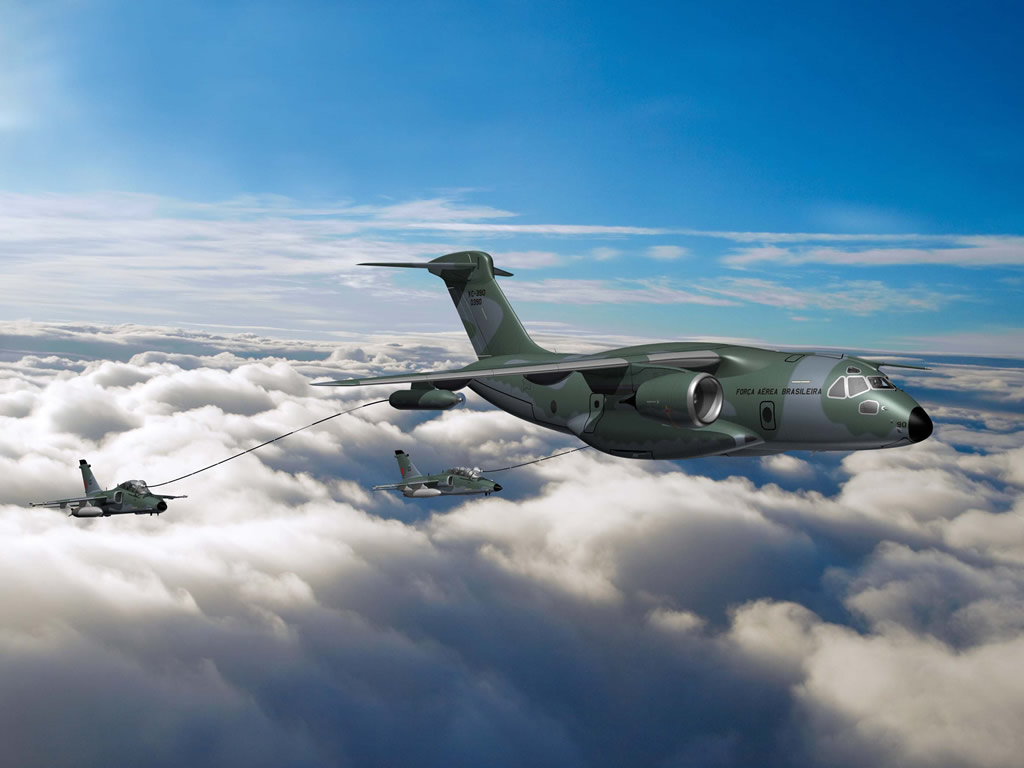
http://www.defenseindustrydaily.com/Embraer-Launches-KC-390-Tactical-Air-Transport-Program-05380/
Embrear KC-390
Crew: 2
Capacity: [3]
84 passengers or
64 airborne troops or
6 pallets (68″ X 108″) or
84 litter patients with 4 medical personnel or
2-3 HMMWV and Marrua or an Astros II or a LAV III and VBTP-MR Guarani[82]
Cargo compartment: Length 17.75 m X width 3.45 m X height 2.9 m
Payload: 23.6 tons (52,029 lb)
Length: 33.91 m (111.3 ft)
Wingspan: 35.06 m (115 ft)
Height: 10.26 m (33.8 ft)
Loaded weight: 74.0 tons (163,142 lb)
Max. takeoff weight: 81.0 tons (178,574 lb)
Powerplant: 2 × IAE V2500-E5 turbofan, 120-129 kN (27,000-29,000 lbf) each
Fuel capacity: 37.4 tons (74,800 lb, 33,929 kg)[3]
Performance
Maximum speed: Mach 0.8 (300 KCAS, 850 km/h)
Range: 2,600 nmi (4,815 km, 2,992 mi) (with 13,335 kilograms (29,400 lb) payload)
Range with full payload: 1,400 nmi (2,593 km, 1,611 mi)
Ferry range: 3,250 nmi (6,019 km, 3,740 mi)
Service ceiling: 36,000 ft (10,973 m)
Wanshan.jpg)
Chinese Shaanxi Y-9
Crew: 3-4
Capacity:
106 passengers or
132 airborne troops or
9 pallets
Payload: 25,000 kg cargo ()
Length: 36 m ()
Wingspan: 40 m ()
Height: 11.3m ()
Empty weight: 39,000kg ()
Useful load: 25,000kg (55,090lb)
Max. takeoff weight: 77,000kg ()
Powerplant: 4 × Zhuzhou WoJiang-6C (FWJ-6C) turboprops, 3,805 kw (5,100 shp) each
Propellers: JL-4 6-blade composite propeller, 1 per engine
Performance
Cruise speed: ~650km/h
Range: ~5,700 km ()
Ferry range: 7,800 km ()
Service ceiling: 10,400m (ft)
Wanshan
Crew: 3-5
Capacity: 300 troops
Payload: 47,000 kg
Length: 40.7 m
Wingspan: 44.06 m
Height: 16.38 m
Empty weight: 66,230 kg
Max takeoff weight: 145,000 kg (319,670 lb)
Powerplant: 4 × Progress D-27 propfans, 10,350 kW (13,880 hp) each
Performance
Cruise speed: 750 km/h
Range: 6,600 km with 20 tonnes of cargo
WanshanIraq Article: http://www.reuters.com/article/2012/10/12/iraq-military-idUSL5E8LCB4620121012
Background: http://www.defenseindustrydaily.com/czech-l-159s-cheap-to-good-home-03494/
Manufacturer: http://www.aero.cz/en/l-159-combat-and-training-system.html
It could be surplus aircraft (which may still be brand new):” Talks have previously been based on the sale of about 24 L-159s, deemed surplus to requirements and placed into storage by the Czech air force.”
http://www.flightglobal.com/news/articles/iraq-advances-negotiations-for-czech-l-159-trainers-377611/
But there is contradiction: “We’ve agreed to supply 28, L-159-type two-seat aircraft to the Iraqi air force”, Alexandr Vondra, the Czech Defence Minister, told media representatives. “Twenty-four of the planes will be new, while four will come from Czech army surplus stocks.”
http://www.armedforces-int.com/news/czech-l-159-jet-trainers-for-iraqi-air-force.html
@BlackArcher > A note on cost: $1b for 24 aircraft, with 4 thrown in free, comes down to $42m per jet. Check second link on the Czech L-159ALCA program: “the L-159’s program cost grew from CZK 20-30 billion to over 51 billion Koruna”… that’s $2,65b for 72 jets, or about $37m per jet about 10 years ago….. granted, those were L-159A single-seat, multirole combat aircraft and Iraq is getting Aero L-159TI, which is a two-seat variant of the L-159A, but still.
As for what else is or may be included in the contract, see second link, down at entry Jan 24/12:
Jan 24/12: In the wake of a visit by Iraqi defense minister Sadoon Al-Dulaim, the Czech Ministry of Defence says that:
“The Iraqi Defence Minister did assure me that the Republic of Iraq is still interested in this type of aircraft,” [Czech defense minister Alexsandr] Vondra said, adding that besides the L-159s he offered support with training of ground and flying personnel, capabilities of VOP Sternberk [DID: link to company website added], education of Iraqi students at the University of Defence in Brno and experience in the field of protection against mass destruction weapons, and demining capabilities as well.”
Wanshan

WanshanTuesday, 02 October 2012 09:16
Lockheed Martin awarded upgrade contract for 145 F-16S of Republic Of China Taiwan Air ForceLockheed Martin [NYSE: LMT] was awarded a contract valued up to $1.85 billion by the U.S. Government to initiate the upgrade of 145 Block 20 F-16A/B aircraft for the Republic of China (RoC). This retrofit program will include the addition of an Active Electronically Scanned Array (AESA) radar, embedded global positioning, as well as upgrades to the electronic warfare and other avionics systems of Taiwan’s F-16s.
WanshanYes, but we’re discussing the opposite problem here: an air force with mostly probe equipped receivers, & hose & drogue equipped tankers, & a relatively small number of large aircraft with receptacles for booms.
Fitting hoses onto the end of booms is a very unsatisfactory solution. The official guides (publicly accessible online – e.g. C-135FR) warn about the need for great caution in using the hose on a boom, & the risk of probe damage. Standard hose units are easier & safer.
The French C-135FRs usually carry underwing hose & drogue units in addition to the boom.
There are probes which can be fitted into boom receptacles.
I wasn’t proposing is, merely pointing it out. There are also some tankers that have both a boom and one or more complete hose-and-drogue systems. If attached to the wings, they are known as the Multi-Point Refueling System (MPRS). USAF KC-10s have both a boom and a hose and drogue system on the aircraft centerline at the tail of the aircraft, but only one system can be used at a time. Many KC-135 and some KC-10s are also equipped with dual under-wing hose-and-drogue attachments (WARPs). The installation of wingtip refuelling pods involves a major modification and refit to the entire aircraft, including modifications to the wing and fuselage fuel tanks, additional fuel control systems and the installation of indicators and circuit breakers on the flight deck.
There are commercial tankers as well: Omega Air Refueling is a company which provides aerial refueling services for military units. It developed the first commercial aerial refueling aircraft in 1999, and has provided aerial refueling services under contract to the United States Navy since 2001. They use DC-10s/MD-11 and remind me of World Airways, which operates non-scheduled services. World got its first government contract in 1951 and has had a substantial amount of government business since then: it became a key military contractor during the Vietnam War. The airline still receives a substantial amount of its business from the military, especially in its role connecting American bases in the U.S. to the Middle East. It also thrives on passenger and freight contracts with private organizations, as well as wet leases to other airlines in which World Airways essentially functions as a cargo airline arm or subsidiary of that other airline.
Also, it can’t be all that hard to (re)fit those few large aircraft with a refeulling probe. Remember the refuelling probes and tanker refits produced for the RAF during the Falklands war. Probes have been refitted to fighters for some time. I can see a CARTS variation for these big birds. The Conformal Air Refueling Tank System the F-16 program investigated fourteen different types of refueling probes during early studies and tested 2. CARTS uses a straight probe that telescopically extends and retracts from the forward section of the right-side conformal fuel tank. I’m sure if there is difficulty with straight fitting on of a probe, then this conformal system may be an option.


 Sign In








