 Wanshan
And why does Romney call Russia enemy No. 1? It ain’t because Russia is friendly. Dream on!
Who cares about what Romney says … :rolleyes:
WanshanIf the C-17s or P-8s need refuelling capacity, they can probably be fitted with probes more cheaply & easily than obtaining tankers with booms. Probe & drogue isn’t ideal for such large aircraft (slower than a modern boom), but workable.
And, as previously stated, there are various options for getting boom-equipped tankers.
USAF KC-135 and French Air Force KC-135FR refueling-boom equipped tankers can be field converted to a probe-and-drogue system using a special adapter unit. In this configuration, the tanker retains its articulated boom, but has a hose/drogue at the end of it instead of the usual nozzle.
WanshanI find it a little lacking in the Stealth aspect… 😉
Regards,
HAMMER
You would like the offshore patrol cutter better?

http://mt-milcom.blogspot.nl/2007/09/us-coast-guard-asset-guide-part-3.html
WanshanSince they had to add the weight, why not add it in a useful form?
That is a great place to stage equipment, fuel tanks, & weapons… as well as for personnel to move without being in the way of aircraft.
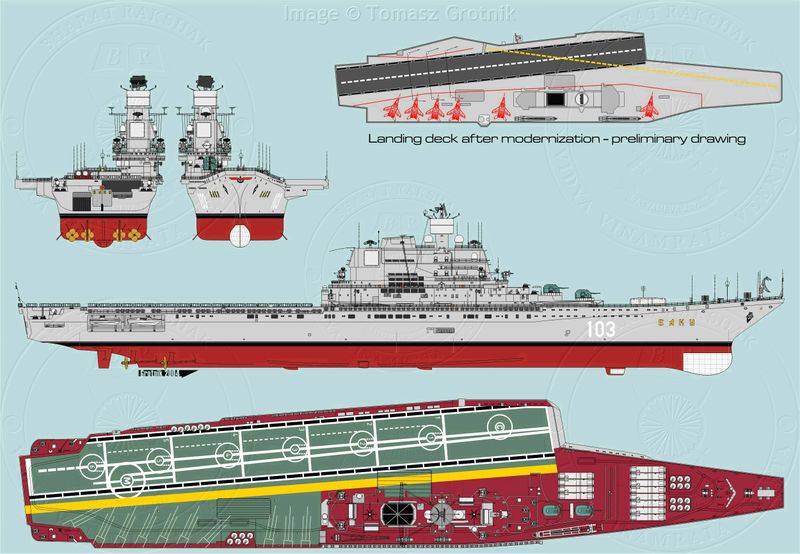
Weight balance aside, I think it was neccessary primarily for deck parking and traffic. Remember, the island sits right next to an elevator : not a good ‘road’. Also, Mig 29K is longer than Yak-39 (17.3 m versus 16.37 m). Fuel tanks & weapons I would prefer to store in a safer place.

WanshanQuite the looker for a coast guard ship.
Yeah, not bad. Nice twin hangar, ramp. Patrol frigate seems a little under armed though.

Wanshan

Patrol Frigate 4921 has additional mission capabilities for anti-aircraft, anti-submarine, anti-surface and mine-warfare provided by a 76-mm gun, a 12-cell vertical launch system, an anti-ship missile launcher and torpedo launcher, sonar dome and remote-controlled and manned 50-caliber machine guns.
WanshanThey had to add the deck extension outboard of the island to counter-balance the weight of the extension of the angle deck to port that provided space for the arresting gear.
I agree with your general point but …JUST to counterbalance the deck extension to port?
Wanshanreally bad design to have the island almost near the middle. it is okay if they are using vertical jump jets and helicopter but bad because now they put a ski ramp on there. china almost consider doing the same with the russian carrier it bought but decide not to for wise reason.
With ‘the middle’, you mean length- or crosswise? I’m asking because if crosswise, then it is not designed so: the island was on the starboard edge in the original GOrshkov, but now the deck(edge) has been extended to starboard. With Kuz/Varyag, the island still IS on the deck edge (i.e. unlikely the Chinese almost considered doing the same – extending deck starboard side – because the deck area in the Kuz is substantially greater already compared to Gorshkov > no need to extend on starboard side.). On Vikra extending the deck to starboard is for vehicle traffic purpose (to keep flight deck clear) and aircraft deck parking front and rear of the island. WIth Kuz/Varyag there is no need for that as there is enough room to the portside of the island.
WanshanThe Royal Malaysian Navy’s Laksamana class have a 4 round Aspide launcher.
Correct: 675 tons full load, 2x RTN-10X fire control radar. Thanks for pointing out my oversight and strengthening the point being made.

WanshanYes, it’s a smaller & less capable (particularly for amphibious assault) ship. But for the stated purpose, that’s not very important.
21 versus 16 knots top speed …. Not to underestimate the importance of getting it ‘now’ (hot transfer) rather than in a few years from now.
Hot Ship” transfers are preferred and mutually beneficial because the U.S. Navy avoids the inactivation costs and the foreign recipient avoids reactivation costs. “Hot ship” transfers also provide the foreign crew a unique opportunity for on-the-job training by the USN crew prior to the transfer date. Through “Hot ship” transfer, the vessel remains active and is commissioned into the foreign navy upon being decommissioned from the U.S. Navy.
http://www.globalsecurity.org/military/systems/ship/transfer.htm
You paid $48 million > see this: http://www.dsca.mil/programs/eda/results.asp?CtryName=INDIA&FY=2006&IANAME=&TRANSTYPE=
LPD 14 USS TRENTON Total Current Value: 67869000
6 UH-3H SEA KING HELICOPTERS Total Current Value: 3317400
WanshanOn long deployments of small boats: http://en.wikipedia.org/wiki/Cherbourg_Project
http://www.globalsecurity.org/military/world/israel/saar.htm
Note some were eventually sold to Chile… not the friendliest of seas around there!
WanshanThales STIR 1.2 (fornmerly Sting) will be able guide ESSM, which is a pretty small system (under 1250kgs counting antennea/tracker unit as well as all below deck components. Antenna diameter 1.2m. Instrumented range: 120km I-band and 36 km K-band) Typical target acquisition and tracking ranges: stealth fighter 50km, missile 30km.
http://www.thales7seas.com/html5_beta/product535.html
http://www.thales7seas.com/html5_beta/product270.html
http://www.thalesgroup.com/Countries/Netherlands/Documents/Datasheet_STIR_1_2_EO_Mk2/
WanshanESSM on a FAC? Thats a SARH weapon! It needs quite e “beefy” guidance kit on the ship to actually use it.
Or are we calling ships reaching the 900/1000 tons of displacement a FAC?
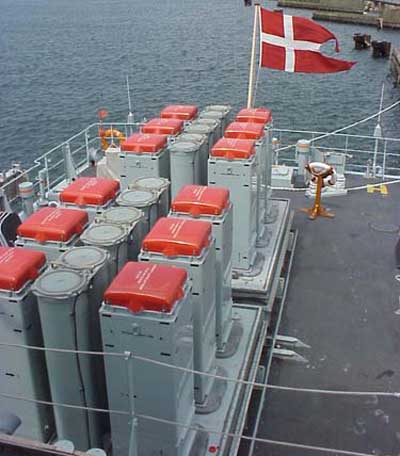
See Danish Stanflex 300 / Flyvefisken class: up to 2x 6-cell Mk 48 Mod 3 > 6 Sea Sparrow (or 12 ESSM per 6-cell unit if you’ld use twinpacks and/or mk56 instead). SaabTech Vectronics 9LV 200 Mk 3 Fire control radar. Displacement is 320 tonnes (315 long tons) light and 450 tonnes (443 long tons) full load.


%20Patrol%20Vessel%20Arriving%20in%20Valletta%20GH%20(Malta)%20on%20August%2018,%202007_02.jpg)
The Thai 960 ton Rattanakosin-class corvette is the smallest ship I know with Mk 29 and Sea Sparrow. This uses the Thales WM-25 for missile guidance (as do e.g. ex-Dutch S-frigates of the Kortenaer/Elli class, which additionally have 1 Stir 2.4 and older Tromp class guided missile frigates, which additionally have 2 Stir 2.4)
http://www.thales7seas.com/html5_beta/product397.html


WanshanPurely linguistic point: I wouldn’t call six ‘many’. ‘Several’ would be much better. ‘Many’ suggests numbers in the tens, at the very least. You may think this a trivial point, but language matters. Its misuse has contributed to millions of deaths.
But I agree, Jalashwa was junk. That $48 million could have paid for a large part of the cost of a brand-new diesel LPD from Korea, like those operated by Indonesia. You’d have got many more years of use out of it, & in the long term it’d have been much cheaper, because of much lower operating costs as well as longer life. OK, it’s a low-end ship, very basic indeed, but for what the IN is supposed to be using Jalashwa, i.e. practice with operating an LPD, it’d be far superior. No problems with ancient steam equipment (notoriously high-maintenance, & risky when old) or other worn-out equipment, & machinery which would be more like that on any other new ships to be bought, & when the IN gets some decent new amphibious ships (LPD or LHD), it’d remain useful for logistics.
Makassar class is 11,394 tons full displacement as compared to 16,900 tons for Jalashwa. It has accommodations up to 518 persons, with a crew of 126. Jalashwa has 24-28 officers, 396-480 enlisted and a Marine Detachment of approx. 900 -1436.
Complement: 28 officers, 480 men, 1436 marines. Boats & landing craft carried: 2 x LCVP, compared to one LCAC or one LCU or four LCM-8 or nine LCM-6 or 24 amphibious assault vehicles (AAV).
WanshanAlso note the area next to the island. Its not covered with anti-skid layer. So no chance for the speculated aircraft basing there.
Makes for a nice vehicle park / “go around”, avoiding the flight deck and keeping it clear for aircraft.


 Sign In







