 Wanshan
How about the two boilers on the $48milion junk we bought from the U.S which has already killed many Indians onbaord?
What!? I’ve only found:
On 1 February, 2008, five Indian Navy personnel were killed, and three others critically injured by inhaling poisonous hydrogen sulphide (H2S) gas aboard INS Jalashwa.
http://en.wikipedia.org/wiki/INS_Jalashwa
The death toll due to the ”gas leakage” in INS Jalashwa, India’s second biggest warship and the only US-made vessel in the Indian Navy fleet, rose to six with one more sailor succumbing at a hospital here late last night, defence sources said today.
http://news.webindia123.com/news/Articles/India/20080210/886211.html
And this is not related to boilers:
A day after five sailors were killed onboard the INS Jalashwa while it was taking part in a naval exercise near Port Blair, the Indian Navy said that a poisonous gas leak in one of the warship’s compartments caused the accident.
Denying initial reports of a fire or explosion aboard the troop carrier ship, the Navy said the accident was caused by “the inadvertent inhalation of H2S (Hydrogen Sulphide) gas by the repair party carrying out maintenance in one of the ship’s compartments.”
While a board of inquiry will investigate the reason behind the leak, reports suggest that it occurred in a sewage treatment plant pipe that was carrying the poisonous gas.
http://www.indianexpress.com/news/sailors-died-due-to-gas-leak-says-navy/268354/0
WanshanI see that Norway constructed a “cofferdam” around the hulk of the Murmansk and have cut her up. It took 3 years to build the cofferdam , but the hulk was cut up in less than a year. DFO 🙂
Related:
WanshanConsider a carrier has far more ‘depth’ to absorb damage compared to, say, a 4000-5000 ton navy frigate or destroyer. Plus, the larger the vessel, the more likely it will have some form of protected area for ammunition and fuel storage i.e. greater ability to ‘take’ damage with out sympathetic detonation of ordnance (same principle distuinguishes e.g. smaller T-series tanks from many larger Western tanks: separated ammo storage, blow out panels etc.).
CVN Beam:
Overall: 252 ft (76.8 m)
Waterline: 134 ft (40.8 m)
Draught: Maximum navigational: 37 ft (11.3 m)
FFG7 frigate (USS Stark hit by 1 Exocet, survived)
Beam: 45 feet (14 m)
Draught: 22 feet (6.7 m)
Type 42 destroyer (HMS Sheffield – D90, hit by 1 Exocet, lost subsequently to fire)
Beam: 14.3 m (47 ft)
Draught: 5.8 m (19 ft)
Arleig Burker destroyer USS Cole survived an attack by suicide bombers sailing a small boat near the destroyer and detonating between 400 and 700 pounds (180-320kg) of C-4 plastic/’plastique’ explosives. The blast created a hole in the port side of the ship about 40 feet (12 m) in diameter just at / the waterline. The crew fought flooding in the engineering spaces and had the damage under control after 3 days.
CV66 USS America was planned to be sold for scrapping. However, she was chosen to be a live-fire test and evaluation platform in 2005, to aid the design of future aircraft carriers. … In a letter to them, Vice Chief of Naval Operations Adm. John B. Nathman explained:
“America will make one final and vital contribution to our national defense, this time as a live-fire test and evaluation platform. America’s legacy will serve as a footprint in the design of future carriers — ships that will protect the sons, daughters, grandchildren and great-grandchildren of America veterans. We will conduct a variety of comprehensive tests above and below the waterline collecting data for use by naval architects and engineers in creating the nation’s future carrier fleet. It is essential we make those ships as highly survivable as possible. When that mission is complete, the America will slip quietly beneath the sea. I know America has a very special place in your hearts, not only for the name, but also for your service aboard her. I ask that you understand why we selected this ship for this one last crucial mission and make note of the critical nature of her final service.”
… She departed the Inactive Ship Maintenance Facility on 19 April 2005 to conduct the aforementioned tests. The experiments lasted approximately four weeks. The Navy battered America with explosives, both underwater and above the surface, watching from afar and through monitoring devices placed on the vessel. These explosions were designed to simulate attacks by torpedoes, cruise missiles and perhaps a small boat suicide attack like the one that damaged the destroyer Cole in Yemen in 2000. After the completion of the tests, America was sunk in a controlled scuttling on 14 May 2005
http://en.wikipedia.org/wiki/USS_America_(CV-66)
The keel of the Gerald R. Ford was laid down on 13 November 2009…. rest assured she incorporates lessons learned from these tests.
WanshanWW2 carriers were also armoured. Todays carriers are nowhere near to that level. But they are bigger on the other hand soo i can see why they said they’d need multiple hits to succefully sink or gut todays carriers
they however repair a todays carrier from a single say Onix hit without going back to port ? Depends where it hits I suppose ?
Yup. It comes down also to the capability/quality of your damage control, as the Japanese learned the hard way. Remember, the Onyx warhead is ‘only’ 250kg.
Compare: In the 1967 Forrestal incident 9x 450 kg dumb bombs exploded on deck, tearing large holes in the armored flight deck, causing flaming jet fuel to drain into the interior of the ship, including the living quarters directly underneath the flight deck, and the below-decks aircraft hangar. Nonetheless, sailors and Marines quickly (withing hours) controlled all fires. The fires were declared defeated early the next morning, after some additional flare-ups. From 31 July – 11 August 1967, Forrestal was moored at Leyte Pier at Naval Air Station Cubi Point in the Philippines for temporary repairs. From 19 September 1967 – 8 April 1968, Forrestal underwent repairs in Norfolk Naval Shipyard. The carrier occupied drydock number 8 from 21 September 1967 until 10 February 1968. Many lessons learned currently implemented on CVNs.
http://en.wikipedia.org/wiki/1967_USS_Forrestal_fire
IN 1969, there was a similar accident involving Enterprise. In this case, there were 18 explosions, some of which were 500-lb (227kg) bombs cooking off in multiples, leaving 20-foot holes in the armored flight deck. The fires were brought under control relatively quickly (compared with previous carrier flight deck fires): in one hour the fire on the flight deck was under control but there were still fires inside the ship, which were finally extinguished some hours later. After the fires were put out, flight operations resumed not withstanding 3 large holes in the armored flight deck….
http://en.wikipedia.org/wiki/USS_Enterprise_(CVN-65)
http://www.navsource.org/archives/02/65.htm
http://navysite.de/cvn/cvn65.html
WanshanWanshan your range numbers are off or at least some of them.
Possibly. Which and by how much, in your opinion? Sufficiently to undermine the basic argument I put forward?
WanshanDo you think that fight will happen at these extreme ranges?
Yes, if you know the opponent has a 550km missile, you want to kill the platform before it gets to firing range. Realisitically, you may not (alsways) be able to. But that’s a different matter. Carrier strike range can well del with this kind of threat.
True, mission kill always need not have to be an aircraft carrier sunk. In that video you will also see them mentioning about 2-3 missiles out of 8 in the salvo to reach its target. Those 2-3 missiles may or may not be enough to sink the carrier in one go.
WW2 fleet carriers managed to stay afloat (to be repaired and fight another day) after numerous 500kg bombs, kamikazis, torpedoes, most of which represent heavier warheads than the supersonic missiles mentioned.
if a carrier is hit, there definitely will be fireworks. In that case what would be the likely response from other members of the unit? —- to help out the carrier and save the thousands of crew on board the carrier. Probably only the SSNs wll go hunting…..
If a carrier is hit, the damage will depend on when/how i.e. where her planes just preparing on deck when she got hit. There stories around from Enterprise and Forrestal during cold war.
INS Vikramaditya is a sitting duck now with not a single AD system.
At this time, yes. However, I fully expect Barak to be installed plus at least a pair of AK630. The best weapon of the carrier is its wing, not its self defence weapons…. of course, escort group aside.
WanshanAircraft Carrier Killers – Malakhit, Bazalt, Granit, Oniks, Brahmos, Club-K
On the topic of carrier killing:
P-350 (4K77), P-500 Bazalt (4K80) P-1000 Vulkan (3M70) / SS-N-12 Sandbox: range 550kg weight 4,500-4,800 kg, warhead 950-1,000 kg HE-SAP or 350 kT nuclear
P-700 Granit (3M45) / SS-N-19: range 550km, Weight 7000 kg, warhead 750 kg HE-SAP or 500 kT nuclear
P-120 Malakhit / 4K-85 / SSN-9 Siren: range 110km, weight 3,000 kg, warhead 500 kg HE-SAP or 200 kT nuclear
PJ-10 Brahmos: range 300km, weight 2,500-3,000 kg depending on version, 200-300kg HE-SAP depending on version (surface or air launch version).
P-800 Oniks (3M55) / SS-N-26: range 120-300 km depending on altitude, weight 3,000 kg, warhead 250 kg HE-SAP
P-900 Club (3M54) / SS-N-27:
3M-54E – three stage anti-shipping variant with supersonic terminal stage: Range is 220 km, 1,920 kg with a 200 kg warhead.
3M-54E1 – two stage anti-shipping variant with subsonic terminal stage: Range is 300km, 1,780 kg with a 400 kg warhead.
See http://www.usni.org/magazines/proceedings/2010-01/fortress-sea-carrier-invulnerability-myth
This speaks of a carrier invulnerability myth and states:
“America’s nuclear-powered aircraft carriers, especially in today’s irregular, asymmetric warfare climate, could be little more than slow-moving targets.”
as well as
“a deployed aircraft carrier is more vulnerable to mission kill than is commonly believed”
However, take not that the author talkes about mission kill, which is not the same as sinking. Carriers are very resilient ships. See e.g. USS Hornet the last U.S. fleet carrier ever sunk by enemy fire. http://en.wikipedia.org/wiki/USS_Hornet_(CV-8)
In a 15-minute period, Hornet took three bomb hits from Aichi D3A “Val” dive bombers, another bomb hit compounded by the “Vals” crashing itself onto her flight deck, two torpedo hits from Nakajima B5N “Kates”, and another “Val” crashing onto her deck.
…
Rear Admiral George D. Murray ordered the heavy cruiser Northampton to tow Hornet clear of the action. Since the Japanese planes were attacking Enterprise, this allowed Northampton to tow Hornet at a speed of about five knots. While under tow, she came under attack again from another wave of torpedo bombers later in the day. A “Kate” scored another torpedo hit, and the order of “abandon ship” was issued.
…
American warships next attempted to scuttle the stricken carrier, which absorbed nine torpedoes, many of which failed to explode, and more than 400 5-inch naval artillery rounds from the destroyers Mustin and Anderson. The destroyers steamed away when a Japanese surface force entered the area. The Japanese destroyers Makigumo and Akigumo finally finished off Hornet with four 24-inch Long Lance torpedoes.
Check out other cases of Fleet Carriers here: http://en.wikipedia.org/wiki/List_of_sunken_aircraft_carriers
Hence, a mission kill may occur but this would most likely be a temporary state. And the US does have 11 large carriers, with 1 more in fleet reserve and 6 yet to be dismantled. Not to mention a similar number of LHA/LHA which can be used as Sea Control Ships with Harriers or F35B.
http://en.wikipedia.org/wiki/List_of_aircraft_carriers_of_the_United_States_Navy
Also note the ranges of the missiles: between 220 and 550km max range.
A carrier / CBG will maintain a ‘bubble’ within which it will attempt to kill launch platforms rather than missiles.
Against submarines, remember on board SH-60 has a 50 nautical-mile radius with 3 hours on station or a 150 nautical-mile radius with 1 hour on station and it will operate from modern CBG ships spread out over a wide area.
Against air targets, USN surveillance capability is ofter better than that of the opponents likely to deploy above missiles, plus F/A-18E has a combat range of 1,275 nautical miles (2,346 kilometers), ‘clean’ with two AIM-9s and a ferry range of 1,660 nautical miles (3,054 kilometers) with two AIM-9s and three 480 gallon tanks retained and over 3335km without AAM. It has a combat radius of 400 nmi (460 mi, 740 km) on air-air mission (i.e. with WVR+BVR missiles+fuel tanks+loiter time). CAP endurance from an aircraft carrier is 1hr 45min.
Against surface target, the F/A/-18E has an interdiction combat radius hi-lo-hi 537km (290nm) and an attack mission combat radius of 1065km (575nm) in a high-lo-lo-high profile.
Malakhit, Bazalt, Granit and Oniks are in Russian navy only and will not likely be encountered unless there is war between US and RUssia (in which case naval missiles will not be our primary worry > ICBMs will be).
Unmentioned SS-N-20 / Moskit is in service Russia and PRC. But PLAN missiles have at best 200km range and are on just 4 few platforms.
India is at present friendly with both US and Russia so IN Brahmos currently no a likely threat untill exported. Afaik there are no Brahmos exports as yet, and Oniks/Yakhont only to Indonesia (on ex-Dutch Van Speijk class frigate lacking air defences!)
So the main problem is Club, which has been exported by Russia to India, Vietnam, China and Iran. All use Club-S on submarines but only three nations use Club-S on surface ships (Russia, India, Vietnam). I don’t think there are any coastal batteries of containerized versions exported.
WanshanIf properly installed and contained, asbestos won’t be harmful to personnel at all.
Hell, inhaling tank fumes for several years is a worse occupational hazzard than working around newly installed asbestos.
Seconded!
WanshanWhat landing on the Vikramaditya feels like 🙂
Nice! max 5 sec to pass over the angle deck…
Wanshanhttp://www.armstass.su/?page=article&aid=110936&cid=25
Mistrals to be fitted with Vampire-NG by Sagem.
The French or the Russian ships?
Wanshan“Soobrazitelny corvette recently had a fire, and that ship has an all composite superstructure”
They are? I had not seen that about the Pr 20380s, other than on Wilki???? Their info seems to be like JFS has been: i.e. somewhat suspect at times.
As far as the burned tri…here is a You Tube link: http://www.youtube.com/watch?v=pk-SIKhM78w&feature=player_embedded#! DFO
See 2nd page (page 8) left column, about halfway down the page, next to table.
http://img1.liveinternet.ru/images/attach/c/1/3795/3795166_russia_offers.pdf
http://www.naval-technology.com/projects/steregushchy-class/
Wanshan5 of these?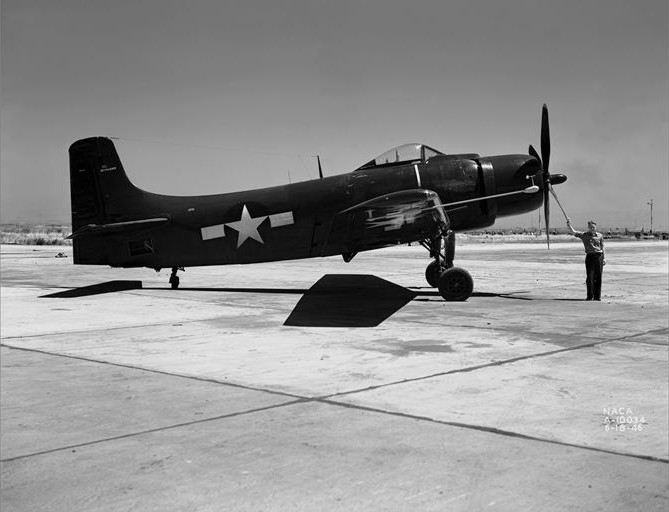

4-5 of these?
The light ones in the middle-back can’t be Firefly’s as these too would have backwards folding wings (like Avenger and Firebrand)

I’m not sure but there may indeed be Sea Hornets
WanshanFor Eagle R05 airgroup over the years, see: http://www.btinternet.com/~a.c.walton/navy/rn-cv3.html
Initial airgroup:
Supermarine Attacker FB, FB2 (jet) http://en.wikipedia.org/wiki/Supermarine_Attacker
Fairey Firefly FR (piston) http://en.wikipedia.org/wiki/Fairey_Firefly
Blackburn Firebrand TF4 (piston) http://en.wikipedia.org/wiki/Blackburn_Firebrand
De Havilland Sea Hornet NF21 (twin piston) http://en.wikipedia.org/wiki/De_Havilland_Hornet
Douglas Skyraider AD-4W / AEW1 (piston) http://en.wikipedia.org/wiki/Douglas_A-1_Skyraider
Westland Dragonfly HR (helicopter) http://en.wikipedia.org/wiki/Westland_Dragonfly
Types added,
1954 and on:
Hawker Sea Hawk FGA (jet) http://en.wikipedia.org/wiki/Hawker_Sea_Hawk6
Grumman Avenger TBF / AS (piston) http://en.wikipedia.org/wiki/Grumman_TBF_Avenger
1955 and on:
Westland Wyvern S4 (helo) http://en.wikipedia.org/wiki/Westland_Wyvern
Fairey Gannet AS4 (piston) http://en.wikipedia.org/wiki/Fairey_Gannet
1956 and on:
De Havilland Sea Venom FAW21 (jet) http://en.wikipedia.org/wiki/Sea_Venom
1964 and on:
Hakwer Siddely (Blackburn) Buccaneer S1, S2 (jet) http://en.wikipedia.org/wiki/Blackburn_Buccaneer
De Havilland Sea Vixen FAW2 (jet) http://en.wikipedia.org/wiki/Sea_Vixen
Supermarine Scimitar F1 (jet) http://en.wikipedia.org/wiki/Supermarine_Scimitar
Fairey Gannet AEW3, COD4 (piston) http://en.wikipedia.org/wiki/Fairey_Gannet_AEW.3
Westland Wessex HAS1, JASS3 (heli) http://en.wikipedia.org/wiki/Westland_Wessex
Westland Whirlwind HAR5 (heli) http://en.wikipedia.org/wiki/Westland_Whirlwind_(helicopter)
1971 and on:
Westland Sea King HAS1 (heli) http://en.wikipedia.org/wiki/Westland_Sea_King
My guess is Attackers (on the left), Firefly’s (in the rear) and either Skyraider AEW (placing the pic in the 1952-53 timeframe) or Avengers (placing the pic in 1954). I’m leaning towards the former.
WanshanAh ok, you were referring to INS matanga the tugboat, I thought you were referring the Vikramaditya as a white elephant :p
Why on earth would you think I would?
WanshanApparently, that high tech carbon composite is highly flammable….


 Sign In







