 Wanshan
1.Name to me the land baced ballestic missiles of France!
2. Air launched cruise missiles of France are not strategic, because their range is only 500km
3. Only USA and Russia have “nuclear triancle” land air, and sea baced nukes, NOT France.
1. Currently none. However, there have been several.
S2/S3/S4/S5: The original S-2 strategic missile force formed the main land-based element of the French force de frappe, (later the force de dissuasion) from the early 1970s. In 1973 a program was initiated to develop the second generation SSBS Sol-Sol-Balistique-Strategique) system, the S-3, entailing the renovation of the first two groups of S-2 silos and replacing the missiles with the S-3 model. The S-3 (Type S-3D/TN-61) was an intermediate range, silo-based, solid propellant, single warhead ballistic missile. Development of the S-3 was completed in 1980. Deployment began in 1980, and both groups of nine silos were operational by the end of 1982. The first group of nine missiles and their associated silo installations on the Plateau d’Albion were officially inaugurated in May 1980, and both groups of nine silos were operational by the end of 1982 making a total deployment of 18 missiles. Reports indicate that about 40 S-3 missiles were manufactured with a further 13 test missiles. It was initially planned that S-3 might be replaced by a land-based version of the M-5 missile by about 2005. The S-4 was an intermediate range, silo-based and mobile, solid propellant, MRV capable ballistic missile. The S-4/S-45 program was cancelled in 1991. By 1993 it was decided that there would be no replacement system, though plans announced in 1994 indicated that a land-based version of the M-4 missile might replace the S-3 missiles on the Plateau d’Albion by 2005. In September 1996, France shut down its 18 land-based nuclear missiles. It was expected to take two years to dismantle the missiles and their concrete silos.
Pluton (120km) The Pluton system entered service in 1974, and it is believed that there were 30 launchers deployed with missiles, reloads and alternative warheads. The system was phased out of service in 1993.
Hades (480km) Hades is a short range, road mobile, solid propellant, single warhead ballistic missile.The program completed development in 1992, with the first flight test taking place in 1988. It was planned that Hades would enter service in 1992, and that only 30 missiles on 15 TEL vehicles would be built instead of the original plan to build 120 missiles. In 1991 the French Government announced that the Hades missiles would not be deployed, but kept in storage, and the programme was terminated in 1992. However, 20 to 25 missiles were available in a national emergency with their mobile TEL vehicles, and were all located at Luneville. On 23 February 1996 the announcement by the President of France on the new format for French nuclear forces called for dismantling of Hadès missiles. On 23 June 1997 the last of the Hadès missile was destroyed.
WanshanAnd don’t forget, you’re talking mainly (except Russia) about NATO countries, where you could see some pooling of forces in a crisis with a common foe. So, essentially, in case no US carriers and LHA in theater, there basically 3 + 2 + 1 + 1 = 7 carriers for the European theater (North Atlantic + Med). This sets the nato countries apart from other single carrier operators e.g. Brazil and India.
WanshanThe key point is, I haven’t seen an adequate explanation of why China would be able to come up with a CoDAG or CoDOG plant and assotiated shipdesign, but not with a CoGAG or CoGOG plant and design. The fact that 112/113 got a certain kind of plant means that the Chinese had experience with it, which may have been a factor in their choices for 052B/C. Perhaps the choice for a GTu/Diesel combo is also in part explained by experience with CODAD on the frigates. But I don’t think there is a deterministic path here, where the choices for 112/113 locked in subsequent choices for 168-171..
WanshanBecouse with ships of this size, 6000-7000 tons or even more, a GODAG with only two LM2500 isen’t exactly the best choise.
US Tico/Burke 9,000+t 30+ knots COGAG four LM 2500
UK Type-45 7,350t (full load) 27-29 knots IEP (Integrated Electric Propulsion); 2x WR21 Rolls Royce-Northrop Grumman ICR gtu generator sets (incl WR-21 turbines down-rated to 21.5 MW each).
IN Delhi 6700t (full load) 28 knots COGAG four DT-59 reversible gas turbines 64,000 hp total
IT/FR Horizon 6,700t (full load) 29 knots CODOG two GE LM2500/Avio Gas turbine engines 53MW two SEMT Pielstick diesel engines rated at 8.6MW
NL LCF 6,050t (full load) 30 knots CODOG 2x Rolls Royce Spey SM1C (18.5MW each) 2x Stork-Wartsila 16V6ST diesel (8.4MW each)
GE F124 5,960t (full load) 29 knots CODAG 1xGE 7 LM2500 PF/MLG 23,500kW 32,500 shp 2x MTU 20V 1163 TB93 each 7,400kW 19,848 bhp
ES F100 5,800t (full load) 28.5 knots CODAG 2 x GE LM 2500 (34.8MW) 2 x Izar (9MW)
IT Durand De La Penne 5,400t (full load) 31+ knots CODOG 2 x Fiat/GE LM 2500 GT sustained power 40.3MW 2 x GMT BL 230.20 DVM 9.3MW each
NO Nansen 5,130t (full load) >26 knots CODAG 1x GE LM 2500 19.2MW gas turbine 2x Izar Bravo 12V diesel engines 4.5MW
IN Shivalik 5000+ (full load) 30 knots CODOG 2x GE LM 2500 18,000 kW (24,000+ hp) each 2x S.E.M.T. Pielstick 16 PA6 STC diesel engines 5700 kW (7600+ hp) each
IN Kashin 4,974t (full load) 35 knots COGAG 4 M-3 gas turbines 72,000 hp total
CA Halifax 4,750t (full load) >27 knots CODOG 2 x GE LM 2500 1 x SEMT-Pielstick 20PA6 V280 diesel engine, 20-cylinder
GE F 123 4,700t (full load) 29 knots CODOG 2x LM 2500 (33,600 each) 2x MTU ZOV956 TB92 (6,568 hp each)
SA AL RIYADH (F3000S SAWARI II) 4,725t (full load) 24.5 knots CODAD 4 x SEMT Pielstick 16 PA6 STC 5,700kW (7,740hp) each
RU Neustrashimy (Type 11540) 4,200 tons (full load) 30 knots COGAG two main gas turbines providing 35.7MW 37,000 shp and two auxiliary turbines providing 17.8MW 20,000 shp
IN Talwar 4035t (full load) 30 knots COGAG 2 x DS-71 cruise turbines 9000 hp each and 2 x DT-59 boost turbines 19,500 hp each
WanshanChina in otherhand have not recieved any russian designing help in either 052 or 052B/C.
Maybe, maybe not. 052B has a high level of Russian systems, which suggests at least some russian involvement.
But in the most cruisal sector regarding to this discussion, the machinery, the ships are practically identical. So thats pretty much the proof that the ships are at least when it comes to the engines, a close relatives. When looking relations between shipdesign, don’t focus in the gizmoes fitted, but the general arragment of space, ecspecially the funnels and so on…
But that’s exactly what I have been looking at, general arrangement! What would be so different in terms of engine rom layout and funnel location etc between 2 Gtu + 2 diesel and 2 Gtu + 2 Gtu? In principle, it would not be hard to put put 2 smaller Gtu in exactly the same spot as the 2 diesels, while sticking to similar gear box placings. And, as my examples of plant in relation to funnel arrangement (Krivak/Udaloy, Slava+Kara/Kashin+Delhi) indicate, similar powerplant arrangement have worked with different funnel arrangements. So, why the reverse could not also work is not clear to me. Also, if the Chinese can independently come up with a design for a Codog arrangement (112/113), why can’t they also come up with design for a Cogag? I remain unconvinced.
the CODOG arrangement to be fitted in the Project 17 Class frigate
the M7 plant arrangement of single funnel Talwar (similar to m9 of double funnel Udaloy)
But again you are giving too much responsibility to the ukrainian engine deliverer. They wont design the ships for you, chinese have to do it by themselves. And I belive that the chinese shipdesign just wasen’t mature enough to go for GOGAG arragment with those four ships. Also remember that diesel engines have enjoyed quite a role in chinese naval engine sectors, so relying on GODAG may come form there as well.
The reason I brought Urkraine turbines up is your claim of their inferiority compared to LM 2500. My point was lesser power output does not necessarily mean inferior performance, depending on how you define performance (e.g. with or without reliability). Another issue was license production. But regardless of whether we’re talking LM2500 or UTG25000, the Chinese designed a cadag arrangement. If they could only have done this with outside help, the initially the US or e.g. UK must have assisted. If that was the case, there is no reason why later Russians or Ukrainians could not have been involved. But if they could design a Codog set up independently, then there is no reason why they cannot also design a cogag set up.
Rephrased, why would designing a ship for a COGOG/COGAG arrangement be so much more difficult than designing a ship for CODOG/CODAG, or CODAD for than matter (054)
Wanshan[editted: sdouble post]
WanshanAnd this should explain the differences (alway go to the source):
Iraq – King Air 350ER for Intelligence/Surveillance/Reconnaissance
(Source: US Defense Security Cooperation Agency; dated Sept. 27, issued Sept. 28, 2006)
WASHINGTON — The Defense Security Cooperation Agency notified Congress of a possible Foreign Military Sale to Iraq of King Air 350ER and potentially other aircraft, as well as associated equipment and services. The total value, if all options are exercised, could be as high as $900 million.
The Government of Iraq has requested a possible sale of:
– 24 King Air 350ER for Intelligence/Surveillance/Reconnaissance role with L-3 Wescam MX-15 Electro Optics/Infrared (EO/IR) system, plus 1 of the following Synthetic Aperture Radar(SAR/ISAR)/Inverse Synthetic: APS-134 Sea Vue or APS-143 Ocean Eye or RDR-1700 or Lynx II (APY-8) or APS144 or APY-12 Phoenix
– 24 Data Link Systems (T-Series Model-U or T-Series Model-N or ADL850 or TCDL or BMT-85)
– 24 King Air 350ER or PZL M-18 Skytruck Aircraft for light transport role
– 48 AAR-47 Missile Warning Systems
– 48 ALE-47 Countermeasures Dispensing Systems
– 6,000 M-206 Flare Cartridges
– 50 Global Positioning System (GPS) and Embedded GPS/Inertial Navigation Systems (INS)
Also included: support equipment, management support, spare and repair parts, supply support, training, personnel training and training equipment, publications and technical data, U.S. Government and contractor technical assistance and other related elements of logistics support.
The estimated cost is $900 million.
This proposed sale will contribute to the foreign policy and national security of the United States by helping to improve the security of a friendly country. This proposed sale directly supports the Iraqi government and serves the interests of the Iraqi people and the United States.
This proposed sale will enhance the foreign policy and national security objectives of the United States by enhancing Iraq’s capacity to support U.S. Government efforts in Operation Iraqi Freedom (OIF), as well as supporting Iraq’s legitimate need for military independence.
These Intelligence/Surveillance/Reconnaissance and light transportation aircraft will provide the ability to survey the battlespace, provide valuable intelligence, and mobilize troops and carry equipment to the fight. Furthermore, they will help Iraq monitor and defend its borders, eliminating the need for a U.S. provided capability.
The proposed sale of this equipment and support will not affect the basic military balance in the region.
The principal contractors will be:
– BAE Advanced Systems Greenlawn, New York
– Raytheon Company Lexington, Massachusetts
– Lockheed-Martin & Skytruck Companies Naples, Florida
– Honeywell Morristown, New Jersey
There are no known offset agreements proposed in connection with this potential sale.
The number of U.S. Government personnel and contractor representatives required in-country to support the program will be determined in joint negotiations as the program proceeds through the development and production phases
There will be no adverse impact on U.S. defense readiness as a result of this proposed sale.
This notice of a potential sale is required by law; it does not mean that the sale has been concluded. (ends)
Iraq – AN/FPS-117 or TPS-77 Long Range Air Traffic Control Radar
(Source: US Defense Security Cooperation Agency; dated Sept. 27, issued Sept. 28, 2006)
WASHINGTON — The Defense Security Cooperation Agency notified Congress of a possible Foreign Military Sale to Iraq of one AN/FPS-117 or TPS-77 Long Range Air Traffic Control Radar, as well as associated equipment and services. The total value, if all options are exercised, could be as high as $142 million.
The Government of Iraq has requested a possible sale of one AN/FPS-117 or TPS-77 Long Range Air Traffic Control Radar, support equipment, management support, spare and repair parts, supply support, training, publications and technical data, U.S. Government and contractor technical assistance and other related elements of logistics support. The estimated cost is $142 million.
This proposed sale will contribute to the foreign policy and national security of the United States by helping to improve the security of a friendly country. This proposed sale directly supports the Iraqi government and serves the interests of the Iraqi people and the United States.
This proposed sale will enhance the foreign policy and national security objectives of the United States by enhancing Iraq’s capacity to support U.S. Government efforts in Operation Iraqi Freedom (OIF), as well as supporting Iraq’s legitimate need for military independence.
The proposed sale of this radar will provide more responsive and timely information for air defense operations. This radar will contribute to the modernization of obsolete radars in Iraq’s air defense radar system.
The proposed sale of this equipment and support will not affect the basic military balance in the region.
The prime contractor will be: Lockheed-Martin Aeronautics Company of Syracuse, New York. There are no known offset agreements proposed in connection with this potential sale.
The number of U.S. Government personnel and contractor representatives required in-country to support the program will be determined in joint negotiations as the program proceeds through the development and production phases
There will be no adverse impact on U.S. defense readiness as a result of this proposed sale.
This notice of a potential sale is required by law; it does not mean that the sale has been concluded.
-ends-
WanshanWhat a ripoff! :p
Wrong conclusion. The question is “what else are they paying for?”
WanshanToday, the Pentagon announced big sales of $ 1 billion worth To Iraqi armed forces,of possible sales of one AN/FPS-117 type long-range radar, worth about $142 million, and a King Air 350 ER aircraft for intelligence, surveillance and reconnaissance (ISR), worth about $900 million.
[/url]
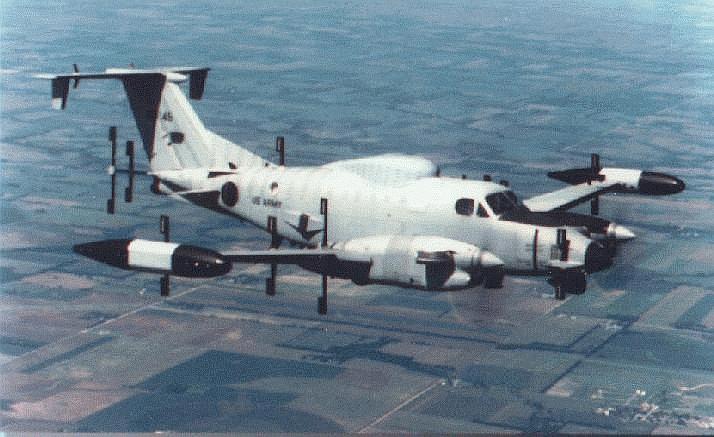
That would likely be something like the Guardian RC-350 military electronic intelligence version of the King Air 350. How is it that this should cost $900 million, considering that the airframe only costs around $7,000,000 ? What equipment and services does it come with to justify an additional cost of $893 million? I assume it is out of the question that the US would sell the RC-12 Guardrail Common Sensor, which is known to have been present in Iraq.
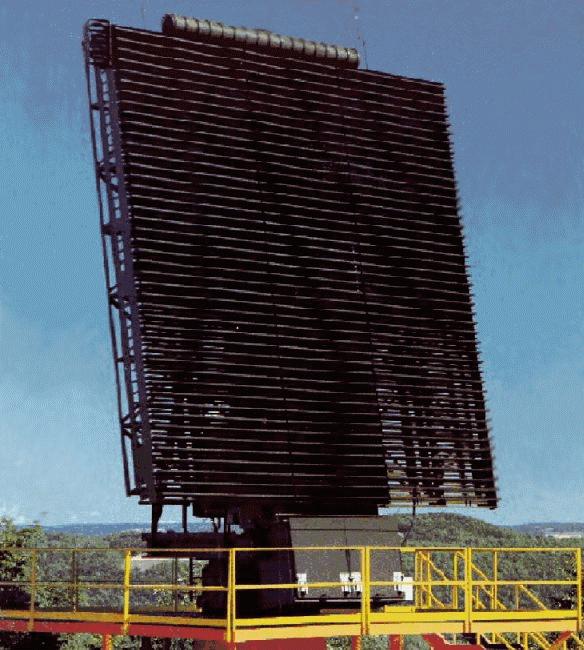
As for AN/FPS-117 being worth about $142 million, consider:
Publication: Journal of Electronic Defense
Publication Date: 01-OCT-02
Delivery: Immediate Online Access
Author: Puttre, Michael
Company: Lockheed Martin Naval Electronics and Surveillance Systems
Article Excerpt
The government of Jordan has requested a possible sale of one AN/FPS-117 3-D long-range radar, spares and repair parts, publications and technical documentation, personnel training, and training equipment, and other related elements of logistical and program support. The estimated cost is $22 million. The prime contractor will be Lockheed.
source
WanshanI think there is. The 052B/C have exactly the same engine arragment which indicates that Chinese adopted it directly form the previous ships. And as they adopted a arragment which they cannot with the current availability of gas turbines totally 100 % to fullfill, it speaks about the capability of chinese ship designs in general. Frankly thats not very suprising. China have very little expereince in destroyer designs and apparently they are not able to design a completely new destroyer with new more powerfull GOGAG arragment.
I know this sound rather gloomy but it’s a harsh fact. It took over ten years to field the first chinese destroyer, Luda class in the early 70’s based for soviet blueprints aquired before the break-up of the project 41 dated back late 40’s. After that the first non Luda class destroyer desingn is the 052 which is the first chinese indegenious design. No wonder it has minor defaults and the follow-ons of the class are suffering form the same illness that the first ships. But china have just starting to rise so we cannot expect too much from it. Give her time and I’m sure the next generation of chinese destroyers are far more mature designs. All other shipbuilding countries have suffered form same difficoulties when they where new on the buisness, just look at the soviet destroyer development in the 30’s and 40’s…there’s afull lot of similarities and the last soviet destroyers, Udaloys are one of the finest of the world…
But this does not explain why China didn’t opt to get an 4 entire CoGaG plants from Ukraine, instead of just 8 GTu to mix and match with. Ukraine fully capable to design and deliver such plants. This is why I listed Soviet Russian ships in the first place. Witness also India’s Delhi and Talwar.
Even though I understand that China had the experience with this particular arrangement from 052, I don’t buy the ‘well, the arrangement was used in 052 and so it dictated the choice for the arrangement in 052B/C’ argument. The design differences between 052 and 052B/C are just too big for them to be such close relatives, just as with 051 and 051B, and for the developmental relationship between these two types to be so deterministic. (design similarities of 052 and 051C are often overlooked, even if they have different propulsion plants).
They could have gotten the M7 plant of the Talwar class , which is very similar to the M9 plant of the Udaloy class, to work for them. Note that the smaller Talwar has only 1 stack vice 2 on the larger Udaloy, not withstanding a near identical plant layout compared to Udaloy! Note that the large Kara and Slava classes have only 1 stack even though their plant arrangement is very similar (if more complex) to that of smaller Delhi, which has 2 stacks. I.e. stack(s) and intake arrangements need not have been a problem in design a 052B/C with COGAG.
Surely China had experience with the plant adopted for 052B/C, which counts for something. (Afterall, India had gained experience with an all GTU powerplant on the Rajput class, prior to the Delhi and subsequent classes. I wonder if expediency also played are role (how quick could they, China, come up with a viable destroyer design, and a plant for it), perhaps offsetting for other issues sut as power output.
WanshanSea Flash = Ship launched Sky Flash AAM. (B.Ae study.)
Sky Flash = UK modification of US AIM-7E Sparrow.
L = 12.1ft (3.68m), W = 425lb (193Kg) R = 31miles (50Km)
Skyflash is a UK modification of the US AIM-7 Sparrow missile with improved guidance and seeker capability. Skyflash uses a Marconi inverse monopulse seeker. A Hoopoe boost/sustainer motor powers Skyflash, which is an Anglicised version of the AIM-7 motor. Developed as XJ.521, the semi-active Skyflash was initially fitted on RAF F-4M Phantoms, but its main use has been on Tornado F2 and F3s of the RAF, Italian and Saudi Arabian Air Forces. Skyflash was also developed for the Royal Swedish Air Force for use on JA-37 Viggens as the RB.71. An improved version called Skyflash 90 was developed for the Swedish Air Force. This was called RB.71A in Sweden. A ship-borne Sea Flash version was not proceeded with.
I would expect it to be compatible with NATO Sea Sparrow Missile system (NSSM), just like Aspide is.
Specifications Sky Flash
Manufacturer British Aerospace
Date Deployed 1978
Range AA 28 miles ( 45 km )
Speed Mach 4
Propulsion One Aerojet Mk52 Mod 2 or
Rocketdyne Mk38 Mod 4 solid-propellant rocket motor
Guidance Marconi XJ521 monopulse Semi-Active Radar Homing
Warhead 87 lb ( 39.5-kg ) HE fragmentation with contact, delay action fuses.
Launch Weight 425 pounds ( 192.8 kg )
Length 12 ft, 1 in ( 3.68 m )
Diameter 8 in ( 0.203 m )
Fin Span 3 ft, 4 in ( 1.02 m )
Specifications Sea Sparrow
Primary Function Air-to-air and surface-to-air radar-guided missile
Contractors Raytheon Co. and General Dynamics
Power Plant Hercules MK-58 solid-propellant rocket motor
Thrust Classified
Speed More than 2,660 mph (4,256 kph)
Range AA More than 30 nautical miles (approximately 55 km)
[Maximum Range = 6 nm according to other sources, SAM-role]
Minimum Range – 1600 yards
Director Lock-on Range – 50 nautical miles
Length 12 feet (3.64 meters)
Diameter 8 inches (20.3 cm)
Wingspan 3 feet 4 inches (one meter)
Warhead Annular blast fragmentation warhead, 90 pounds (40.5 kg)
Proximity fuzed, continuous expanding rod, with a 27 ft. kill radius
fire control systems MK 91
Launch Platform (Launcher) MK 29 Mod 1.
Launch Weight Approximately 500 pounds (225 kg)
Guidance System Raytheon semi-active on continuous wave or pulsed Doppler radar energy
Date Deployed 1976
Unit Cost $165,400
Inventory Classified
WanshanThe rumoured proplems may be like you said in other
Like I said above, the arragment of the machinery parts are different in different types of solutions. If you have GOGOG arragment like in Krivak class frigates, you would have similar one large air-inlet for two large and two smaller gas turbines which others are used for speedy dashes and others for cruising. When using the GOGAG arragment, like in the Alreighs Burkes, you have 4 similar size gas turbines, LM2500 in those ships.
Agree. But while the Chinese problem with 113 was that the arrangement had already been set, and they had to shoe-horn in different GTUs, I don’t think that’s the same situation as with 052B/C, which were alltogether new later designs. Apart from constraints like a preexisting design, there is no technical reason why China could not adopt an all GTu arrangement, is there?
WanshanIt doesen’t matter if you post a list of russian gas turbine ships when none of them has the same GODOG arragement as in 052s.
Ah so, but is the problem then not one of gas turbines per se but rather one of the power plant arrangement (which includes diesel engines, reduction gears, propulsion control system etc)? Instead of just the GTu’s. Any way, the point I attempted to make is that Ukraine is perfectly able to make reliable GTu’s
The arragement calls for two powerfull gasturbines, orginally indended to be LM2500 but they have to substitute for much inferior engines. This wasen’t done becouse they suddenly decided to go for better to worse, but the 1989 incidence in Tiananmen made the US engines unavailable. Thus they had to seddle for two somewhat same class (but with 48 000 hp against the 55 000 hp of LM2500) ukrainian engines.
1990-2000: Eight UGT25000 marine gas turbines were sold to China together with the license for manufacturing.
http://www.zmturbines.com/Eng/AboutEnterprise/HistoryReferenceEng.htm
… and there’s the rub IMHO, in the availability of the license.
While GE rates LM2500 at 33,500 shp and LM2500+ at 40,500, there are more than a few applications where it is rated much less (e.g Perry class: 2 LM2500 gas turbines, 1 shaft, 40,000 shp).
Anyway, power output alone isn’t everything, is it? Besides, they could have opted for an all diesel or all GTu plant as well, or not?
As the designing of chinese warships, bigger warships is somewhat in the “children’s shoes” as we say here, there really wasen’t any other solution for the new 052B/C class ships. Those ships (or any ships of that size) should have had IMO either GOGAG or GOGOG arragment with four gas turbines, but the limitations in chinese shipbuilding and development area prevented this.
If you can put a plant with 2 GTu and 2 diesel in a ship, why couldn’t you put in a plant with 4 GTu? What limitations are you referring to exactly?
GAS TURBINE UNITS FOR SURFACE SHIPS
http://www.zmturbines.com/Eng/Products/SeaEquipment/SheepsEng.htm
http://www.zmturbines.com/Eng/ExperienceOfTheUsing/SeaUsingEng.htm
Wanshan“unvailability of good enough gas turbines”
Beg pardon, but thats hard to believe considering:
Slava class (1164): 4 gas. turbines, 108,800-110,000 shp
Kara class (1134.2): 4-6 gas. Turbines, 96,000-120,000 shp
Udaloy class (1155): COGAG, 2 M62 cruise gas turbines, 15,000 shp and 2 M8KF boost gas turbines, 45,000 shp
Kashin class (p61): 4 gas turbines – 72,000-96,000 (shp)
Krivak class (1135): COGAG: 2 cruise gas turbines 24,000-24,200 shp, 2 boost gas turbines 36,000-48,600 shp
Neustrashimy class (1154): COGAG, 2 cruise gas turbines 20,000 shp, 2 boost gas turbines 37,000 shp
and
Delhi (P15) class: two Ukrainian Zorya Production Association M36E gas turbine plants that produce over 64,000 hp. The M36E gas turbine plant comprise four DT-59 reversible gas turbines grouped in two pairs, driving two propellers through two RG-54 gearboxes. There are four separate Russian-made gas turbine generators, two in each engine room.
WanshanMy “friend” sferrin I didn’t metioned the DD(X) but the arcenal ship. Even the DDX has 14000t tonnage and -I don’t know why they call it “destroyer”- was created as much smaller succesor of the arcenal ship.
This ship is more than 30000t
Ship design 500-800 feet loa, with tonnages for survivability.
TSSE Total Ship System Engineering 1996 proposal
(based on USNS T-AO CLASS OILER)
Arsenal Ship Characteristics
•LOA = 667 ft
•BEAM= 97 ft
•DRAFT= 34 ft
•DISPLACEMENT= 39,500 LT
•RANGE= 75,800 NM
•ENDURANCE= 210 DAYS
•TOTAL INSTALLED SHAFT HORSEPOWER = 57,750 HP
•FLOODABLE LENGTH = 3 COMPT
•KG = 29.75 FT
•GM = 11.20 FT
http://www.nps.navy.mil/tsse/files/1996.htm#


 Sign In








