 Wanshan
Was Barak equipped looong ago. The holes were cut at Cochin and the ship equipped at Bombay. There are 2x 8 cell launchers, with reloads, just aft of the tower. Elta radar replaces the RAWS 08.
What do you mean “with reloads”? Are they planning to manually swap out expended canisters with loaded ones while at sea?
WanshanHello
MR-710 Fregat-MA/Top Plate 3D Radar
Look more like MARS-PASSAT to me
Wanshanhuh? how does that matter kashtan is fitted with only 8 missiles at one time and it can intercept 2 targets at one time the additional missiles are reloaded automatically when needed when missiles are expended (but from what i understand its not quick procedure around 1 1/2 minutes to reload). Barak doesnt have automatic reload but vessels fitted with barak system carry additional missiles (no word on how many) which are reloaded manually.
Only recently did IN even test kashtan-m for installation on the gorshkov that takes P-15A out of the picture also as i said it found kashtan unsatifactory and all reports point to gorshkov being fitted with barak rather than kashtan-m. So why will IN go for latter in the case of P-15A?
The whole point of having VL units is – among other things – that there is no reloading proces: all rounds are ready rounds. 1 fully loaded Kashtan unit has 32 missiles, of which 8 are ready rounds. In order to have an equivalent number of Barak missiles available, you would need to install not 1 but 4 8-cells launchers. So, you need to compare the space and weight taken up by those 4 units plus space and weight for 1 radar director) to that of 1 kashtan unit. In that sense, the Barak system is probably neither smaller nor lighter than Kashtan. Apart from giving the same number of missiles, however, this arrangement would provide a superior rate of fire.
Why wouldn’t IN go for Kashtan on P15A? After all, it is using it on Talwar class, it is planned for the first three P17 frigates. This irrespective of the fact that IN tested Kashtan M only recently! Both of which have a fully Russian suite of weapons. Most weaponry aboard P15A is likewise Russian. To avoid integration problems, it would make sense to stick with a fully Russian set of armaments, including Kashtan.
For a key unit like Gorshov (as well as Viraat for that matter) having a VL system may be preferable from the perspective of all round coverage. In fact, I wouldn’t at all be surprised to see it having both Kashtan and Barak systems eventually.
WanshanThen again, we all know Al Gore invented the internet 😉
WanshanI hate when all these pro-Russians babble on about how the Russians “invested” stealth, it doesnt matter who calculated it first or whatever, what matters is who is developing it now, whose ahead in this field and who can construct the necessary LO vehicles. It’s clear that Russia or European countries have yet to construct a LO aircraft in class of F-22, F-35, B-2 or whatever. When I see PAK-FA and how stealthy it will be, then we’ll know.
I hate it how some people attribute qualities to another person for no reason at all e.g. that this other person is somehow pro-russian just because he made a remark that is historically accurate. Also, just because Russia and “Europe” have not constructed a LO aircraft doesn’t mean that they can’t or are otherwise unable to. It may be, for example, that it has been decided that money is better spent on other things.
Oh, and Sweden, the country that designed Visby, is a European country. As is England, home country of Vosper Thorneycroft which designed the Sea Wraith. Both LO designs. And France, which produces LO LaFayette frigate. European nations have applied stealth mainly in naval rather than air force designs.
Wanshanthe barak module is far smaller weight and size wise than one the kashtan requires, it can be mounted on top of hull as its county destroyer without any ramifications. If latter wasnt true kashtan would have deployed on viraat and would have replaced ak-630 on most russian vessels. As for barak vs kashtan, IN wants standardization of its SAM system 10 more system have been ordered (3 of those for brahmaputra, the rest is probably intended for newer vessels).
You would need 4 8-cell BARAK modules to get the same missile load as 1 Kashtan unit. Given that BARAK is 2m long, I don’t think there is much space saved below deck if you install 4×8 barak instead of 1 Kashtan combat module.
Wanshanactually no according to milparade article kashtan command module weights 9.5 tons and m weights 7.5 tons. I will try to post snapshot of it when it get time.
Here’s some extrapolation from that article :
Weights
1) Combat module + units of fire:
Kashtan: 12000 kg (radar + EO tracking)
Kashtan M: 10000 kg (radar + EO tracking
Kashtan M: 8000 kg (EO traking only)
2) Units of fire: 2500 kg (1000 rounds 30mm + 32 SAMS)
3) Combat module:
Kashtan: 9500 kg (radar + EO tracking)
Kashtan M: 7500 kg (radar + EO tracking
Kashtan M: 5500 kg (EO traking only)
4) Turret w/o units of fire (the above deck piece, excl. ammo/SAM):
Kashtan: 6254 kg (radar + EO tracking)
Kashtan M: 6254 kg (radar + EO tracking
Kashtan M: 4500 kg (EO traking only)
5) Remainder of system weight in combat module
Kashtan: 3246 kg (radar + EO tracking)
Kashtan M: 1246 kg (radar + EO tracking
Kashtan M: 1000 kg (EO traking only)
1) IT SEEMS TO ME THAT EVEN IF KASHTAN-M IS LIGHTER THEN KASHTAN, THIS SHOULD ONLY HELP RATHER THAN HINDER INSTALLATION ON DELHI/BANGALORE SHIPS.
2) IT ALSO SEEMS THAT SINCE WE’RE NOW ARGUING ABOUT WEIGHT RATHER THAN VOLUME AND FOOTPRINT, IT IS NOW ACCEPTED THAT 1 KASHTAN or 1 KASHTAN-M WOULD FIT ON DELHI/BANGALORE CLASS EN LIEU OF 2 AK630 or 1 AK630+6-8 VL BARAK.
😀
WanshanAs far as I know an initial order of 16 Migs has been placed, this includes 4 trainers, I think that there is an option for 60, I am not sure though?
But the Gorshkov can certainly not carry more than 24-25 MiGs.
That’s more then enough if their flottilla has them and yours doesn’t
Wanshani dont think kashtan module is represented accurately in that plastic model will try to find image showing ayout of kashtan i used to have one b4 but cant find it. Anyway one of the problems with kashtan has been its size hence russia tried to find cheaper and smaller alternative ak-630m1-2, palma. I believe the newer kashtan-M model is supposed to few tons lighter and smaller than the orginal.
As for barak i believe more could be ordered that whats IAI reported along with few newspapers when news broke that US will sell few more orions to pakistan no word on how many.
I doubt Kashtan M is much lighter and AFAIK the below decks requirements are unchanged. see here
I believe the plastic Kashtan model is to the same scale as the AK630 model. But here are some pics of the real things so you can judge for yourself. As for content of module, it must have those reload cylinders so the ‘control room’ shown in the bottom pic must be limited in size and located between the cylinders, directly below the gunmount.
Palma is not exactly smaller, but perhaps lighter than Kashtan. No automatic relaods from magazine. AK-630m1-2 is heavier than regular AK630 due to 2 barrel clusters but has the same footprint as regular AK630.

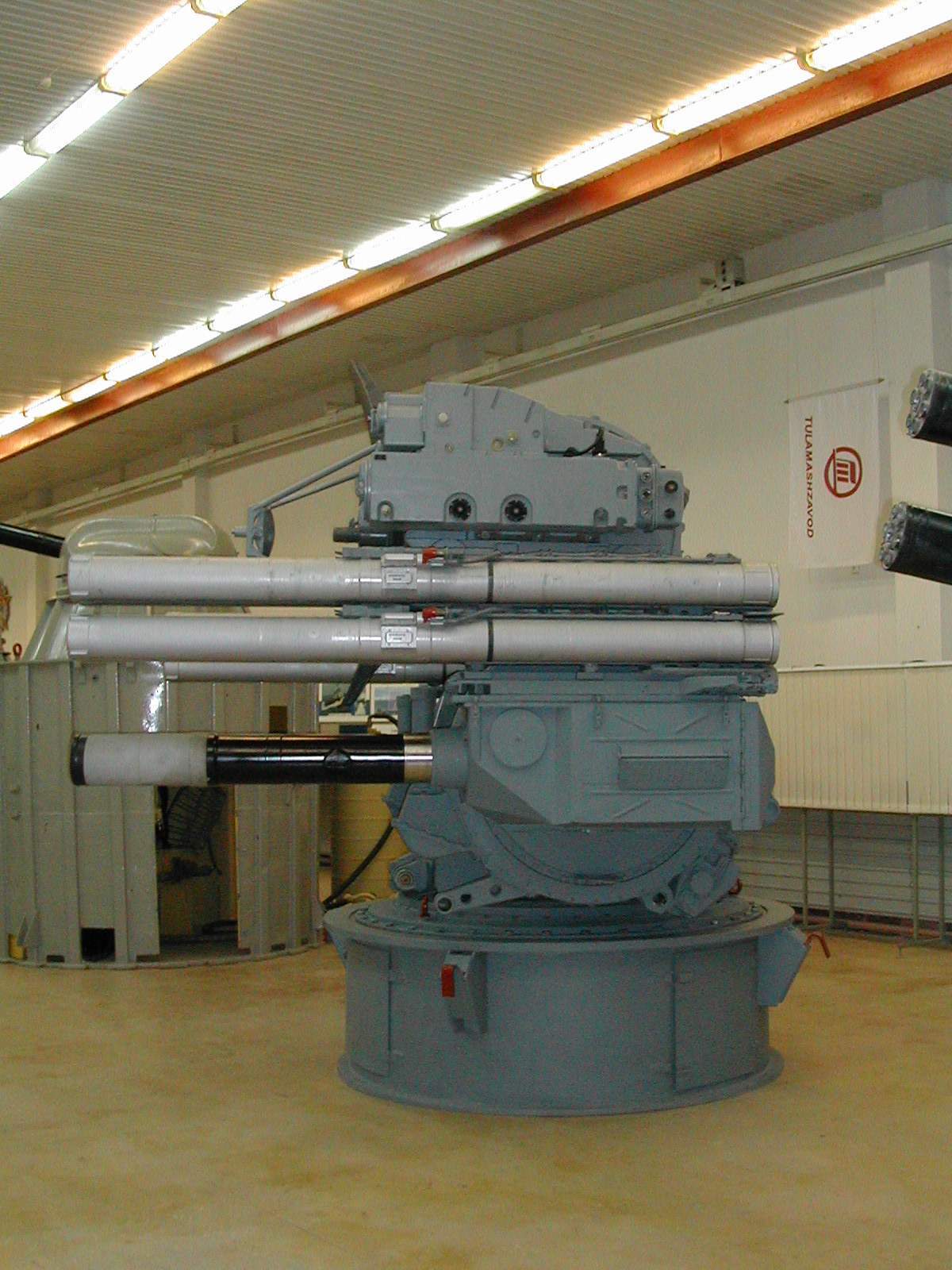
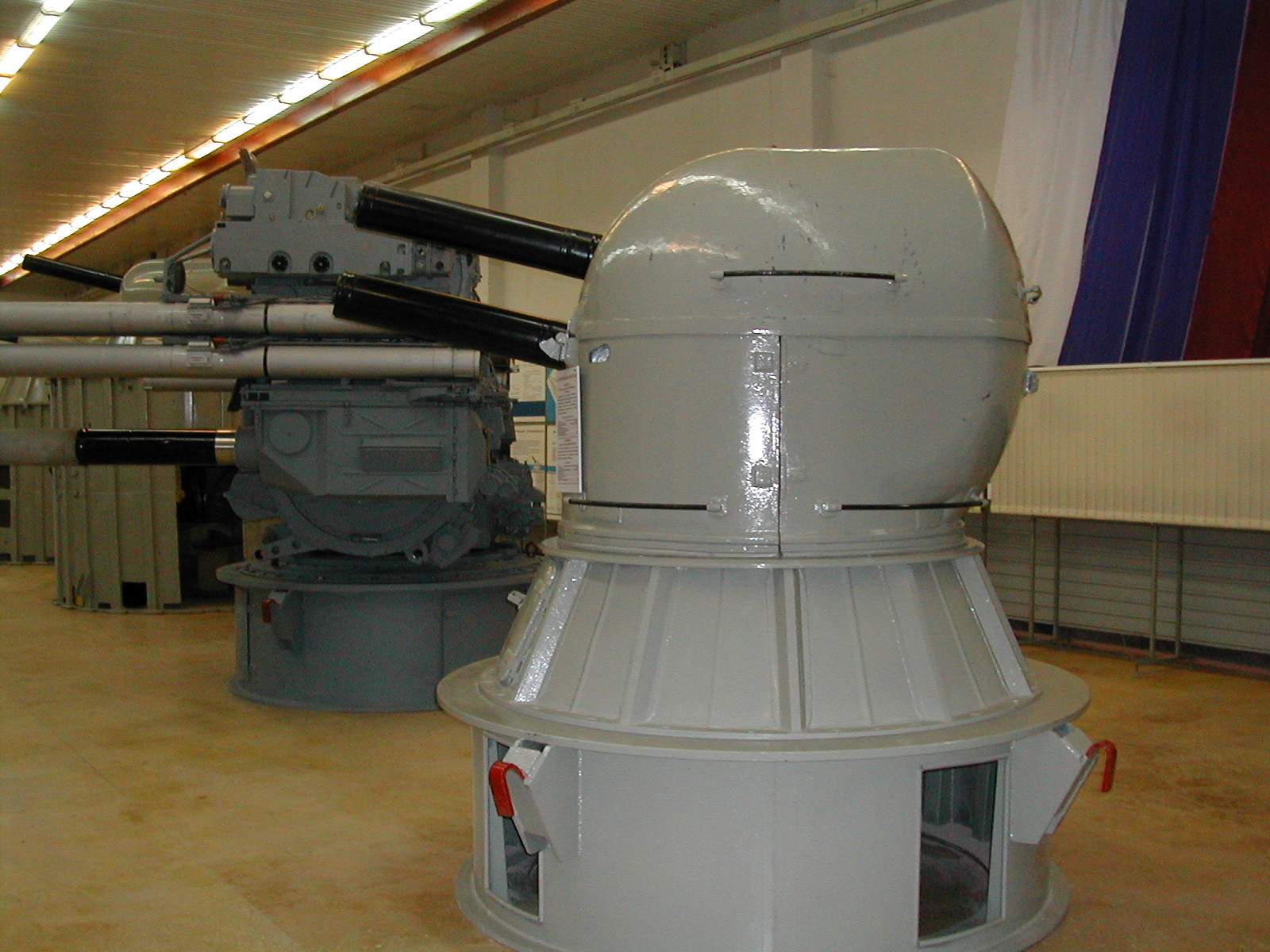
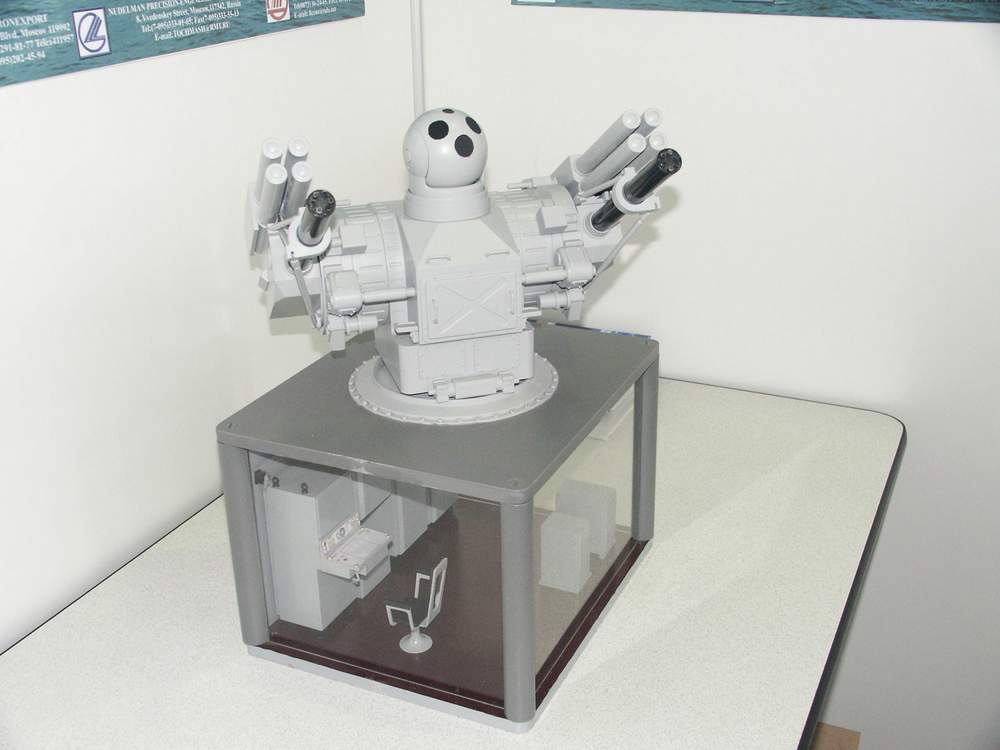
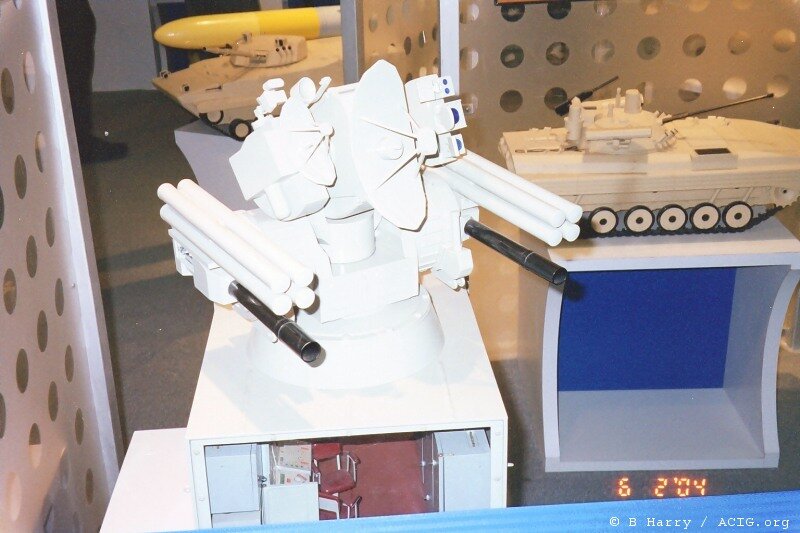
Wanshanno, kashtan requires extensive deck penetration for storage of its missiles thats one of the reason why it hasnt fully replaced ak-630 in most russian vessels and also IN considered kashtan for viraat and Delhi but abandoned due to extensive refitting they would require to carry the system. As u noted all those vessels were redesigned to carry kashtan, P-15A in other hand was already designed to carry ak-630 so without have to redo the design its harder to fight kashtan onto it. Besides IN is in love barak, gorshkov was postponed by couple months because IN wanted barak rather than kashtan but finally relanted dont see why they would not fit barak rather kashtan onto their own vessel.
1x Kashtan vice 2x AK630: Mainly, Kashtan is taller than 2x AK 630 but has about the same footprint. To the extent there is room to go up, there need not be much difference in below deck volume required.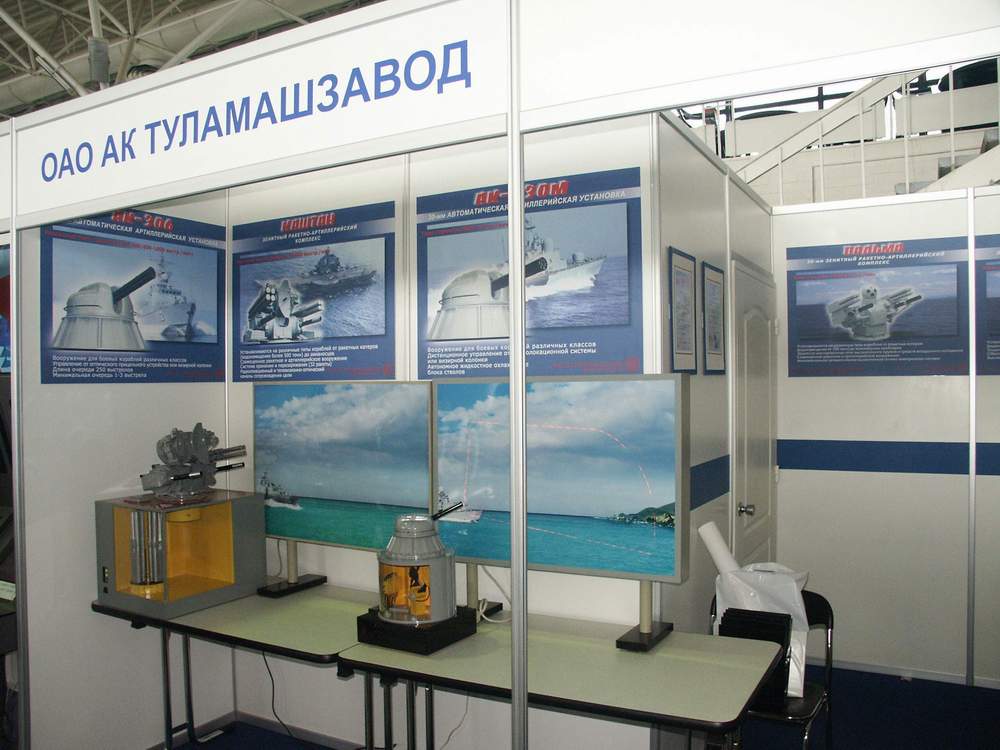
Udaloy I (2 sets of 2x AK 630 plus 1x Bass Tilt)
Udaloy II (2x Kashtan fire unit + 1x dedicated search radar)
Delhi (P15): (2 sets of 2x AK 630 plus 1x Bass Tilt)
Surely you could fit 1 Kashtan en lieu of 2 AK630s and 1 Bass Tilt (i.e. you got space to go up to accommodate the taller ‘box’ that Kashtan is)
As for Barak, IN has thus far ordered 17 systems. 1 each went onto INS Viraat, INS Ganga (Godavari class) and INS Delhi (Delhi class). With their respective P15 and P16 sisterships, this accounts for 7 systems. The Brahmaputra and sisterships (P16A) still lack a SAM beyond MANPADS. They are a likely further candidate. So, IMHO 10 out of 17 systems ordered are accounted for. Where will the remaining 7 systems go?
Talwar class: already has Kashtan
P17 “batch I” (Shivalik and first couple of consorts): weapons fit similar to Talwar class, has been depicted with Kashtan.
ex-Gorskov? Possible but unlikely as this has consistenly been depicted with 2 Kashtan incorporated in the front and rear of the island structure and the Russians have consistently opposed attempts to fit it with Barak.
Other possibilities:
ADS (1 planned)
P15A (3 planned)
P28 ASW corvettes (4-6 planned)
P17 “batch II” (?)
Rajput/Kashin upgrade (2-3?)
My assessment is that the remaining 7 Barak systems will go onto:
a) ADS + all 6 P28, or onto
b) ADS + first 4 P28 + 2 upgraded Rajput, or onto
c) ADS + 3 P15A + 3 upgraded Rajput
IMHO (a) is most likely. Like P16 and P16A, P28 will mainly be ASW unit and will have Barak (and only Barak) as self protection SAM. I think it is highly likely that all new built Shtil equipped ships will also receive Kashtan, like Talwar and P17 (Shivalik) classes.
WanshanS, the top plate in indian service is called FREGAT. any info you have on FREGAT would be nice.
Lets not confuse the radar’s name (FREGAT) with its kind (FREquency SCAN)
WanshanHere’s two other systems using planar phased arrays
Dutch: APAR (Thales)
Israeli: MF-STAR (Elta)
WanshanThe design is still cluterred.. though much better then the Delhi class..
What are the technical specifications of Israel’s STAR radar
RAN40L
http://www.naval-technology.com/contractors/data_management/ams/press4.htmlRussian Salyut Pod Beryo Zovik Radar (It’s known as PODBERYOZOVIK-E FAMILY OF RADARS)
http://www.milparade.com/security/35/042x.htm
IMHO this is the STAR EL/M-2238 (as installed on INS GANGA) and not the MF-STAR EL/M-2248
STAR EL/M-2238 
The 3D-STAR is a multi-purpose, modern naval radar system, representing superior performance capabilities in surface and air search as well as threat alert. The STAR is particularly well suited to supporting the operations of anti-air missile (AAM) weapon systems and is also capable of supporting surface gunnery engagements through a unique splash-spotting capability.
The STAR is a fully coherent S-band pulse Doppler 3D multibeam and multimode search radar. The radar performance Long Range air surveillance combined with surface surveillance and, at the same time, provides fast detection and automatic threat alert of air targets with an extremely low false alarm rate. The STAR supports surface gunnery engagement and anti-air warfare by excellent designation to the fire control system. The STAR, with its superior tracking capability of surface and air targets, is the most cost-effective solution for medium-size ships (Corvette-Frigate), serving as the surface/air search radar, in addition to its threat alert and surface gunnery support roles. The STAR’s azimuth and elevation track accuracy and its high update rate, make it an excellent designator for anti air & anti missile weapon and for ECM or chaff systems.
Main Features
-Pulse Doppler Detection of Air & Surface Targets.
-3D Elevation Coverage.
-Automatic Track-While-Scan (TWS).
-Very Low False Alarm Rate.
-IFF Correlation.
-Advanced Programmable Signal Processing
-Powerful Data Processing.
-Extensive Built-In-Test (BIT)
-Automatic Designation to Ship’s Systems.
-Variety of Interface Capabilities.
Typical Performance
-Fighter aircraft detection at 150 Km (medium antenna).
-Automatic threat alert for attacking missile at 25 Km.
-Surface target detection up to radar horizon.
-Track-While-Scan (TWS) for multiple air and surface targets.
Operational Capabilities
The STAR provides long range detection, high quality missile detection and designation, automatic threat alert, track while scan of air and surface targets and high spatial resolution and accuracy.
Radar Configuration
The STAR is available in single or dual face antenna configurations. The dual face antenna configuration provides double update rate, has two radar transmitters and provides simultaneous Threat Alert and Long Range detection while search, by waveform optimization and inherent radar redundancy. Both configurations are available in two antenna sizes: large or medium size.
Specifications: Medium Antenna / Large Antenna
-Faces: Single / Dual
-Frequencÿ: S-Band / S-Band
-Stabilization: 20° roll & pitch / 20° roll & pitch
-Instrumented Range: 200 Km / 350 Km
-Below deck weight: 1300 Kg / 2000 Kg
-Above deck weight: 750 Kg / 2400 Kg
-Power consumption: 21 KVA / 34 KVA
ELTA Electronics Industries, a subsidiary of Israeli Aircraft Industries, of Ashdod, Israel, has recently sold a number of its EL/M-2238 STAR Naval Multipurpose Surveillance Search and Threat Alert Radars to several customers worldwide. The STAR is a fully coherent S-band pulse-Doppler multi-beam multi-mode and multi-function radar. The radar performs long range surface and air surveillance in azimuth and elevation, provides fast detection and automatic threat alert of air targets and sea skimming missiles, and at the same time serves as designator for the ship’s surface gunnery and anti air/anti missile fire control systems. This combination of functions, formerly requiring two separate radars, makes the STAR the ideal cost effective solution for small and medium size ships, where space and mast-top weight and area is at premium. The STAR features include 3D surface and elevation coverage and detection of air and surface targets, automatic multiple target track -while scan (TWS), very low false alarm rate, automatic designation to the ships’ weapon systems and interface capability with other sensors. The selection of S-band, and combination of pulse-Doppler configuration, advanced programmable signal processing and waveform programming capability, ensures peak performance even in extreme weather and clutter conditions. ELTA has accumulated vast experience in the design, development and manufacture of advanced, state-of-the-art naval radars, and the STAR is a fourth generation in this line. The STAR is currently in series production, and attracts high interest among naval operators around the world.
MF-STAR EL/M-2248
Elta Systems Ltd of Israel has unveiled a new naval active phased array multifunction radar. Operating in E/F-band (S-band), the EL/M-2248 MF-STAR includes four ‘instantaneous multibeam’ solid-state receive/transmit arrays with a weight of 1,500kg each (plus 900kg below deck).
The MF-STAR, which follows a trend set by active phased array radars such as the Alenia Marconi Systems Sampson, CEA Technologies CEA-FAR, Raytheon AN/SPY-3 and Thales APAR and SEAPAR, would be capable of automatically initiating tracks beyond 250km for high-flying fighter aircraft and beyond 25km for sea-skimming anti-ship missiles, Elta said.
The system’s spatial coverage would cover 360º in azimuth and between -20º to +85º in elevation. Operational capabilities quoted by the Israel Aircraft Industries subsidiary include full littoral warfare support, simultaneous multi-engagement support, active and semi-active missile support, 3-D (three-dimensional) long-range air surveillance, 3-D medium-range threat alert, missile horizon search and threat alert, maritime surface surveillance, target classification (including helicopters) and gunfire control and splash spotting.
According to Elta, the EL/M-2248 MF-STAR’s “scalable, modular, lightweight antenna” technology can be “tailored to fit relatively small ship sizes (corvettes and above)”. Company literature shows the system installed on one of the Israel Defense Force/Navy three Eilat-class Saar 5 stealth missile corvettes, but it is unknown whether such a retrofit is actually planned.
Wanshanthere was speculation that israel is working on naval version of lora my guess is that it will used instead of dhanush onboard vessels.
As for ciws for the P-15A its up for speculation but there were reports of more barak systems being ordered my guess is mixture Barak and ak-630 will fitted on the vessel rather than Kashtan because the latter require deck penetration and P-15A doesnt really seem to have room for that.
Well, that’s not entirely true. IMHO 1 Kashtan mount will take up about the same (under)deck space as 2x AK 630. Compare for example the russian Udaloy 1 (2×2 AK630) and Udaloy 2 (2x Kashtan). Also compare the russian large cruisers: newer units have 1 Kashtan mount where older ones had 2x AK630.
WanshanThe F-100 is the least capable, but with it’s pure american suite, it was exactly what the Aussies wanted.
You realize the F-100 is from Spain?
Observation on the use of corvette/frigate/destroyer/cruiser designatinos: in the context of funding and budget discussions the tendency is to call a cruiser a destroyer, a destroyer a frigate, a frigate a corvette and a corvette and opv etc. Once in the water, the tendency goes in the opposite direction, trying to impress/intimidate the neighbors by saying an opv is a corvette, a corvette is a frigate etc.


 Sign In








