Wanshan
Not so unusual, and understandable…
X
Not my words/assessment
WanshanThere is no 9.5 ton engine for Rafale. and UAE simply wont fund 9ton as it is not commercially viable. In absence of second French carrier. I doubt there will be more Rafale Naval orders. Do Rafale wings fold up.
The Rafale M features a greatly reinforced undercarriage to cope with the additional stresses of naval landings, an arrestor hook, and “jump strut” nosewheel, which only extends during short takeoffs, including catapult launches. It also features a built-in ladder, carrier-based microwave landing system, and the new fin-tip Telemir system for syncing the inertial navigation system to external equipment. Altogether, the naval modifications of the Rafale M increased its weight, it is 500 kilograms (1,100 lb) heavier than other variants. The Rafale M retains about 95% commonality with Air Force variants including, although unusual for a carrier-borne aircraft, being unable to fold its multi-spar wings for reducing storage space. The size constraints were eased by the introduction of the Charles de Gaulle, France’s nuclear-powered carrier, which was considerably larger than previous carriers, FS Foch and Clemenceau.
WanshanWith the to my untrained eyes low freeboard and other changes to her design I am curious to see how she handles at speed and in any kind of chop. Not a criticism before people jump down my throat but going on how the Kuznetsov handles in rough seas and her rather pedestrian performance its a reasonable question in respect of the Vikramaditya.
Pedestrian performance or not, IN needs to replace her current flattop.
WanshanCAPTOR =
Aircraft, ship or submarine laid magnetically moored mine. More specifically, a deepwater moored torpedo launcher. It is (self) anchored to the ocean floor, where it lies dormant until a target is detected, at which time the torpedo swims out of its capsule to attack and destroy its target. Lifetime is several weeks or months. I suppose it doesn’t come with a mooring cable of unlimited length. Hence, the maximum depth. (But you could have googled that yourself too….)

http://www.fas.org/man/dod-101/sys/dumb/mk60.htm
http://en.wikipedia.org/wiki/Mark_60_CAPTOR
Originally used Mark 46 Mod 4 torpedo with aluminum case, but was then modified to accept a Mk 46 Mod 5 (NEARTIP) torpedo as its warhead. The hardware design for this Mod 1 version was completed under a FY88 program.
So, I don’t think MK60 CAPTOR was/is produced with anything other than MK46. However, I suppose the principle could be applied with any lightweight ASW torpedo.
Similar to the US Navy’s CAPTOR mine is USSR/russian federation PMR/PMK-1. PMR is a 21” diameter submarine-laid mine designed to actively attack shipping. The PMR sits horizontally on the seabed; a passive sonar hydrophone compares shipping sounds to a stored threat library and if a target signature is detected; a smaller subcaliber torpedo launches and attacks the target. After 1991, Russia redesignated the weapon PMK-1.
China is working on a similar design.
http://www.usnwc.edu/Research—Gaming/China-Maritime-Studies-Institute/Publications/documents/CMS3_Mine-Warfare.aspx
WanshanСтроку, которую сыновья шлюх!
Well that is what google translate says!
WanshanMk 62/63 (Quickstrike)…conversions of standard streamlined bombs (Mks 82, 83, 84, respectively: 500, 1000, 2000 lb) supersede Destructors EX-52 through -54. The Destructors were magnetic-fuzed. These weapons can be dropped either on land (where they can be exploded by the magnetic signatures of vehicles) or in shallow water. Assembled very quickly using stored fuzes, Mk 62/ 64 are called Quickstrikes. All have standard thick-walled bomb casings, and their tails are adaptable to parachutes.
…These weapons use 2 alternative target-detection devices (TDDs): Mk 57 (magnetic-seismic) and Mk 58 (magnetic-seismic-pressure). Presumably, seismic is, in effect, an acoustic sensor using sound as transmitted through the sea floor rather than directly through the water. These units are to be replaced by new Mk 70 and Mk 71 TDDs.
The QUICKSTRIKE Service Mine Mk 62 is an explosive-loaded (H-6 fill) bottom mine operationally planted by personnel flying B-52H Stratofortress, F/A-18A/D Hornet, F-14A/D Tomcat, B-1B Lancer, B-2A Spirit, or P-3C Orion aircraft. This mine is currently being flight tested on the F/A-18E/F Super Hornet with carriage approval expected in the near future.
This 500-pound mine consists of a thick-walled general purpose (GP) Bomb Mk 82 incorporating an Arming Device Mk 32, and a Fin Mk 15, Fin BSU-86/B, or Tail Section Mk 16. The mine uses a Target Detection Device (TDD) Mk 57 (magnetic and seismic sensors) to detect stimuli generated by enemy vessels. The mine case is painted either olive drab or gray (new color).
…
The QUICKSTRIKE Service Mine Mk 63 is an explosive-loaded (H-6 fill) bottom mine operationally planted by personnel flying B-52H Stratofortress, F/A-18A/D Hornet, or P-3C Orion aircraft. This mine is currently being flight tested on the F/A-18E/F Super Hornet with carriage approval expected in the near future.This 1,000-pound mine consists of a thick-walled general purpose (GP) Bomb Mk 83 incorporating an Arming Device Mk 32 and a Fin MAU-91A/B or Tail Section Mk 12. The mine uses a Target Detection Device (TDD) Mk 57 (magnetic and seismic sensors) to detect stimuli generated by enemy vessels. The mine case is painted either olive drab or gray (new color).
http://www.hartshorn.us/Navy/navy-mines-12.htm
http://www.fas.org/man/dod-101/sys/dumb/mk62.htm
http://articles.janes.com/articles/Janes-Air-Launched-Weapons/Mk-62-63-64-and-65-Quickstrike-Mines-United-States.html
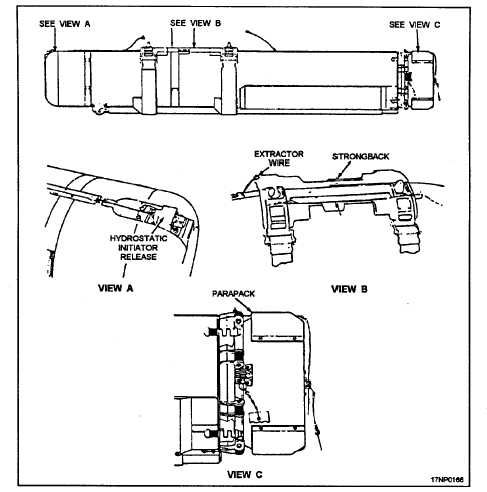
Mk 60 Captor Mine The Mk 60 captor mine (fig. 5-12) is an air-laid antisubmarine mine. This mine, when triggered by the influence of a submarine, launches a homing torpedo. A strongback assembly is used to attach the mine to aircraft bomb racks. Two Mk 3 suspension lugs threaded into the strongback provide a 30-inch suspension. The mine uses a parachute pack to slow descent and reduce impact when the mine enters the water. An explosive fitting actuated by a single arming wire opens the parachute. After entering the water, the parachute pack and strongback separate from the mine, and the stabilizer deploys. The mine is armed by a hydrostatic initiator, which is held in the safe position by a single arming wire. The Mk 60 configuration requires arming wire installation prior to aircraft loading
WanshanWell any upgrade should involve the cutting of several hundred holes for oarlocks to allow the crew to row when the boilers inevitably break down.
Certainly no lack of vision here :p:D:rolleyes:
WanshanThanks a lot! May I know where you got those drawings?
From those pics it’s unlikely that removing the Granits will allow for a hangar extension as people have speculated. That area can better be used for additional fuel bunkarage or storage of ammunition for the aircraft.
You could still do it if you use areas immediately forward of the hanger and relocate their functions to other vacated areas (due to missile launcher removal) located even further forward.
WanshanData fusion + second captain? :diablo:
WanshanThe hangar is not adjacent to the launcher bay.


WanshanIt’s the Rezistor-K4 TACAN(Tactical Communications and Navigation) system for the ship’s aircraft. Pretty bulky compared to Western analogues, but I guess that’s due to the 80s vintage design(It was originally designed for the Baku).
http://www.harpoondatabases.com/encyclopedia/Entry2583.aspx
This raises some questions…
WanshanWanshanNice. If Damen can work like this with PAL, then perhaps we will in time see a similar arrangement with the Damen Yard in Vietnam…
Wanshanwill anti ship missile using ir or iir seeker like AGM-119 or NSM be useless if the enemy ship is equip with something like intermat or Camuflaje Adaptiv:confused:
http://www.youtube.com/watch?v=6jxAeA7IU-c
http://www.bbc.co.uk/news/technology-14788009
http://www.army-technology.com/contractors/camouflage/intermat/
The pixels can also be resized to achieve stealth at different ranges. For example, larger objects like buildings or warships might not require close-up stealth and may be fitted with larger panels to display a lower resolution image
A similar system is also under development in israel – ‘Invisible Reactive Armor Protection (IRAP)’ utilizing the ‘Blax Fox’ thermal camouflage system from Eltics and IMI’s hybrid armor technology. In the U.S., DARPA and the U.S. Army research and development center have pursued similar capabilities for future spirals of the ‘Manned Ground Vehicle’ – the core maneuver element of the now terminated Future Combat System.
http://defense-update.com/20110905_bae-adaptiv_camouflage.html
Seems there are some trade offs involved (long v short range ‘cloaking’). And so long as your missile can take extrernal inputs, you can always get a shot it, I suppose.
Wanshanwill anti ship missile using ir or iir seeker like AGM-119 or NSM be useless if the enemy ship is equip with something like intermat or Camuflaje Adaptiv:confused:
http://www.youtube.com/watch?v=6jxAeA7IU-c
http://www.bbc.co.uk/news/technology-14788009
http://www.army-technology.com/contractors/camouflage/intermat/
The target selection technology provides NSM with a capacity for independent detection, recognition, and discrimination of targets at sea or on the coast. This is possible by the combination of an imaging infrared (IIR) seeker and an onboard target database. NSM is able to navigate by GPS, inertial and terrain reference systems. A multi-role version of the NSM is in development. This missile is called Joint Strike Missile (JSM) and will feature an option for ground strike and a two-way communications line, so that the missile can communicate with the central control room or other missiles in the air. Like its Penguin predecessor, NSM is able to fly over and around landmasses, travel in sea skim mode, and then make random manoeuvres in the terminal phase, making it harder to stop by enemy countermeasures
source: various wiki’s


 Sign In