Wanshan
from the article…
both CO & XO gets the same picture at the consoles and w.r.t XO, this is what it says…
this probably means XO needs to assign what weapons needs to be employed for the specific threat and the system only presents him the options to choose from for engaging the target. It means a manual input (operator) for the actions.
But this one w.r.t CO says…
What does he mean by ‘electronically’…? A touch screen input instead of physical inputs like buttons?
Final HUMAN decision, otherwise AUTOMATED (man in the loop). Wouldn’t surprise me if there is a ‘full auto’ setting… Anyway, very reminiscent of Russian ‘second captain’ system: computer handles optimization of the engagement, it will be difficult (risky for career) to diverge from DSS ‘advice’.
WanshanShe is a good lookin ship!
The Indian Navy should be very proud and I’m sure She will have a very exciting and extended service life.
I agree, the conversion is actually quite elegant. In a way, it is too bad the same was not possible for her 3 sisterships…
WanshanEveryone DOES know that nobody’s minds are being changed here, right?
Yup. Please send king size steak from VA Beach asap!!!
WanshanHere photos of Teg, when she as in Hamburg:
http://www.modellmarine.de/index.php?option=com_imagebrowser&view=gallery&folder=teg-hamburg&Itemid=55
Source
Interesting, unlike Talwar ‘batch 1’, Teg does not have Kashtan CIWS`but merely a single pair of AK630, which is like the 11356Ms being built for Russia. Makes me wonder whether the IN will bolt on some Barak VLUs and Elta STIR. Or is there possibly something wrong with Kashtan-M? Or is it simply weight penalty of Brahmos use…?


Wanshan^^^ thanks man for digging it all. I’d missed that blog entry. But after reading it, I’m little more confused than earlier. 😀
“Network-centric” is the new buzzword that defines the high-tech combat of today. The Shivalik is supremely well equipped for the new digital battlefield.
In the days of cannon and sail, a warship’s Captain directed battle from the ship’s Bridge, from where he could observe what was happening as the combatants closed in, raking each other with cannon-fire. Today it all happens at far longer ranges. Battle, for the Shivalik’s Captain, would be a high-stakes video game conducted from an Operations Room, the enemy only a blip on a radar screen.
The nerve centre of the Shivalik’s battlefield capability is an indigenous design triumph called the AISDN (short for ATM-based Integrated Services Digital Network). This is a backbone network that allows all electronic information from the Shivalik’s systems and sensors — e.g. engines, navigation devices, radars, weaponry, radio sets and control systems — to be transmitted digitally all over the warship on a common data base. Designed by Bharat Electronics Limited (BEL) in partnership with Centre for Development of Telematics (C-DOT), this common carrier takes vital information to the Shivalik’s commanders in real time on multi-function displays.
“This is as good, if not better than comparable systems on any warship in the world”, says Captain Sunder. “On earlier warships, weapons had a separate data bus, sensors had their own bus, and so on. Now, the AISDN integrates all that, and also information coming from sensors outside the Shivalik, such as from Unmanned Aerial Vehicles (UAVs) or Airborne Warning and Control Systems (AWACS).”
Taking feed from AISDN, is another network, the Computer-aided Action Information Organisation (CAIO), which brings to the captain a complete electronic picture of the battlefield. This is the heart of the weapons exploitation system, laying out for the Captain all the information about targets being picked up by the warship’s sensors and radars.
This will also be transmitted to the ship’s Executive Officer (XO), the second-in-command after the Captain, and the man responsible for the ship’s weaponry. From his console, the XO electronically assigns each detected target to one of his weapons.
When the Shivalik’s radars detect an enemy aircraft, the CAIO will show it up on the consoles automatically. The CAIO includes a Decision Support System that will suggest what to use to shoot down the aircraft; the final decision, though, is that of the commanding officer. He could decide to use the 76mm gun; the command will go electronically from his console to that of the gunnery officer controlling the gun. Alternatively, he could choose to use a missile. Either way, the detection, the information, the allocation of a weapon to the target and the actual engagement itself, would all be done electronically.
Assisting the Captain in managing the battle would be a multi-function, touch-screen console called the Integrated Versatile Console System (IVCS), providing pinpoint navigational information, the ship’s course, position, and its engine parameters.
The ship’s movements are controlled through an Integrated Machinery Control System (IMCS) that links all the ship’s engines and other auxiliary machinery, via optic fibre cabling, to various control points. The Shivalik’s four generators, which together produce 4 Megawatts of power, enough to light up a small city, are controlled through the Automated Power Management System (APMS), which senses the requirement of power at all times. No sailors are needed to constantly monitor power requirement or to switch on and off the generators.
The Shivalik is also equipped for the nuclear and chemical battlefield. It is the navy’s first ship with a Total Atmospheric Control System (TACS), which filters all air going into the ship at all times, including the air being used by the engines. This would remove radioactive, chemical and biological impurities, protecting the crew and the systems. For this reason, the Shivalik is centrally air-conditioned and has no portholes. There are also decontamination facilities on board in case the ship passes through an area where the radioactivity from a nuclear strike still lingers.
http://ajaishukla.blogspot.nl/2009/03/visit-to-ins-shivalik-indias-newest.html
Also use: http://ajaishukla.blogspot.nl/search?q=shivalik
WanshanI think this shows the 3 fire extinguishers, in red, along the port flight deck edge.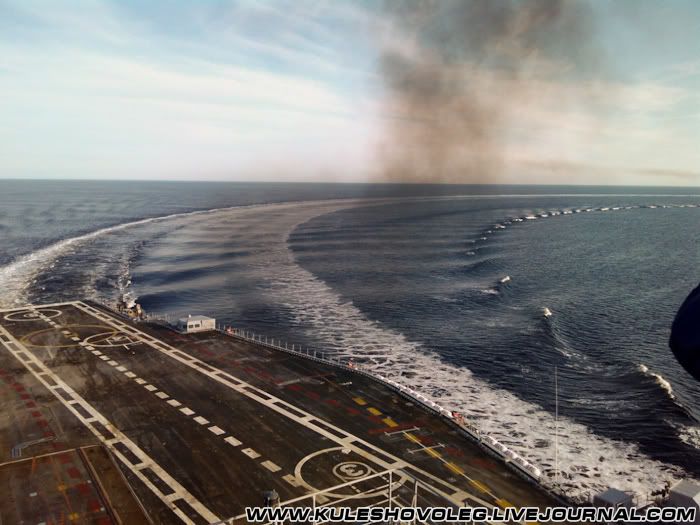
WanshanWHat did Venezuela get out of this delivery (if it happened)?
WanshanWanshanI think that’s a popular western misconception.
Yefim Gordon’s ‘Soviet Jump Jets’ (Red Star Vol. 36) has an interesting table of attrition stats for VTOL aircraft.
I won’t type all of it but the following rows are interesting….
…………………..USA….UK….USSR
Total aircraft…. 110…..105……45
No of Accidents.. 29……28…….10
Pilots Lost……….10……..9….NoneDunno wwhere the stats come from – or whether they are accurate – but it seems it wasn’t the ‘death trap’ of western propaganda.
The Yak-38 had marginal performance, but it was first gen for the Soviets – so cut it some slack.
Ken
Agree. Would be interesting to add numbers operated to this table plus e.g. sorties or hours flow.
WanshanWOW! Great design there.:eek: It is telling when China can design and build its own LPDs while Russia has to import Western designs…
1 design was chosen for import (a first in recent – post ww2 – history)
It is not a given that Russia cannot design it own LPD (choosing not to is a different thing). See e.g. Ivan Rogov class (Project 1174).
http://en.wikipedia.org/wiki/Ivan_Rogov_class_landing_ship
And then there’s a few that were designed but never built e.g:
Project 10200


Project 11780
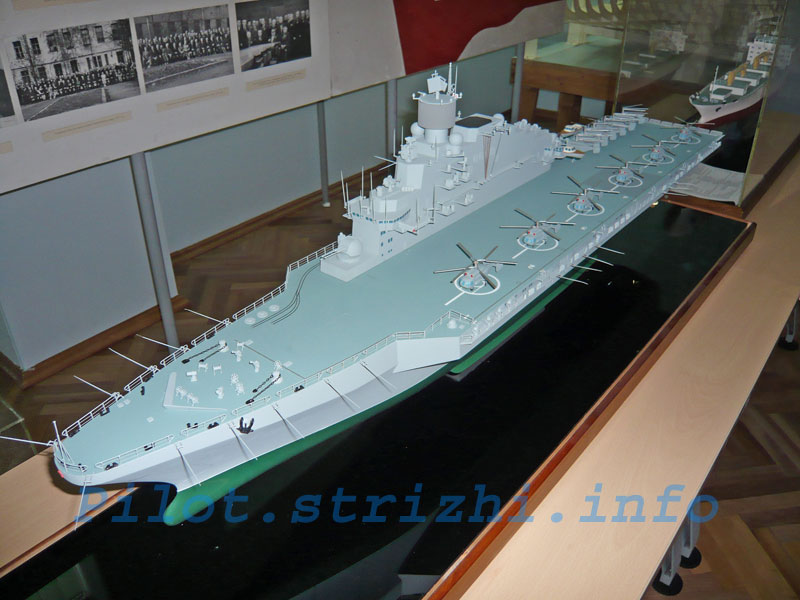
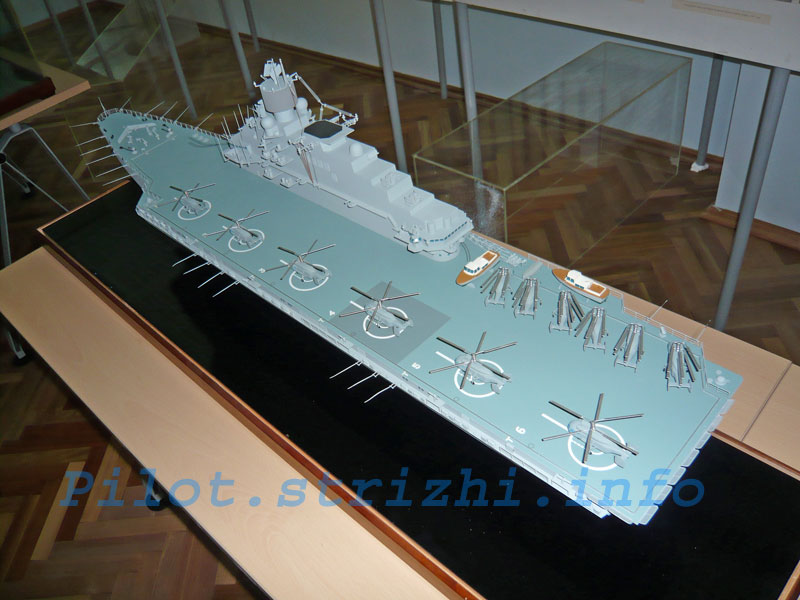

And others:

WanshanThanks Wanshan, yeah I can see the two on the hanger.
Witcha also gave the link and its now clear.
FIre extinguishing equipment tend to be painted red …. :diablo:
Wanshan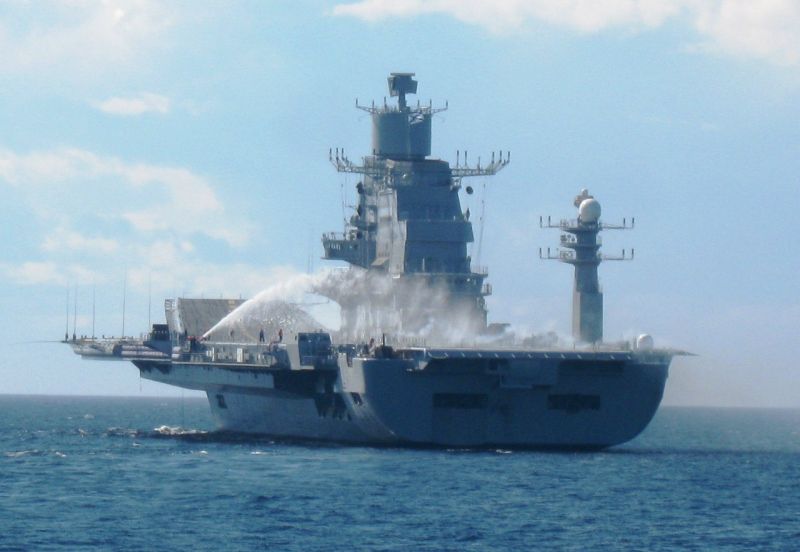
Wanshan^^ Wanshan,
Yes, but I’m not sure, maybe you are right…. but on the Vik, there are suppose to be three water cannons to cover the aircraft parking area
Compare Delhi class, forward corners of the hangar section of the superstructure, just aft of the rear funnel.
WanshanSina FACs and Mowj corvettes: to replace aging hull no doubt..
WanshanProbably testing their fire-fighting cannons…. one is also at the stern @port side and one at front…
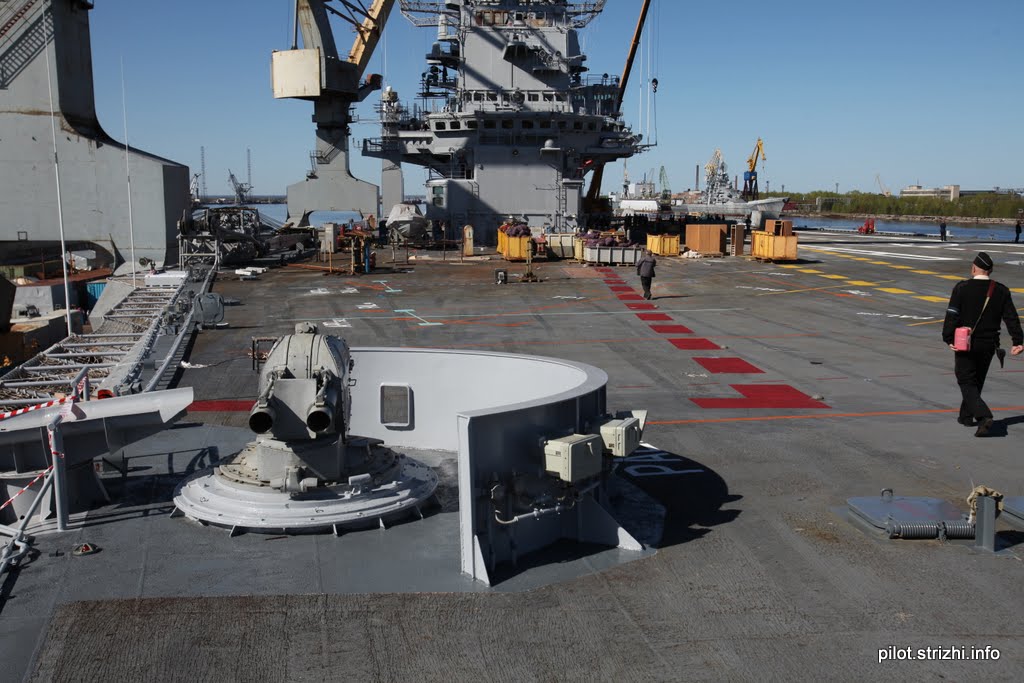
In case you’re referring to that double barrelled thingy, I was under the disctinct impression that was a piece of ECM (PK-2 decoy launcher system).


 Sign In