 Bager1968
What is a “forward looking infrared radar”? Somebody doesn’t know what he’s talking about.
That always makes me laugh when I hear it.
I’ve been hearing that misnomer ever since starting maintainer school for the AN/AAS-33A DRS in October 1982… many times from those in the military who should have known better!
Bager1968Over on PPRuNe, there has been some “concern” expressed about the amount of flexing in the vertical tail after landing in the video. Anyone here notice that?
Bager1968Actually, it is more from a “reduce the maintenance” perspective, as part of the ~30% reduction in ship’s company that CVN-78 achieves over CVN-77.
Urinals are, from what the USN says and from what those who have done plumbing maintenance aboard ship say, more frequently plugged-up or otherwise defective… to the level of requiring nearly twice the man-hours per urinal as per toilet.
Bager1968I suppose there is some degree of resemblance… but there are only so many ways to engineer a “T-tail”, and the British & German commercial T-tail designs were also similar.
😉
Bager1968The ship is “built around” the diesel engines, but NOT the GTs.
That is because the GTs will be removed on a regular schedule, to be replaced by one which has been overhauled. The removed GT will then be overhauled.
Therefore they had to be placed where they could be easily accessed.
Bager1968As far as I can find, there is nothing to indicate a different shape… just different materials/internal design.
Bager1968The problem with that is turbofans do really well at low/medium altitudes and speeds, but really drop off in actual power output at high altitudes and supersonic speeds.
This is why the British F-4s with Speys had a lower max operational ceiling and lower “max speed at altitude” than the J79-powered F-4s, even though they put out more thrust than the J79s on the test stand.
This is fine for the subsonic Sea Vixen, and for the A-7D/E (which used the Allison-modified Spey-based TF41), as they both operated at low-medium altitudes and were barely trans-sonic in a dive.
The Lightning, on the other hand, was a high-speed/high-altitude interceptor, so replacing its Avons with Speys will, while increasing range/mission duration, lower its max speed and max altitude.
If you are trying to make a more multi-role fighter then this is acceptable, but the bomber-interceptor role will remain with the Avon-engined Lightnings.
Note that the F100/F110 engines in the USAF F-15/F-16s were of a lower bypass-ratio than the Spey… they had a worse SFC (.73-.75), but lost less thrust at high-speed/high-altitude.
The F-111 & F-14 both used the TF30… which was of similar characteristics to the Spey (but less-well-implemented), and suffered the same high-speed/high-altitude power loss. This was fixed in the F-111F by up-rating the TF30 to ~25% more thrust, and in the F-14B/D by installing F110s (also of higher thrust than the TF30s they replaced).
Bager1968It was stated in a documentary that I saw on TV some years ago. An RAF officer (I seem to remember) saying that the
technology on the Sea king was 20yrs out of date, by the time it came into service. May have been on Ark Royal ?
I don’t recall the Mark of aircraft in question.I’m only repeating what was said.
Pay attention to what you just said… RAF officer, NOT RN FAA!
Sea King first flight 1959;
RN Sea King ordered 1966 (first 4 assembled in US & flown 1966);
First Westland-produced Sea King delivered 1969 (with then-state-of-the-art ASW suite, but 10-year-old airframe/powertrain/rotor design);
First RAF Sea Kings delivered 1978… so THOSE were the “20-year-old” airframe/powertrain/rotor design!
Bager1968But in a Jan. 3 solicitation, Naval Sea Systems Command (Navsea) says it “has a potential requirement for design and construction of a steel deckhouse and hangar superstructure, and aft peripheral vertical launching system (PVLS) modules for DDG-1002. This requirement will be solicited without full and open competition … from the only two sources in the Navy’s destroyer shipbuilding industrial base: Bath Iron Works (BIW) … and Ingalls Shipbuilding.”
HII officials declined to discuss the solicitation specifically, but they note that it comes just as the Navy and Ingalls have begun negotiations on building the ship’s deckhouse.
The Navy solicitation says, “This limited competitive procurement is an alternative to construction of composite deckhouse, composite hangar and aft PVLS for DDG-1002 by Ingalls … in the event a contract is not awarded non-competitively to Ingalls.”
Navsea spokesman Christopher Johnson says, “The notice was published as part of a risk-reduction strategy to provide the DDG-1002 composite deckhouse, composite hangar and steel aft peripheral vertical launching system to support the ship construction schedule.
BIW and HII will be given the opportunity to compete in a limited competition for the production of the components should the Navy and HII be unable to reach an affordable, fair and reasonable price for the DDG-1002 composite and steel components. Deckhouse construction material has no impact on the stealth characteristics of the ship.”
Sounds like there might be problems in composite-land… and the fire in the Indonesian vessel cannot have boosted the USN’s confidence in the safety of the material any.
So it is a “plan B” in case the contract negotiations for the composite deckhouse cannot be concluded at a price the USN is willing to pay, and in case tests show its fire-safety characteristics are unacceptable..
Bager1968The USMC has phased out all of its CH-53A/Ds, replacing them with the 3-engine CH-53E (the USMC D-model’s last combat mission was in Afghanistan during late February 2012; it was taken out of service afterward.).
Israel operates a modified version of the 2-engine CH-53D (as does Germany).
There are a lot of surplus A/D airframes in storage, so selling off some to keep an ally’s fleet operating is an expected thing.
Bager1968Alphajets are ideal for this kind of work.
Of course, that’s because they were designed with this kind of work in mind…. 😉
Bager1968I am formally requesting that a MODERATOR remove these “Typhoon vs Su-35” posts from the SAAB GRIPEN thread, and place them in their own thread!
Bager1968Precisely… the engine idea started with a French engineer, passed through the Americans to the British, then found its way to another Englishman via another Frenchman to develop the aircraft.
Then the Americans provided most of the funding & significant technical assistance in the development of the first flight articles. (1.2 & 1.3)
Then the Germans helped with funding of the development into a combat aircraft. (1.4)
So we see 4 nations intimately involved, all under the umbrella of NATO co-operation.
Bager1968
http://tanks45.tripod.com/Jets45/Histories/B17/B17.htm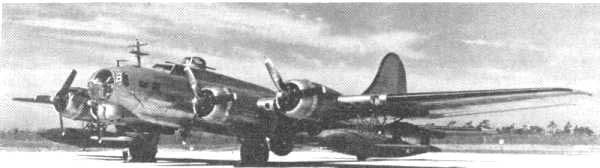

Tin Triangle’s links: (the first one is available in a much larger version at the flickr site by choosing “original” via this link) http://www.flickr.com/photos/amphalon/5531255071/sizes/z/in/photostream/
Alternate site for http://mcfisher.0catch.com/scratch/v1/loon_b29.jpg
http://tanks45.tripod.com/Jets45/Histories/B-29/JB-2.jpg
And the original for http://mcfisher.0catch.com/scratch/v1/loon_b29.jpg
Bager1968I’ve always wondered about this and the pics are good illustration. If that green engine wasnt available at the damaged A-10s recovery base would that aircraft have flown again as soon as it did?. Is survivability all its cracked up to be if, on day 2, you are launching half the planes you did on day one because half came back shot to bits?
Good news for the pilots that their planes got them back of course, but, better if the aircraft didnt get hit in the first place and available the next day or, perhaps, didnt have a human component to worry about?
Better yet if we just had a magic lamp we could rub and wish reality to alter however we want, eh?
Sorry, but we are talking about what is available and in-service NOW, not “might be in service 10+ years in the future”.


 Sign In







