crobato
It does not change the fact that the primary fighter design was a single engined one, and the twin engined version was nothing but an adaptation. That means this fighter was not designed to have twin engines in the first place, which is fundamentally different from the J-8I.
http://wp.scn.ru/mig_okb/planes-exp-e152a
The second E-152A prototype was under construction till October 1959; later it was used to build the second E-152 prototype powered by R-15-300 engine.
Look, they converted the second plane back into single engined configuration. Can you do that on a J-8I?
crobatoWhat you’re saying is pure BS if you ask me, since you don’t have the proof even from OKB MiG’s own history.
The fact remains the Ye-152 was primarily designed as a single engined fighter, the twin engined one was a test platform alternative. as a matter of fact the second Ye-152A was converted back into single engine.
The J-8 on the other hand, was built as a twin engined fighter from the start. The whole physical design of the Ye-152 was for a single engined, and the twin engined one was only meant to test the plane while it was awaiting its real engine. That means your structural airframe and intake-engine duct design would have been very different.
Here is a googled translation of the J-8 history. Note how much more information. You get dates, you get names of people, even results of test flights and specific details of their problems for example. That’s quality information, not innuendo.
***
May 1964 in the air by the Institute developed on the basis of MiG-21 high-altitude high-speed fighter. In October the same year programme to combat demonstration for the Air Force’s B-58 bombers twice the speed of sound at high altitudes and F-105 fighter-bombers. Prior to 1000, such as Huang of the Shenyang Aircraft Research Institute, in the MiG-21, F-7 aircraft systems theory, finished annex and test methods such as in-depth research, and the aircraft wreckage to the United States in the annex were analyzed. This imitation of the F-7, F-8 to design a technology reserves. July 1963, Huang Xu Shunshou 1000 together with a “62-(Mig – 21 type) aircraft design work of the key technical issues and research projects,” Technical Report summarizes the “thoroughly” in the work results and experience. In this way, China’s aviation industry has steadily to a self-designed Mach 2 times the speed of sound fighters – F-8 new stage.
To meet requirements of high-altitude operations, the Shenyang Aircraft Design by F-8 design idea: Focus on high-altitude, high-speed performance, increased range, improved climb rate and the strengthening of firepower. Identify design options, the adoption of “single” (Ap-style layout, but we are now into the development of the F-known -9, with the development of a new turbofan engine), or a “double” (with two improvements are a turbojet engine -7); “nose inlet” or “both sides Inlet” key technical issues, there is a heated debate.
Tang Yan-president of the Institute for Aviation, 1000 by Huang, Nan TING consistent with the views of experts such as “feeling river stones, to win the first battle,” and step-by-step strategy. Decided to adopt a “double” option. The programme literally behind the single programme, but in fact the plan was too ahead alone, can not be realized. Thus, “double” increase the feasibility of developing the plane. Based on the above views, and the MiG-21 decided to adopt a similar “nose intake” program, the reference to MiG-shape – 21, did not make major changes, a big sweep, small aspect ratio, thin delta wing, the next Hirao, double layout Fuqi aerodynamic form. The MiG design bureau in the MiG-21 developed on the basis of E-152 series of large-scale single fighter, the West has been speculation F-8 derived from the design of E-152, but there is no big two points in common, and also the starting point different.
Selection of the programme two turbojet -7 A (WP-7B) engine, the largest single thrust 43.15 KN, a single thrust Afterburner 58.8 KN. Here must also be discussed turbofan -6. December 1960 the Central Military Commission decided to set up the Institute of Aviation, in August 1961 in the form of Shenyang Aero Engine Design Institute. Miss Wonderland engine renowned experts was appointed deputy director of technology, technical awarded the rank of Colonel. The Institute for the MiG-21 “thoroughly imitation to design their own” played an important role, the MiG-21 engine thoroughly formed a relatively mature turbojet -7 series. At that time the country’s industrial foundation is weak, the development of the aviation industry by big powers to contain and blockade, and take the road of the introduction of digestion, is a wise move. Specific “to digest the introduction of” is, in fact, the first step is carried out first F-8, the decision-making process as mentioned above; engage in the second step annihilation -9, that is, high-altitude high-speed, all-weather fighter, supporting the Afterburner-turbofan engine project No. turbofan -6. F-8 successful service, but the F–9 later detained. With the support of the identification, on May 17, 1965, Luo Ruiqing chief ratification of the new F-combat mission to develop indicators and skills, and officially named the F-8. Shenyang Aircraft Design (601) to specific tasks.
Former general secretary of Hua Guofeng’s inspection tour of F-8. Air Force World:: China’s super Mig – 21: F-8
F-8-after the success of the programme, further implementation of the programme on both sides of intake (F-8 is more than history, the simple fact that the MiG-21 is the magnification, and “further proposals” is the Jian-8 II) . May 17, 65, chief of the General Staff approved the F-8 Luo Ruiqing the tactical and technical indicators and research task. September 65 design work in full swing. Huang, chief designer of the year 1000 in a helicopter crash in the unfortunate victims abroad, the new machine for the technical work of the leadership of Ye Zhengda, Nan TING as the chief architect of the Office for specific organizations. In December, wooden prototype through a review of the following year in March-site design. Early 67 issued corresponding documents, factories began Preparation. July 1968, the first batch of two F-8 assembly completed. July 5, 1969, by Yin-huan driving the prototype made a successful maiden flight. December 1979 F-8 design stereotypes. December delivery of the air force the following year trial, in 1981 the Air Force began equipment.
F-8 highlights high-altitude, high-speed, increased range, increased the rate to climb to enhance performance such as firepower. Compared to the F-7, the performance indicators have improved. Maximum speed of M2.2 maximum Its 20,000 meters above the maximum climb rate of 200 meters per second; basic 1,500 km range and a maximum range of 2000 kilometers; set out in the height of 19,000 meters air combat; installation of improved design The Gun and air-to-air missiles, from the installation of the larger search radar. F-8 Inlet to the nose, big sweep, small aspect ratio, delta wing thin, under-tail, double layout Fuqi aerodynamic form. Aircraft Thrust-Weight Ratio of 0.89, better than the F-7 aircraft. These indicators, in addition to a radar, the F-8 design requirements are successfully met. Such as the United States, “firebee” Its practical largest UAV 18,300 m, B-58 supersonic bombers practical Its 19,248 m, and F-8 are fully capable of shooting down. F-105 and the comprehensive combat capability although far more than F-8, F-8 However, if the high-speed pursuits encountered so, it can hardly escape easily. However, the level of the electronics industry led to the backwardness of the most critical Fire Control System radar did not successfully developed, resulting in greatly reduced the combat effectiveness of F-8.
High-speed F-8 is an important indicator. Thus F-8 Gu Songfen deputy chief designer of the Mach number of the F-7, the direction of the Stability and flying qualities to annihilate – 8 provided the basis for design. 601, the Shenyang Aircraft plant, aerodynamic department of experimental research on the technical staff with Beijing Aviation Academy Professor Lu Scarborough, Xu Fang, and so do a lot of wind tunnel tests and research analysis, the F-8’s vertical tail design and Fuqi . End up as a single vertical tail area with double Fuqi.
F-8 encountered in the development of the wing flutter is the most dangerous aeroelastic phenomenon, but also restricting aircraft maximum speed an important factor. Pilot Luming East despite repeated flight risk, Gu Songfen to participate in the high-speed wind tunnel tests oil flow model aircraft, and ground resonance test case, the vibration is derived from spoiler, the preliminary settlement of the problem. Unexpectedly, after eight years later occurred when Transonic vibration phenomenon. Gu Songfen three by driving from the East F-Luming -6 supersonic trainer of the sky, followed by F-8 flight, observed filming the back of the flight line spectrum, and further determine the airflow triage area. The final adoption of partial repair to eliminate air-separation method, and thoroughly solve the problem. Its supersonic vibration in the Mach number is 1.24, by the power of the system vibrations. 601 (Shenyang Aircraft Research Institute) by reference to foreign prototype design, the design of the new damping extinguishers, in the installation of rudder on the Elimination of the supersonic vibration. (Site station Note: do not know how to, but not the LAB This is the great thing done, or negligence in the design.)
Also in 1970, F-8 found in the Mach number, altitude after emerging in the problem of excessively high body temperature. Improved forced cooling method to solve the problem initially. In 1976, the F-8 pilot flight Mach number of large long after the discovery of body temperature is too high, the resistance umbrella and burned umbrella module. 601 Solutions thinking fitness, and 606 of Wang Xu, Shenyang engine plant Heshu love, and others increased cooling common trap door opened, cooling air flow path adjustment, and aim to reduce the engine wall temperature, Annex local products such as cooling and insulation measures can solve the problem of overheating.
Gu Songfen test and inspection, etc. at the scene after the F-8 prototype fuselage overheating.
Air Force World:: China’s super Mig – 21: F-8
Improvement in engine design, hollow leaves Technical problems also made a major breakthrough. To increase the thrust of the engine, turbo-ago about the need to improve the temperature was 100 degrees, but the turbine blades can not afford such a high temperature. 1964, 621 deputy director, casting experts to the use of hollow-cooled by leaves. At that time the technology from abroad just engage, in a highly confidential. – Branch and the Shenyang Institute of Metal, 606, engine plant in Shenyang co-operation and work together key. Shenyang Shi Changxu metal Institute, under the auspices of the Organization Technical problems and overcome the technical difficulties blade casting. First choice for the core in the nearly 100-millimetre-long blade on the uniform thickness ranging from the hole, and the youngest only 0.8 mm aperture. After developing the corresponding mold, have been resolved from batteries, ultrasonic measurement of wall thickness, and other technical issues. 66 developed China’s first gas-cooled porous film cast nickel-base superalloy blades, the engine installed in the test successful, become the world’s second aviation engine used in the foundry air leaves the country. F-8 engine prototype also repeated air parking incident, the initial move to limit the installation of the accelerator card solution, after several incidents of this kind. 601 Liuchunxi, 606 Chiang Yi-he, Shenyang engine plant Ji-Cheng Liu and other restrictions to the installation of the accelerator card and the angle of attack dynamic compensation equipment, the installation of the engine in reverse expenditure laminates, adjusting ring pressure points and other measures, the ultimate solution to the air parking problem. The aviation industry to improve access to scientific and technological achievements second prize.
Air Force World:: China’s super Mig – 21: F-8
F– 8 in the development process due to the special historical era, the guiding ideology and technical capabilities, and other factors, is a mess. Only the first prototype in a test flight, engine and finished the regular failure grounded more time than the duration of the flight. The test should be adjusted in the factory to complete the flight, but in fact did not do so, the longer flight time, increase the difficulty of resolving the issue. Technical and administrative command system several changes, personnel changes too, had also affected the development process. Practical until F-8, has been lagging behind the needs of the situation, U.S. warplanes to a comprehensive low-altitude high-speed Penetration, F-8 immediately become tasteless. At that time, the development of institutional constraints too numerous serious impact on the debate F-8 progress. 20 years later, some people LAB chief personal capacity also made a doubt, of course, GU chief of the division has always been good, the details of the problems that we should not be exaggerated.
From the test process, the July 5, 1969, the F-8 aircraft from Yin-huan driving the success of the maiden flight. “Great Cultural Revolution” greatly hindered the development of the F-8, the first test flight after the leading group, the joint headquarters have been disbanded, regulations, has been damaged, and Nan longevity, Gu Songfen, such as Feng has been the bell stop working. F-8 was at a standstill position. So until 10 years later, in December 31, 1979 F-8方才design stereotypes, and power installations as turbojet -7 B (WP-7B) engine. One year later, the aircraft started to equip our troops. , In the June 25, 80, Shenyang F-8 aircraft factory destroyed in the accident, resulting in the aviation sector to effectively control the quality of aviation products from the production process confined to advance scientific research, design, Preparation, production and after-sales service the whole process. 30-1 weapons by two 30-mm cannon, can be linked to four air-to-air missile. The chart shows that, the F-8-day use of MiG-21 F is the first open-hatch design.
crobatoHere take a note on this one.
http://wp.scn.ru/mig_okb/planes-exp-e152m
E-152M/1, E-152M/2
Aircraft equipped for tests and final development of S-155 intercept complex.
In accordance with the Council of Ministers resolution dated February 5,1962 and the Ministry of Aviation Industry order dated February 17, 1962, two E-152 aircraft had to be re-equipped for tests and final development of S-155 intercept complex. New R-15B-300 engine had to be installed on the E-152/1 aircraft, and flight tests of this new engine should be carried out. E-152/1 aircraft had to be equipped with “Smerch-A” system and K-80 rockets for system tests and development in the interests of 155 aircraft.
E-152M aircraft was armed with two K-80 rockets providing target seeking from any aspect angle, which were slung under wingtips. Aircraft was equipped with “Smerch-A” radar, SAU-1I “Polet” automatic flight control system, “Lazur-M” airborne equipment for command data link, RSBN-2 “Iskra” short range navigation and landing system and KSI compass system. Aircraft was powered by R-15B-300 engine that had increased thrust and fully variable nozzle. Additional fuel was loaded into three fuselage-fairing tanks and in the first fuselage tank.
It was intended to mount destabiliser on the fuselage nose. Therefore nose and tail parts of E-152 fuselage, as well as underwing rocket stores, had to be modified.
Re-equipment of E-152/1 aircraft began after its world record flights and was finished by the late 1962 when the aircraft was equipped with a non-standard engine. E-152M/2 manufacturing was delayed due to absence of standard engine. The aircraft fitted out also with non-standard engine was assembled only by June 1963 and was transferred to the flight test station of the plant on June 14,1963. R-15B-300 No 8 engine delivered in November 1963 and installed on E-152/1 aircraft could be used only for ground tests of aircraft with engine running. Flights were not made since a permit to operate engine in-flight was not available. Flight tests of these aircraft were not started in 1963-1964 because the R-15B-300 engines suitable for flight operation were not delivered. Therefore, the program was cancelled, and E-152A aircraft was used for experimental work. One E-152M aircraft was transferred to Monino Air Force Museum.
LOL, for all the time, right up to the Sino-Soviet split, the Ye-152 was in fact a SINGLE ENGINED FIGHTER fitted with a very different engine, the R-15.
It was only long after this, in 1965 at least, that the Ye-152M had the two R-11 engine configuration.
The evidence of the time line and MiG’s own direct history is totally against you.
crobatoThe YE-152 does have two ventral fins
and has a narrow spine
The difference in inlet cone/ramp/radome is explained because the J-8I is faster than the Ye-152A
http://www.airwar.ru/enc/xplane/e152a.html
The Ye-152 is a more crude design but we can say differences do not mean not having a common origin but simple refinements
Do note that the plane you were showing is the original Ye-152 that happens to be a SINGLE ENGINED design.
It is this, the later Ye-152M, which was made after the Sino-Soviet split, that had the twin engine design.
crobatoYeah and you have proven your point with evidence? have you? you do the same you rely in fantasy fan boy sites where they are embarrased of admiting any russian relation the Chinese aircraft have even denying the WP-7 is the same R-11, they call J-7 instead of MiG-21 or WP-7 instead of R-11 and they give a very long list of supposedly hypothesis to prove that there is no relation between the Chinese programs and their original Russian models, yeah yeah yeah the hard evidence is the same leve in both sides.
That fantasy “site” you are referring too happens to be giving a specific time line, names and data on the projects. And you?
And later you even claim to be the expert the lectured one and even say i was trying to avoid this discussion but for the sake of the truth yeah i will give you my distorted point of view yeah yeah.
As i said to Crobato i will say to you, China has indiginized many original Russian or foreign designs and has adapted to some degree foreign technology to some of the chinese lead designs such as the JH-7 or FC-1.
The fact that JH-7 uses a Rolls Royce engine does not make Rolls Royce the designer of the plane. By your logic, the Gripen would be designed by GE.
Oh like some Russians that want to claim that the Yuan class submarine is a copy of Kilo class. The only thing similar of the two is the torpedo tube layout, and everything about the two subs are very different, in dimensions, proportions, plane designs and all. Now they want to claim the Yuan is a copy of their Amur, despite that the Yuan came out two years **ahead** of the Amur and is —much bigger—.
Oh and just like the 093 Shang class = Victor III class argument that got totally sunk the moment the first publicly revealed photos of the Shang were revealed.
The modern J-8II is a good example, it has gotten rid of the original Russian tech in later variants but still the early models did have russian designed technology built in China,
China did study the splitter intake technology from the MiG-23 but splitter intake technology itself is NOT Russian. They can easily study that from crashed F-4 Phantoms too, the design is still the same, and the Russians probably got the design itself from the US.
The Chinese designers have their merits and have their originality however getting rid of foreign input by some seudo Historians is a hideous attempt of rewriting history
On this case however, you’re the one trying to rewrite history. You have never managed any counterpoint to the historical arguments and data. The logic is so fraught with inconsistencies.
Why does China, who is almost at that point in arms against Russia, get the blueprints of the SU’s latest fighter for FREE, when more trusted Warsaw Pact nations DIDN’T. When India, a closer ally to the Soviets, DIDN’T either.
And why this plane? Why not the Su-7 Fitter or some other design?
Another argument against you is that Ye-152 is a fighter and interceptor that was intended to be used by the PVO or Strategic Air Force, and the Russians simply don’t export away or share their strategic assets (though some Foxbats went to Iraq). And they would certainly not GIVE AWAY THE BLUEPRINTS OF A STRATEGIC WEAPON FOR FREE TO A POTENTIAL ADVERSARY. That would be like giving the blue prints to the Tu-160 for free to China. Look at the fact that Russia DID NOT SELL MiG-31s to China, and they were already at infinitely friendlier terms terms, and China was going to fork out money too.
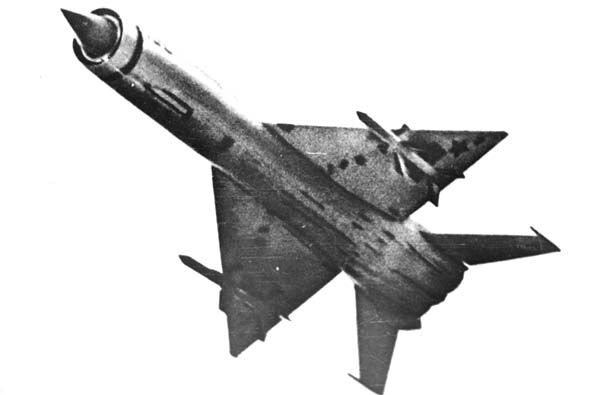
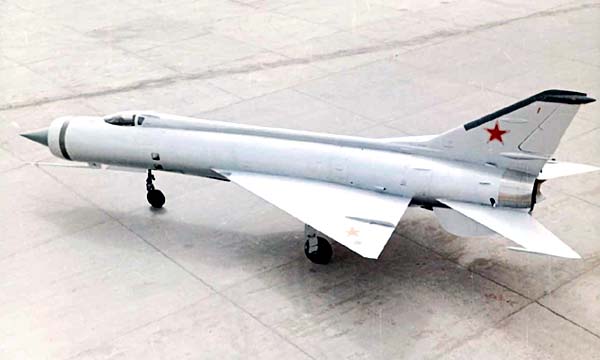
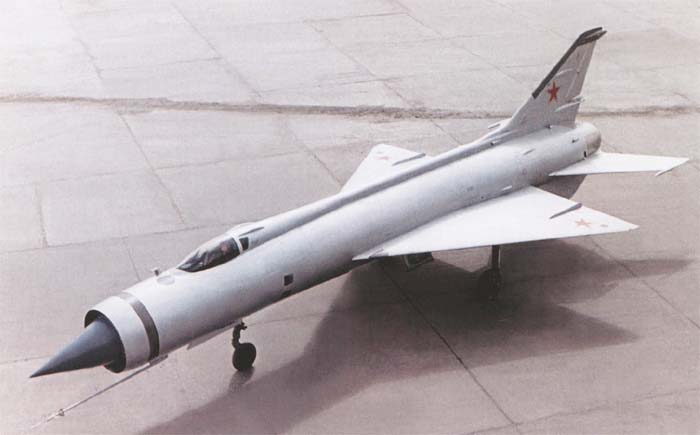
Here are clearer pictures of the Ye-152. As you will note the Ye-152 has SINGLE ENGINED versions, and in fact the original was designed that way. The J-8I was designed from the start to be twin engined and never was designed to be single engined. That fact alone tells you that there are great internal airframe differences.
http://www.aerospaceweb.org/question/performance/q0248.shtml
crobatocrobato,
Funny that you would make that argument when that should be MiG-23MLD’s line to you. The details of the design are unoriginal and follow closely to what the Russians did in their progression. Yet since there is no internet proof that it did happen other than hearsay you say it did not happen. However, MiG-23MLD’s argument is more closer to probable simply because the circumstantial evidence leans his way and not your own. You chose the weak side of the argument here and should just drop it altogether.
The circumstantial evidence DOES NOT EVEN support commonality. And the historical evidence are AGAINST this issue.
Maybe you should study the YE-152 closer, to note that it has a much more substantial spine in the back of the fighter. The difference of what you put into the spine makes a crucial difference in the way stress loads are managed in the entire airframe and in fact, underwrites completely how the airframe would have been designed.
The fatter spine means that fuel is likely to be stored in the spine of the YE-152, but the J-8I only has a thin spine. That makes a MAJOR difference in the internal layout of the two aircraft because of the allocation and deallocation of fuel storage within the aircraft would be totally different. This would also affect the center of gravity of the two aircraft, and that means redesigning the internals to make up for the COG differences.
You can see for example that the Ye-152 is not as tail heavy as the J-8I as the latter required two ventral fins for rear stabilization.
Now all these changes are COMPOUNDED by the fact the two have different inlet designs. The YE-152 is more outward and has a larger inlet than the J-8I’s. These changes means changes in the intake tunnel, which in this kind of semi-monoque, means literal changes in the airframe. The inlet differences show they’re not sharing even the same data on the air flow feeding the engine.
The YE-152 is also already forecasting the changes that would show in the 3rd and 4th generation MiG-21s, and yet the Chinese never heard of them and went to a totally different approach.
crobatoCrobato
Frankly you can believe what ever suits your personal opinions, however it does not mean there are not other poeple who do not agree with such accounts, here is not a design similarity based in pure aerodynamics but a design similarity based upon MiG-21 lineage and R-11 engines, and the fact Russia did pass documentation and the machinery needed.
However you way of trying to debunk those versions is at the same level of your own argumentation, in few words your proof is as vague as those russians opining about the subject.
I have no need to debunk your story, which lacks serious evidence anyway.
Sorry, but Russia did not pass the documentation nor the machinery. They have no motivation for that. That’s just an internet invention by Russian posters. People like to invent myths for some reason because they like to see that a certain project did not end in ignominy. The fact remains that China and the Soviet Union already had a serious downturn in relations even before that project even got started.
By the same logic, Russia would hand over the blueprints to PAK-FA to China for free.
Prove it beyond a doubt. You’re struggling trying to make a fact out of non-evidence. The alleged stories, as you present have serious holes. They never “sold” blueprints, all blueprints were given because that was the Communist way. Why would they give it to China and not for a closer ally in the Warsaw Pact? When the project was finally done, China and the Soviet Union were having military border clashes. Why don’t the SU give it to India because India is a more trusted ally. The J-8 requirement came out from watching B-52s over Vietnam, how can you go back in time before the Sino-Soviet split and ask for the blueprints?
crobatoSo similarity makes it a copy? A lot of Boeing and Airbus jets are similar to each other too. The Mirage III, Delta Dagger and Delta Dart are also similar. Concorde and a planned Boeing supersonic passenger jet were also very similar. The Typhoon and the Rafale looks similar too.
A lot of designs in these world look similar to each other and that does not mean squat they have genetics in common.
http://forums.airforce.ru/showthread.php?t=1026&page=2
Here they say that aftern completing the program the technical documentation was sold to China for the chinese J-8 fighter aircraft program
После окончания программы испытаний техническая документация на планер была продана китайцам, которые на ее базе разработали новый истребитель-перехватчик J-8.
And the program itself was only finished YEARS after China and the Soviet Union have broken up.
Its so funny why you can even claim why the Russians would want to sell the blueprints to China when they had a lack of motive. Such a fighter would have threated the Soviet bombers and the SU’s ace in the hole. This is even so contradictory because in the first place, being Communists, they don’t sell blueprints, they would give it for the Proletariat cause. This is an argument falling apart in so many levels.
Such posters and websites do not let the lack of logic, proof and direct evidence from stopping them posting things as if they were fact. That’s why they are very low in the credibility scale.
crobatoPlease man, undertand this, in all the things of what i read about chinese aviation i see the Russian presence all the time in fact almost every project you will see Russian presence in one way or another, it is too much of a coincidence that both aircraft look similar even to the degree that they followed and mirrowed the development of the MiG-21 and MiG-23, after the MiG-21 the Russians attempted to build the Ye-150/Ye-152 and the Sukhoi T-5 what does China do? well after the MiG-21 they developed a copy at least in concept of the Ye-150, and later the copy the MiG-23 in the J-8II.
yeah that is what i call original thinking, the Ye-150 in Russia was a further development of the MiG-21 and the chinese did the same with their MiG-21 copies.
The R-11 that powers the J-8I is the same engine that powers the Ye-150 so it means in terms of power plant both aircraft used similar inlet arrangement and technologies, so the Ye-150 is not far from the same design of the J-8.
If china did not copy Russia in the J-8 the Ye-150 why then the J-8 has not a different design for example VG wings, shoulder mounted wings, but not we find that the J-8 mirrows the Ye-150A so you like it or not the Russian sources that claim relation are as speculative as your stand in the J-8 because having the same engine both aircraft share at least some technology
Look genius. it does not take much to see that putting two engines in one plane is an obvious idea. Look at Sukhoi’s efforts in the same area.
In the sixties and seventies, China did not have VG technology and even if they copied it, it would have been deemed to complex and expensive, since they prefer cheaper, more straightforward, easier to maintain designs. In the sixties, everyone was going for delta wings, and for delta wing its more convenient to put middle to low of the aircraft. How many delta winged aircraft around the world at that time had a low or mid wing position? Just about everyone from Dassault to the Delta Dagger/Dart. The loose logic being practiced here might make it appear that the Mirage III is derived from the Delta Dagger or vice versa.
The Ye-150 has only one engine to boot. Now when you compare the J-8I with the twin engine Ye-152, somethings become apparent. The Ye-152 appears much thicker, and it has a large top spine which the J-8I doesn’t. On the J-8I side, it had two ventral fins on the bottom which the Ye-152 doesn’t. The intake cone for the Ye-152 extends much further out than the J-8I, giving the Ye-152 a more pointed look, while the J-8I has more of an open mouth look. that difference alone makes a big deal on the aerodynamics of feeding the engine. In the concept drawings that led to the J-8 and J-9, none of them had an extended inlet cone like the Ye-152.
Furthermore, in the history of the J-8I, China never had a major supersonic high flying interceptor requirement until around 1966-68 when that requirement was formed. Why would China acquire blueprints of the Ye-152 when they had no requirement for such, and second, why would Russia give it to them when the distrust between Russia and China was peaking. As a matter of fact out of that supersonic interceptor requirement, there were two proposals, one led to the J-8, and other led to the J-9.
As for the Su-27, carrying the longer ranged R-27ER does not make it a more effective interceptor. It needs to keep the target in the forward view of the radar or otherwise, the missile will fail to track it. Using the R-27ER, it also does not have the ability to engage multiple targets. The cassegrain radar cannot twist and turn to have the same wide field of view as the planar radar equipped J-8F has. This is not to mention that the radar has a sea search and anti-sea clutter resistance that the Su-27 radars don’t have, a reason why the J-8F is being preferred in the PLANAF.
crobatoThat’s right: the Horten flying wing, which happened to have a favorable shape in addition to the materials, although I’m not sure whether the Germans were going for stealth or trying to compensate for shortages in metals while increasing range. It seems that almost every idea that finally gets applied has been around for a while, which represents a natural technological lag. The main questions that should be asked regarding each application should be: 1) how effective is it in its current environment, and 2) what tradeoffs does it force? I think you’ll find that each case is unique in how it answers these questions, especially when you examine all of the details involved.
By the way, if this is too generalized in a “typical western” manner for 1MAN, then (deep sigh) I suppose I could go over a few examples. 😉
Coolien was probably referring to something else, although you’re correct the Horten has low radar observability.
Actually the Germans got the idea by observing the RAF Mosquitoes which would barely show in the radar, or would only do so at decreased ranges. Plus with the speed of the Mosquitoes, these light bombers were difficult to intercept. Even at that time, it was understood that wood does not reflect radar very well. Wood as you know, is a natural composite. So the Germans wanted their own Mosquito. It was a twin engined zerstorer/night fighter/schnell bomber that went by the name Ta-144, as it was Focke Wulf’s Kurt Tank who worked on that. However, the plane had problems staying glued together.
The Horten wing would have been a horrible plane to fly. The Northrop YB-49 also demonstrated that these things are just horrible to fly, leading to their cancellation. FBW was the major breakthrough that enabled flying wings to be flight manageable.
crobatoAs with other military accidents in Commie China, don’t know whether these claims/reports are true or not?
http://www.xmart.tw/FORMOSA/reply.php?TopicID=1313&p=4
16 August 2007:
J-7.
PLAAF.
About 16:10, crashed into civilian houses, near Hua Xia Qi Che Cheng (Hua Xia Automobile City), Cheng Men Town, southeast of Fu Zhou City, Fu Jian Province. Or, near Huang Shan (Huang Mountain), Fu Zhou.
http://www.fjhmc.com/
Pilot ejected.
On ground, two civilians killed.Reportedly, witnesses saw a parachute in sky, and aircraft glided for 1-2 minutes before it crashed.
http://www.xmart.tw/FORMOSA/reply.php?TopicID=1313&p=4
30 March 2005:
Two Su-27.
Reportedly, 19th Division, Ji Nan Military Region AF, PLAAF.
Afternoon/evening, crashed near Lao Ling City, Shan Dong Province.
One crashed near dried river, in Hu Jia Xiang (Hu Jia Village).
Another crashed into farm, in Huang Jia Xiang (Huang Jia Village), 20 Chinese miles from Hu Jia Xiang.
At least one pilot ejected.
On the last I remember there was a report of a collision, but there was no firm idea from whom. Some speculated it was from the FTTC involving two MKKs. others claim seeing the wreckage had a blue color that is typical of the PLAAF Flankers. That was assuming that J-7s and J-8s were still white, but in this decade, even J-7s and J-8IIs had been moving into the same blue-grey color as the Flankers. Both FTTC and 19th Division also has J-7s. I remember speculating at that time that it was the 19th. This is not to say that the report may actually be the 19th or not, but sometimes so called reports are recycled by people reading the speculating stuff on the forums.
crobatoI doubt that. At the late fifties, such a design won’t be in the wrong direction for them, considering this is the same direction of the plane that would be the Su-15 Flagon took. It was only like after the midsixties that MiG switched its priorities elsewhere.
crobatoDocumentation for E-152A (which never entered mass production in the USSR ), was transferred to China (without engines, missiles and radar).
I would seriously doubt that the documentation of a top secret state of the art project being developed would be transferred to China. Even by the late fifities, there was already increasing tension between China and the Soviet Union. The J-8I also has considerable “waisting” in the center of the plane which the YE-152A did not, which means that the Chinese were able to study the area ruling concepts that were tested on the F-102 Delta Dagger.
Chinese engineers did study under Russian universities, so they are taught engineering and design concepts the Soviet way. One can imagine students and teachers brainstorming all sorts of ideas in the blackboards then, all becoming future designers in their respective countries.
crobatoDon’t give me that nonsense that it requires a good TF for post Mach 2 speeds. Many fighters in the sixties are capable of quick dashes right to around Mach 2. That was an important requirement in the Cold War needed for bomber intercepts. Regulated inlet systems have been part of aircraft since the late fifties, nothing new about that. TF is really a poor engine to go past supersonic speeds because you cannot go faster than the speed of your exhaust gases existing the rear. That’s plain physics, similar to why a car cannot go faster than the rate its driving wheels can turn. Shift to turbofans was because the TF is more fuel economical, accelerates better, has much higher payloads and because of the realization that most combat takes place at subsonic. But make no mistake that a TJ fighter like a BAC Lightning, F-4 Phantom or a Starfighter is still pretty fast even for today. The J-8F has an operational weight of around 14,000 to 15,000kg, yet one of the two engines has an output of 7600 to 7800kg (later variant of WP-14).
crobatoFalcon 4 has J-10s? Must be a mod. Or are you confusing it with BF2?
No actual official names have been given for the fighters, that is officially by the PLA. and the PLA never names anything on the basis of animals. Vigorous Dragon could have been a proposed name for export marketing by Chengdu Aircraft.
Back to loofahboy,
J-8F has a very fast speed profile. Back in the sixties, you will notice why fighters achieve Mach 2 easily despite have low TWR compared to modern fighters. That’s because they use turbojets, which has much higher exit speeds for the exhaust gas than turbofans. The J-8F takes that legacy advantage and combine with a TWR that exceeds unity (1:1). So this is going to be very fast, and it may be even faster than the J-10s and J-11s. If you have a lot of top speed, you can add this speed to your BVR missiles and that would improve the kill rate for the missiles. In addition, the J-8F is being used to test Beidou positioned bombs (GPS guided weapons), and having that speed increases the launching speed and range of the bombs. The negative to the J-8II is that it consumes fuel rather fast, because of turbojets, so the range is rather average.
Does it have a future? Sealordlawrence already mentioned it exactly. They will be flying around, but production for the latest J-8F version, which had a burst from 2001 till last year, maybe heading for an end. It has no export market, despite attempts to market it. and the new J-11B has now been confirmed in serial production and operational service, which means the J-8F will get the big squeeze from an internal sibling rival.


 Sign In