 Stonewall
Nicely done, dropped down horizontally.
😉
StonewallRussia Moves Mistral Stern Construction to France
(Source: RIA Novosti; published June 18, 2013)
Illustrating the risk to capabilities when defense spending is cut too far, Russia is moving construction of the Mistral-class LPD to France because its own shipyard cannot meet contract terms. (FR MoD)
LE BOURGET, France — The construction of the stern for the first Mistral helicopter carrier being built for the Russian Navy will be finished in France because a Russian shipyard cannot meet the deadline specified in the contract, a senior Russian defense official said Tuesday.
“We will have the whole stern made there [in France], we won’t take risks so as not to delay the contract,” Deputy Defense Minister Yury Borisov told reporters on the sidelines of the Paris Air Show in Le Bourget.
Borisov said the decision had been made as it became evident that the Severnaya Verf shipyard in St. Petersburg, subcontacted to build the stern for the ship, was not going to meet the deadline.
Russia and France signed a contract for two French-built Mistral-class helicopter carriers in June 2011. The first, the Vladivostok, is being built at the DCNS shipyard in Saint-Nazaire and is due to be delivered in 2014, while the second, the Sevastopol, is scheduled for delivery in 2015.
Borisov said the Vladivostok may be moved as early as in October from France to Russia where Russian armaments, communications systems and other equipment would be installed.
He also said the Sevastopol helicopter carrier was laid down at an official ceremony in Saint-Nazaire on Tuesday.
Russia has put back plans to build two additional Mistral-class ships under French license to 2016, citing the need to assess the ships’ performance, role and status as part of the Russian Navy.
The Mistral deal came under fire from senior Russian officials in January, following the dismissal of former Defense Minister Anatoly Serdyukov, had who actively lobbied for their purchase.
-ends-
StonewallThe four ship Comandante João Belo class features a French design, identical to the Commandant Rivière class, with extra equipment for tropical climates. The two frigates remaining in active service were replaced, in 2008, by the Bartolomeu Dias class (Dutch Karel Doorman class) in the Portuguese Navy.
The NRP João Belo and the NRP Sacadura Cabral were sold to the Uruguayan Navy, becoming, respectively the ROU Uruguay and the ROU Pedro Campbell, which once (early 1990s) operated similar 3 Commandant Rivière class from France. (ROU 02 General Artigas, ROU 01 Uruguay, and ROU 03 Montevideo). These ran into problems, particularly with upkeep, and were decommissioned
F480 Comandante João Belo (Chantier Nantes, Dubigeon, 1967) Sold to Uruguay as ROU 01 Uruguay
F481 Comandante Hermenegildo Capelo (Chantier Nantes, Dubigeon, 1968) Decommissioned in 2004 (see above and F482)
F482 Comandante Roberto Ivens (Chantier Nantes, Dubigeon, 1968) Decommissioned in 1998 after colliding with a Tanker ship on a NATO exercise. Stripped of its equipment, taken to sea and sunk.
F483 Comandante Sacadura Cabral (Chantier Nantes, Dubigeon,1969) Sold to Uruguay as ROU 02 Comandante Pedro Campbell
the former Hermenegildo Capelo was sunk yesterday in the Algarve, to create a new artificial reef

StonewallPortugal:
Images of the arrival of the Hermenegildo Capelo Frigate the third vessel to be scuttled at the Ocean Revival Underwater Park.
StonewallSome pics of the first project 22350 fregate from last month:
http://www.balancer.ru/forum/punbb/attachment.php?item=327726&download=2
http://www.balancer.ru/forum/punbb/attachment.php?item=327730&download=2
http://www.balancer.ru/forum/punbb/attachment.php?item=327733&download=2
http://www.balancer.ru/forum/punbb/attachment.php?item=327734&download=2
Any forecast for start of sea-trials?
StonewallRussia Goes Ahead with 5G Submarine Project
(Source: RIA Novosti; published March 18, 2013)
MOSCOW — Work is in progress on the newest fifth-generation nuclear-powered and diesel submarines at Russia’s Rubin Central Design Bureau, Rubin head Igor Vilnit said on Monday.
The Russian Navy currently relies on third-generation submarines with fourth-generation subs of the Yury Dolgoruky (Project 955 Borey) and St. Petersburg (Project 677 Lada) class just beginning to be adopted for service.
In addition to Rubin, Defense Ministry research centers and the Navy Institute, as well as Rubin’s partners and contractors, are currently working to develop a basic design of the fifth-generation submarine.
The new submarine will have a service life of about 50 years, he said.
The fifth generation will be distinguished by its lowered noise, automated control systems, reactor safety, and long-range weapons.
The Defense Ministry previously said Russia is planning to develop its fifth-generation submarine by 2020 under a 2011-2020 arms procurement program, to be armed with both ballistic and cruise missiles.
Russia also plans to build eight fourth-generation strategic nuclear subs by 2020 and arm them with Bulava submarine-launched ballistic missiles.
-ends-
StonewallSaturday, March 16, 2013
Spotted: China’s First Aircraft Carrier At Its New Homeport [Image Of The Day]
Satellite image showing the sole Aircraft Carrier China operates, a Russian-origin Kuznetsov-class vessel, recently christened Liaoning, berthed at what has been said to be its home base in China’s North-East.
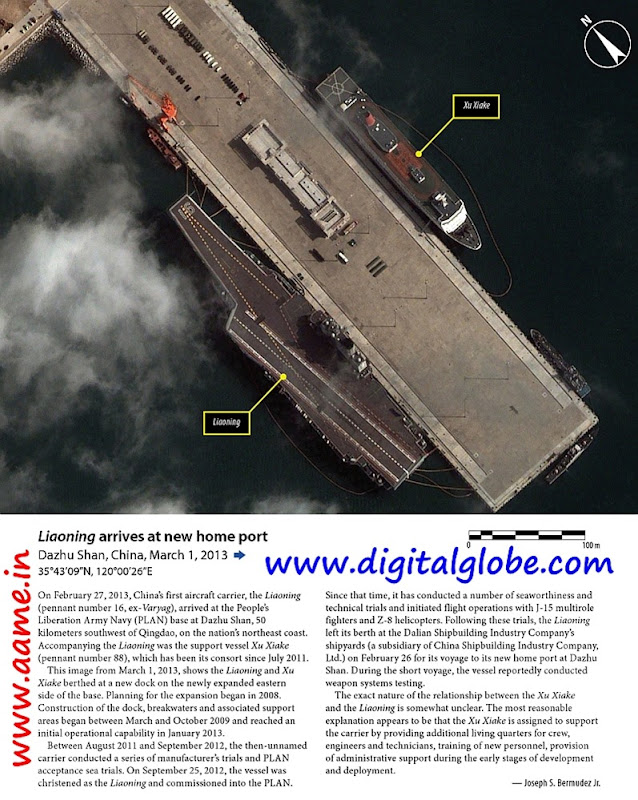
Relevant sections of an IHS Global Insight update,
“The arrival on 27 February of China’s first aircraft carrier, Liaoning , at its new home port in northeastern China has confirmed previous speculation that the Kuznetsov (Orel) (Project 1143.5/6)-class vessel was part of the People’s Liberation Army Navy’s (PLAN’s) North Sea Fleet.
Liaoning (pennant number 16) arrived at the new base at Dazhu Shan, 50 km southwest of Qingdao, accompanied by support vessel Xi Xiake (pennant number 88), which has been its consort since 3 July 2011.
The North Sea Fleet is headquartered at Qingdao, about 50 km northeast of Dazhu Shan. Divided into nine coastal defence districts with about 325 ships deployed among two submarine flotillas, two escort groups, one mine warfare unit, one amphibious unit, and the Bohai Gulf training flotilla, it is responsible for the area from the North Korean border to Lianyungang in Jiangsu Province. It would also render critical support to the army in the event of a war on the Korean Peninsula.”
http://www.aame.in/2013/03/spotted-china-first-aircraft-carrier-at.html
StonewallIs there somewhere an acurate/reliable table or study stating the OPERATIONAL COSTS PER HOUR of the Gripen/Rafale/Eurofighter/SuperHornet, etc…
I have seen several versions and don’t really know what to think:confused:
Thanks in advance if anyone can help.
StonewallUSAF’s F-35A Not Even Ready for Combat Training
(Source: Project On Government Oversight; issued March 6, 2013)
Including stunning pilot comments about the aircraft’s survivability (such as “Aft visibility will get the pilot gunned [down] every time”), a new, unclassified DOD document on the F-35 is now available.
It describes the performance of the F-35A and its support systems in initial training at Eglin Air Force Base in Florida. Not previously in the public domain, the unclassified DOT&E materials are available at the POGO.org.
DoT&E Memo on F-35A Operational Utility Evaluation
(Source: DoD Director, Operational Test and Evaluation; dated Feb. 15, 2013)
FOR: SECRETARY OF DEFENSE ·
FROM: J. Michael Gilmore, Director, Operational Test and Evaluation
SUBJECT: F-35A Ready For Training Operational Utility Evaluation (OUE)
• I have attached at TAB A the F-35A Ready For Training OUE Report. At the request of the Joint Strike Fighter Program Executive Officer, the OUE evaluated the capability of the F-35A air vehicle and the infrastructure at Eglin Air Force Base to train an experienced initial cadre of pilots using a very basic syllabus designed to familiarize pilots with aircraft that possessed no combat capability. It also evaluated the ability of the F-35A maintenance and Autonomic Logistics Information System to sustain a sortie generation rate consistent with the limited training contained in the Block 1 A syllabus.
In the report I conclude the following:
• The limitations, workarounds, and flight restrictions in place on the F-35A at this early stage of its development substantially limit the utility of training. However, the evaluation indicates areas where the program needs to focus attention and make improvements.
• The radar, the pilot’s helmet-mounted display, and the cockpit interfaces for controlling the radios and navigational functions should be improved.
• Discrepancies between the courseware and the flight manuals were frequently observed, and the timelines to fix or update courseware should be shortened.
• The training management system lags in development compared to the rest of the Integrated Training Center and does not yet have all planned functionality.
• Plans and procedures for training pilots to recover the aircraft in the event of an engine problem or flameout should be reviewed for adequacy and to assure such training can be conducted in an appropriate venue.
• Sustainment of the six Block 1A F-35A aircraft was sufficient to meet the relatively low student training sortie demand of the syllabus, but only with substantial resources (aircraft and manpower) and workarounds to the intended sustainment system in place.
• The demonstrated reliability of the F-35A is significantly below the program office’s projected targets for the reliability it expected the aircraft to achieve at the 2,500 flight hours the F-35A fleet has now accumulated.
• I am providing copies of my report to the Under Secretary of Defense for Acquisition, Technology and Logistics; the Secretary of the Air Force; the Secretary of the Navy; and the Vice Chairman of the Joint Chiefs of Staff. The professional staff of the Congressional defense committees have also requested the report and I will provide them copies next Thursday. By law, I must provide the Congress with any test-related material it requests.
Click here for the full report (68 PDF pages) on the POGO website.
(ends)
New, Unclassified DOD Document Describes F-35A Performance in Training
(Source: Project On Government Oversight; issued March 6, 2013)
(by Winslow T. Wheeler, Director, Straus Military Reform Project, POGO)
Find my summary and analysis of the document below.
The Air Force’s F-35A: Not Ready for Combat, Not Even Ready for Combat Training
On February 15, 2013 the Department of Defense’s Director of Operational Test and Evaluation (DOT&E) sent a memorandum and accompanying evaluation report to Congress and the DOD hierarchy describing the performance of the F-35A and its support infrastructure at Eglin Air Force Base (FL). There, already skilled Air Force pilots are undergoing a basic syllabus of familiarization training with the aircraft.
Not previously in the public domain, the unclassified DOT&E materials are available at the POGO website at http://pogoarchives.org/straus/ote-info-memo-20130215.pdf
DOT&E’s report, titled “F-35A Joint Strike Fighter: Readiness for Training Operational Utility Evaluation,” reveals yet more disappointments on the status and performance of the F-35. The Operational Utility Evaluation (OUE) is particularly valuable as it focuses on the Air Force’s A model of the F-35 “Joint Strike Fighter.” Many in the political and think tank world have focused more on the Marine Corps B, or Short Take Off and Vertical Landing (STOVL), version or the Navy’s C model with its heavier structure and larger wings.
While the B and C are even more expensive and lower in performance-on certain key performance dimensions-than the Air Force’s A model, this OUE (inadvertently) demonstrates that the A model is also flawed beyond redemption.
While the DOT&E paperwork includes an opening memo and an executive summary, they do not do justice to the detailed findings of the report. Specific issues are discussed below-much of it in quotations and showing the appropriate page number of the text of the evaluation.
RESTRICTIONS IN SOFTWARE, SYSTEMS AND FLIGHT
The currently available software essential to control the aircraft (software Blocks 1A and 1B) is “intended to provide only basic pilot training and has no combat capability. The current aircraft have a number of significant operational restrictions . such as limited maneuvering, speeds, and constrained descent rates; no carriage of weapons, no use of countermeasures, and no opening of weapons bay doors in flight.” (p. 1.)
Also, “. student pilots were limited in flight maneuvering to very basic aircraft handling, such as simple turns, climbs, and descents as the flight envelope of speed and altitude was limited, angle-of-attack and g-loading were restricted, and maneuvers normally flown during a familiarization phase of a syllabus were explicitly prohibited.” (p. 2.)
Table 3-1 (starting on p. 14.) outlines the many limitations. The following are prohibited:
— Descent rates more than 6,000 feet per minute (for reference, Wikipedia shows the F-16C rate of climb to be 50,000 feet per minute);
— Airspeed above 550 knots per hour or Mach 0.9 (not the 1.6 Mach or 1,200 mph Wikipedia says the F-35 is capable of);
— Angle-of-attack (attitude of flight) beyond -5 and +18 degrees (e.g. not the +50 degrees the aircraft is capable of);
— Maneuvering at more than -1 or +5 gs (nowhere near the stated +9g capability);
— Take offs or landings in formation;
— Flying at night or in weather;
— Using real or simulated weapons;
— Rapid stick or rudder movements;
— Air-to-air or air-to-ground tracking maneuvers;
— Refueling in the air;
— Flying within 25 miles of lightning;
— Use of electronic countermeasures;
— Use of anti-jamming, secure communications, or datalink systems;
— Electro-optical targeting;
— Using the Distributed Aperture System of sensors to detect targets or threats;
— Using the Identification Friend or Foe (IFF) Interrogator;
— Using the helmet mounted display system as a “primary reference;”
— Use of air-to-air or air-to-ground radar modes for electronic attack, sea search, ground-moving targets or close-in air combat modes. (pp. 14-16.)
In addition, “…the radar system exhibited shortfalls that – if not corrected – may significantly degrade the ability to train and fly safely under a typical transition training syllabus, where an operational radar is required. The radar performance shortfalls ranged from the radar being completely inoperative on two sorties to failing to display targets on one sortie, inexplicably dropping targets on another sortie, and taking excessive time to develop a track on near co-speed targets on yet another sortie.” (p. 13.)
“AFT VISIBILITY WILL GET THE PILOT GUNNED EVERY TIME”
A key system of the aircraft, the pilot’s multi-million dollar helmet-mounted display (HMD) of the aircraft’s operating systems, threats, targets and other information “functioned more or less adequately. [but] presented frequent problems for the pilots.”
These included “misalignment of the virtual horizon display with the actual horizon, inoperative or flickering displays, and focal problems – where the pilot would have either blurry or ‘double vision’ in the display. The pilots also mentioned problems with stability, jitter, latency, and brightness of the presentation in the helmet display..” Two of the complaints were basically that elements of the helmet made it harder, not easier, to see outside the aircraft. (pp. 16-17.)
There are additional problems for detecting threats in the all-important visual mode: the ejection seat headrest and canopy “bow” (where the canopy meets the fuselage) are designed in such a way as to impede seeing aircraft to the rear: one pilot commented “A pilot will find it nearly impossible to check [their six o’clock position{to the rear}] under g.” Another commented, “The head rest is too large and will impede aft visibility and survivability during surface and air engagements,” and “Aft visibility will get the pilot gunned [down] every time,” referring to close-range combat. (p. 18.)
Indeed, DOT&E stated explicitly “The out-of-cockpit visibility in the F-35 is less than other Air Force fighter aircraft.” (p. 17.)
To summarize in different words, the helmet-mounted display and the F-35 system does not present an enhanced, clearer view of the outside world, targets and threats to the pilot; instead, they present a distorted and/or obstructed view.
This is one of the most serious backward steps that the entire F-35 system takes, and it presents an even greater threat to the survivability of the F-35 and its pilot than the astounding evidence of the flammability of the F-35 (all versions) in the recent analysis of another DOT&E report by military analyst Lee Gaillard at Counterpunch at http://www.counterpunch.org/2013/03/04/when-money-is-no-object-the-strange-saga-of-the-f-35/
In the event of the pilot needing to escape from the aircraft, there are also some incompletely explained problems with the ejection seat in “off-normal” situations, i.e. those that can occur in combat or even real training. (p. 43.)
SUSTAINMENT
While there is little that is more important than pilot and aircraft survivability, additional, almost-as stunning revelations about the F-35A involved its “sustainment”-or reliability, maintainability, and availability.
While the report states “Sustainment of the six Block 1A F-35A aircraft was sufficient to meet the student training sortie requirements of the syllabus” (p. ii.), it further explains that this was despite “generous” Air Force resources and a “hybrid of government and contractor support personnel that relies heavily on workaround procedures, non-standard support procedure, and specialized support equipment to generate sorties and maintain the F-35A fleet..” (p. iv).
Moreover, “the program is not meeting reliability growth targets..” That is to say, it is not as reliable as it should be for this stage of its development. (pp. iv and 27) It is also important to note that this was despite the aircraft lacking many mission systems “which resulted in far fewer failure modes and a narrower scope of demand on the supply chain” than would a combat capable aircraft. (In other words, had more of the F-35’s complex components and systems been available for use, the aircraft would have required still more maintenance, with the commensurate, additional loss of reliability and availability. [p. 27])
The as is sustainment numbers were not impressive.
The F-35 program required an air abort rate no greater than 1,000 aborts per 100,000 flight hours to commence F-35A training (p. 27): while they were previously even higher, in late 2012-well after the training started-the aircraft had an air abort rate of 3,600 air aborts per 100,000 flying hours. (p. 28)
Mission aborts while the plane is still on the ground (ground aborts) were also a serious problem: one in seven sortie attempts resulted in a ground abort. (p. 28)
The Air Force wanted the F-35As at Eglin AFB to be available for training missions 33 percent of the time: the equivalent of each aircraft flying one sortie every three days. (pp. 29, 30) By late 2012 this very modest minimum was basically being achieved (p. 29), but certain aircraft at various times during the OUE flew as seldom as one sortie every 7 to 10 days. (pp. 30, 31)
Mean Flight Hours Between Critical Failures (a typical measure of reliability) occurred every four hours, on average-well short of the expected 11 hours at this stage of the F-35’s development-and well below the aircraft’s ultimate goal of a modest 20 hours. (p. 34) The F-35As at Eglin also failed reliability goals for this stage of development: a major problem was the poor reliability of the complicated, badly performing helmet. (p. 34)
Similar problems occurred on the maintenance time the aircraft required. (pp. 36, 37) For example, the mean elapsed time for an engine removal and installation was 52 hours; the system threshold is 120 minutes. (p. 37)
One component vividly demonstrated the fragility of the F-35A. Temperatures at Eglin as moderate as <59 degrees Fahrenheit caused a problem for the 270 Volt Battery Charger Control Unit inside the airplane. Maintainers had to warm the aircraft in hangars overnight to prevent ground aborts. (p. 38) Foreign purchasers such as Canada and Norway, already wary of real cold weather issues for their F-35As, are sure to be concerned with a “cold weather” issue at just 59 degrees and below.
The aircraft’s Autonomic Logistics Information System (ALIS) was limited and required workarounds throughout the operating cycle (p. 38), and it has potential problems in hot weather when air conditioning is not available, which would cause ALIS to shut down altogether. The system was also cumbersome and time consuming. (pp. 39-41)
CONCLUSION
The conclusion is obvious: The F-35A is not viable.
(EDITOR’S NOTE: Not mentioned above, but reported by the Toronto Star, are two other points:
— “Mechanics have had their own gripes. It takes more than two days to swap out an engine rather than the two hours it was supposed to take.
— “And because a battery unit is vulnerable in cool temperatures, ground crews have had to keep the aircraft in heated hangars overnight, taking up space that would otherwise be used for jets needing repairs. “Moving jets in and out of a hangar to keep them warm involves five personnel for three to four hours per shift,” the report says, or 15 to 20 man-hours.)
-ends-
StonewallI just read in a Brazilian defense site that the newspaper IZVESTIA reported that Russia will build a new destroyer type in the range of 12000 tons, that will serve , among other missions, for escort of the new Mistrals.
Is there any available image of that project?
StonewallOr here’s another suggestion: Rather than every other post in this thread being a “Merge the threads” post, why don’t you just start posting some new here and that other thread will fade into insignificance.
Which thread offers more advantages to the posters? Maybe it’s the other one and so we should start posting there and let this fade :confused:
StonewallIn the end we can’t bee to sentimental! She missed an overhaul and would need a serious and expensive SLEP to make it a worthwhile purchase by another navy.
If Thailand have any sense they will buy up her spares and when she is scrapped any transferable systems and components like propellers, anchors, engine room fittings as well to support the HTMS Chakri Naruebet.
acording to the ABC newspaper Spain tried to sell her to India:
Salvo una venta «in extremis» improbable -Navantia ha estado sondeando hasta última hora a la India
http://www.abc.es/espana/20130210/abcp-ultima-estela-principe-asturias-20130210.html
StonewallThe Japanese have a helicopter carrier they classify as a destroyer.
Political reasons.
Remnants of WW2.
StonewallDon’t the Russians term their carriers as “aviation cruisers”, possibly as a way of circumventing the ban on carriers traversing the Dardanelles?
I remember something about that, yes.
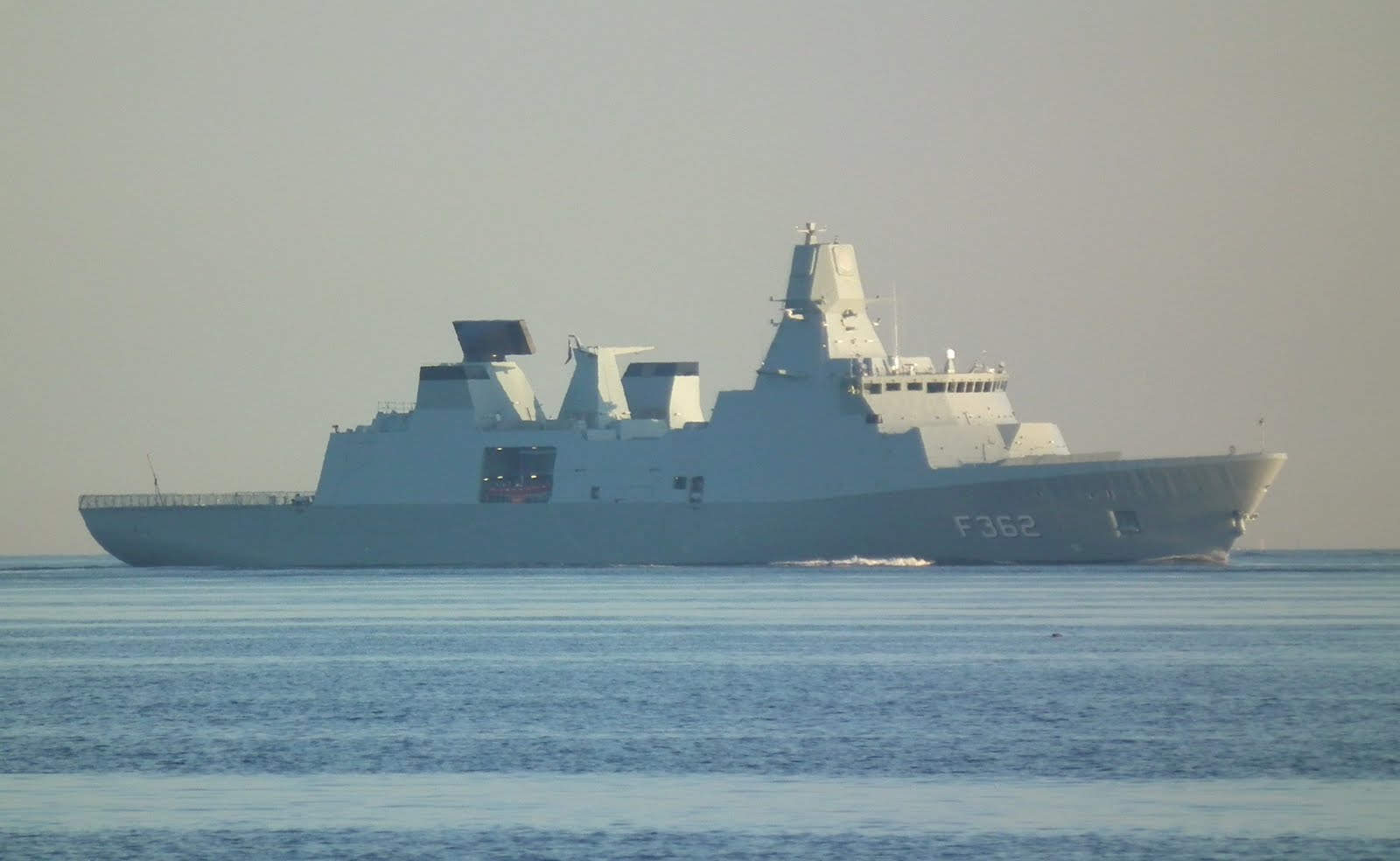
Stonewallthe New danish frigates were originally classified “Patrol ships”



 Sign In







