 Alepou 340MB
Just another report;
Turkey cancels three multi-billion-dollar defence tenders
ANKARA (AFP) May 14, 2004
Turkey on Friday announced that it had called off three long-running multi-billion-dollar tenders for tanks, helicopters and unmanned aircraft, saying that it will seek to manufacture them at home.
No reason was given for the cancellation taken at a meeting of Prime Minister Recep Tayyip Erdogan, Defence Minister Vecdi Gonul, army chief Hilmi Ozkok and defence industry officials.
“It has been decided to meet the needs of the Turkish armed forces with new models based on domestic production and original designs and by making maximum use of national resources,” said a statement issued after the meeting and carried by the Anatolia news agency.
It added that it would encourage domestic firms as well as partnerships between Turkish and foreign firms to take an interest in the projects.
The statement gave no further details, but Anatolia said the cancelled tenders amounted to nearly 11 billion dollars.One of the tenders, worth some five billion dollars, was for the manufacture of 1,000 tanks, with four countries — Germany, France, the United States and Ukraine — vying for it.
The second tender was for the purchase of 145 attack helicopters, a project also worth five billion dollars.
In July 2000, Turkey shortlisted Bell Helicopter Textron of the United States and a consortium between Kamov of Russia and the Israeli Aircraft Industries (IAI).
The third tender, worth nearly one billion dollars, involved the joint production of nine unmanned aircraft in Turkey.
http://www.spacewar.com/2004/040514184925.p3gunz9k.html
Cheers,
Alepou 340MB
Alepou 340MBThis map shows the path taken by Turkish F-16s that took part in the NATO action against the former Yugoslavia. The Turkish government had asked Greece for over flight rights to transit to their base in Italy. Greece refused them due to their disregard of Athens FIR and frequent Greek airspace violations, so they were required to fly around Greece and its airspace.
The red line shows the flight path taken by the Turkish jets. It clearly shows the path is well within Athens FIR. Greece does not claim it as its airspace and the Turkish jet were able to transit freely but Greece is responsible for the air safety and search and rescue within the Athens FIR area. (The blue/black line)
I hope this has helped some people that are not familiar with this dispute understand it a bit better.
Cheers,
Alepou 340MB
Alepou 340MBA map of the area showing the main Greek islands, the green line is not the national border, but I believe it’s the Athens FIR eastern limit.
Notices that the line also includes the tiny islands off the Turkish coast (bottom right corner) the Kastalorizo group.
Cheers,
Alepou 340MB
Alepou 340MBThe TV program says, that the helicopter was originally ordered to operate from a coastal patrol craft that was to be developed between Australia and Malaysia.
But after Malaysia decided to leave the joint venture, Australia also cancelled the patrol craft order, but they didn’t cancel the Seasprite program.
The seasprite was only selected because the planned patrol craft could not accept the larger and heavier Seahawk helicopter, which Australia uses from it’s ANZAC frigates.
Here is the heavily modified Seasprite
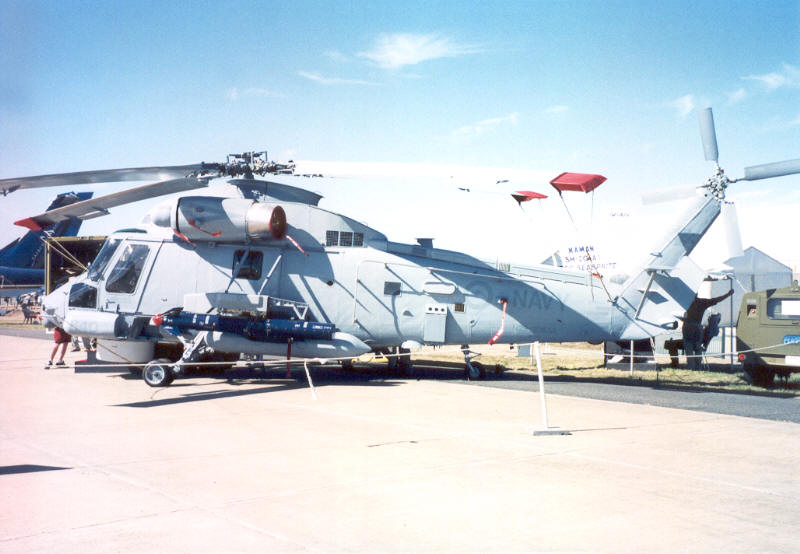
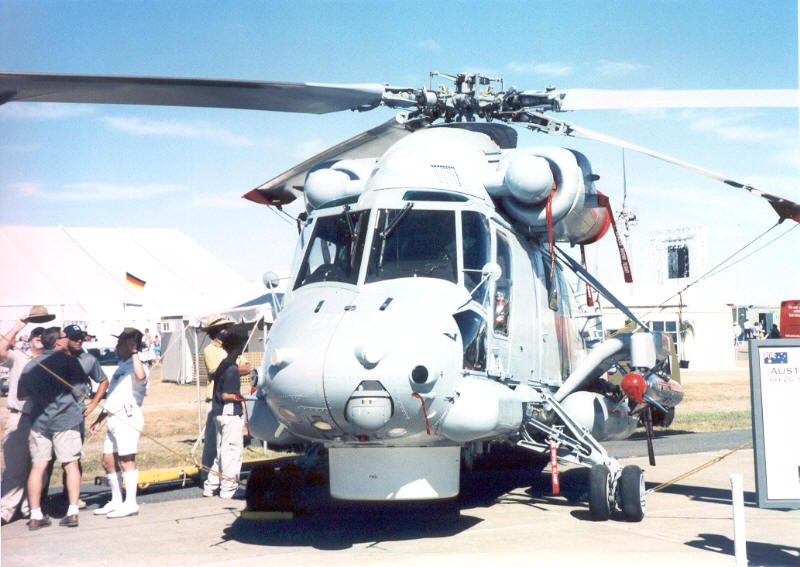
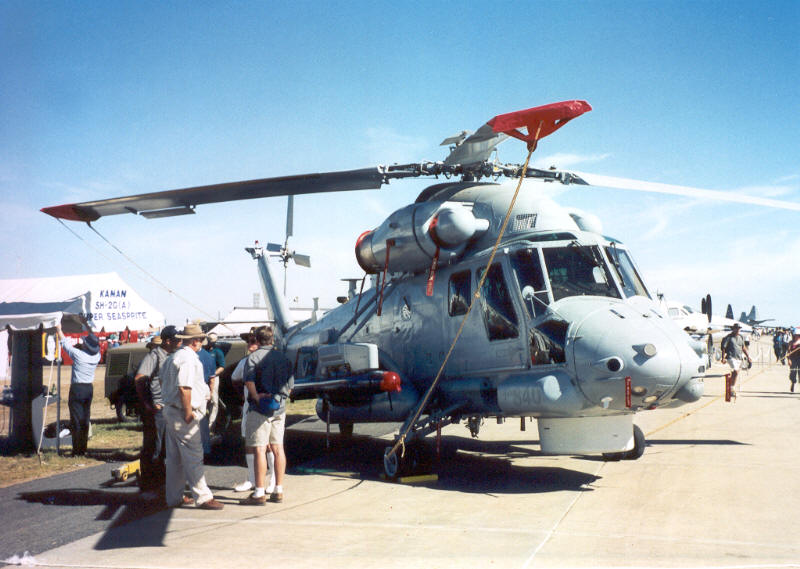
pictures from http://www.airventure.de/ aia2001.htm
Cheers,
Alepou 340MB
Alepou 340MBGreece has shown interest in this system, I believe.
Cheers,
Alepou 340MB
Alepou 340MBI downloaded it all and it is very good, some highlights are the HUD video, in-flight refuelling with US tankers I think, also some very low level flight in tight formation over the sea.
It works until the F-16Cs are over a mountain area about 9min 26 sec into it.
Cheers,
Alepou 340MB
Alepou 340MBMaybe the Americans don’t want them to have any offensive aircraft just yet, so they are not used on them. (The Americans that is). 😉
Cheers,
Alepou 340MB
Alepou 340MBjust another picture of M2K (Hellenic)
Cheers,
Alepou 340MB
Alepou 340MBThis today from Defence-aerospace.com
New Iraqi Air Force Achieving “Real Military Capability,” CPA Says
(Source: US State Department; issued April 19, 2004)
WASHINGTON — Significant progress has been made in restoring the Iraqi Air Force to “real military capability” and in establishing it as “the foundation of a modern air force,” according to a fact sheet released by the Coalition Provisional Authority (CPA) April 17.
The CPA predicted the Iraqi Air Force will be an “integral part” of coalition activities in Iraq, and will be working closely with other units on the ground, at sea and in the air to carry out its mission.
Duties will include policing Iraq’s borders and conducting surveillance of national assets, according to a CPA press release. The release noted that with over 3,500 miles of border, air-based monitoring is the only practical surveillance method.
CPA projections for the composition of the Iraqi Air Force included:
— Six C-130B Hercules transport aircraft by April 2005,
— 16 Iroquois helicopters by April 2005, and
— A squadron of light reconnaissance aircraft by late summer 2004.Members of Iraq’s former air force were recruited for the new air force, and over 100 trainees currently are receiving instruction at the Royal Jordanian Air Force in Amman, Jordan, according to the fact sheet.
The CPA said the majority of Iraqi aviators will require only “difference training” to learn new equipment, but they also are being instructed on the philosophy of a democratically controlled military. In addition, some senior Iraqi air force staff members will receive training in the United States, and a training course within Iraq has been scheduled for late May.
The new Iraqi Air Force will be commanded by a yet-to-be-named major general who will be stationed at air headquarters in Baghdad.
Following is the text of the press release and included fact sheet:
FACT SHEET: DEVELOPMENT OF THE IRAQI AIR FORCE
The Iraqi Air Force not only represents a real military capability and the foundation of a modern air force, but also indicates the re-emergence of Iraq as an air-capable power with an ability to take its share of security responsibilities under a democratic leadership. The Iraqi Air Force will be an integral part of Coalition efforts, with its activities built into Coalition air plans and working closely with ground, maritime and air units to accomplish its mission.
The Iraqi Air Force’s roles will include the policing of international borders and surveillance of national assets. Air capability will allow Iraq to rapidly deploy its developing Army, and with over 3,500 miles of border, aviation is the only practical method of surveillance.
Airplanes: The Iraqi Air Force’s long-range tactical airlift capability will be initially supported by two C-130B Hercules transport aircraft, which will be operational in October and based at Baghdad Air Station. The fleet will eventually grow to six aircraft by April of 2005. Each Hercules is capable of transporting 92-troops or 42,000-pounds of freight over a distance of 2,000-miles. Each is manned by a crew of two pilots, a navigator, an air engineer and a loadmaster.
Helicopters: A squadron of six UH-1H Iroquois helicopters will be operational in July and stationed at Tadji Air Base. This fleet will increase to sixteen Iroquois by April of 2005. Each is manned by two pilots and capable of carrying 13-troops at 120-knots over a 180-mile range. Its main tasks are border and coastal patrol, troop transport and search and rescue duties.
Reconnaissance Aircraft: A squadron of light reconnaissance aircraft will be operational later this summer, with four aircraft at Basrah and expanding later, possibly to Kirkuk. This fleet will be tasked with infrastructure and border security duties – reporting problems directly to the appropriate repair and intervention units. The reconnaissance aircraft has yet to be decided upon, but will be a new aircraft and will be operated by two pilots, with Army observers on appropriate missions, able to stay airborne on extended patrol and communicate directly with ground forces.
Personnel: Members of the former air force were recruited to preserve perishable flying and maintenance skills and to also reduce the cost in creating the new Air Force. More than 100 trainees are currently undergoing instruction from the Royal Jordanian Air Force in Amman. As the initial force is established, recruiting efforts will expand as the Iraqi Air Force has also ready established a presence at the Baghdad and Mosul Recruiting Centers. Non-flying specialist will be drawn from a range of backgrounds, with the majority expected to be recruited in or near to the location in which they will finally be employed. In October, once all have been recruited, the force will be nearly 500 strong, with the majority being divided between bases at Tadji and Baghdad.
Training: The majority of the Iraqi Air Force aviators, being former pilots, require only “difference” training to qualify them on their new equipment. However, they are also schooled in the philosophy of a democratically-controlled military. The non-specialist enlisted troops undertake the eight-week basic training course alongside their army colleagues in northern Iraq. Some of the more senior Iraqi Air Force Staff have been selected for overseas training in the United States and an in-country staff course scheduled for late May to prepare selected officers for duties in the Joint and Air Headquarters. The majority of trainees will start their operational service helping to establish the Tadji Air Base and preparing it to receive the helicopter squadron. Following the completion of construction work on the Baghdad Air Station, some of the more experienced staff from Tadji will transfer to Baghdad to teach the incoming new staff and pass on their experience. In addition, Coalition mentoring teams from appropriate specialist areas will assist the Iraqi Air Force in the establishment of the squadrons and bases. In particular they will help to develop safety procedures and standard operating procedures as well as aiding the interface with coalition forces.
Command & Control: The Air Force will be commanded by a Major General (yet to be appointed), who will normally work at the Air Headquarters in Baghdad and act as the Chief of the Defense Staff’s senior air advisor. The force’s missions will be determined by the Joint Headquarters. Air missions will be fully integrated into coalition air activity through the Multi-National Force Iraq.
-ends-
Cheers,
Alepou 340MB
Alepou 340MBThis from defence-aerospace.com.
EADS/Qantas Wins $2 Billion Air-To-Air Refueling Competition
(Source: Australian Department of Defence; issued Apr. 16, 2004)
The Military Transport Division of the European Aeronautic Defence and Space Company (EADS) teamed with Qantas Defence Services has been selected as the preferred tenderer for the Royal Australian Air Force’s fleet of new air-to-air refueling aircraft, Defence Minister Robert Hill announced today.
Senator Hill said the government had selected the EADS A330 Multi-Role Tanker Transport Aircraft to replace the RAAF’s ageing Boeing 707 aircraft in an approximate $2 billion project.
“The five new aircraft will be capable of refueling F/A-18, F-111, Airborne Early Warning and Control and Joint Strike Fighter aircraft,” Senator Hill said.
“They will also have a significant strategic air lift capacity when not engaged in aerial refueling tasks, including the ability to carry 293 passengers and a significant amount of cargo.
“The acquisition of an additional aircraft will provide a big boost to operational capabilities – giving the RAAF a wider range of activities in one area of operations while also supporting refueling and transport activities in a second area.”
“Our aircraft, for example, would enable non stop deployment of six F/A-18s from Darwin to Butterworth in Malaysia, while carrying 43 tons of support equipment and stores.”
Senator Hill said that recent experiences had showed the vital importance of this type of aircraft as a force multiplier during combat operations. This was borne out by the extremely valuable work done by the RAAF 707 tankers over Afghanistan during the War on Terror, and by the high demand for aerial refueling during the recent Iraqi Freedom operations.
Contract negotiations will now commence with EADS for the purchase of five aircraft.
The basic aircraft will be constructed in Europe, with four of the five having refueling modifications installed and integrated by Qantas in Brisbane. Qantas Defence Services will also conduct through life support of the aircraft in Australia.
“Australian industry will also be involved in the design of the refueling system, project management and production of aircraft components and engine parts for export,” Senator Hill said.
“Over the life of the program, the value of the work to be undertaken by Australian industry and the associated technology to be transferred to Australia exceeds $500 million.”
The project will be a significant defense industry boost for Australia.
Senator Hill said that all the aircraft would be fitted with an Electronic Warfare Self Protection suite for defense against shoulder fired surface to air missiles. Additionally, the EADS tender package includes a hospital bed kit for emergency medical evacuations and advanced simulators for crew training.
Contract signature is expected later this year, with the aircraft planned to enter service from 2007.
-ends-
Cheers,
Alepou 340MB
Alepou 340MBJust another HUD camera shot!
From your friendly 330 Mira boys!
Cheers,
Alepou 340MB
Alepou 340MBWhat they looked like before they had their Ghost paint make over. 😉
Cheers,
Alepou 340MB
Alepou 340MBThe two decoys hard at work.
Cheers,
Alepou 340MB
Alepou 340MBMirage 2000C, obscuring the F-102 decoy.
Cheers,
Alepou 340MB
Alepou 340MBOriginally posted by Arthur
Unfortunately I can’t find the pic of the Ghost-painted Greek F-102 decoys someone (Fantasma, i think it was you?) posted here a long time ago. But those look absolutely great.
Arthur, it was I who posted the Ghost-painted Greek F-102 decoys. I will re post them and some others for your viewing pleasure! 😎
2 Mirage 2000Cs move past the decoys.
Cheers,
Alepou 340MB


 Sign In







