Alepou 340MB
For a second there I thought the news media had hujacked my graphic 😀
It’s out of date too, but not by much: another active SA-2 site has been located southeast of Damascus.
I added it for effect! 🙂
Why not post the update? :diablo:
Alepou 340MB[SIZE=5]Israel, Syria: Rhetoric and Air Incursions[/SIZE]
September 06, 2007 21 02 GMT
Summary
The Syrian government announced Sept. 6 that it reserves the right to retaliate as it sees fit to an overnight Israeli airspace violation deep into Syrian territory. Even though Damascus has every reason to play this incident up to display an apparent boost in its air defense system, the incident is unlikely to serve as a catalyst for a military confrontation between Israel and Syria.
Analysis
Syrian Information Minister Mohsen Bilal said Sept. 6 that Damascus is giving serious consideration to its response to a midnight incident in which an Israeli overflight deep into northeastern Syria was greeted by Syrian anti-aircraft fire.
Syria can be expected to make much of the incursion in order to hype its air defenses. Despite the resulting rhetoric, however, the incident is unlikely to cause an armed conflict between Israel and Syria.
The details surrounding the incident remain murky, but if the Israeli air force (IAF) were indeed conducting a mission deep inside Syria, the warplanes were likely on a reconnaissance mission. Syrian reports of the warplanes dropping “ammunition” probably were the Israeli aircraft dropping external fuel tanks or extraneous ordnance while trying to evade ground fire or missiles. Though Syrian media are issuing reports that locals heard “five or more” warplanes in the area, Israeli reconnaissance flights would typically involve a pair of warplanes, and nothing indicates Syria’s air force scrambled jets.
The Syrian military’s focus is on its borders with Israel and Lebanon, and its disposition reflects these priorities. Syria’s air defense network is heaviest in the country’s south and west. Major sites commonly identified with Syria’s ballistic missile units and other significant military targets of interest to Israel are far closer to the coast than the area in which this incident reportedly occurred.
Israel could have been carrying out a reconnaissance mission to probe Syria’s air defense network. Probing the network along the Turkish border — especially 200 or more miles into northeastern Syria — is likely of marginal value to the Israelis, however. A reconnaissance mission also could have been launched to detect militant training camps or arms-smuggling routes in the area, and could have been heading further east toward the Iraqi border before it was spotted.
The Syrians wasted no time in playing up the incident, with Information Minister Mohsen Bilal telling Al Jazeera in a television interview that “Syria retains the right to determine the quality, type and nature of our response to the Israeli attack.” Even the Iranians have joined in the fray, with Iran’s ambassador to Syria publicly assuring security officials in Syria that Tehran would be ready to offer Damascus any assistance it might need to respond to Israel’s perceived act of aggression.
Israeli overflights into Syrian territory occur fairly regularly, most of which Damascus is embarrassingly slow in responding to. When Israel buzzed Syrian President Bashar al Assad’s palace last summer off the coast of Latakia (flying so low the president’s windows shattered), the IAF warplane had already flown out well beyond Syrian territory before a single shot was fired. In this latest incident, however, Syria’s air defense tracked the warplane in time to cause the IAF aircraft to maneuver and drop extra weight to avoid risking getting shot down.
In Syria’s mind, this definitely constitutes something worth bragging about.
This overflight safely can be assumed to be one of several IAF penetrations into Syria since the 2006 Israel-Hezbollah summer conflict, all of which Syria either was not able or willing to respond to. (Shooting at an IAF warplane is one thing, shooting it down and dealing with the response is another.) This raises two possibilities that are not necessarily mutually exclusive: One, the Syrians were able to track and engage the infiltrator(s), reflecting an apparent improvement in Syria’s ability to integrate its communication and radar systems. Or two, Syrian decision-making has shifted to a more aggressive stance, with Damascus eager to remind Israel that its air defense system should no longer be held in such low esteem.
Syria closely studied the IAF’s performance during the summer conflict, and has since built up its anti-aircraft systems with Russian assistance. With Israel already agitated over these defense sales and Moscow’s ambitions to return its naval fleet to the Syrian coast, Israel’s ongoing spat with Russia is bound to intensify.
But Syria’s fueling of speculation over how exactly it plans to retaliate against Israel — either diplomatically or militarily — actually puts Damascus in a tight spot. A Syrian response is unlikely to take the form of a direct military confrontation with Israel. The Syrian government is well aware that the Israeli government is quite comfortable keeping the al Assad family in control of Damascus for purposes of regional stability. With Syria lacking a better, non-Islamist alternative to the al Assad clan, Israel has no interest in provoking a military conflict that would significantly threaten the government’s hold on power.
The Syrians also are busy figuring out how to readjust their priorities now that the Iranian-U.S. negotiations over Iraq are waning, and the prospect of Washington giving Syria the time of day no longer looks as promising as it did just a few months ago. Syria’s current focus is on how to reconsolidate its position as Lebanon’s main powerbroker by getting its preferred candidate selected in Lebanon’s upcoming presidential elections. With the bulk of the region’s focus on a coming U.S. policy shift in Iraq, Syria is looking to take advantage of the distraction to secure its interests in Lebanon. The Syrians also are looking at how things are shaping up for their allies in Tehran, who are preparing an aggressive push to fill the power vacuum in Iraq once U.S. troops begin to drawdown. With the Iranians holding the upper hand, Syria will align itself more closely with Tehran and will use this alliance to bolster itself regionally.
But a boost of confidence in Syria will not necessarily translate into the Syrians working up enough chutzpah to challenge the Israelis militarily in the near future. Though Israel is still in the recovery stages from last year’s summer conflict against Hezbollah, Israel Defense Forces (IDF) would not hesitate to respond with full force against a direct Syrian provocation. Damascus may rely on its militant proxies — such as Hamas, Palestinian Islamic Jihad or even Hezbollah — to pressure Israel, but even these groups are preoccupied enough with internal matters that they would need to think twice about getting into a major brawl with the IDF at this point in time.
So though the Syrians have talked up this incident to portray themselves as the victim of Israeli aggression, Damascus’ response is unlikely to go much beyond rhetoric.
Alepou 340MBAbsolutely phabulous Hellenic phantoms!
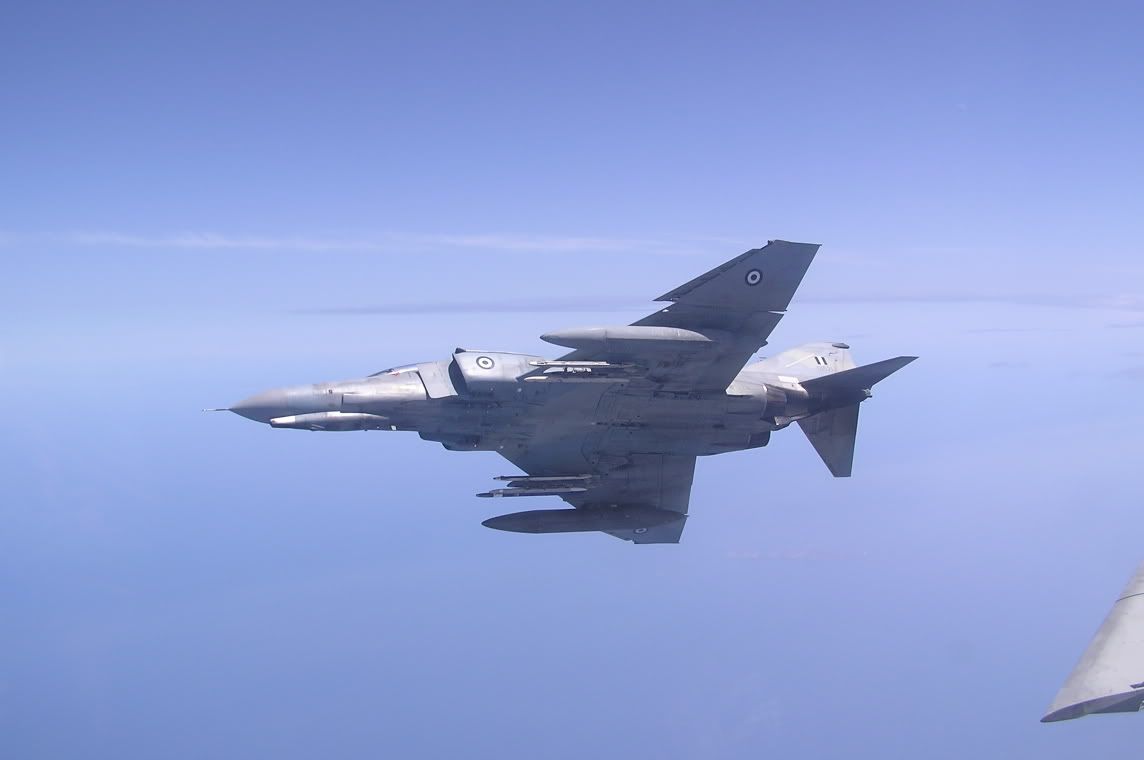
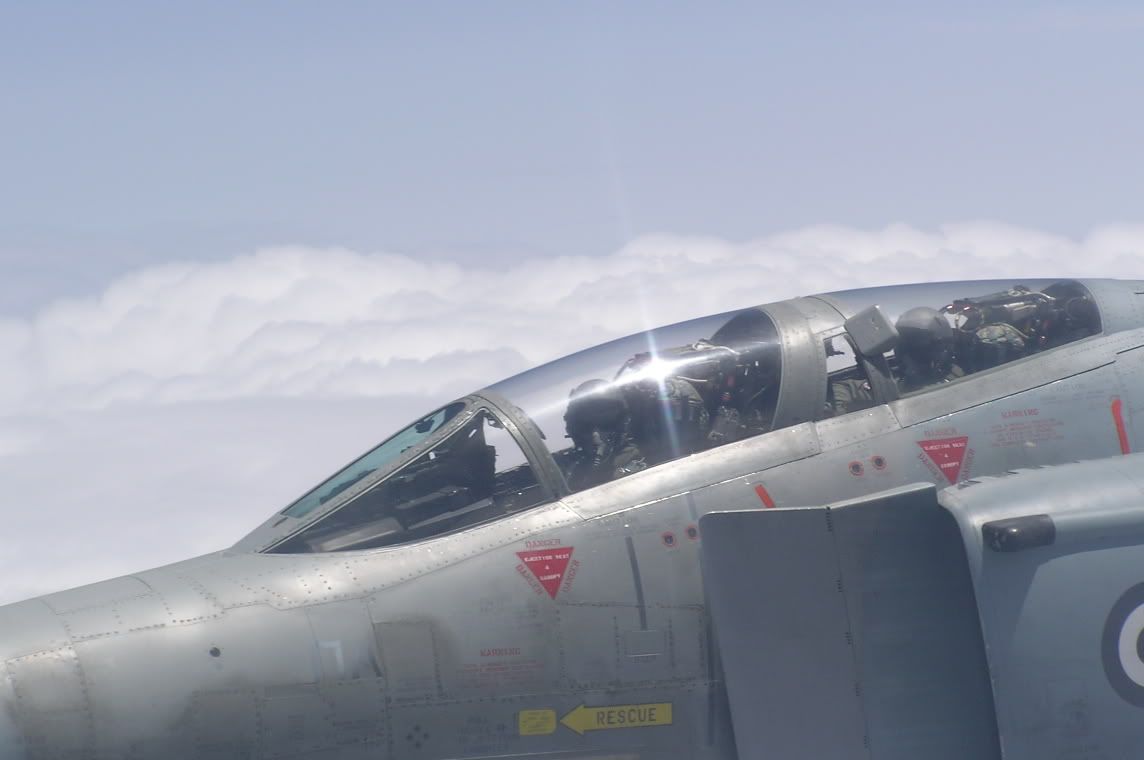

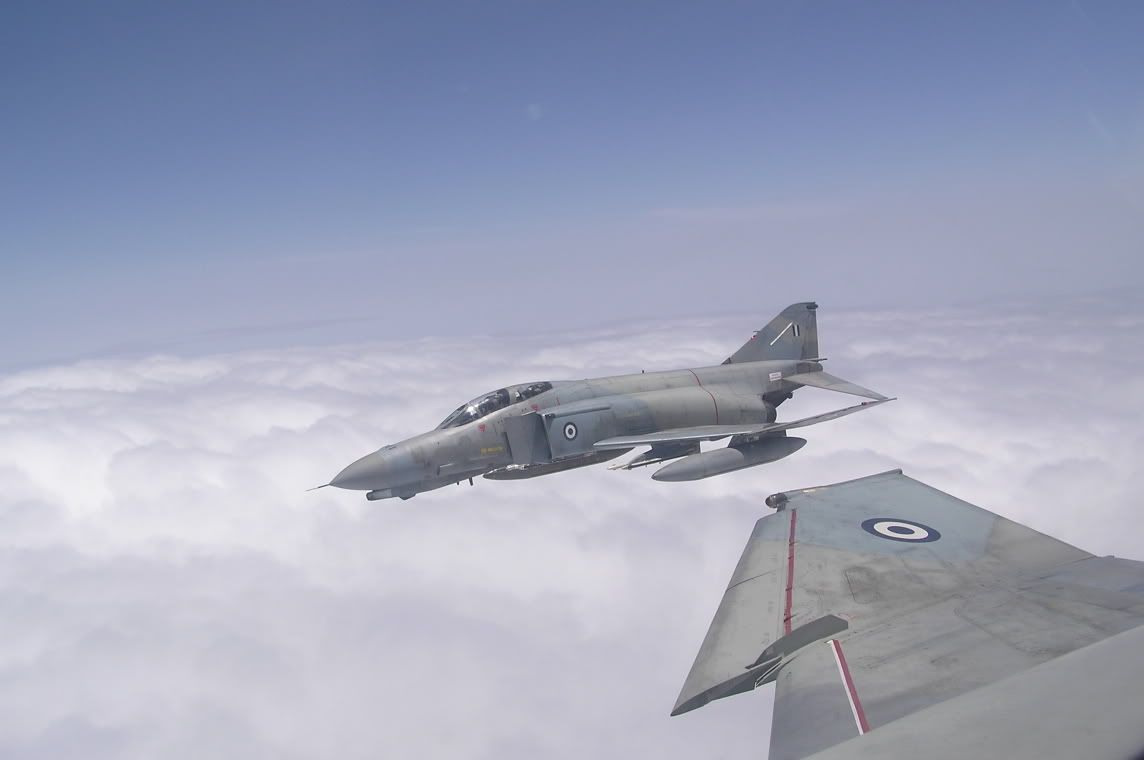
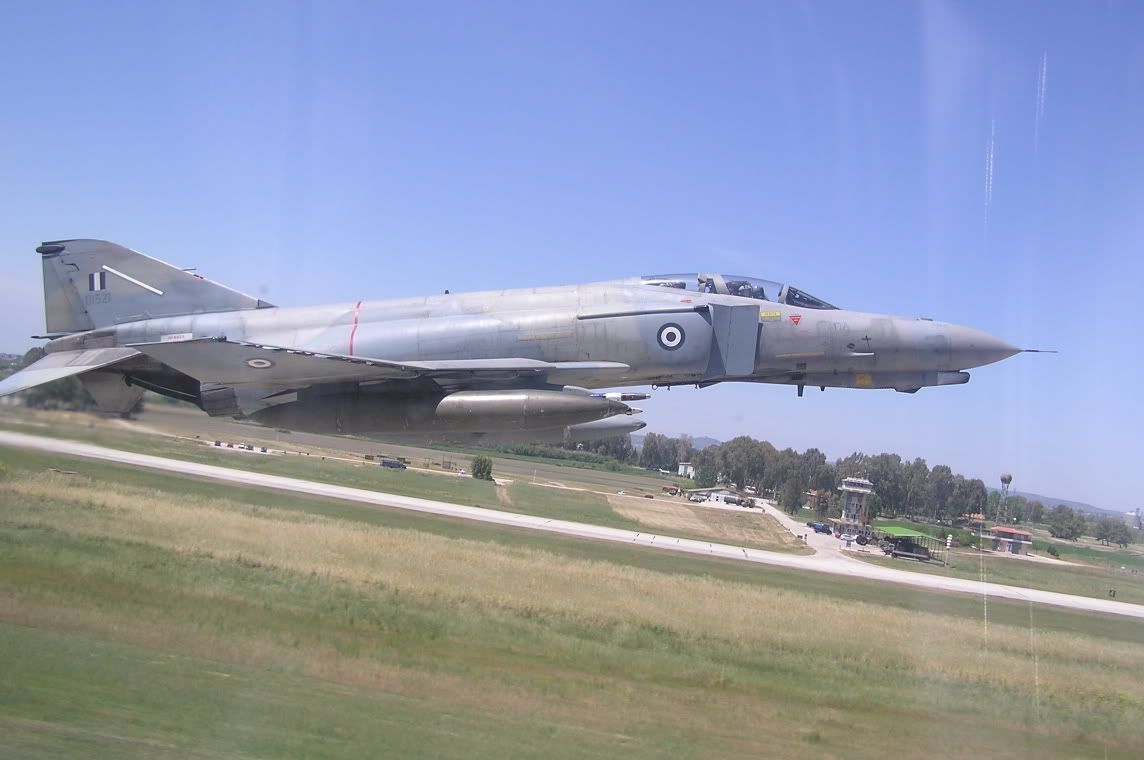
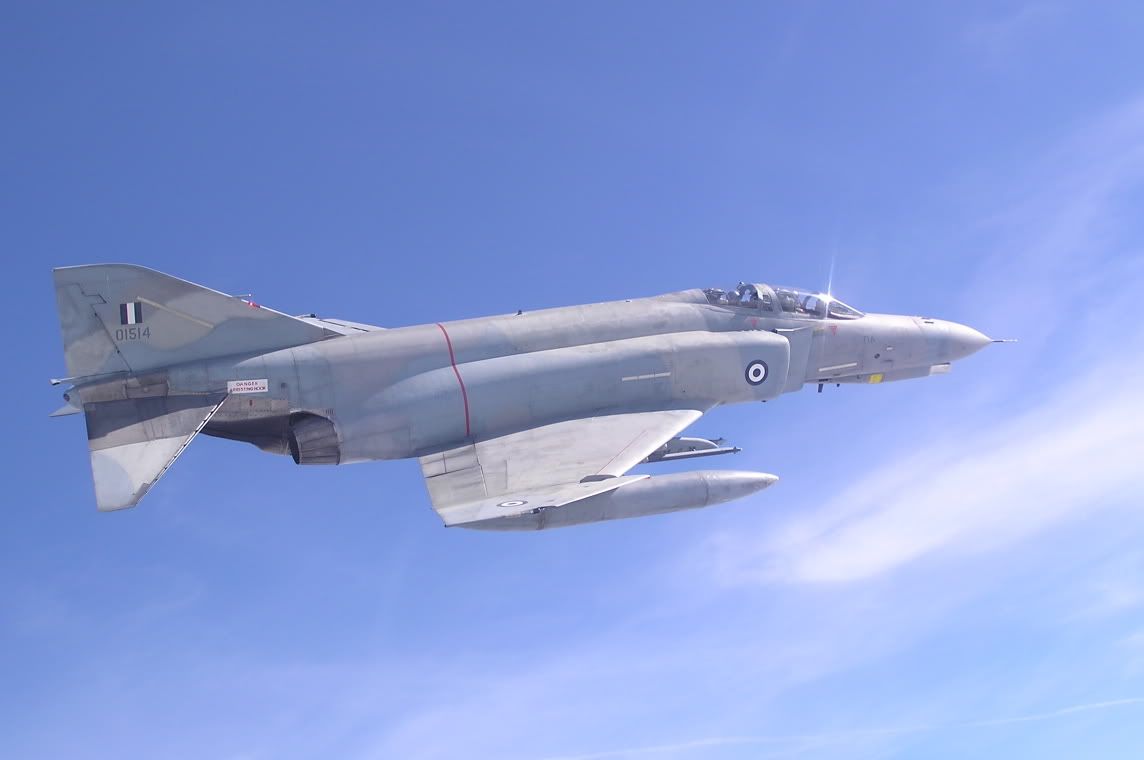
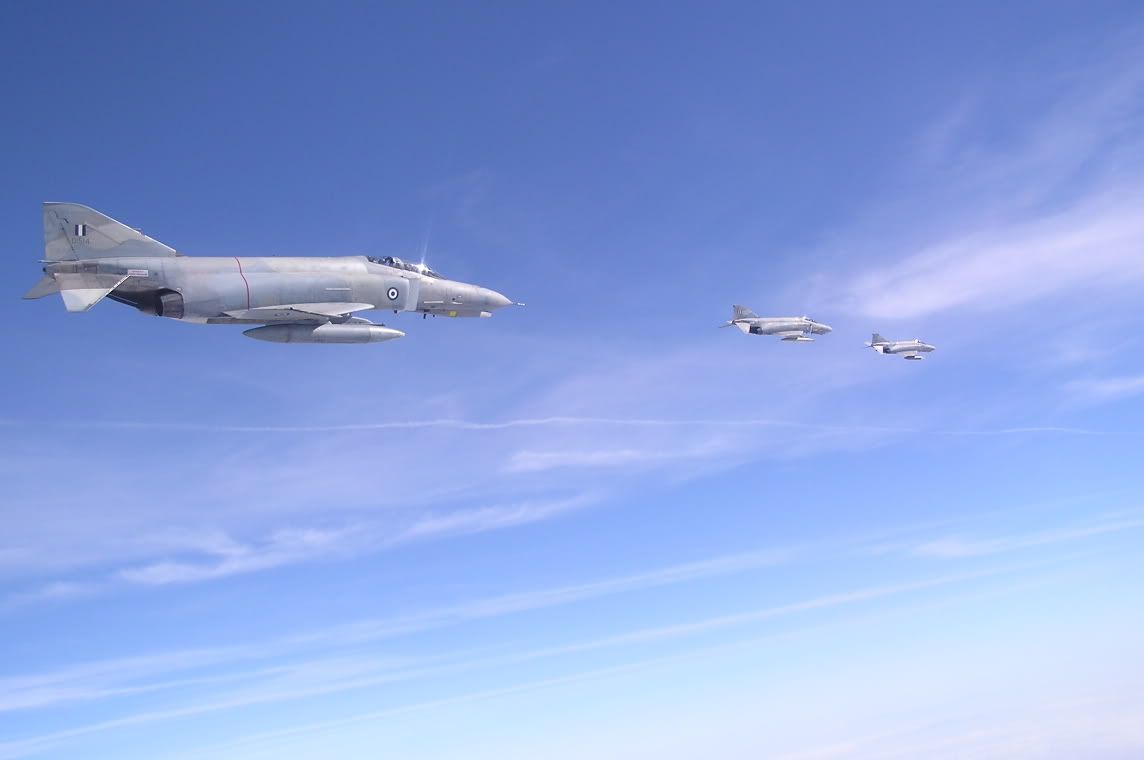
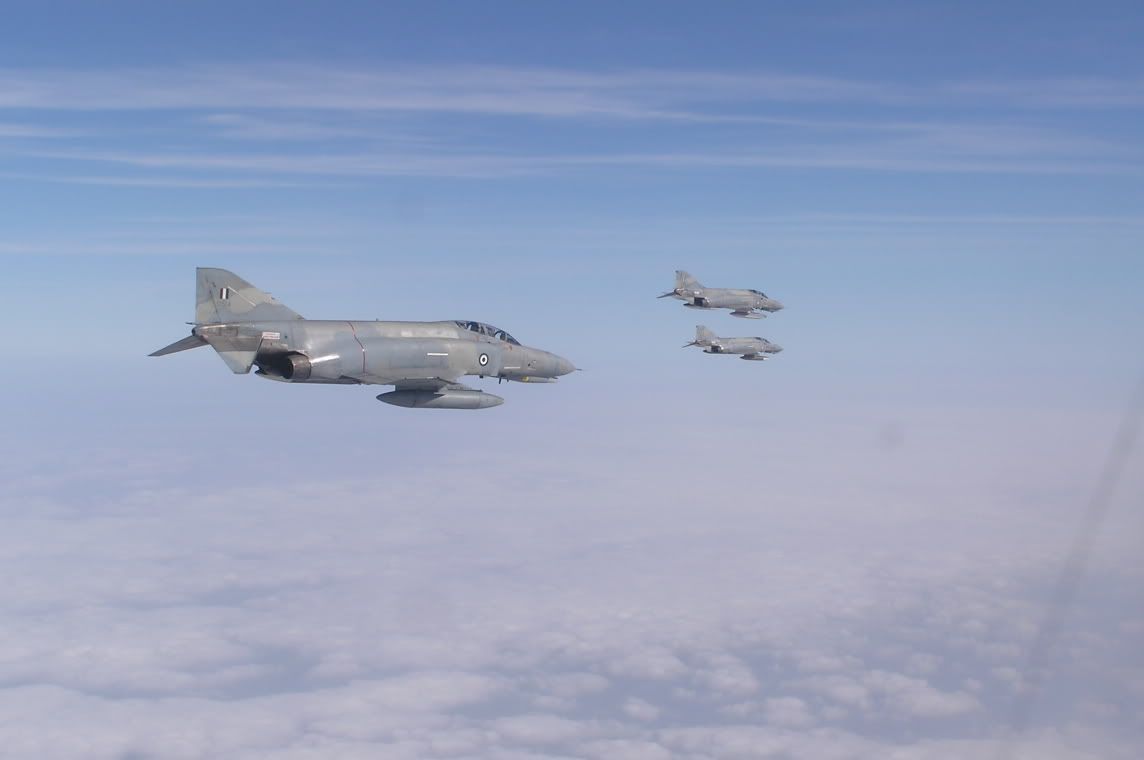
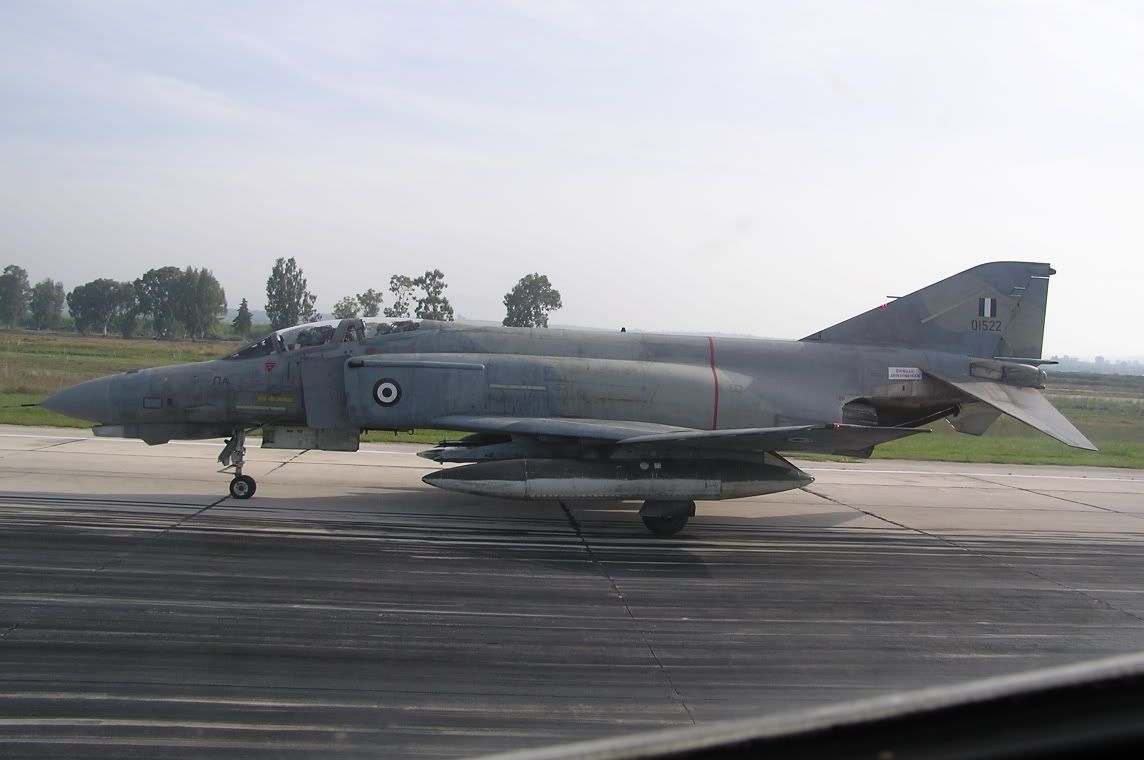
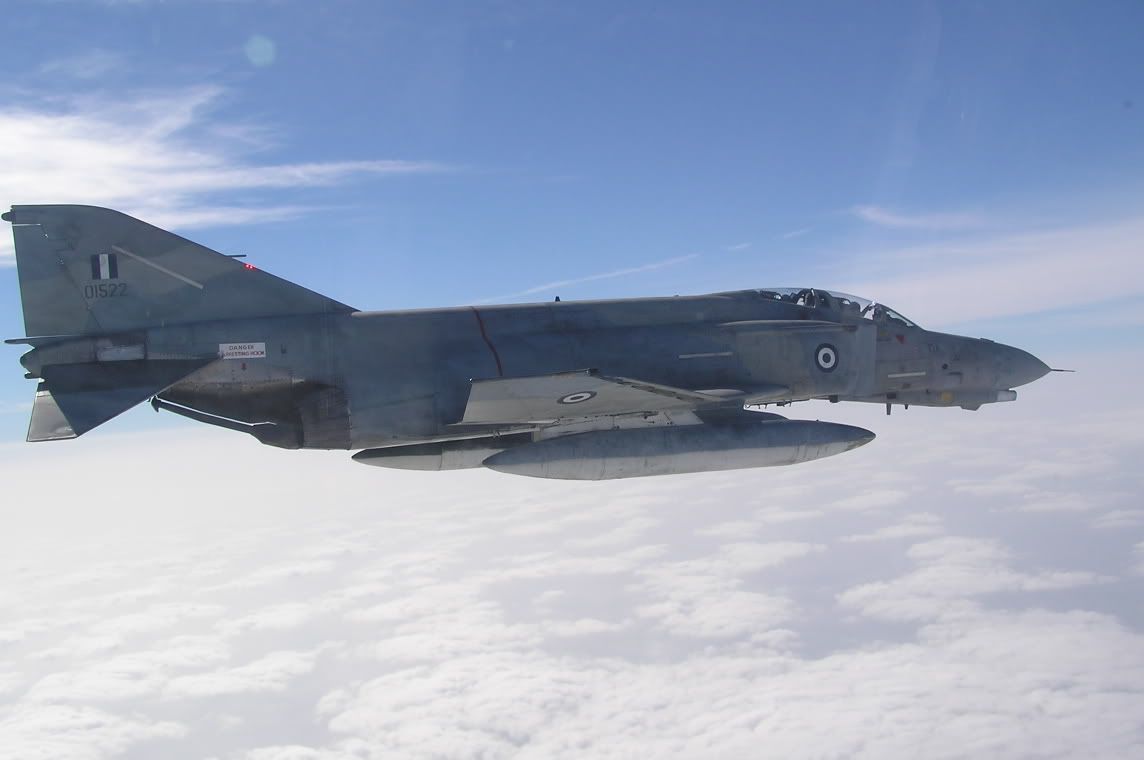
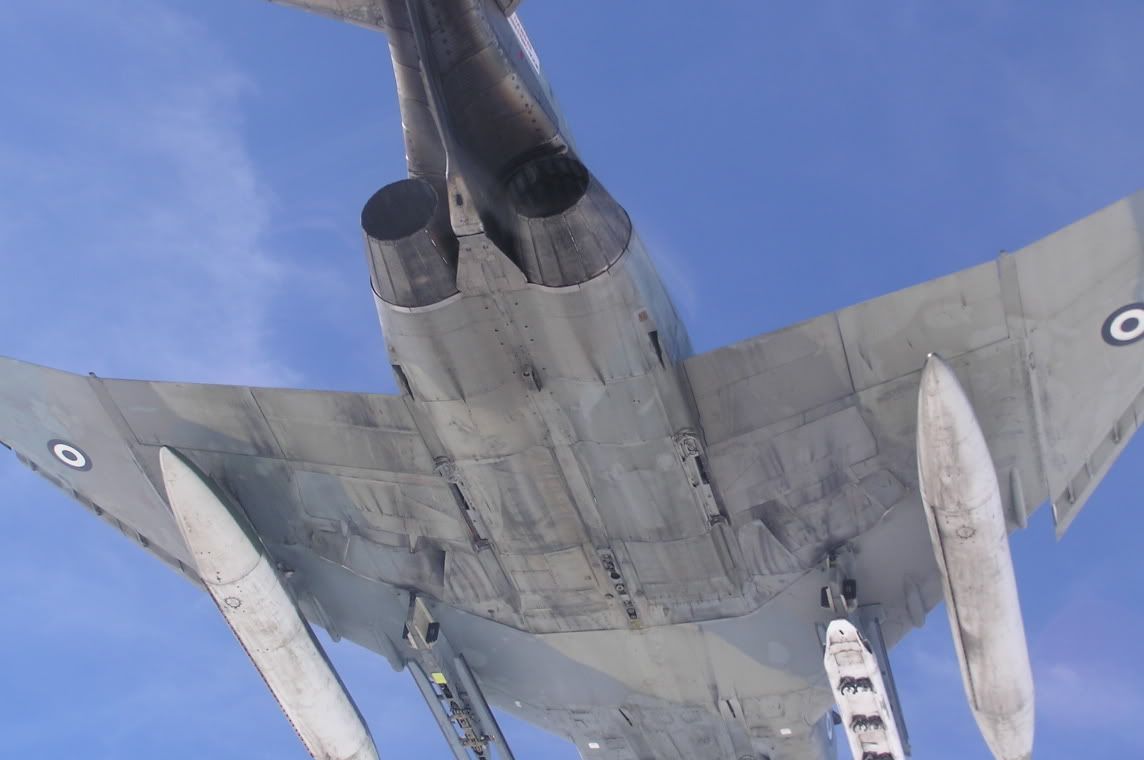
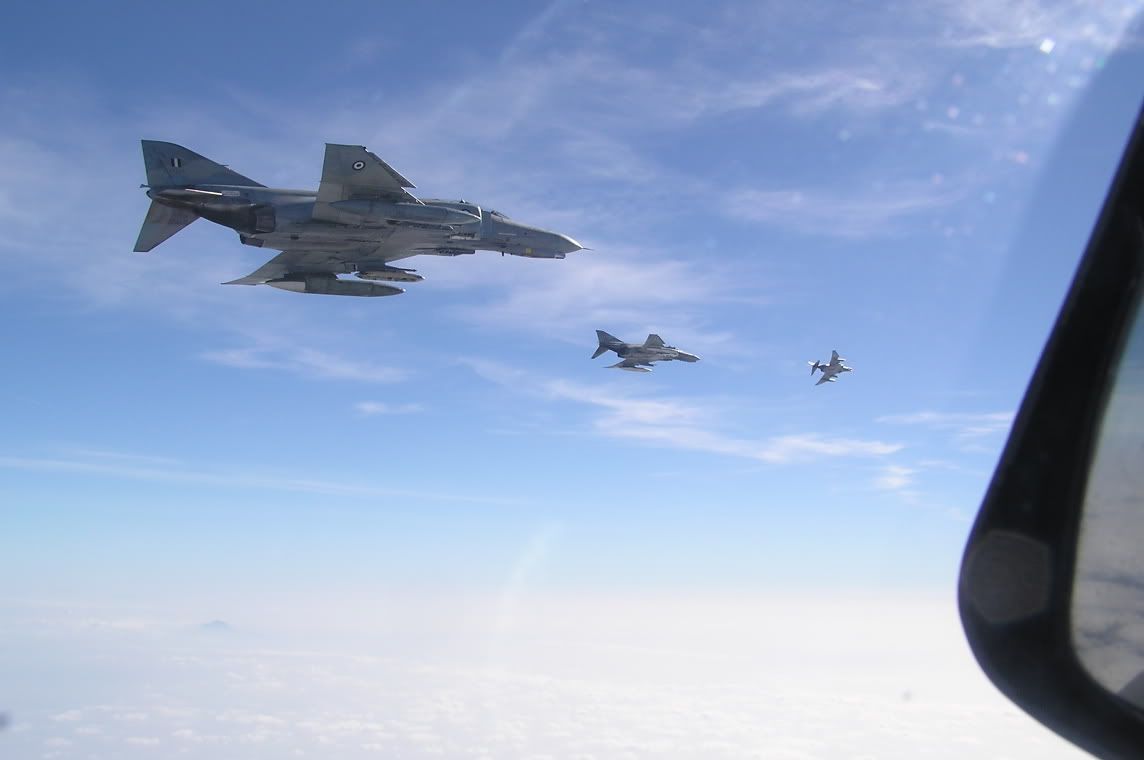
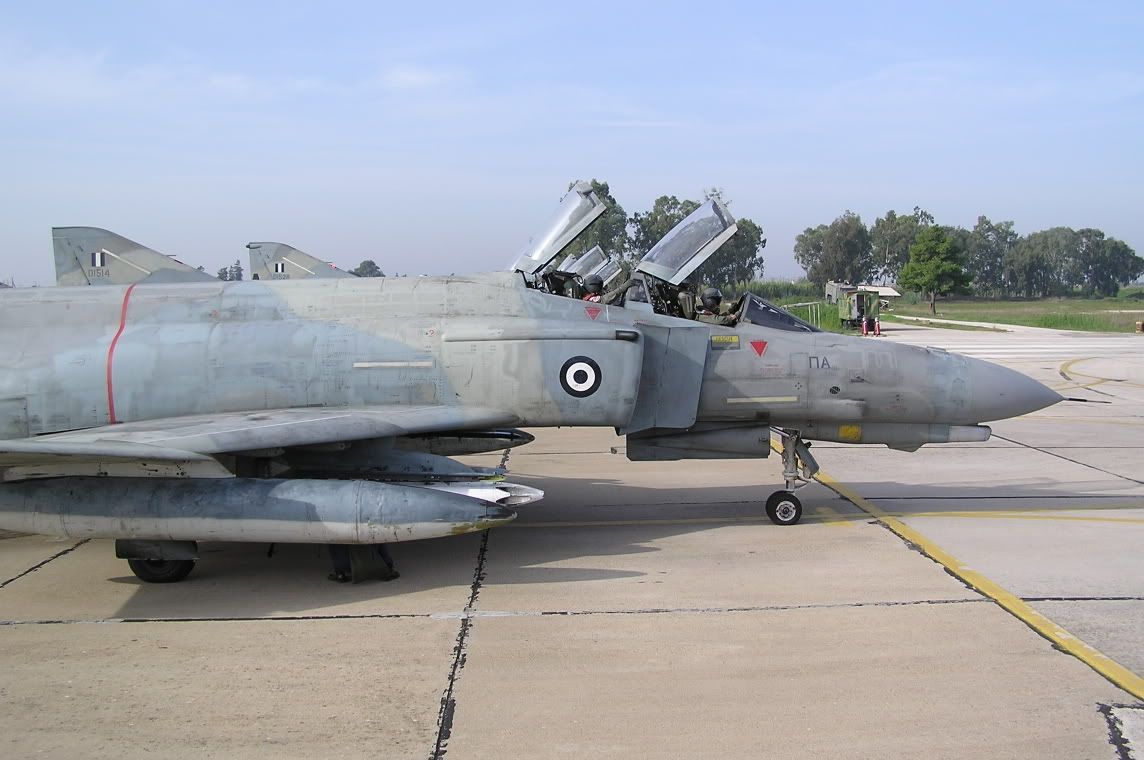

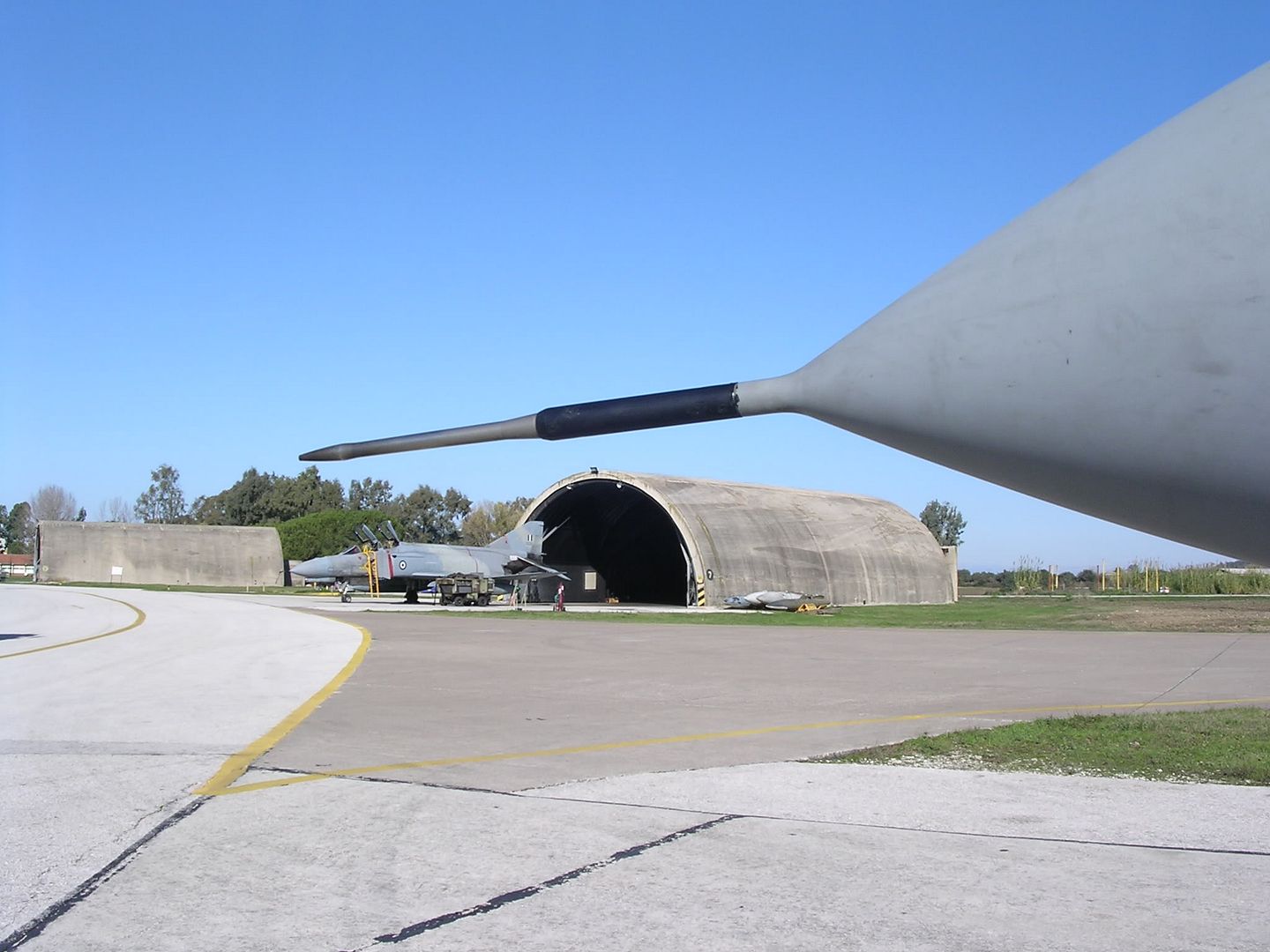
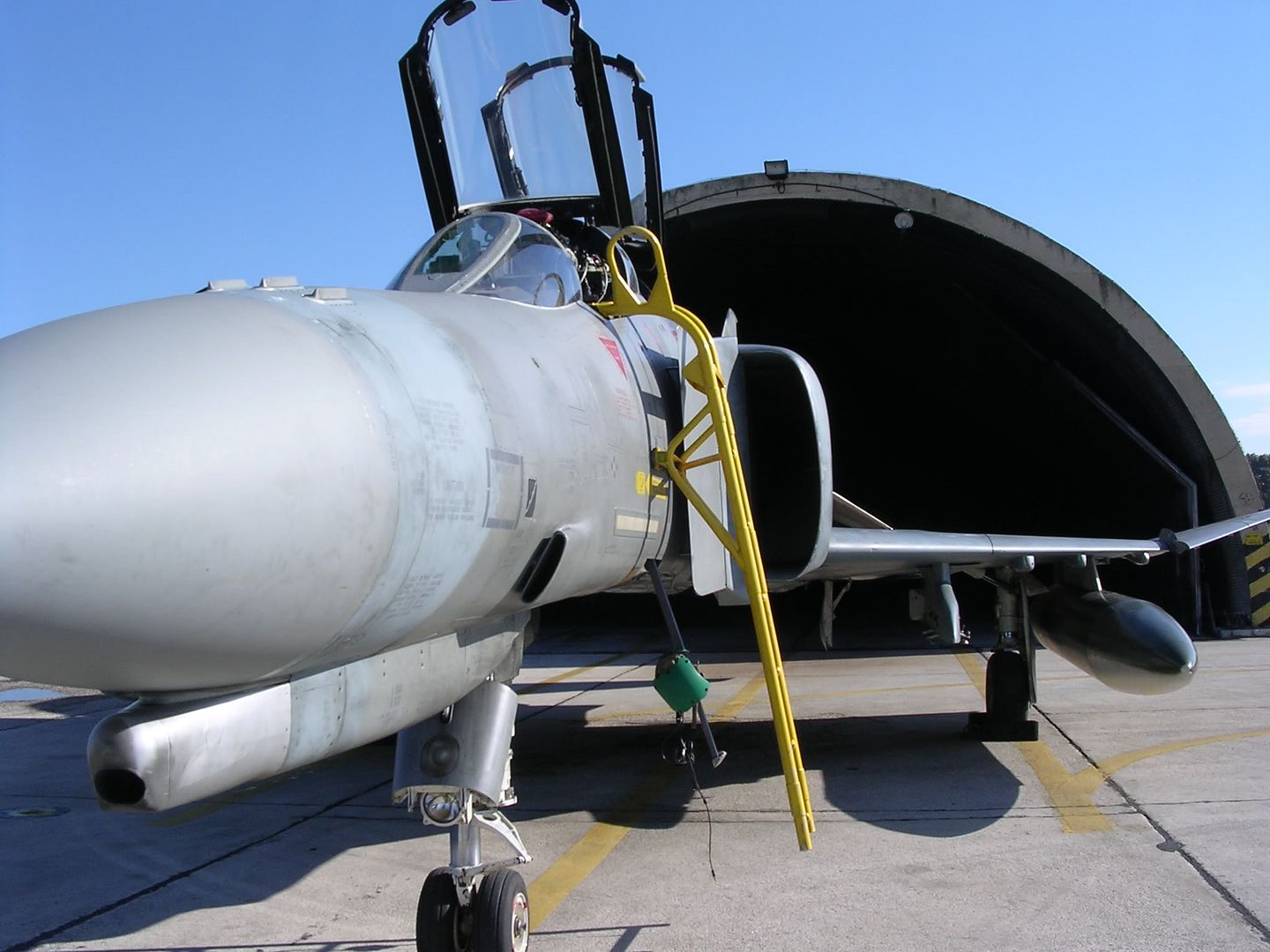
Credit to Xristos
😎
Alepou 340MB[size=5] HS F-456 “Ipiros” [/size]
Takes a hit from a Penguin MK 2 MOD 7 missile fired from PN-61 a S 70 B “Aegean Hawk” and then some 5inch shots from the MEKO 200 Frigate HS F-454 “Psara”.


[size=5]The end result:[/size]
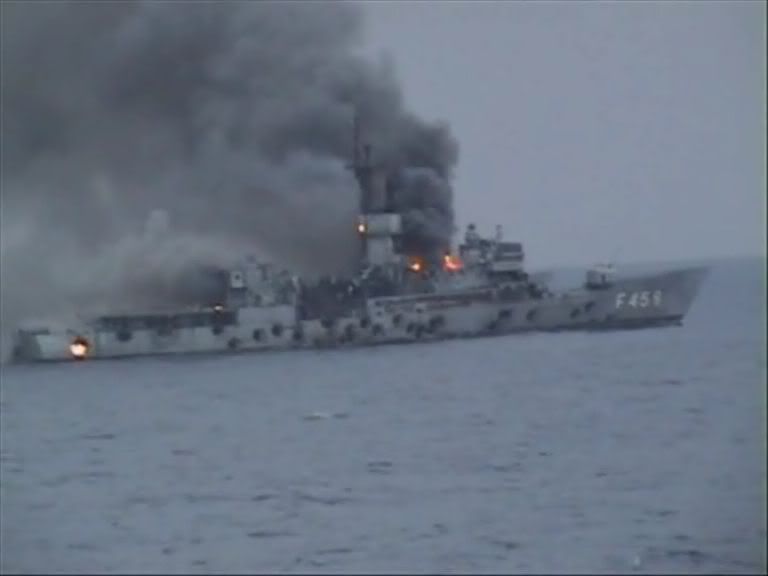
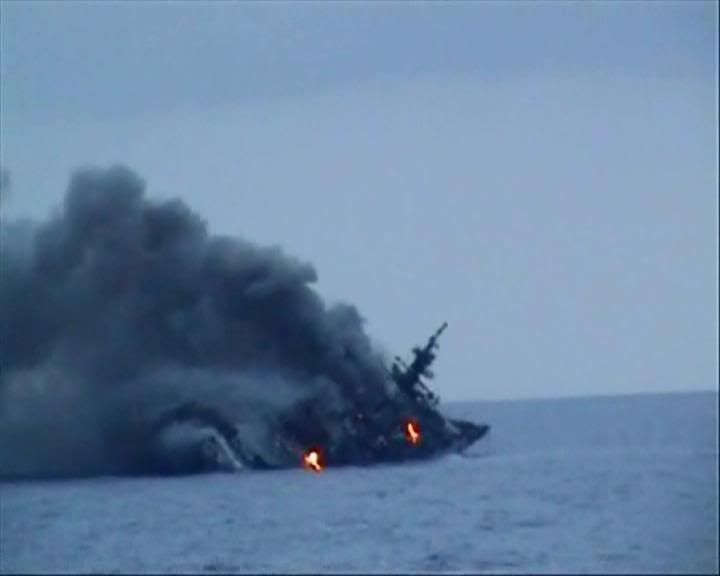

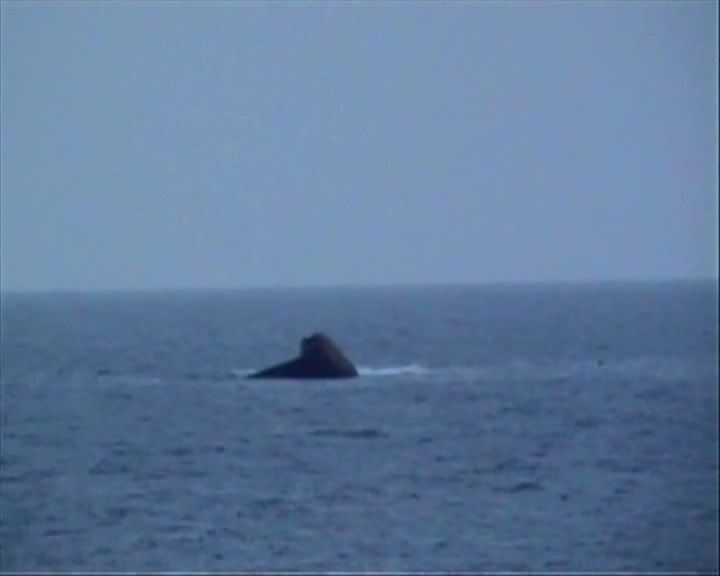
Alepou 340MBWith the ship fuel and weapons not onboard, we don’t see large fires like we would if the ship was on active duty.
And yes the torpedos are always the last shot to break the ships back.
See below:
[size=5]MK 48[/size]


These slide show images show the awesome power of a Mark 48 war-shot torpedo fired at the hulk of the old destroyer-escort, TORRENS. The plume of water and fragments shot some 150 metres skywards as the blast of the torpedo cut the ship in two. The submarine was over the horizon and submerged when it fired the torpedo.
[size=5]Statistics[/size]
Guidance: Wire guided and passive/active acoustic homing
Weight: MK-48 1545.3 kilograms (3,411 pounds), MK-48 ADCAP 1662.75 kilograms (3,671 pounds)
Length: 5.79 metres (19 feet)
Range: 8 kilometres (8,753 yards)
Speed: 52+ kilometres per hour (28+ knots)
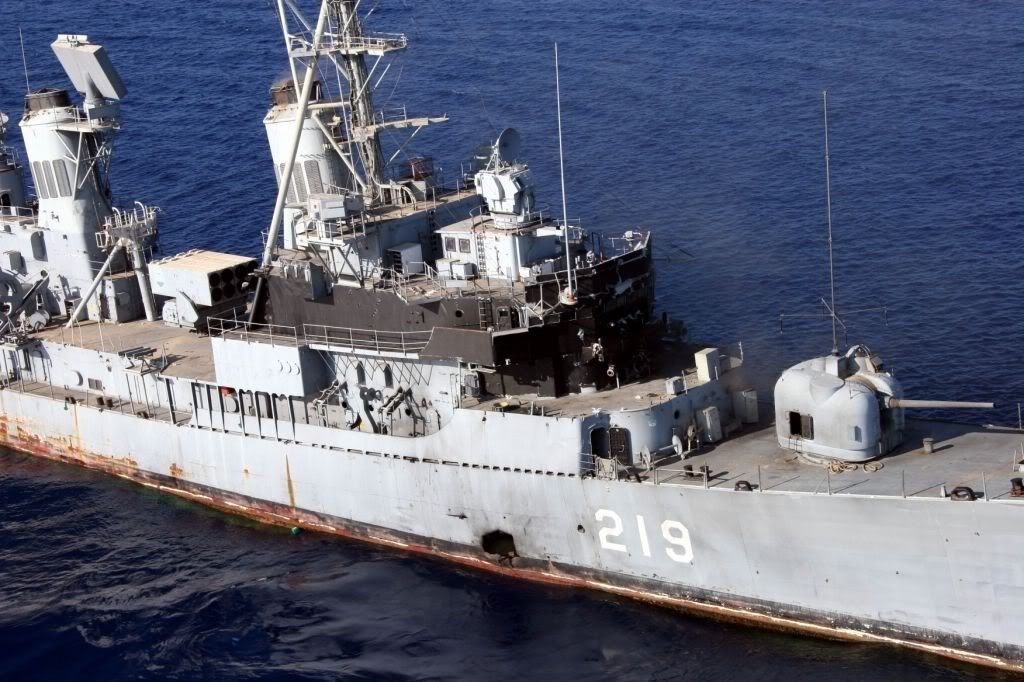
Alepou 340MBHS Nearchos D-219 Sinking Exercise
Two photos the Hellenic Navy released from the sinking of the Nearchos. Both pictures show the point of impact of the MBDA MM-40 Block 2 Exocet Surface-to-Surface Missiles. Photo Credit: Hellenic Navy
HN MM-40 FIRINGS/HS NEARCHOS SUNK: On May 29 2006, off Crete, the Hellenic Navy performed acceptance test firings of its MBDA MM40 Block 2 SSMs. These firings were also acceptance tests for its two new, Super Vita-type FAC(M)s, HS Rousen (P-67) and HS Daniolos (P-68), as each fired one missile against HS Nearchos (D-219), a decommissioned C.F. Adams-class DDG. The missile shot by HS Rousen ran a 64 km straight course, while that from HS Daniolos, ran a 44 km dog-leg course. Also taking part were a Sikorsky S-70B Aegean Hawk helicopter, side number ΠΝ 60, which fired a Hellfire II air-to-surface missile and HS Triton (S-112), a Type 209/1100 submarine, which fired a SST-4 torpedo. Following the day-long firings, HS Nearchos finally sunk late in the evening.
http://www.usswaddell.com/nearchos/sinkex/nearchossinkex.htm
😎
Alepou 340MBI not sure, but I’d say F’ing Low, I have heard a group of A-7s made it all the way to Cyprus without troubling any Turkish radar operators. 😉
A small selection from my HDD:


😎
Alepou 340MBWe have all seen this video right?
Alepou 340MBThe Indian Sukhois make stopover in Tanagra AB, Greece, on their way to England.
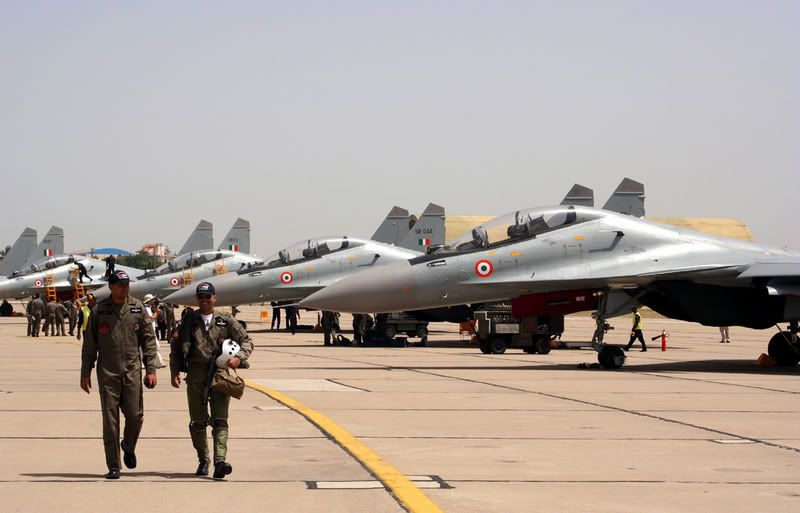
Photo Credit © Kostas Pantios
Via the ‘F’ man @ ACIG. 😎
And no, I don’t have any more.
😉 yet
Alepou 340MB[SIZE=5]Australia’s Canberra Class LHDs[/SIZE]
Posted 21-Jun-2007 11:42
Related stories: Surface Ships – Combat
Also on this day: 21-Jun-2007 »In May of 2006, “Australia Issues Official Tender for A$ 2.0B Large Amphibious Ships Program” covered Australia’s decision to expand its naval expeditionary capabilities, and replace HMAS Manoora and Kanimbla with substantially larger and more capable modern designs featuring strong air support. Navantia and Tenix offered a 27,000t LHD design that resembled Strategic Projection Ship (Buque de Proyeccion Estrategica) under development for the Spanish Navy. The DCNS-Thales Australia team, meanwhile, proposed a variation of the 21,300t Mistral Class that is serving successfully with the French Navy.
Since that article, there have been a pair of key developments. One is that the stated cost of the 2-ship Canberra Class program went from A$ 2 billion to A$ 3 billion (about $2.5 billion). The other is that a winner has been declared….
The Winner: The Navantia-Tenix LHD
The Tenix-Navantia team proposed a variation of their 27,000 tonne LHD design, which is similar to the Strategic Projection Ship (Buque de Proyeccion Estrategica) under development for the Spanish Navy. Tenix managed the RAN’s ANZAC Class frigate program, and their Canberra Class LHDs will share the same Saab 9LV combat system. Navantia, meanwhile, has just been declared the winner for Austraia’s $8 billion Hobart Class Air Warfare Destroyer (Frigate?) program.
Australia’s Kinnaird report, undertaken after the Collins Class submarine program’s massive time and dollar overruns, emphasized the need to do more up-front work in order to improve cost and delivery estimates on defense projects. As a result approximately A$ 23 million was spent over 3 years on Canberra Class design studies.
The outcome was a mixed blessing: the Government was told at 1st Pass Approval that the Project was likely to cost of the order of A$ 600 – $900 million more than the allocated budget. Hence the A$ 3 billion reference, instead of the original budget figure of $2 billion. A 50% cost increase is never palatable news, and without access to the formal bids it’s difficult to know if there was a significant difference between them on this score when “Australianization” and industrial benefits requirements are included. What can be said is that knowing about the price hike before a contract is awarded, and planning accordingly, certainly beats the intense project gyrations and political fallout that would follow if the government had discovered the issues after construction was underway.
Each Canberra Class LHD ship will have the ability to transport up to 1,000 personnel, with 6 helicopter landing spots and a mix of troop lift (S-70 Blackhawk or NH90 TTH), naval (NH90 NFH) and armed reconnaissance (Eurocopter Tiger ARH) helicopters carried inside. The “ski jump” deck is also suitable for launching fixed-wing UAVs, and may also prove suitable for vertical or short takeoff fighters should a future government decide that this is necessary. By comparison, the Kanimbla Class carries 450 personnel and can accommodate only 4 helicopters.
The new Canberra Class will also be able to transport up to 150 vehicles, including the new M1A1 Abrams tank and other elements of the “Hardened and Networked Army” such as the Bushmaster IMV and the forthcoming vehicles of Project Overlander.
Like the ships they will replace, each ship will be equipped with medical facilities; their size, however, will allow these facilities to include 2 operating theaters and a hospital ward.Construction and Program
The ships’ hull from keel to flight deck will be built in Navantia’s modern naval shipyard in Ferrol, Spain. DID’s Spanish correspondent informs us via anonymous sources that Spain’s BPE (LHD) project has experienced some schedule issues. The were rumored to stem from not having enough cranes in the shipyard to build Norway’s Frijtof Nansen Class AEGIS frigates, Sapin’s new F-105 Alvaro de Bazan Class AEGIS frigate, and Spain’s BPE all at the same time. Word is that the delay is now solved, but it will be interesting to see whether adding 5 Australain ships to the backlog will create future issues.
Once the ships’ hulls are built, they will be brought to Tenix’s Williamstown shipyard in Melbourne by heavy lift ship, where the locally built superstructure (the part that rises above the flight deck) will be joined to the hull. This effort has an estimated value of up to A$ 500 million.
The majority of combat system design and integration work will take place in Adelaide, at a cost of up to A$ 100 million. There will also be further work contracted to other states, and total Australian content is expected to be about 23%, or A$ 700 million.
Australian industry will also be providing full in-service support for the life of the ships, creating a steady and reliable source of demand on industry that, over ship lifetimes of 30 years or more, usually amounts to several times the value of the construction program.
Alepou 340MB[SIZE=5]Romania Unblocks C-27J Selection[/SIZE]
BY TOM KINGTON, PARIS
A legal challenge to Romania’s selection of the Alenia Aeronautica C-27J tactical transport aircraft has been turned down by an appeal court just days after the Pentagon selected the aircraft.
Romania started talks to acquire seven of the aircraft from the Finmeccanica unit in December, but talks were blocked when a legal challenge was issued by EADS, maker of the rival and losing C-295 turboprop.
EADS filed its complaint to Romania’s National Council for Solving Complaints, which upheld it in January, “on the grounds that the contracting authority did not respect the principles of indiscrimination, equal treatment and transparency.”
However, Alenia said in a statement that no sooner had U.S. officials decided to buy 78 of the aircraft on June 13 than a Romanian appeals court overturned the complaint, ensuring the Romanian selection would go ahead.
Including the U.S. and Romanian selections, 117 C-27Js are now likely to be ordered, with other customers including Italy, Greece, Lithuania and Bulgaria.
http://www.defensenews.com/story.php?F=2842302&C=europe
😉
Alepou 340MBNot that you want to blow your own trumpet. :dev2:
Alepou 340MB[size=5]Ship contract boon for Melbourne[/size]
June 20, 2007 – 11:13AM
Department Of Defence in Canberra today Mr Howard casts an eye over a model of a frigate to be built in Australia.
Photo: Glen MccurtayneAustralia is to buy three Spanish-designed warships and two large Spanish landing ships, Prime Minister John Howard has confirmed.
As reported in The Age today, Melbourne will benefit most, with the superstructure and fitout on the massive warships to be completed at the Williamstwown shipyards, creating 500 jobs and a $500 million economic boost.
Mr Howard said the navy would be equipped with three Navantia F100 air warfare destroyers worth a total of $8 billion.
To be Australia’s most advanced and expensive warships, they will enter service from 2013.
And in another win for Spain, the Australian navy will be equipped with two 27,000 tonne Navantia landing ships at a cost of about $3 billion.
Mr Howard said the purchases would add significantly to Australia’s military capability.In the case of the Navantia-designed amphibious landing ships, they would also help with disaster relief efforts.
“They will greatly enhance Australia’s ability to send forces in strength when required, particularly in our own region but not, of course, restricted to our own region,” he told reporters.
“(It) will, of course, include a capacity to send forces and men and women and materials in relation to disaster relief efforts.
“They will be able to land over 1000 personnel along with their vehicles – the new M1 Abrams tanks, artillery and supplies, and using integrated helicopters and water craft.”
Mr Howard said about a quarter of the construction work on the landing ships would take place in Australia, generating about 600 jobs.
“The superstructure will be constructed and the majority of the fitout will be completed in Melbourne with an estimated value of about $500 million,” Mr Howard said.
“The majority of the combat system design and integration work will take place in Adelaide and the value of that work will be up to about $100 million.”
Mr Howard said the Navantia destroyers had been selected as the “next generation air warfare destroyer” for the Royal Australian Navy.
The three Spanish-designed ships would be delivered in 2014, 2016, and 2017, he said.
“This does represent a massive lift in the Royal Australian Navy air warfare capability,” Mr Howard said.
“These vessels will be able to perform the full spectrum of joint maritime operations.”
He said the vessels would be equipped with the most capable air combat system in the world.
The destroyers will be assembled in Adelaide by an alliance between navy shipbuilder ASC, the Defence Materiel Organisation and mission systems company Raytheon, he said.
Australian industry will provide around 55 per cent of content and about 3,000 Australians across the country will be employed.
AAP
Alepou 340MBSome additional info.
Black Hawk 221 was carrying 10 people when it crashed into the side of HMAS Kanimbla and tumbled into the ocean off the coast of Fiji.
On board were four flight crew and six Special Air Service (SAS) personnel.
The pilot, Captain Mark Bingley, died trying to escape from the helicopter, while SAS trooper Joshua Porter was eventually found entombed within the submerged wreckage more than 2,500 metres beneath the surface.
A defence department board of inquiry began its hearings today in Sydney.
Full article below:
http://abc.net.au/news/stories/2007/06/18/1954809.htm?section=australia
Alepou 340MBFirst off, I’d like to apologise to everyone. I couldn’t help myself!
You all know what this means, right?

[size=5]The Winner is SPAAAAARRRRTTTTAAAAAANNNN!!!!!!![/size]


 Sign In